On This Page
Description
The object of this book is to provide with a popular and a comprehensive edition of Sappho, containing all that is so far known of her unique personality and her incompatible poemsLittle remains today of the writings of the archaic Greek poet Sappho (fl. late 7th and early 6th centuries B.C.E.), whose work is said to have filled nine papyrus rolls in the great library at Alexandria some 500 years after her death. The surviving texts consist of a lamentably small and fragmented body of lyric show more poetry--among them, poems of invocation, desire, spite, celebration, resignation, and remembrance--that nevertheless enables us to hear the living voice of the poet Plato called the tenth Muse. Sappho is rated as the supreme poetess and is regarded in the same vein as Shakespeare and Homer the supreme poets. show lessTags
Recommendations


















Member Reviews
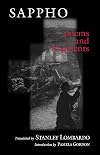
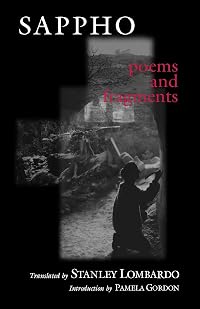
Little remains today of the writings of the archaic Greek poet Sappho (fl. late 7th and early 6th centuries B.C.E.), whose work is said to have filled nine papyrus rolls in the great library at Alexandria some 500 years after her death. The surviving texts consist of a lamentably small and fragmented body of lyric poetry--among them, poems of invocation, desire, spite, celebration, resignation, and remembrance--that nevertheless enables us to hear the living voice of the poet Plato called the tenth Muse.Stanley Lombardo's translations give us a virtuoso embodiment of Sappho's voice, whose telltale charm, authority, immediacy, directness, intensity, and sudden changes of tone are among the hallmarks of his masterly translation.Pamela show more Gordon introduces us to the world of Sappho, discusses questions surrounding the transmission of her manuscripts, offers advice on reading these texts, and concludes with an enlightening discussion of same-sex desire in Sappho. show less
I love Stanley Lombardo's work, translating and commenting on Sappho. Sappho's existing body of work is pitifully small, but I felt such a resonance within me when I read these poems and fragments: Lombardo does a great job of letting us see the person within the poet, and it doesn't take a large number of poems to achieve this. What is lacking in quantity is made up by quality of language. Some poems from a man's view, some from a woman's. The emotions and feelings exposed in these poems are universal, I believe. Lombardo does his best to make Sappho approachable and real to a modern reader. I love this edition of her poetry.
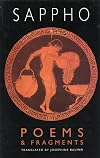
Sappho: Poems and Fragments New Expanded Edition (2018) is the most recent revision of Josephine Balmer's admired translations of poetry by Sappho. As such it now includes the two new poems revealed in 2014 by Dirk Obbink. The provenance and authenticity of these two newly discovered poems has sparked great controversy too complex to recite here. In any event, the new poems are included in this Expanded Edition.
I do not read Ancient Greek let alone the particular variety in which Sappho's works are recorded. I can therefore only judge the translations as they stand in English. As such the translations are very readable and free from affectations. For my purposes, Josephine Balmer's edition is comfortable and more than adequate. I can show more see no reason to look for another.
There is an informative Introduction and a helpful Translator's Note. There is also a brief Chronology and a Glossary.
A necessarily slim volume but a very welcome one. show less
I do not read Ancient Greek let alone the particular variety in which Sappho's works are recorded. I can therefore only judge the translations as they stand in English. As such the translations are very readable and free from affectations. For my purposes, Josephine Balmer's edition is comfortable and more than adequate. I can show more see no reason to look for another.
There is an informative Introduction and a helpful Translator's Note. There is also a brief Chronology and a Glossary.
A necessarily slim volume but a very welcome one. show less
Lombardo does it again. Unbelievably beautiful and resonant, miles and centuries away.
Charlotte Higgins, The Guardian’s chief arts writer and patron of The Iris Project, has chosen to discuss Sappho’s Poems and Fragments , on FiveBooks (http://five-books.com) as one of the top five on her subject - Love and Greats, saying that:
“…Sappho was admired in antiquity for the delicacy and elegance of her verse, and this is quite right – it’s just pitch-perfect. She talks about love as being bittersweet – such a cliché but she was almost certainly the first person to coin this expression that everyone can understand. Some of the poems are wedding hymns, so they do have a heterosexual context, some are the most extraordinary personal poems of desire for women..…”.
The full interview is available here: show more target="_top">http://thebrowser.com/books/interviews/charlotte-higgins show less
“…Sappho was admired in antiquity for the delicacy and elegance of her verse, and this is quite right – it’s just pitch-perfect. She talks about love as being bittersweet – such a cliché but she was almost certainly the first person to coin this expression that everyone can understand. Some of the poems are wedding hymns, so they do have a heterosexual context, some are the most extraordinary personal poems of desire for women..…”.
The full interview is available here: show more target="_top">http://thebrowser.com/books/interviews/charlotte-higgins show less
Titeln är Dikter och fragment är naturligtvis missvisande: fragment har vi massor av, men fullständiga dikter endast en. Annars finns det en handfull varav vi har mer än strof, en hel del där vi har en vers eller två, några där enstaka ord ur skilda strofer bevarats, och i enstaka fall bara enskilda ord: inte mycket, men tillräckligt för såväl filologisk möda som poetisk uppskattning. Allt detta har överförts till svenska av Magnus William-Olsson och Vasilis Papageorgiou, med genomgående gott resultat.
Förutom det med rätta berömda 31:a fragmentet, om den förlamande, förvirrande, förblindande förälskelsen i någon som sitter vid en man som verkar som gudarnas like gillade jag i synnerhet det 138:e. Bara två show more rader, men ändå:
Stå, som en vän, mitt emot mig
och sträck ut skönheten i dina ögon
Översättningen är överlag mycket fint utförd, och förtjänar berömmet av att vara i stort sett omärklig. Men en märklighet finns, som dock förutan den annars rätt sparsamma kommentarerna skulle gått mig förbi: i det 99:e fragmentet återfinns i original ordet olisbos, vilket i kommentarerna ges den vanliga betydelsen »›penisatrapp‹ av läder« (man undrar om de gamla grekerna även hade ord för penisatrapper i andra material); tydligen passar dock sådant inte sig i dikter av kvinnor, eller i alla fall inte av dikter av den annars mer mildtungade Sapfo, och således har översättarna valt att återge det med »plektronet«. Inte vet jag hur de spelar lyra hos William-Olsson och Papageorgiou, men jag tvivlar på att jag vill se och höra det.
Nåväl, utöver detta är det som sagt en trevlig översättning av en stor poets samlade kvarlåtenskaper, som fortfarande framstår som friska och läsvärda efter 2500 år. show less
Förutom det med rätta berömda 31:a fragmentet, om den förlamande, förvirrande, förblindande förälskelsen i någon som sitter vid en man som verkar som gudarnas like gillade jag i synnerhet det 138:e. Bara två show more rader, men ändå:
Stå, som en vän, mitt emot mig
och sträck ut skönheten i dina ögon
Översättningen är överlag mycket fint utförd, och förtjänar berömmet av att vara i stort sett omärklig. Men en märklighet finns, som dock förutan den annars rätt sparsamma kommentarerna skulle gått mig förbi: i det 99:e fragmentet återfinns i original ordet olisbos, vilket i kommentarerna ges den vanliga betydelsen »›penisatrapp‹ av läder« (man undrar om de gamla grekerna även hade ord för penisatrapper i andra material); tydligen passar dock sådant inte sig i dikter av kvinnor, eller i alla fall inte av dikter av den annars mer mildtungade Sapfo, och således har översättarna valt att återge det med »plektronet«. Inte vet jag hur de spelar lyra hos William-Olsson och Papageorgiou, men jag tvivlar på att jag vill se och höra det.
Nåväl, utöver detta är det som sagt en trevlig översättning av en stor poets samlade kvarlåtenskaper, som fortfarande framstår som friska och läsvärda efter 2500 år. show less
Jun 2, 2011Swedish
L'amore cantato come una "dolceamara invincibile serpe", che sconvolge l'animo con la felicità ed il dolore al quale è impossibile resistere. Questo il tema dominante della più celebre poetessa del mondo antico.
La bella edizione curata da Savino offre l'ineguagliabile traduzione di Quasimodo, di alcuni frammenti e accoglie tutta l'opera superstite di Saffo di Lesbo, vissuta tra il VII e il VI secolo a.C. Fu a capo di un tiaso femminile, un circolo o una confraternita, potremmo dire, dedito al culto di una divinità ma soprattutto delle Muse, in un'atmosfera raffinata e colta. La poesia di Saffo canta la bellezza, l'amore, il senso del tempo che fugge, la giovinezza perduta, il sentimento tradito che fa invocare la morte.
La poetessa show more visita anche il mito, dedicando versi in pentametrici eolici, di cui ci è pervenuto un ampio frammento dedicato all'incontro di Ettore con la sposa Andromaca.
La sua poesia è caratterizzata da grande compostezza ed equilibrio e al pari dell'opera di Alceo e Anacreonte, è poesia immortale. show less
La bella edizione curata da Savino offre l'ineguagliabile traduzione di Quasimodo, di alcuni frammenti e accoglie tutta l'opera superstite di Saffo di Lesbo, vissuta tra il VII e il VI secolo a.C. Fu a capo di un tiaso femminile, un circolo o una confraternita, potremmo dire, dedito al culto di una divinità ma soprattutto delle Muse, in un'atmosfera raffinata e colta. La poesia di Saffo canta la bellezza, l'amore, il senso del tempo che fugge, la giovinezza perduta, il sentimento tradito che fa invocare la morte.
La poetessa show more visita anche il mito, dedicando versi in pentametrici eolici, di cui ci è pervenuto un ampio frammento dedicato all'incontro di Ettore con la sposa Andromaca.
La sua poesia è caratterizzata da grande compostezza ed equilibrio e al pari dell'opera di Alceo e Anacreonte, è poesia immortale. show less
Dec 8, 2013Italian
Members
- Recently Added By
Lists

Pre-1969 LGBTQ Literature
182 works; 69 members

Greatest Books, allegedly
484 works; 9 members

Mustich's 1000 Books to Read Before You Die: A Life Changing List
1,001 works; 19 members

sotiris' favourites circa january 2023
43 works; 2 members

The Well-Educated Mind, Susan Wise Bauer, 2016
179 works; 3 members

In Our Time books
4,934 works; 2 members
Author Information

206+ Works 6,729 Members
Sappho, whom Plato (see Vols. 3 and 4) called "the tenth Muse," was the greatest of the early Greek lyric poets. She was born at Mytilene on Lesbos and was a member---perhaps the head---of a group of women who honored the Muses and Aphrodite. Her family was aristocratic; it is said that she was married and had a daughter. Her brilliant love show more lyrics, marriage songs, and hymns to the gods are written in Aeolic dialect in many meters, one of which is named for her---the Sapphic. Mostly fragments survive of the nine books she is thought to have authored. Her verse is simple and direct, exquisitely passionate and vivid. Catullus, Ovid, and Swinburne (see Vol. 1) were among the many later poets she influenced. (Bowker Author Biography) show less

27+ Works 736 Members

71+ Works 776 Members
Some Editions
Series
Belongs to Publisher Series
Common Knowledge
- Canonical title*
- Sappho : poems and fragments
- Original publication date
- 1984 (English: Balmer) (English: Balmer)
- People/Characters
- Sappho
- Important places
- Lesbos, Greece; Ancient Greece
- Dedication
- To Beth, to Anjanette, to Carlo, and to Joey
- First words
- Artfully adorned Aphrodite, deathless
- Last words
- (Click to show. Warning: May contain spoilers.)all the troops in Lydia in their chariots and glittering armor.
*Some information comes from Common Knowledge in other languages. Click "Edit" for more information.
Classifications
Statistics
- Members
- 457
- Popularity
- 66,817
- Reviews
- 10
- Rating
- (4.04)
- Languages
- 9 — Bable, Dutch, English, French, Greek (Ancient), Italian, Portuguese, Spanish, Swedish
- Media
- Paper, Ebook
- ISBNs
- 35
- ASINs
- 5