On This Page
Description
First published in 1893, this outrageous novel of homosexual love has been attributed to Oscar Wilde with varying degrees of certainty. This edition, carefully prepared from original sources in the British Library archives, is the only one on sale annotated and unabridged. Ahead of its time in its celebration of uninhibited sensual passion between men.Tags
Recommendations





















Member Reviews
Christ alive. That was a trip.
This book was so intensely written that it sometimes physically affected me to read; I felt sick or delirious if I read it too long. The prose is so consistently and exaggeratedly florid that it makes one’s head spin—the digressions pointless, the story nearly incoherent, the paranormal flourishes bizarre. I think the best word I could use to describe Teleny would be heady, like a noxious perfume, which, if you expose yourself to it for too long, becomes as dizzying and nauseating as the stench of a corpse.
It takes that Victorian hallmark of sensual hysteria—of describing everything, every sound, sight, touch, taste, and smell, as far more heightened than they are in reality—to such an extreme that show more the story becomes this insane phantasmagoria, like the crazed ravings of a lunatic. You only really encounter this frenzied calibre of debauchery nowadays when authors describe a character’s senses as abnormally intensified by fever or hallucinogens, but in Teleny, this is just the way the world exists.
But what’s the sex like? you ask. Horrible. Disgusting. Dizzying. And I don’t say this as a prude. The sex scenes in this book have a horrifying quality of the grotesque to them—there are two that involve dying during a sexual act—and even the passages that are intended to be erotic or arousing can come off like body horror. Like this line: “To me it seemed that all the pores of my skin were tiny mouths that pouted out to kiss him.” (137) I understand that this is supposed to be sensual, but really it made my stomach churn, my mind likening the narrator’s body to the terrible creation of some twisted scientist in a horror movie. Sex in this book is tied so closely to pain, death, sin, and illness that I can’t imagine a single modern reader who would be aroused by the sorts of descriptions the author employs, like those of caustic acid or tears or blood or searing pain or pleasure so intense it ceases to really be pleasurable at all. And it’s not even the sort of thin-line-between-pleasure-and-pain thing one might find in kinky or sadistic/masochistic erotica.
The rape scenes—two of them—are brutal and protracted. Misogyny runs rampant throughout. In Teleny, sex seems fatal, terrifying, and grotesque, abstracting and objectifying the human body to such a degree that it doesn’t even bear any resemblance to an act of love or affection.
But it can also be hilarious. There were quite a few times this story made me laugh out loud, mainly in the anatomical errors perhaps owing to the Victorian lack of sexual education (in particular the author seems to labour under the belief that, when aroused, a woman’s clitoris “weeps” some sort of discharge or lubrication, and that a man’s penis, when he has sex with a woman, hits the back wall of her uterus). As I read, I marked down all the different names that were used to describe the penis, and I list them here for your entertainment:
- Priapus (34)
- a ‘birdie’ (39)
- prickle (45)
- the little blind God of Love (77)
- instrument (78)
- limp tool (83)
- acorn (94)
- ramrod (94)
- piston (94)
- phallus (109)
- this wingless god (119)
- the rod (124)
- the little god (124)
- the whole turgid column (126)
- Sir Priapus (150)
- the right sort of handle (150)
- battering-rams (151)
- fluttering instrument of pleasure (168)
- frisky phallus (168)
- pivot (179)
- quivering rod of pleasure (179)
- my fluttering bird (180)
- my nightingale, as they call it in Italy (180)
I would be remiss, of course, if I didn’t remark upon the gay aspects of this book, which are numerous and sometimes thought-provoking. The Victorian Era was quite fond of pathologisation, that is the identification and codification of medical conditions. During this time, homosexuality went from being thought of as a sin to which some people were drawn to an actual mental imbalance stemming from improper childhood development. People even went so far as to brand things medical conditions or mental illnesses that we now consider character traits, like independence or stubbornness in women becoming “hysteria” or gay people being known as “sexual inverts”—this pathologisation suggested a deviation from the norm that was so profound it merited diagnosis and treatment.
But Teleny rejects this wholeheartedly in favour of a shockingly modern view of sexual orientation: Camille, the narrator, never once thinks he can cure or fix his proclivity, he knows he must live with it. And he feels little shame about it because, to him, it’s how he was made, and therefore isn’t something to be lamented. This isn’t very far from how we think of homosexuality today, in what I would call the age of identity as opposed to pathology. This passage struck me in particular:
And though the story ends in tragedy, it isn’t the tragedy of self-denial, which as a Gay™ myself is refreshing to see. And Camille’s rants on the hypocrisy and moralism of a society that condemns a sexuality that harms no one still hold true today.
But I don’t want to lay the praise on too thick. I despised reading this book. It reminds me of an ouroboros, so full of lust and gluttony it perpetually consumes itself, frantically and horrifically and in this it alienates the reader completely. Here lies the purplest prose, the most mesmerisingly disturbing sex scenes, the stupidest deus ex machina I’ve ever experienced. And it was an experience. I suppose I’m glad to have had it, if only because my curiosity about this book is now wholly sated, but I’d be lying if I said I wasn’t happy to set it aside forever and never read it again.
***
Pre-review, 9/4/17:
Yep.
I did it.
I bought a Victorian gay porn book. With my own money.
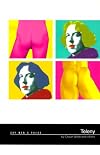
It came in the mail today and the cover has a Warhol-esque quadriptych of colourful butts and Oscar Wilde portraits. It is garish and fantastic and I regret nothing.
I'd read that it was rare and purported to have been written, at least in part, by Wilde, and when I found it on thriftbooks for $4 (it was the last copy in stock) there was no stopping me.
So here I've got a porno book from 1893 that I can never in good conscience read in public, with two more butts on the cover than any book should have, and a blurb on the back perplexedly stating that "It is a bizarre book, alternating porn with florid purple passages, a hymn to sodomy with an angry attack on notions of the 'natural.'"
Best $4 I've ever spent, easily.
(I hear there's a prequel...) show less
This book was so intensely written that it sometimes physically affected me to read; I felt sick or delirious if I read it too long. The prose is so consistently and exaggeratedly florid that it makes one’s head spin—the digressions pointless, the story nearly incoherent, the paranormal flourishes bizarre. I think the best word I could use to describe Teleny would be heady, like a noxious perfume, which, if you expose yourself to it for too long, becomes as dizzying and nauseating as the stench of a corpse.
It takes that Victorian hallmark of sensual hysteria—of describing everything, every sound, sight, touch, taste, and smell, as far more heightened than they are in reality—to such an extreme that show more the story becomes this insane phantasmagoria, like the crazed ravings of a lunatic. You only really encounter this frenzied calibre of debauchery nowadays when authors describe a character’s senses as abnormally intensified by fever or hallucinogens, but in Teleny, this is just the way the world exists.
But what’s the sex like? you ask. Horrible. Disgusting. Dizzying. And I don’t say this as a prude. The sex scenes in this book have a horrifying quality of the grotesque to them—there are two that involve dying during a sexual act—and even the passages that are intended to be erotic or arousing can come off like body horror. Like this line: “To me it seemed that all the pores of my skin were tiny mouths that pouted out to kiss him.” (137) I understand that this is supposed to be sensual, but really it made my stomach churn, my mind likening the narrator’s body to the terrible creation of some twisted scientist in a horror movie. Sex in this book is tied so closely to pain, death, sin, and illness that I can’t imagine a single modern reader who would be aroused by the sorts of descriptions the author employs, like those of caustic acid or tears or blood or searing pain or pleasure so intense it ceases to really be pleasurable at all. And it’s not even the sort of thin-line-between-pleasure-and-pain thing one might find in kinky or sadistic/masochistic erotica.
The rape scenes—two of them—are brutal and protracted. Misogyny runs rampant throughout. In Teleny, sex seems fatal, terrifying, and grotesque, abstracting and objectifying the human body to such a degree that it doesn’t even bear any resemblance to an act of love or affection.
But it can also be hilarious. There were quite a few times this story made me laugh out loud, mainly in the anatomical errors perhaps owing to the Victorian lack of sexual education (in particular the author seems to labour under the belief that, when aroused, a woman’s clitoris “weeps” some sort of discharge or lubrication, and that a man’s penis, when he has sex with a woman, hits the back wall of her uterus). As I read, I marked down all the different names that were used to describe the penis, and I list them here for your entertainment:
- Priapus (34)
- a ‘birdie’ (39)
- prickle (45)
- the little blind God of Love (77)
- instrument (78)
- limp tool (83)
- acorn (94)
- ramrod (94)
- piston (94)
- phallus (109)
- this wingless god (119)
- the rod (124)
- the little god (124)
- the whole turgid column (126)
- Sir Priapus (150)
- the right sort of handle (150)
- battering-rams (151)
- fluttering instrument of pleasure (168)
- frisky phallus (168)
- pivot (179)
- quivering rod of pleasure (179)
- my fluttering bird (180)
- my nightingale, as they call it in Italy (180)
I would be remiss, of course, if I didn’t remark upon the gay aspects of this book, which are numerous and sometimes thought-provoking. The Victorian Era was quite fond of pathologisation, that is the identification and codification of medical conditions. During this time, homosexuality went from being thought of as a sin to which some people were drawn to an actual mental imbalance stemming from improper childhood development. People even went so far as to brand things medical conditions or mental illnesses that we now consider character traits, like independence or stubbornness in women becoming “hysteria” or gay people being known as “sexual inverts”—this pathologisation suggested a deviation from the norm that was so profound it merited diagnosis and treatment.
But Teleny rejects this wholeheartedly in favour of a shockingly modern view of sexual orientation: Camille, the narrator, never once thinks he can cure or fix his proclivity, he knows he must live with it. And he feels little shame about it because, to him, it’s how he was made, and therefore isn’t something to be lamented. This isn’t very far from how we think of homosexuality today, in what I would call the age of identity as opposed to pathology. This passage struck me in particular:
Had I committed a crime against nature when my own nature found peace and happiness thereby? If I was thus, surely it was the fault of my blood, not myself. Who had planted nettles in my garden? Not I. They had grown there unawares, from my very childhood. I began to feel their carnal stings long before I could understand what conclusion they imported.
And though the story ends in tragedy, it isn’t the tragedy of self-denial, which as a Gay™ myself is refreshing to see. And Camille’s rants on the hypocrisy and moralism of a society that condemns a sexuality that harms no one still hold true today.
But I don’t want to lay the praise on too thick. I despised reading this book. It reminds me of an ouroboros, so full of lust and gluttony it perpetually consumes itself, frantically and horrifically and in this it alienates the reader completely. Here lies the purplest prose, the most mesmerisingly disturbing sex scenes, the stupidest deus ex machina I’ve ever experienced. And it was an experience. I suppose I’m glad to have had it, if only because my curiosity about this book is now wholly sated, but I’d be lying if I said I wasn’t happy to set it aside forever and never read it again.
***
Pre-review, 9/4/17:
Yep.
I did it.
I bought a Victorian gay porn book. With my own money.
It came in the mail today and the cover has a Warhol-esque quadriptych of colourful butts and Oscar Wilde portraits. It is garish and fantastic and I regret nothing.
I'd read that it was rare and purported to have been written, at least in part, by Wilde, and when I found it on thriftbooks for $4 (it was the last copy in stock) there was no stopping me.
So here I've got a porno book from 1893 that I can never in good conscience read in public, with two more butts on the cover than any book should have, and a blurb on the back perplexedly stating that "It is a bizarre book, alternating porn with florid purple passages, a hymn to sodomy with an angry attack on notions of the 'natural.'"
Best $4 I've ever spent, easily.
(I hear there's a prequel...) show less
Arguably the most famous 19th-century queer erotica, but definitely not the best! Reading this has given me a better sense of where something like [b:Sins of the Cities of the Plain|119666|Sins of the Cities of the Plain|Jack Saul|https://d202m5krfqbpi5.cloudfront.net/books/1347797205s/119666.jpg|115215] stands, which I had not originally been able to give a rating to. This one was attributed to Oscar Wilde and his circle which is why it is well-known, but his affiliation with it is a bit dubious and I'd rather dissociate him from it now that I've read it in full. For pornography it is really not good. The focus is really the story, Des Grieux falling in love with Teleny and then all sorts of melodramatic near- or actual-suicides. And show more when the porn does happen, it is seldom even... desirable. The following spoiler-warning is actually a trigger-warning for non-consensual sex, sexual injury, and gore: We see Des Grieux twice sexually assault a servant-girl, and shortly after we are told the details of her rape and suicide resulting from that rape, and yet the descriptions are a pornographic kind meant to be titillating. In the standard orgy scene (a necessity in Victorian porn) we are audience with the rest of the guests to a man who pleasures himself with a bottle. This is meant to be an impressive feat and isn't out of place in porn. The glass bottle breaks and although the glass is removed by a member of their party, he refuses to go to a hospital because of the shame that would accompany his actions. He then goes home and kills himself. This is not how you write erotica! There is a lot of reflection on the social stigmatization of homosexuality and the mental and emotional suffering of gay men in this book, which is fair and which was certainly a part of the life of homosexual men in the 19th century, but those issues don't make for good porn. Compare it with The Sins of the Cities of the Plain, which is the most gleeful text imaginable. While it, likewise, has issues of dubious consent (largely Imperialist issues involving young teenage foreigners), I don't remember near as many red flags as there were in Teleny.
Also, there are way more women in this one. In that women are actually present (not just men in fancy dresses). Unfortunately, this leads to a display of some of the worst examples of gay misogyny you could ask for. Women's bodies are described in detail, but as the most disgusting thing you could witness. Teleny sleeps with a woman then treats her with disgust for sleeping with him so easily. Des Grieux is willing to assault the servant girl just for the sake of having an 'ordinary' sexual experience and to 'treat' his homosexuality.
Yeah, don't read this book. There's much better Victorian porn out there. I'm looking forward to reading my colleague's Fanny and Stella, which I drunkenly requested a copy of and which, while not forming a part of my thesis the way that these others do, I think will be a good antidote to Teleny. show less
Also, there are way more women in this one. In that women are actually present (not just men in fancy dresses). Unfortunately, this leads to a display of some of the worst examples of gay misogyny you could ask for. Women's bodies are described in detail, but as the most disgusting thing you could witness. Teleny sleeps with a woman then treats her with disgust for sleeping with him so easily. Des Grieux is willing to assault the servant girl just for the sake of having an 'ordinary' sexual experience and to 'treat' his homosexuality.
Yeah, don't read this book. There's much better Victorian porn out there. I'm looking forward to reading my colleague's Fanny and Stella, which I drunkenly requested a copy of and which, while not forming a part of my thesis the way that these others do, I think will be a good antidote to Teleny. show less
For a book about the love between two men, they managed to fit in a lot of straight sex and even a lesbian orgy. In fact, I was surprised to see that there was no man-on-man action until halfway through the book. Anyway, I enjoyed this for the myriad of biblical and mythological references. It seemed like I could hardly turn a page without some comparison to Lot, Antinous, Jonathan, Penelope, the River Styx, etc.
La mejor ficción erótica de la historia (si no es la mejor, al menos está entre las cinco mejores) . Perdí la cuenta de cuántas veces le releí.
"A Novel Attributed to Oscar Wilde"
limited edition hardback copy
limited edition hardback copy
Limited edition of 26 lettered copes, of which this is copy "P". signed by editor
En Teleny, la obra maldita de Oscar Wilde, el autor hace un dibujo de sí mismo y de su contrafigura: un seductor insistente y un infiel constante, un celoso enamorado y un amante enardecido, un iniciador en los juegos eróticos y un discípulo aventajado. Si su desprecio por las leyes de la sociedad victoriana habían de costarle la cárcel y el entierro en vida, la confesión novelada de sus amores iba a convertir a Teleny en la obra más prohibida y en vano silenciada del autor de Dorian Gray.
Jun 15, 2012Spanish
Members
- Recently Added By
Lists

Pre-1969 LGBTQ Literature
182 works; 69 members
Author Information

Flamboyant man-about-town, Oscar Wilde had a reputation that preceded him, especially in his early career. He was born to a middle-class Irish family (his father was a surgeon) and was trained as a scholarship boy at Trinity College, Dublin. He subsequently won a scholarship to Magdalen College, Oxford, where he was heavily influenced by John show more Ruskin and Walter Pater, whose aestheticism was taken to its radical extreme in Wilde's work. By 1879 he was already known as a wit and a dandy; soon after, in fact, he was satirized in Gilbert and Sullivan's Patience. Largely on the strength of his public persona, Wilde undertook a lecture tour to the United States in 1882, where he saw his play Vera open---unsuccessfully---in New York. His first published volume, Poems, which met with some degree of approbation, appeared at this time. In 1884 he married Constance Lloyd, the daughter of an Irish lawyer, and within two years they had two sons. During this period he wrote, among others, The Picture of Dorian Gray (1891), his only novel, which scandalized many readers and was widely denounced as immoral. Wilde simultaneously dismissed and encouraged such criticism with his statement in the preface, "There is no such thing as a moral or an immoral book. Books are well written or badly written. That is all." In 1891 Wilde published A House of Pomegranates, a collection of fantasy tales, and in 1892 gained commercial and critical success with his play, Lady Windermere's Fan He followed this comedy with A Woman of No Importance (1893), An Ideal Husband (1895), and his most famous play, The Importance of Being Earnest (1895). During this period he also wrote Salome, in French, but was unable to obtain a license for it in England. Performed in Paris in 1896, the play was translated and published in England in 1894 by Lord Alfred Douglas and was illustrated by Aubrey Beardsley. Lord Alfred was the son of the Marquess of Queensbury, who objected to his son's spending so much time with Wilde because of Wilde's flamboyant behavior and homosexual relationships. In 1895, after being publicly insulted by the marquess, Wilde brought an unsuccessful slander suit against the peer. The result of his inability to prove slander was his own trial on charges of sodomy, of which he was found guilty and sentenced to two years of hard labor. During his time in prison, he wrote a scathing rebuke to Lord Alfred, published in 1905 as De Profundis. In it he argues that his conduct was a result of his standing "in symbolic relations to the art and culture" of his time. After his release, Wilde left England for Paris, where he wrote what may be his most famous poem, The Ballad of Reading Gaol (1898), drawn from his prison experiences. Among his other notable writing is The Soul of Man under Socialism (1891), which argues for individualism and freedom of artistic expression. There has been a revived interest in Wilde's work; among the best recent volumes are Richard Ellmann's, Oscar Wilde and Regenia Gagnier's Idylls of the Marketplace , two works that vary widely in their critical assumptions and approach to Wilde but that offer rich insights into his complex character. (Bowker Author Biography) show less

Oscar Wilde has a Legacy Library. Legacy libraries are the personal libraries of famous readers, entered by LibraryThing members from the Legacy Libraries group.
Some Editions
Series

Belongs to Publisher Series
Brandon House (An Unknown Imprint) (Brandon 2016)
Work Relationships
Has the adaptation
Common Knowledge
- Canonical title
- Teleny
- Alternate titles
- The Reverse of the Medal
- Original publication date
- 1893
- First words
- Tell me your story from its very beginning, Des Grieux, said he, interrupting me; and how you got to be acquainted with him.
- Quotations
- ‘Do you think me mad?’ said he. Then, without waiting for a reply: ‘But who is sane and who is mad? Who is virtuous and who is vicious in this world of ours? Do you know? I don’t.’
Nature has formed us for each other; why withstand her? I can only find happiness in your love, and in yours alone; it is not only part of my heart but my soul that pants for yours.
Why should we, then, make ourselves unhappy for not having been born angels? - Last words
- (Click to show. Warning: May contain spoilers.)Oh, I promised to tell you her adventures! I may do so some other time. They are well worth hearing.
- Disambiguation notice
- The 1966 Icon Books print is an abridged edition.
Classifications
Statistics
- Members
- 525
- Popularity
- 57,129
- Reviews
- 9
- Rating
- (3.36)
- Languages
- 15 — Chinese, Czech, Dutch, English, Finnish, French, German, Scottish Gaelic, Greek, Hungarian, Italian, Portuguese, Spanish, Swedish, Turkish
- Media
- Paper, Audiobook, Ebook
- ISBNs
- 54
- ASINs
- 14