
Bas Heijne
Author of Onbehagen nieuw licht op de beschaafde mens
About the Author
Works by Bas Heijne
Korter dan kort de beste kortste verhalen uit de wereldliteratuur (1993) — Contributor; Editor — 28 copies
Oude zekerheden en nieuwe wegen — Author — 4 copies
Mens/onmens 2 copies
Optima 28 achtste jaargang nr. 3 — Editor — 2 copies
Mens/onmens (Dutch Edition) 1 copy
Welke identiteit? 1 copy
Associated Works
De Nederlandse en Vlaamse literatuur vanaf 1880 in 250 verhalen (2005) — Contributor — 79 copies, 2 reviews
Ja hai, met Mai : een uitgeversprentenboek — Contributor — 1 copy
Tagged
Common Knowledge
- Canonical name
- Heijne, Bas
- Legal name
- Heijne, Bastiaan Johan
- Other names
- Prondini, Esmeraldo
- Birthdate
- 1960-01-09
- Gender
- male
- Education
- University of Amsterdam
- Occupations
- writer
translator
interviewer - Organizations
- NRC Handelsblad
- Awards and honors
- P.C. Hooft-prijs (2017)
- Nationality
- Netherlands
- Birthplace
- Nijmegen, Netherlands
- Places of residence
- Nijmegen, Netherlands
Zwanenburg, Netherlands
Amsterdam, Netherlands - Map Location
- Netherlands
Members
Reviews

When the classicists take to the barricades, you know things are getting really bad...
A bunch of Dutch classicists, philosophers, historians, lawyers, journalists, an economist and a political speechwriter get together to discuss the relevance of the ideas of classical rhetoric, as taught by Aristotle and Quintilian, to modern public life. The book sometimes seems to have been conceived as a kind of extended plug for Piet Gerbrandy's Dutch translation of Quintilian, but a lot of the essays show more are quite interesting in themselves. I particularly enjoyed Gerard Spong's clear exposition of how he puts together a speech in a criminal case, which went very well with the eloquent prosecution speech in a hypothetical (but not very hypothetical...) historical sexual abuse case by his fellow advocate Liesbeth Zegveld. Luuk van Middelaar's thoughts on the role of authenticity in political speeches, drawing on his experience of writing for Herman Van Rompuy, were also very interesting, as were Henk te Velde's reflections on the differences between political debate (a form of theatre) and political negotiation (an attempt to find a solution to problems).
If there is an overall conclusion, it seems to be that not much has changed in the techniques of rhetoric since Quintilian's day, but that what counts is not so much how the tools are used (since we all know they are being used) but what vision or inspiration is behind them. And none of the contributors seems to find much vision in contemporary politics. show less
A bunch of Dutch classicists, philosophers, historians, lawyers, journalists, an economist and a political speechwriter get together to discuss the relevance of the ideas of classical rhetoric, as taught by Aristotle and Quintilian, to modern public life. The book sometimes seems to have been conceived as a kind of extended plug for Piet Gerbrandy's Dutch translation of Quintilian, but a lot of the essays show more are quite interesting in themselves. I particularly enjoyed Gerard Spong's clear exposition of how he puts together a speech in a criminal case, which went very well with the eloquent prosecution speech in a hypothetical (but not very hypothetical...) historical sexual abuse case by his fellow advocate Liesbeth Zegveld. Luuk van Middelaar's thoughts on the role of authenticity in political speeches, drawing on his experience of writing for Herman Van Rompuy, were also very interesting, as were Henk te Velde's reflections on the differences between political debate (a form of theatre) and political negotiation (an attempt to find a solution to problems).
If there is an overall conclusion, it seems to be that not much has changed in the techniques of rhetoric since Quintilian's day, but that what counts is not so much how the tools are used (since we all know they are being used) but what vision or inspiration is behind them. And none of the contributors seems to find much vision in contemporary politics. show less
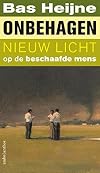
Bas Heijne is a Dutch essayist and columnist from the Netherlands. For this series he is asked to write his vision about cultural discontent in the framework of Freud's principle of lust. The principle of lust is one of the principles that Freud describes. The principle of lust is recognizable in the want for immediate satisfaction. The principle of reality suppresses the lust-principle. You want to have sex with your neighbor, but you say he looks nice today.
Dismanteling Autonomy
For Heijne, show more Freud's theoretical framework is valuable in describing society discontent. He argues that individuals are 'robbed' of there autonomy. Science points out that we are not free, mark(zuckerberg)ting makes clear our behavior can be predicted and managed, globalization robs us of our idea of an autonomic political area. Our scientific, economic and political discourse is dismantling the view that we are autonomous and shows that we are living in a complex reality.
Mixed messages
On the other hand, we are told that 'everything is possible'. That we are free to make our own choices. Most series for children show a reality where obstacles can be removed by making a wish. An great example of this 'paradox' between autonomy and a non-autonomous view on humans is Las Vegas. In the political reality outside the casino humans are treaded as free agents who are able to make their own choices. This changes as soon as they set foot inside the casino. All the lights, sounds and atmosphere treats humans exactly the opposite. As 'machines' that can be influenced with triggers.
Discontent
For Heijne, people are not accepting this complex reality. Because they want direct satisfaction large groups turn away from the principle of reality to fulfill their lust. An example is the way Trump (and his voters) deal with climate change. In the scientific community their is almost an 100% agreement that their is something wrong. The only thing Trump states is 'They want us to talk about climate change. I say: look outside, I see no climate change'. He promises a simple solution, reality is what we make of it. All you have to do is choose me.
What Freud's theoretical framework can show us is the seer disrespect for the reality principle in large groups of todays world. And Heijne makes include a lot of people in those groups - from populist to religious extremists. What connects them is their unwillingness to act in a complex society — to acknowledge the principle of reality.
Conclusion and looking forward
Is Heijne going to far? Can an American tea-party member be understood from the same principle as a second generation European extremist Muslim? The length of this essay (only round 70 pages) makes it hard to justify his broad statements. Still, at the end of the essay the writer states that those who acknowledge Freuds principle of reality will have the will to reform the world. Those who deny the principle of reality will want to destroy her (p.69). This seems to me a good measure for valuating Heijnes own essay.
He acknowledge the need for a 'simple' narrative. There is a human need for a myth, a narrative that binds people. Such a story was the EU after WWII. Today those stories are lost or too simplistic. We need to search for a story that includes human dark sides, the current Geo-political situation, the new ways of managing individual via marketing and political campaigns. In this Heijnes simplification is different, because he does not want to argue all difficulties away, he does not want to explain, but tries to search for a new way to be human in a complex world.
This all results in a readable essay that in my view is nice to read as a work in everlasting process. show less
Dismanteling Autonomy
For Heijne, show more Freud's theoretical framework is valuable in describing society discontent. He argues that individuals are 'robbed' of there autonomy. Science points out that we are not free, mark(zuckerberg)ting makes clear our behavior can be predicted and managed, globalization robs us of our idea of an autonomic political area. Our scientific, economic and political discourse is dismantling the view that we are autonomous and shows that we are living in a complex reality.
Mixed messages
On the other hand, we are told that 'everything is possible'. That we are free to make our own choices. Most series for children show a reality where obstacles can be removed by making a wish. An great example of this 'paradox' between autonomy and a non-autonomous view on humans is Las Vegas. In the political reality outside the casino humans are treaded as free agents who are able to make their own choices. This changes as soon as they set foot inside the casino. All the lights, sounds and atmosphere treats humans exactly the opposite. As 'machines' that can be influenced with triggers.
Discontent
For Heijne, people are not accepting this complex reality. Because they want direct satisfaction large groups turn away from the principle of reality to fulfill their lust. An example is the way Trump (and his voters) deal with climate change. In the scientific community their is almost an 100% agreement that their is something wrong. The only thing Trump states is 'They want us to talk about climate change. I say: look outside, I see no climate change'. He promises a simple solution, reality is what we make of it. All you have to do is choose me.
What Freud's theoretical framework can show us is the seer disrespect for the reality principle in large groups of todays world. And Heijne makes include a lot of people in those groups - from populist to religious extremists. What connects them is their unwillingness to act in a complex society — to acknowledge the principle of reality.
Conclusion and looking forward
Is Heijne going to far? Can an American tea-party member be understood from the same principle as a second generation European extremist Muslim? The length of this essay (only round 70 pages) makes it hard to justify his broad statements. Still, at the end of the essay the writer states that those who acknowledge Freuds principle of reality will have the will to reform the world. Those who deny the principle of reality will want to destroy her (p.69). This seems to me a good measure for valuating Heijnes own essay.
He acknowledge the need for a 'simple' narrative. There is a human need for a myth, a narrative that binds people. Such a story was the EU after WWII. Today those stories are lost or too simplistic. We need to search for a story that includes human dark sides, the current Geo-political situation, the new ways of managing individual via marketing and political campaigns. In this Heijnes simplification is different, because he does not want to argue all difficulties away, he does not want to explain, but tries to search for a new way to be human in a complex world.
This all results in a readable essay that in my view is nice to read as a work in everlasting process. show less

Within the world of Dutch letters, Louis Couperus has a status comparable to that of Marcel Proust. Therefore, one would expect that a book-long essay about Couperus and his work would cause a stir and some excitement, but apparently not. Angst en schoonheid. Louis Couperus, de mystiek der zichtbare dingen (Engl. "Fear and Beauty: Louis Couperus and the mysticism of the visual world") is a very interesting exploration of the works of Louis Couperus.
Bas Heijne writes that he has had a show more life-long interest in Couperus, and parts of the essay are reflections on his teaching creative writing using novels of Couperus as examples. The essay can roughly be divided into two parts, each pondering an idea of the author about aspects of Couperus.
The first part looks mainly at biographical aspects of Louis Couperus. The inspiration for this part is formed by the recent discovery of a film fragment of only 23 seconds, recorded on 9 June 1923, a few weeks before his death (p. 25). This fragment forms the basis of a broad speculation about Couperus as a person, suggesting that an explanation for Couperus' enormous productivity could be found in his urge to make himself invisible. According to this thesis, Couperus would hide in world he conjured up, assuming identity in his own novels. Pointing at the correspondence of Couperus, which is scant and mainly with his publisher, Heijne points out how particularly impersonal this correspondence is, mainly only about royalties and practical matters related to the publishing of his books. Couperus was also very sparse with comments about himself in interviews. Marcel Proust also did not write much correspondence.
Another motive for making himself invisible could perhaps be found in Couperus' homosexuality, a theme often embedded in his novels. In that view, Couperus would be masquerading in his work, assuming other identities in the form of characters in his novels. Couperus is often described as a very narcistic personality.
The other main thesis of the essay focuses on fear, particularly the fear experienced by the Dutch for the mysticism of the East. This part of the essay is merely a reformulation of a very well known motive in the work of Couperus centred on the novel De stille kracht (Engl The Hidden Force). Heijne's vivid descriptions seem to be based on the 1974 TV serial based on the novel.
The two theses of the essay are not very clearly connected, although there is a faint suggestion that Couperus "ghostly" appearance was a result of his fatique. Obviously, the essay discusses many of Couperus novels, mainly in relation to the author's personal development, and some contemporary novelists, besides.
The writing style of the essay is fluent and with ease. It is obvious that Heijne is in his element. The fragmented nature of the essay likely stems from the fact that it is based on previously published and unpublished material brought together. Regardless of the success of the essay as a unity or formation of a single coherent thesis, Angst en schoonheid. Louis Couperus, de mystiek der zichtbare dingen is a must read for those with an interest in Louis Couperus. show less
Bas Heijne writes that he has had a show more life-long interest in Couperus, and parts of the essay are reflections on his teaching creative writing using novels of Couperus as examples. The essay can roughly be divided into two parts, each pondering an idea of the author about aspects of Couperus.
The first part looks mainly at biographical aspects of Louis Couperus. The inspiration for this part is formed by the recent discovery of a film fragment of only 23 seconds, recorded on 9 June 1923, a few weeks before his death (p. 25). This fragment forms the basis of a broad speculation about Couperus as a person, suggesting that an explanation for Couperus' enormous productivity could be found in his urge to make himself invisible. According to this thesis, Couperus would hide in world he conjured up, assuming identity in his own novels. Pointing at the correspondence of Couperus, which is scant and mainly with his publisher, Heijne points out how particularly impersonal this correspondence is, mainly only about royalties and practical matters related to the publishing of his books. Couperus was also very sparse with comments about himself in interviews. Marcel Proust also did not write much correspondence.
Another motive for making himself invisible could perhaps be found in Couperus' homosexuality, a theme often embedded in his novels. In that view, Couperus would be masquerading in his work, assuming other identities in the form of characters in his novels. Couperus is often described as a very narcistic personality.
The other main thesis of the essay focuses on fear, particularly the fear experienced by the Dutch for the mysticism of the East. This part of the essay is merely a reformulation of a very well known motive in the work of Couperus centred on the novel De stille kracht (Engl The Hidden Force). Heijne's vivid descriptions seem to be based on the 1974 TV serial based on the novel.
The two theses of the essay are not very clearly connected, although there is a faint suggestion that Couperus "ghostly" appearance was a result of his fatique. Obviously, the essay discusses many of Couperus novels, mainly in relation to the author's personal development, and some contemporary novelists, besides.
The writing style of the essay is fluent and with ease. It is obvious that Heijne is in his element. The fragmented nature of the essay likely stems from the fact that it is based on previously published and unpublished material brought together. Regardless of the success of the essay as a unity or formation of a single coherent thesis, Angst en schoonheid. Louis Couperus, de mystiek der zichtbare dingen is a must read for those with an interest in Louis Couperus. show less
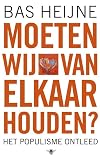
Een mooi voorbeeld van helder denken: Heijne ontwart de kluwen van het hedendaags politiek- en gemeenschapsdenken en brengt zo lucht. Na lezing voelde ik een bijna fysieke opluchting: we zijn ontheven van een definitief gelijk. We zijn opgeroepen onze blik en onze geest open te houden.
Lists
Awards


You May Also Like


Associated Authors
Statistics
- Works
- 54
- Also by
- 14
- Members
- 515
- Popularity
- #48,204
- Rating
- 3.8
- Reviews
- 19
- ISBNs
- 75
- Favorited
- 2
