The Frogs [in translation]
by Aristophanes
On This Page
Description
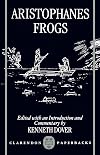
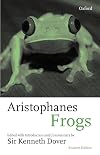
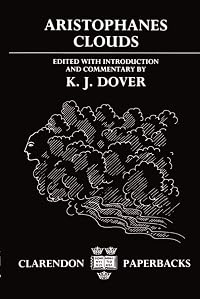
Among extant Greek comedies, the Frogs is unique for the light it throws on Classical Greek attitudes toward tragedy and literature in general. It merits a much more extensive commentary than it has so far received, and the establishment of the text itself has rested for over a century on collations which were inadequate and inaccurate. At the same time, its most problematic passages have been the subject, in recent years, of more scholarly articles than those of any other Greek play. In show more this introduction, edition, and commentary, Sir Kenneth Dover presents the relevant data, arguments, and considerations as fully as can reasonably be done in one volume. show lessTags
Recommendations








Member Reviews
Gracioso en ocasiones, la partes con los siervos son buenisimas.
Pero muchas de las bromas se refieren a trozos de obras de la epoca. Mi edicion afortunadamente tenia muchas notas a pie de pagina pero aun asi era muy dificil seguir las bromas. Mas bien los insultos que se tiraban los unos a los otros.
No me cabe duda que en la epoca fue lo maximo pero ahora mismo o al menos para mi sin tener conocimiento de las otras obras me perdi las partes mas graciosas.
Pero muchas de las bromas se refieren a trozos de obras de la epoca. Mi edicion afortunadamente tenia muchas notas a pie de pagina pero aun asi era muy dificil seguir las bromas. Mas bien los insultos que se tiraban los unos a los otros.
No me cabe duda que en la epoca fue lo maximo pero ahora mismo o al menos para mi sin tener conocimiento de las otras obras me perdi las partes mas graciosas.
I thought it was about time that I did something about my lack of a "classical" education and found this in the bargains section so why not. I'd tried once before......attending a production of "The birds" which was produced by my Philosophy lecturer. Suffice to say, I had no idea what was going on and was profoundly bored. So same playwright and an animal theme....what did I have to lose apart from an hour or two of my time. Ok. I've read it and even read the accompanying notes which were pretty helpful. Clearly, it would have even been more helpful to be a native Athenian at the time the plays were being produced...because a lot of the humour is clearly focused on well known individuals etc. Even the audience is berated for their show more shortcomings. However, I'm afraid that the subtlety of the plot with Aeschylus as the old master dramatist being offset against the newer trendier Euripides....and Aeschylus seemingly coming out on top. I must say that I was expecting a lot more from the frogs but they only seem to appear during the boat ride across the lake with the boatman Charon. And that's it. Nor do they seem to add a great deal of content.
So am I any the wiser for my reading? Not much. I think I will have to read a few more of these classic plays and do the background research to understand what they were really writing about. There was the odd spot where even I could pick up the humour ...such as when they are trying to prove their immortality by not feeling pain when whipped. But (like most humour) it doesn't survive translation or change in context too well.
I'll give it the benefit of the doubt but it's hard going so only one star from me. show less
So am I any the wiser for my reading? Not much. I think I will have to read a few more of these classic plays and do the background research to understand what they were really writing about. There was the odd spot where even I could pick up the humour ...such as when they are trying to prove their immortality by not feeling pain when whipped. But (like most humour) it doesn't survive translation or change in context too well.
I'll give it the benefit of the doubt but it's hard going so only one star from me. show less
While parts of this play were opaque to me (I assume references to other classical Greek plays that I have not read), other sections were quite amusing. I particularly enjoyed the fight between Aeschylus and Euripides for the position of best (dead) writer of tragedy!
Gracioso en ocasiones, la partes con los siervos son buenisimas.
Pero muchas de las bromas se refieren a trozos de obras de la epoca. Mi edicion afortunadamente tenia muchas notas a pie de pagina pero aun asi era muy dificil seguir las bromas. Mas bien los insultos que se tiraban los unos a los otros.
No me cabe duda que en la epoca fue lo maximo pero ahora mismo o al menos para mi sin tener conocimiento de las otras obras me perdi las partes mas graciosas.
Pero muchas de las bromas se refieren a trozos de obras de la epoca. Mi edicion afortunadamente tenia muchas notas a pie de pagina pero aun asi era muy dificil seguir las bromas. Mas bien los insultos que se tiraban los unos a los otros.
No me cabe duda que en la epoca fue lo maximo pero ahora mismo o al menos para mi sin tener conocimiento de las otras obras me perdi las partes mas graciosas.
As is well known, the god Dionysus likes to bring Euripides, who has recently died, back to the quick. But when he comes to Hades, it turns out to become a competition between Euripides and Aeschylus, who is the greater poet. Now, who should be saved? I saw the play in the sixties. In a South-German fringe theatre. With croaking from an audio tape.
While parts of this play were opaque to me (I assume references to other classical Greek plays that I have not read), other sections were quite amusing. I particularly enjoyed the fight between Aeschylus and Euripides for the position of best (dead) writer of tragedy!
A very interesting musical, with a very specific setting. It's in many ways very similar to Aristophanes Frogs with Bernard Shaw and William Shakespeare instead of greek playwrights. It's enjoyable, but I was left with the feeling there was something not quite right about the show, though it may be the visual spectacle of seeing the show is what's missing from my experience.
Members
- Recently Added By
Lists

Plays I Like
230 works; 31 members

Favourite Books
1,819 works; 316 members

Books Read in 2016
4,666 works; 199 members

Favourite Greek Books
97 works; 1 member

100 Books to Read in a Lifetime (That Are Older Than 200 Years)
415 works; 175 members

Authors from Greece
3 works; 1 member

Greatest Books, allegedly
484 works; 9 members
My Play Collection
769 works; 3 members

Next Plays / 2025
352 works; 1 member

Fav. Stage Plays / First-Time Watched / Listened To / 2025
20 works; 1 member

In Our Time books
4,934 works; 2 members
Author Information

Aristophanes, 448 b.c. - 385 b.c. Aristophanes is considered to be one of the greatest comedic writers ever to have taken to the stage. He was born in Athens, Greece, in the town of Cydathenaeum. Aristophanes is believed to have been well educated, which would explain his propensity towards words. It is also believed that he owned land on the show more island of Aegina. Aristophanes was first a satirist, he was well known for attacking anything from politics to poets, mainly the war between Sparta and Athens and the poet Euripides. He wrote more than 40, eleven of which are still being acted today. "The Acharnians" was his first play, written in 425, B.C.. This was the first of his plays in reaction to the war, as well as the play "Peace." But perhaps Aristophanes most famous play, Lysistrata, made his true feelings of the war known. In this play, the women seek peace by claiming celibacy until the fighting is stopped. It is the play that he is most famous for, for capturing the feeling of the people in a way that was both lighthearted and poignant. Aristophanes died three years after the war ended, in 385, B.C.,but left behind a legacy that has lasted to the present day. (Bowker Author Biography) show less
All Editions
Some Editions
Awards and Honors
Notable Lists
Series
Belongs to Publisher Series
Work Relationships
Is contained in
Aristophanis Comoediae. Tomus II: Lysistratam, Thesmophoriazusas, Ranas, Ecclesiazusae, Plutum, Fragmenta, Indicem Nominum continens (Oxford Classical Text) by Aristophanes
6 Plays: Birds / Lysistrata / Women at the Thesmophoria / Frogs / Assembly-Women / Wealth by Aristophanes
8 Plays: Assembly-Women / Birds / Clouds / Frogs / Lysistrata / Peace / Wasps / Women at the Thesmophoria by Aristophanes
Has the adaptation
Is abridged in
Has as a reference guide/companion
Has as a student's study guide
Common Knowledge
- Canonical title
- The Frogs [in translation]
- Original title
- Βάτραχοι
- Alternate titles
- Ranae; Frogs
- Original publication date
- 405 BCE; 405 BC
- People/Characters
- Aeschylus; Amynias
- Important places
- the Academy; Attica, Greece
- First words
- Nella Germania del primo dopoguerra il ragazzo Elias Canetti legge Aristofane; e allorché nel Frutto del fuoco egli rievocherà quel periodo, il suo ricordo gli apparirà "totalmente dominato dalla turbolenza degli av... (show all)venimenti pubblici e insieme, come se si trattasse dello stesso mondo, dalle commedie di Aristofane, nell'impressione violenta della prima lettura". "Avrei dovuto essere cieco per non notare la somiglianza con ciò che vedevo intorno a me... Si potrebbe dire che lo sguardo crudele di Aristofane offriva l'unica possibilità di tenere unito ciò che si frantumava in mille schegge."
INTRODUZIONE - Last words
- (Click to show. Warning: May contain spoilers.)Il tema esplicito delle Rane è un dibattito sulla tragedia: ma per un altro lato l'indagine coinvolge l'essenza del fatto teatrale, e oltrepassa la distinzione tra i generi. La dimensione itinerante della prima parte, l'abbandono della scena fossa in una misura inusitata allo stesso Aristofane, non rifletterà pure un'allusione alle forme preistoriche della commedia, al ramingo χωμος di Dioniso che ne costituì il nucleo genetico? Con le Rane non si esaurisce la carriera di Aristofane, che proietterà la sua inventiva verso nuovi orizzonti: ma quest'ipera chiude la prima e forse massima epoca del teatro - e dell'opera ultima ha molti caratteri. Il suo messaggio è una meditazione storica e strutturale dell'evento teatrale: così come Shakespeare concluderà la sua esistenza di drammaturgo con la sublime metafora del teatro che è la Tempesta.
INTRODUZIONE - Original language
- Ancient Greek
- Disambiguation notice
- This contains Aristophanes' play The Frogs in translation. Do not combine with editions containing the ancient Greek text.
Classifications
- Genre
- Fiction and Literature
- DDC/MDS
- 882.01 — Literature & rhetoric Classical & modern Greek literatures Classical Greek dramatic poetry and drama standard subdivisions; collections; history, description, critical appraisal; Specific periods Ancient period to ca. 499
- LCC
- PA3877 .R3 — Language and Literature Greek language and literature. Latin language and literature Greek literature Individual authors
- BISAC
Statistics
- Members
- 787
- Popularity
- 35,445
- Reviews
- 16
- Rating
- (3.52)
- Languages
- 15 — Bengali, Catalan, Danish, Dutch, English, French, German, Greek (Ancient), Greek, Italian, Norwegian (Bokmål), Portuguese, Russian, Serbian, Spanish
- Media
- Paper, Ebook
- ISBNs
- 77
- ASINs
- 27