
Gloriana
by Michael Moorcock
On This Page
Description
Gloriana rules an Albion whose empire embraces America and most of Asia. A new Golden Age of peace, enlightenment and prosperity has dawned. Gloriana is Albion and Albion is Gloriana; if one falls, so too will the other. And Gloriana is oppressed by the burden this places upon her - and by the fact that she remains incapable of orgasm. The maintenance of the delicate balance that keeps Albion and Gloriana thriving depends of Montfallcon, Gloriana¿s Chancellor, and on his network of spies show more and assassins - in particular on Quire, cold hearted seducer of virtue and murderer of innocence. When Quire falls out with Montfallcon, he forms an alliance with his greatest enemy and conceives a plan to ruin Gloriana, destroy Albion, the empire and the Golden Age itself. But even the utterly ruthless Quire does not fully understand what he has set in motion when he persuades the Queen to fall in love with him... Moorcock¿s masterly evocation of Gloriana¿s strange and secretive palace and of a vibrant London make this one of his most powerful and memorable novels. show lessTags
Recommendations





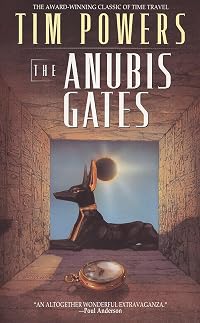
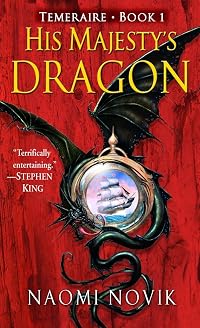


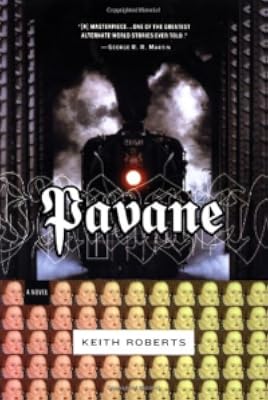
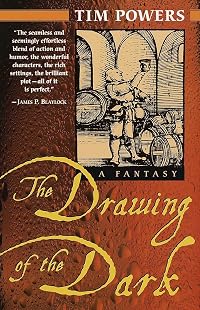


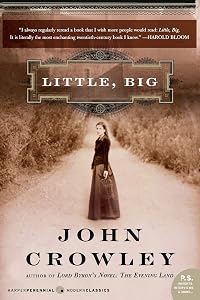
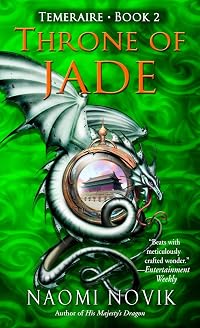
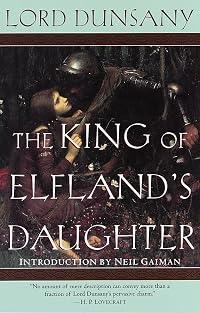
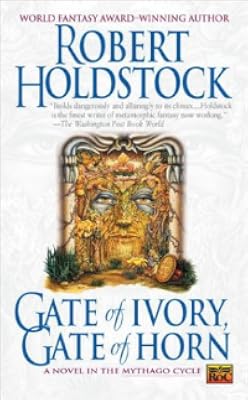

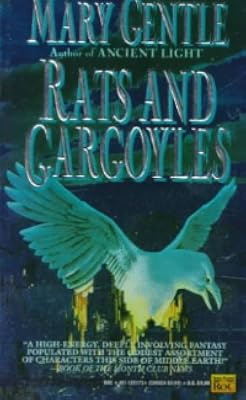
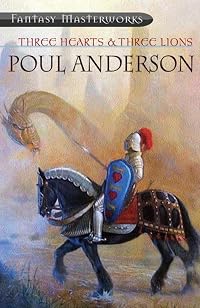
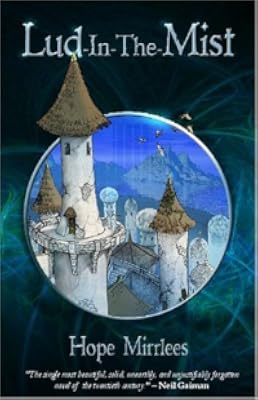
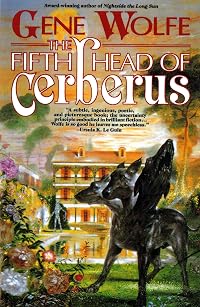








Member Recommendations
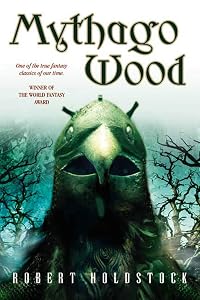
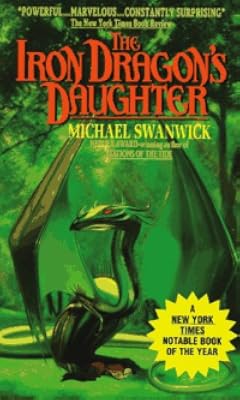
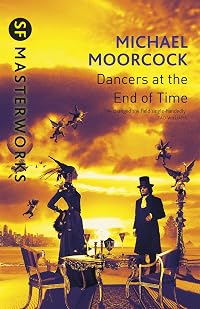
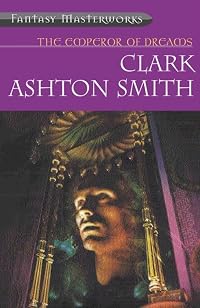
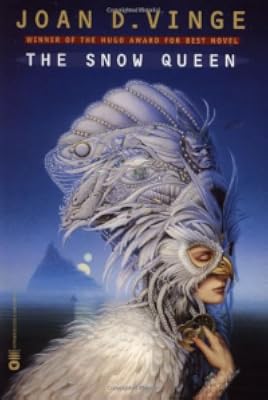
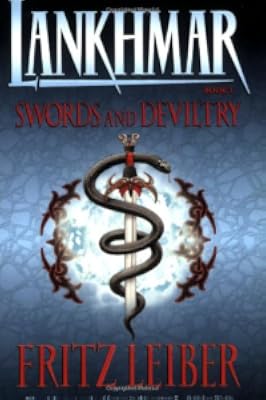
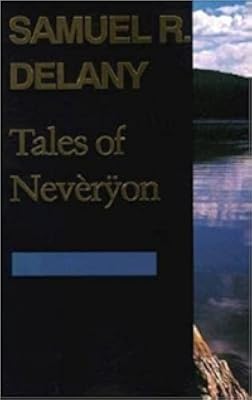
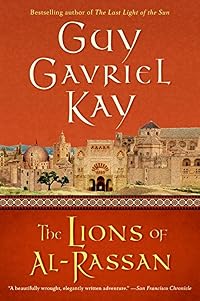
ed.pendragon Both fantasy titles explore the seedy underbelly of London, one in Tudor times, the other more recently in London Below.
Member Reviews
Moorcock's writing oscillates between excellence and bullshit so dramatically and with such frequency that it's dizzying. Nowhere is this better exemplified then with this book, which was promised as courtly intrigue that takes place in Spencer's Fairy Queene. There are few things that could mar such an outstanding premise. One of those things is a persistent misogyny built into the very foundation of the plot.
Moorcock is a well poisoner. No one can ever write an erotic romp through a Shakespearean fantasy setting ever again. The ur-text of such a tantalizing genre is inescapably rape apologia.
Moorcock is a well poisoner. No one can ever write an erotic romp through a Shakespearean fantasy setting ever again. The ur-text of such a tantalizing genre is inescapably rape apologia.
A book that shows that Moorcock can really write and think.
This Gothic Elizabethan fantasy shows an alternate world (in which Moorcock specialises) which clearly, consciously or not in his successors' cases, is part of the same fantasy complexes of Philip Pullman, Neil Gaiman and the American Tim Powers. This is not steam-punk perhaps but sail-punk.
Hidden within the folds of the story (and Moorcock folds his stories in time and space like the folds of a rose) are some serious ruminations on power and myth, a theme running through so many of his works. In this case, the myth is that of Albion and what it is to be British - things never stated, only entered by stealth into the readers' soul.
Alan Moore does similar things in his graphic show more work and there is a school here of occult trickster nationalism exploiting the global market in a world of paradox and mirrors. John Dee, it would seem, still lives in the darker recesses of Anglo culture.
American capital so often transforms these myths into worldwide phenomena - as we have seen with Angelina Jolie's appearance in Beowulf - but one day somebody clever will expose its quiet influence on why many Britons have come to think so little of their leaders ... and why Americans still do not really understand their closest ally. Paradox and trickery ... a great book. show less
This Gothic Elizabethan fantasy shows an alternate world (in which Moorcock specialises) which clearly, consciously or not in his successors' cases, is part of the same fantasy complexes of Philip Pullman, Neil Gaiman and the American Tim Powers. This is not steam-punk perhaps but sail-punk.
Hidden within the folds of the story (and Moorcock folds his stories in time and space like the folds of a rose) are some serious ruminations on power and myth, a theme running through so many of his works. In this case, the myth is that of Albion and what it is to be British - things never stated, only entered by stealth into the readers' soul.
Alan Moore does similar things in his graphic show more work and there is a school here of occult trickster nationalism exploiting the global market in a world of paradox and mirrors. John Dee, it would seem, still lives in the darker recesses of Anglo culture.
American capital so often transforms these myths into worldwide phenomena - as we have seen with Angelina Jolie's appearance in Beowulf - but one day somebody clever will expose its quiet influence on why many Britons have come to think so little of their leaders ... and why Americans still do not really understand their closest ally. Paradox and trickery ... a great book. show less
I read this for a book club, but it's the kind of book I like anyway.
Moorcock dedicated this book to the memory of Mervyn Peake, and it is indeed very Ghormanghastly. The huge palace with its complex of interlinked buildings and roofed-in alleyways, hidden rooms and secret passages behind the walls is a perfect setting for a tale of courtly intrigue, spying and seduction. I was glad to find that it has a straight-forward narrative, unlike some of his other books such as the Jerry Cornelius novels, where you have to keep your wits about you to keep up with what is going on.
The story is set in an alternative history version of Elizabethan England. Instead of England in the throes of the Reformation, we have Albion where Christianity and show more Islam do not appear to exist and it is still the pagan feasts of Yule and May Day that are celebrated at court. There are mentions of a 'High Tongue' that presumably is something other than Latin. Gloriana's empire encompasses the Americas and much of Asia, and the American diplomats at her court include representatives of the Sioux and the Aztecs as well as of the Europeans who have settled in Virginia.
"The corruption lies in the fact that a myth was used to manufacture an imitation of reality. Could Albion fall so swiftly if the foundations were secure?" show less
Moorcock dedicated this book to the memory of Mervyn Peake, and it is indeed very Ghormanghastly. The huge palace with its complex of interlinked buildings and roofed-in alleyways, hidden rooms and secret passages behind the walls is a perfect setting for a tale of courtly intrigue, spying and seduction. I was glad to find that it has a straight-forward narrative, unlike some of his other books such as the Jerry Cornelius novels, where you have to keep your wits about you to keep up with what is going on.
The story is set in an alternative history version of Elizabethan England. Instead of England in the throes of the Reformation, we have Albion where Christianity and show more Islam do not appear to exist and it is still the pagan feasts of Yule and May Day that are celebrated at court. There are mentions of a 'High Tongue' that presumably is something other than Latin. Gloriana's empire encompasses the Americas and much of Asia, and the American diplomats at her court include representatives of the Sioux and the Aztecs as well as of the Europeans who have settled in Virginia.
"The corruption lies in the fact that a myth was used to manufacture an imitation of reality. Could Albion fall so swiftly if the foundations were secure?" show less
I genuinely didn’t think I was going to like this. I’ve only had one encounter with Michael Moorcock before and that was in my early teens, when I found a copy of Behold the Man among my dad’s 1970s sci-fi books in the attic, and was promptly traumatised. Not that I was religious or anything like that. I was just shocked to see Jesus and the Virgin Mary depicted in such a way. What an innocent I was. Youthful shocks have an impact, though, and I’ve steered away from Moorcock ever since, thinking him far too weird for me (I have the same feeling about Alasdair Gray). But times change. I recently found myself looking at Gloriana in the library. It was an allegory, a fable, a Tudor history set in an alternate universe, an show more Elizabethan extravaganza. Why not give it a shot? So I did. And, Reader, I liked it. There was one scene I didn’t like, true, but for the most part I was utterly absorbed by this sprawling, dense jungle of a book, which wears its affection for Mervyn Peake’s Gormenghast very clearly on its sleeve. A seething stew of sex and sycophancy, full of tunnels and intrigue and secrets and bravos and debauchery and honour and twisted goodness and dreams and hope and horror… it defies description...
Nevertheless, I try. For the blog post, see here:
https://theidlewoman.net/2019/02/01/gloriana-michael-moorcock/ show less
Nevertheless, I try. For the blog post, see here:
https://theidlewoman.net/2019/02/01/gloriana-michael-moorcock/ show less
Moorcock has posited himself as the rebel of fantasy, sapping the high walls built by Howard and Tolkien. He is a well-spoken and thoughtful critic of the complete lack of romance in either of these would-be romances, but the love in Gloriana's court is anything but courtly.
There is a delightful Quentin Crisp quote about how innovation is not 'seeing your neighbor to the left has a straight walk and your neighbor to the right a curved and thence making your own diagonal', suffice it to say that contrariness is not the mother of invention.
Moorcock's Elric was, in many ways, written to be contrary; to be the antithesis of the fantasy that came before. However, Moorcock is not being contrary in this case. In fact, he's not even being show more particularly original. In most regards, Gloriana reads like an abridged Elizabethan take on Peake's Gormenghast books (which, incidentally, are the origin of Crisp's quotation, by way of his introduction).
Gloriana is considered by highfalutin Moorcock fans to be perhaps his most remarkable and original work. It is certainly in no way genre Fantasy, and though the characters may not be easy to empathize with, you certainly won't be stuck resenting them for flimsily facaded archetypes.
Though they are not based upon those same silly cliches, they are still immediately as one-dimensional and unchanging. The book is really nothing so much as an eroticized rewrite of Peake, and Moorcock does not have the capacious wit necessary to evoke Peake. It is more of a fond imitation than a reimagining.
That being said, it takes a skilled writer to draw any comparisons to Peake, even when that's precisely what they are trying to do.
The book will also teach you the word 'seraglio'; a one which I hope to have more and more a need to use in the future, hopefully in the same sentence as 'odalisque'. show less
There is a delightful Quentin Crisp quote about how innovation is not 'seeing your neighbor to the left has a straight walk and your neighbor to the right a curved and thence making your own diagonal', suffice it to say that contrariness is not the mother of invention.
Moorcock's Elric was, in many ways, written to be contrary; to be the antithesis of the fantasy that came before. However, Moorcock is not being contrary in this case. In fact, he's not even being show more particularly original. In most regards, Gloriana reads like an abridged Elizabethan take on Peake's Gormenghast books (which, incidentally, are the origin of Crisp's quotation, by way of his introduction).
Gloriana is considered by highfalutin Moorcock fans to be perhaps his most remarkable and original work. It is certainly in no way genre Fantasy, and though the characters may not be easy to empathize with, you certainly won't be stuck resenting them for flimsily facaded archetypes.
Though they are not based upon those same silly cliches, they are still immediately as one-dimensional and unchanging. The book is really nothing so much as an eroticized rewrite of Peake, and Moorcock does not have the capacious wit necessary to evoke Peake. It is more of a fond imitation than a reimagining.
That being said, it takes a skilled writer to draw any comparisons to Peake, even when that's precisely what they are trying to do.
The book will also teach you the word 'seraglio'; a one which I hope to have more and more a need to use in the future, hopefully in the same sentence as 'odalisque'. show less
One of Moorcock's best novels and so a classic of fantasy. A symbolic tale beautifully structured around the four seasons. The main influences are Mervyn Peake and the decadent writers of the late 19th Century, but Moorcock creates something original out of these; an alternative 'Elizabethan' London dominated by a palace of complex dimensions that rivels Gormanghast and a Queen (Gloriania) both with human emotions and symbolic of virtue.
Elizabethan but not Elizabeth~she is unfufilled because she cannot be fufilled (no matter how hard she tries~and believe me she tries.) Starts off wonderfully, then sort of devolves~a little too degenerate but very interesting at that
Members
- Recently Added By
Lists

Best Alternate History
111 works; 60 members

Fantasy Masterworks
66 works; 5 members

David Pringle's Modern Fantasy: The 100 Best Novels
100 works; 5 members
Modern Arthurian Fiction
237 works; 16 members

Works Referenced in The League of Extraordinary Gentlemen
122 works; 6 members
Author Information

659+ Works 65,189 Members
Michael Moorcock, 1939 - Writer Michael Moorcock was born December 18, 1939 in Mitcham, Surrey, England. Moorcock was the editor of the juvenile magazine Tarzan Adventures from 1956-58, an editor and writer for the Sexton Blake Library and for comic strips and children's annuals from 1959-61, an editor and pamphleteer for Liberal Party in 1962, show more and became editor and publisher for the science fiction magazine New Worlds in 1964. He has worked as a singer-guitarist, has worked with the rock bands Hawkwind and Blue Oyster Cult and is a member of the rock band Michael Moorcock and the Deep Fix. Moorcock's writing covers a wide range of science fiction and fantasy genres. "The Chronicles of Castle Brass" was a sword and sorcery novel, and "Breakfast in the Ruins: A Novel of Inhumanity" uses the character Karl Glogauer as a different person in different times. Karl participates in the political violence of the French Revolution, the Paris Commune, and a Nazi concentration camp. Moorcock also wrote books and stories that featured the character Jerry Cornelius, who had no consistent character or appearance. "The Condition of Muzak" completed the initial Jerry Cornelius tetralogy and won Guardian Literary Prize in 1977. "Byzantium Endures" and "The Laughter of Carthage" are two autobiographical novels of the Russian emigre Colonel Pyat and were the closest Moorcock came to conventional literary fiction. "Byzantium Endures" focuses on the first twenty years of Pyat's life and tells of his role in the Russian revolution. Pyat survives the revolution and the subsequent civil war by working first for one side and then another. "The Laughter of Carthage" covers Pyat's life from 1920-1924 telling of his escape from Communist Russia and his travels in Europe and America. It's a sweeping picture of the world during the 1920's because it takes the character from living in Constantinople to Hollywood. Moorcock returned to the New Wave style in "Blood: A Southern Fantasy" (1994) and combined mainstream fiction with fantasy in "The Brothel of Rosenstrasse," which is set in the imaginary city of Mirenburg. MoorCock won the 1967 Nebula Award for Behold the Man and the 1979 World Fantasy Award for his novel, Gloriana. (Bowker Author Biography) show less
Some Editions
Awards and Honors
Awards
Notable Lists
Series
Belongs to Publisher Series
Common Knowledge
- Canonical title*
- Gloriana oder Die unerfüllte Königin
- Original title
- Gloriana, or The Unfulfill'd Queen
- Original publication date
- 1978
- People/Characters
- Queen Gloriana I of Albion (Elizabeth I, Queen of England); Lord Perion Montfallcon; Captain Arturo Quire; Countess Una of Scaith; Sir Thomasin Ffyne; John Dee (show all 9); Ernest Wheldrake; Lady Mary Perrott; Adolf Hitler (mentioned)
- Dedication
- Dedicated to the
Memory of
Mervyn Peake - First words
- The palace is as large as a good-sized town, for through the centuries its outbuildings, its lodges, its guest houses, the mansions of its lords and ladies in waiting, have been linked by covered ways, and those covered ways ... (show all)roofed, in turn, so that here and there we find corridors within corridors, like conduits in a tunnel, houses within rooms, those rooms within castles, those castles within artificial caverns, the whole roofed again with tiles of gold and platinum and silver, marble and mother-of-pearl, so that the palace glares with a thousand colors in the sunlight, shimmers constantly in the moonlight, its walls appearing to undulate, its roofs to rise and fall like a glamorous tide, its towers and minarets lifting like the masts and hulks of sinking ships.
- Last words
- (Click to show. Warning: May contain spoilers.)And behind them will be the palace, with its glinting domes and roofs rising and falling like a glamorous tide; its towers and minarets lifting like masts and hulks of sinking ships.
- Original language
- English
*Some information comes from Common Knowledge in other languages. Click "Edit" for more information.
Classifications
Statistics
- Members
- 1,200
- Popularity
- 20,787
- Reviews
- 9
- Rating
- (3.63)
- Languages
- 8 — Dutch, English, French, German, Hungarian, Italian, Polish, Spanish
- Media
- Paper, Ebook
- ISBNs
- 27
- UPCs
- 1
- ASINs
- 9