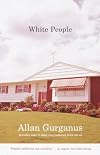
White People
by Allan Gurganus
On This Page
Description
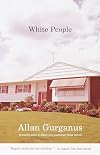
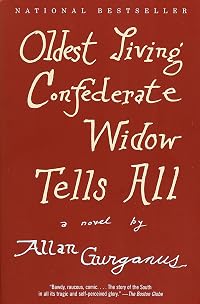
From Allan Gurganus, author of the beloved, bestselling Oldest Living Confederate Widow Tells All and winner of the Sue Kaufman Prize for First Fiction from the American Academy and Institute of Arts and Letters, here are eleven masterful works of short fiction. First seen in The New, Yorker, Harper's, the Paris Review, Granta, and elsewhere, they are darkly comic stories and novellas about love and money among American WASPs, that majority outnumbered, outflanked, and somewhat out of love show more with itself. show lessTags
Recommendations














Member Reviews
I had no expectations of this novel. It was suggested to me by a friend who is usually trustworthy. So when I started reading, I was just heart-wrenchingly captured by the first chapter, a description of the family dynamic between a WW2 era father and his two sons. By page 17 I was so enamoured of the characters...so imagine my surprise when Chapter 2 was a completely different narrative of a different family.
This book appears to be a series of essays...perhaps an ethnographic review of the lives of white people, most of the stories coming from the southern United States.
A quaint enough idea and yet there is so much missing. One of the essays "Nativity: Caucasian" describes a birth at an upstanding stereotypical bridge tournament, with show more wealthy southern US women reflecting their "white women" identity.
As I am sure many different cultural groups feel when a work is meant to portray their ethnic beliefs, I found this horribly shallow. I wished that the essays covered a more diverse range of personality. Or perhaps the diversity within the "white culture" and why not discuss racial issues that are foundational in the white experience? For instance, if we are going to talk about southern white folk, we had just as well talk about how the white southern identity is built around the systematic oppression and forced migration of the entire continent of Africa, and how the culture of oppression has defined white culture in the south.
I would be lying if I said that my review of this book is not affected by my own ethnicity, or the fact that I live in Canada and have a difficult time identifying with the southern white experience. And Gurganus does write lovely prose (which is why he gets my 3-1/2 stars). I guess I am just rubbed the wrong way by the title.
This book is good for
1) people interested in narrative studies of ethnic groups
2) people interested in reading short essays before bed
3) those experiencing sexuality conflicts, especially men
4) individuals questioning identity
I would not recommend this novel for, say, someone from another cultural group wanting to learn more about "white people." Maybe the title should be Southern Entitled Whiners. show less
This book appears to be a series of essays...perhaps an ethnographic review of the lives of white people, most of the stories coming from the southern United States.
A quaint enough idea and yet there is so much missing. One of the essays "Nativity: Caucasian" describes a birth at an upstanding stereotypical bridge tournament, with show more wealthy southern US women reflecting their "white women" identity.
As I am sure many different cultural groups feel when a work is meant to portray their ethnic beliefs, I found this horribly shallow. I wished that the essays covered a more diverse range of personality. Or perhaps the diversity within the "white culture" and why not discuss racial issues that are foundational in the white experience? For instance, if we are going to talk about southern white folk, we had just as well talk about how the white southern identity is built around the systematic oppression and forced migration of the entire continent of Africa, and how the culture of oppression has defined white culture in the south.
I would be lying if I said that my review of this book is not affected by my own ethnicity, or the fact that I live in Canada and have a difficult time identifying with the southern white experience. And Gurganus does write lovely prose (which is why he gets my 3-1/2 stars). I guess I am just rubbed the wrong way by the title.
This book is good for
1) people interested in narrative studies of ethnic groups
2) people interested in reading short essays before bed
3) those experiencing sexuality conflicts, especially men
4) individuals questioning identity
I would not recommend this novel for, say, someone from another cultural group wanting to learn more about "white people." Maybe the title should be Southern Entitled Whiners. show less
What a great collection - the last was the most moving, Blessed Assurance. I liked how some of the characters overlapped from previous stories. Only one in this collection I just wasn't able to get through, the rest were all excellent in their own way. A blend of Flannery O'Connor with John Cheever.
Loved this book. Has totally made me obsessed with short stories.
In the short story 'Art History', an elderly former teacher takes two young boys to stay in a hotel and signs them in as his grandsons. One of them later reports that he was sexually abused.
how the hell do i read this online?
Ratings
Members
- Recently Added By
Lists

Pen/Faulkner Winners and Finalists
178 works; 9 members
Author Information

30+ Works 2,961 Members
In 1966, as a conscientious objector faced with possible charges of draft evasion during the Vietnam War, Allan Gurganus found himself on a four-year tour as a message decoder on an aircraft carrier. While at sea, Gurganus, who had studied to be a painter, developed the idea for his first successful novel, Oldest Living Confederate Widow Tells All show more (1989) after reading an article that described how Confederate veterans were granted pensions in the 1880s, making them prime marital candidates for much younger women. The novel features Lucy Marsden, a feisty ninety-nine-year-old North Carolina widow, and spans the 1850s to the 1980s. Gurganus's subsequent books include Blessed Assurance: A Moral Tale (1989), The Practical Heart (1993), and Plays Well With Others (1997). He has written a number of short stories that have appeared in periodicals such as Granta, The New York Times, The New Yorker, Harper's, and Paris Review, and in books such as The Faber Book of Short Gay Fiction (1991). Eleven of his short stories are collected in The White People (1991). Gurganus was born in Rocky Mount, North Carolina, in 1947 and graduated from Sarah Lawrence College (B.A., 1972) and the University of Iowa Writers' Workshop (M.F.A., 1974). He has taught fiction writing at University of Iowa, Stanford University, Duke University, Sarah Lawrence College and the University of Iowa Writers' Workshop, and has had his paintings displayed in many private and public collections. (Bowker Author Biography) Allan Gurganus lives in a small town in North Carolina. The title novella of this book won the National Magazine Prize, & his other honors include the Los Angeles Times Book Prize, the Southern Book Prize, & the Sue Kaufman Prize from the American Academy of Arts & Letters. (Publisher Provided) show less
Awards and Honors
Classifications
Statistics
- Members
- 339
- Popularity
- 93,414
- Reviews
- 5
- Rating
- (3.61)
- Languages
- English, Spanish
- Media
- Paper, Audiobook, Ebook
- ISBNs
- 10
- ASINs
- 6