On This Page
Description
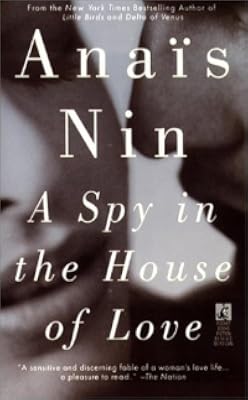
Beautiful, bored and bourgeoise, Sabina leads a double life inspired by her relentless desire for brief encounters with near-strangers. Fired into faithlessness by a desperate longing for sexual fulfilment, she weaves a sensual web of deceit across New York. But when the secrecy of her affairs becomes too much to bear, Sabina makes a late night phone-call to a stranger from a bar, and begins a confession that captivates the unknown man and soon inspires him to seek her out...Tags
Recommendations








Member Reviews
Moglie dolcissima e mite, amante appassionata e bugiarda, Sabina, la protagonista di Una spia nella casa dell'amore, è una donna dalle innumerevoli sfaccettature che cerca la propria identità inseguendo contemporaneamente molti amori. L'unione con il marito le dà sicurezza, ma non la soddisfa appieno, perché un solo amore non riesce a far vibrare in lei le infinite corde della sua sensualità. Durante le molteplici peregrinazioni amorose, Sabina ritrova negli altri uomini il riflesso del suo io spezzato che però non le corrisponde mai esattamente.
I often find parallels between what I'm reading and what I'm watching and with A Spy in the House of Love I find an affinity between the book and a film, Dark City if that film were told from the point of view of John's "wife" and I also see an affinity with the anime series, Serial Experiements Lain. In all three cases they are stories of women struggling to find themselves among the artifice in which they live, whether it is self created or created by others. To put in terms the book uses, Sabina is like Duchamp's painting of Nude Descending a Staircase; she is a series of frames, a moment of action captured on canvas, but not a single destilled representation of that woman. No one will know what that woman looked like but they will show more know how she walked down the steps.
Sabina has memories of past loves, past adventures, past meetings but so current feeling of who she is. She is a name. She has a husband who loves her dearly but she is constantly running from him looking for love among her artist friends. There is also clearly a strong note of autobiography in the last third of the book where Sabina meets up with the artist's enclave in New York and that gives this otherwise sensuous tale a note of sadness. show less
Sabina has memories of past loves, past adventures, past meetings but so current feeling of who she is. She is a name. She has a husband who loves her dearly but she is constantly running from him looking for love among her artist friends. There is also clearly a strong note of autobiography in the last third of the book where Sabina meets up with the artist's enclave in New York and that gives this otherwise sensuous tale a note of sadness. show less
Pas på med at bade i måneskin, og lad være med at se en døende ind i øjnene. Got it! Her er et citat fra bogen:
"Høj feber og intet klimaks - vrede, vrede - over denne kerne, der ikke vil opløses, selv om Sabina ønsker at være som manden og frit kunne besidde og begære i eventyr, nyde en fremmed" (s. 36)
Sabina er gift, men har adskillige, overlappende affærer. Hendes liv er kortvarige højdepunkter og langvarige perioder med skyld.
Jeg er ikke sikker på hvad jeg mener om slutningen, eller forstår hvad der sker, om løgneafsløreren er en rigtig person eller "bare" en personificering af Sabinas skyldfølelse. Men jeg kunne virkelig godt lide at Sabinas kvaler over de mange roller hun spiller bliver sat op mod at hun selv show more kun så én side af sin mand og sine elskere og ikke ledte efter andre. show less
"Høj feber og intet klimaks - vrede, vrede - over denne kerne, der ikke vil opløses, selv om Sabina ønsker at være som manden og frit kunne besidde og begære i eventyr, nyde en fremmed" (s. 36)
Sabina er gift, men har adskillige, overlappende affærer. Hendes liv er kortvarige højdepunkter og langvarige perioder med skyld.
Jeg er ikke sikker på hvad jeg mener om slutningen, eller forstår hvad der sker,
Anais Nin in an “iridescent” fashion describes the immense guilt an affluent woman in a post-WWII man's world must endure. Posing as many people and taking on new roles to fulfill this obligation, reading house of love is like sauntering through promiscuity. Most likely why so many musicians were taken by the book, namely the Lizard King himself who made a pansy out of Dionysus, Mr. Jim Morrison. Born ten years earlier, the two would have pulsatile lovers.
[i] "The new self she offered him, created for him, appeared intensely innocent, newer than any young girl could have been, because it was like a pure abstraction of a woman, an idealized figure, not born of what she was, but of his wish and hers. She even altered her rhythm for show more him, surrendered her heavy restless gestures, her liking for large objects, large rooms, for timelessness, for caprice and sudden actions. Even her hands which were sturdy, for his sake rested more gently upon objects around her." [/i]
If this reads like a new-age romantic novel, you're probably right, it just might be that but the opening paragraph about surveillance and the desire of a criminal to be caught intrigued me.
A Spy is a constant reminder of a woman's "flirtation with justice," the ultimate neuroerotica tale for those of us who want absolute autonomy and don't understand sexual monotony. Or, as Nin would say, "a joyous, joyous, joyous, joyous impaling of a woman on man's sensual mast." show less
[i] "The new self she offered him, created for him, appeared intensely innocent, newer than any young girl could have been, because it was like a pure abstraction of a woman, an idealized figure, not born of what she was, but of his wish and hers. She even altered her rhythm for show more him, surrendered her heavy restless gestures, her liking for large objects, large rooms, for timelessness, for caprice and sudden actions. Even her hands which were sturdy, for his sake rested more gently upon objects around her." [/i]
If this reads like a new-age romantic novel, you're probably right, it just might be that but the opening paragraph about surveillance and the desire of a criminal to be caught intrigued me.
A Spy is a constant reminder of a woman's "flirtation with justice," the ultimate neuroerotica tale for those of us who want absolute autonomy and don't understand sexual monotony. Or, as Nin would say, "a joyous, joyous, joyous, joyous impaling of a woman on man's sensual mast." show less
Maybe because I expected a much simpler tale or maybe because I had higher expectations about what this book would be like, but somehow I couldn't help but feeling deceived by this story.
The short summary at the back cover seemed promising enough: a haunted woman, Sabina, who is unable to remain faithful to her husband Alan. She is helplessly attracted to total strangers and finally driven into fruitless affairs which leave her feeling restless, guilty and edgy. But at the same time, she can't live without these different kind of loves, she has multiple faces, she is specially transformed for each one of her lovers and she can't perform normally with her husband if she doesn't have the excitement of these other amorous adventures.
Don't show more know exactly why, but for me, it didn't work. The spell wasn't there. I thought the writer tried too hard, sometimes you got lost with her long descriptions of Sabina's red dresses or the feelings she shared with each of her lovers. She wandered too much, didn't focus enough and I felt like an outsider, a voyeur watching some kind of schizophrenic woman acting like a 17 year old. Then there was the repeating guilt and the references to Debussy and Mme Bovary all over the book. You got the point the first time, why did you have to read it all over and over again? I found it tiresome, thank God the book was only 120 pages long!
I will give it 2,5 stars though, because I sort of liked the last pages, where I could find a bit of what I had expected of the whole book. There were some good sentences which gave a glimpse of what the book could have been like, if only the writer had been more humble in her writing and had brought the novel to a more "earthly level".
Some quotations I liked from the book (well, the last pages):
"Let us say I had perverted tendencies: I believed everything I read"
"But if I told the truth, I would be not only lonely but also alone, and I would cause each one great harm"
"The enemy of love is never outside, it's not a man or a woman, it's what we lack in ourselves." show less
The short summary at the back cover seemed promising enough: a haunted woman, Sabina, who is unable to remain faithful to her husband Alan. She is helplessly attracted to total strangers and finally driven into fruitless affairs which leave her feeling restless, guilty and edgy. But at the same time, she can't live without these different kind of loves, she has multiple faces, she is specially transformed for each one of her lovers and she can't perform normally with her husband if she doesn't have the excitement of these other amorous adventures.
Don't show more know exactly why, but for me, it didn't work. The spell wasn't there. I thought the writer tried too hard, sometimes you got lost with her long descriptions of Sabina's red dresses or the feelings she shared with each of her lovers. She wandered too much, didn't focus enough and I felt like an outsider, a voyeur watching some kind of schizophrenic woman acting like a 17 year old. Then there was the repeating guilt and the references to Debussy and Mme Bovary all over the book. You got the point the first time, why did you have to read it all over and over again? I found it tiresome, thank God the book was only 120 pages long!
I will give it 2,5 stars though, because I sort of liked the last pages, where I could find a bit of what I had expected of the whole book. There were some good sentences which gave a glimpse of what the book could have been like, if only the writer had been more humble in her writing and had brought the novel to a more "earthly level".
Some quotations I liked from the book (well, the last pages):
"Let us say I had perverted tendencies: I believed everything I read"
"But if I told the truth, I would be not only lonely but also alone, and I would cause each one great harm"
"The enemy of love is never outside, it's not a man or a woman, it's what we lack in ourselves." show less
This book was written in the late 1950s and I can understand why it must have been quite shocking at the time. I also believe it stands the test of time well....maybe not shocking any more, but still a story that is relevant today.
Sabina is married to Alan. She loves him and feels protected and loved in their relationship. She is, however, compelled to fall in love with strangers and has a series of affairs. In each one, she becomes a different person. She takes on roles to give her partners what they need or want from her. She lives with feelings of guilt and remains restless and unfulfilled.
The book explores Sabina's thoughts and feelings. It is sensuous, interesting and ultimately, sad. I subtracted half a star because the last show more paragraph didn't make sense to me. show less
Sabina is married to Alan. She loves him and feels protected and loved in their relationship. She is, however, compelled to fall in love with strangers and has a series of affairs. In each one, she becomes a different person. She takes on roles to give her partners what they need or want from her. She lives with feelings of guilt and remains restless and unfulfilled.
The book explores Sabina's thoughts and feelings. It is sensuous, interesting and ultimately, sad. I subtracted half a star because the last show more paragraph didn't make sense to me. show less
I was enthralled by Nin when I was a young, self consciously poetic college girl (we hadn't quite yet insisted that we were women, that came a year or two later). And I devoured her novels, slender and self consciously poetic things that they were, and her many, many diaries, with their poignant narcissism. Of the novels I think this is my favorite, or was, as I strolled the back alleys of Venice, forever in love and forever sad.
Members
- Recently Added By
Lists

SHOULD Read Books!
354 works; 9 members

I Could Live There
185 works; 12 members

Reading LIst
648 works; 1 member
Author Information

239+ Works 24,768 Members
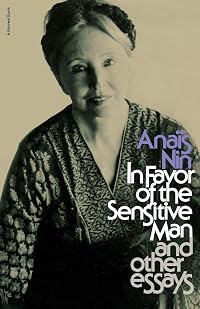
Anaïs Nin 1903-1977 Writer and diarist Anaïs Nin was born February 21, 1903 in Neuilly, France to a Catalan father and a Danish mother. She spent many of her childhood years with her Cuban relatives. Later, she became a naturalized American citizen. Nin is best known for her journals,"The Diary of Anais Nin, Vols. I-VII" and her erotic fiction. show more In fact, Nin was one of the raliest writers of erotica for women. She also wrote the book Henry and June, which was made into a movie of the same name in 1990. In 1973 Anaïs Nin received an honorary doctorate from the Philadelphia College of Art. She was elected to the United States National Institute of Arts and Letters in 1974. She died of cancer in Los Angeles, California, on January 14, 1977. (Bowker Author Biography) show less
Some Editions
Series

Belongs to Publisher Series
Work Relationships
Is contained in
Common Knowledge
- Canonical title
- A Spy in the House of Love
- Original title
- A Spy in the House of Love
- Original publication date
- 1954
- First words
- The lie detector was asleep when he heard the telephone ringing.
- Last words
- (Click to show. Warning: May contain spoilers.)The lie detector held out his hand as if to rescue her, in a light gesture, as if there were a graceful dance of sorrow rather than sorrow itself, and said: "In homeopathy there is a remedy called pulsatile for those who weep a music."
- Blurbers
- Davis, Robert Gorham
- Original language*
- Engels
*Some information comes from Common Knowledge in other languages. Click "Edit" for more information.
Classifications
Statistics
- Members
- 1,705
- Popularity
- 13,041
- Reviews
- 23
- Rating
- (3.40)
- Languages
- 13 — Catalan, Danish, Dutch, English, Estonian, Finnish, French, German, Italian, Polish, Swedish, Turkish, Portuguese (Brazil)
- Media
- Paper, Ebook
- ISBNs
- 44
- ASINs
- 30