On This Page
Description
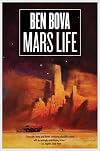
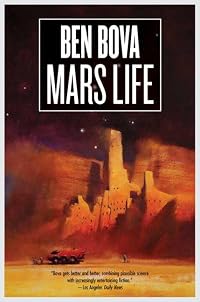
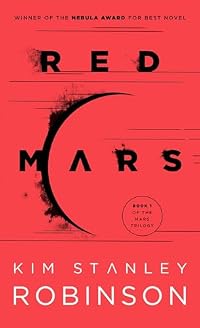
Jamie Waterman discovered the cliff dwelling on Mars, and the fact that an intelligent race lived on the red planet sixty-five million years ago, only to be driven into extinction by the crash of a giant meteor. Now the exploration of Mars is itself under threat of extinction, as the ultraconservative New Morality movement gains control of the U.S. government and cuts off all funding for the Mars program. Meanwhile, Carter Carleton, an anthropologist who was driven from his university post show more by unproven charges of rape, has started to dig up the remains of a Martian village. Science and politics clash on two worlds as Jamie desperately tries to save the Mars program and uncover who the vanished Martians were.--From publisher description. show lessTags
Recommendations


























Member Reviews
I haven't read a great deal of science fiction in recent years but I grew up on the novels of Heinlein, Asimov and Clarke, and Ben Bova's Mars Life reminds me a whole lot of the style used so successfully by those guys. Those writers were at their peaks in socially simpler times, when the dialogue of books and movies seldom reflected the harsh reality of street language and the raciest sex scenes described were of the relatively tame James Bond style. Their plots were seldom over-complicated, their character types rather predictable and their dialogue not always very realistic sounding. But, taken as a whole, the style worked, and today many of their books are considered to be science fiction classics. So the fact that Mars Life reads show more like a throwback to that science fiction era is not at all a bad thing.
This book is actually the third in Bova's Mars series but readers like me who have not read the first two books in the series will have no problem reading and enjoying it as a standalone novel. In fact, Mars Life is actually the sixteenth novel in Bova's "Grand Tour" series begun in 1993, which also includes a book of "Grand Tour" stories.
Navajo tribesman, Jamie Waterman, discovered Martian cliff dwellings on his first trip to Mars and has ever since that time dedicated his life to keeping the Mars exploration program focused and well-funded. Now, much to the dismay of Waterman and everyone associated with the program, both governmental and private funding is drying up and the existence of the program is threatened. Partially, that is because the United States government is facing the tremendously complicated and expensive prospect of relocating a substantial portion of its population due to all the flooding caused in recent years by global warming.
But even more importantly, a group of religious fundamentalists known as the New Morality has become so powerful that it can determine the outcome of elections at both the state and national levels by simply choosing whom to support. And New Morality leadership sees the archeological work being done on Mars as such a threat to its core religious beliefs that it wants the whole project shut down. Private donors have been intimidated into withdrawing their support from the Mars program, and the President and members of Congress told to do the same if they want to have any hope of being re-elected.
Mars Life is a race against the clock during which anthropologist Carter Carleton tries to uncover as much of the Martian village and cemetery discovered beneath the cliff dwellings as possible before everyone is forced to leave the planet and Waterman desperately searches for new sources of funding. It is also an intriguing look at what might happen if the clash between science and religion were to get so out of hand that extremists end up with the power to shut down scientific exploration any time that it threatens their shaky religious beliefs, something that seems more and more possible every day.
Rated at: 4.0 show less
This book is actually the third in Bova's Mars series but readers like me who have not read the first two books in the series will have no problem reading and enjoying it as a standalone novel. In fact, Mars Life is actually the sixteenth novel in Bova's "Grand Tour" series begun in 1993, which also includes a book of "Grand Tour" stories.
Navajo tribesman, Jamie Waterman, discovered Martian cliff dwellings on his first trip to Mars and has ever since that time dedicated his life to keeping the Mars exploration program focused and well-funded. Now, much to the dismay of Waterman and everyone associated with the program, both governmental and private funding is drying up and the existence of the program is threatened. Partially, that is because the United States government is facing the tremendously complicated and expensive prospect of relocating a substantial portion of its population due to all the flooding caused in recent years by global warming.
But even more importantly, a group of religious fundamentalists known as the New Morality has become so powerful that it can determine the outcome of elections at both the state and national levels by simply choosing whom to support. And New Morality leadership sees the archeological work being done on Mars as such a threat to its core religious beliefs that it wants the whole project shut down. Private donors have been intimidated into withdrawing their support from the Mars program, and the President and members of Congress told to do the same if they want to have any hope of being re-elected.
Mars Life is a race against the clock during which anthropologist Carter Carleton tries to uncover as much of the Martian village and cemetery discovered beneath the cliff dwellings as possible before everyone is forced to leave the planet and Waterman desperately searches for new sources of funding. It is also an intriguing look at what might happen if the clash between science and religion were to get so out of hand that extremists end up with the power to shut down scientific exploration any time that it threatens their shaky religious beliefs, something that seems more and more possible every day.
Rated at: 4.0 show less
This book is a sci-fi novel with the theme of religion versus science. Science is represented by the planetary explorers of Mars, who are studying the planet after discovery of 60 million year old human-like life. A group of earthly religious fundamentalists has become so politically powerful that it can determine the outcome of elections. New Morality leadership sees the archeological work being done on Mars as a threat to its core religious beliefs--it wants the project shut down. I believe it's obvious that Bova sees the religious movement as a fanatic fringe; he even states that when religious movements become too powerful, conflict results. Lots of conflict in the book, but the resolution seems like an afterthought. The book just show more sort of ends, leaving the reader to wonder what the result might be...the epilogue gives a clue. I liked the book. It was exciting--makes one think. show less
I had not read the first two books in this series, in fact didn't know there were two previous books until I read the reviews here. Even still, a reader can pick up Mars Life and understand what is going on. I liked the story and thought the happenings on Mars were believable. It was hard to get a sense of how far in the future this was supposed to be. They had ships which could get them to Mars in under a week but computers which didn't seem much different than what we use today. My only real problem with the book was the political stuff back on Earth. The New Morality organization frankly seemed unbelievable to me. Not that I couldn't believe in that such an organization could exist. I couldn't believe that such an organization could show more gain such power in the United States in so short a time. Also, and this is a minor point, the global warming crisis Earth was handled pretty much as an after thought and suffered therefore from inconsistencies.
One other thing, the plot device to get the priest to Mars was a failure. In fact, the whole subplot involving the priest could have been dropped. I'm guessing he was a major character in perhaps the first book and Bova wanted to wrap-up his history. show less
One other thing, the plot device to get the priest to Mars was a failure. In fact, the whole subplot involving the priest could have been dropped. I'm guessing he was a major character in perhaps the first book and Bova wanted to wrap-up his history. show less
[b:Mars Life|908284|Mars Life (The Grand Tour, #17)|Ben Bova|https://i.gr-assets.com/images/S/compressed.photo.goodreads.com/books/1316130595l/908284._SY75_.jpg|893424] continues the story set out in [b:Mars|267282|Mars (The Grand Tour, #4)|Ben Bova|https://i.gr-assets.com/images/S/compressed.photo.goodreads.com/books/1173282407l/267282._SY75_.jpg|1932635] and [b:Return to Mars|267310|Return to Mars (The Grand Tour, #7)|Ben Bova|https://i.gr-assets.com/images/S/compressed.photo.goodreads.com/books/1388211421l/267310._SY75_.jpg|1932634], with much the same setting and characters (particularly of the latter). Seventeen books in, there's little particularly surprising about Mars Life, but it's still a solid enough entry to the series.
For show more the most part, we're back to dealing with the New Morality (which makes me wonder about the timeline a bit) and greenhouse flooding on Earth. In particularly how they just want to put their heads in the sand and ignore concrete evidence of intelligent life on Mars and user their oomph to get the Mars project shut down entirely. It's interesting enough on one hand, but as mentioned, it's starting to feel like more of the same.
One thing that is really starting to get frustrating is Jamie's absolutely inability to bend and compromise throughout much of the work. I get that he doesn't want to see Mars destroyed and at first, that was an admirable goal. Something of the little guy fighting back against the corporations and governments of Earth. But now... who exactly is he to make that call? And why exactly can't Mars be used for more than one thing? It's an entirely planet for crying out loud.
Overall, it's a solid continuation to Bova's Mars trilogy and the Grand Tour in general and I'm glad to have read it. It could easily be read immediately after the other Mars books without particularly spoilering anything in the greater universe. On the other, 17 books in and I think I'm almost done with this series. Almost. Onward to Venus! show less
For show more the most part, we're back to dealing with the New Morality (which makes me wonder about the timeline a bit) and greenhouse flooding on Earth. In particularly how they just want to put their heads in the sand and ignore concrete evidence of intelligent life on Mars and user their oomph to get the Mars project shut down entirely. It's interesting enough on one hand, but as mentioned, it's starting to feel like more of the same.
One thing that is really starting to get frustrating is Jamie's absolutely inability to bend and compromise throughout much of the work. I get that he doesn't want to see Mars destroyed and at first, that was an admirable goal. Something of the little guy fighting back against the corporations and governments of Earth. But now... who exactly is he to make that call? And why exactly can't Mars be used for more than one thing? It's an entirely planet for crying out loud.
Overall, it's a solid continuation to Bova's Mars trilogy and the Grand Tour in general and I'm glad to have read it. It could easily be read immediately after the other Mars books without particularly spoilering anything in the greater universe. On the other, 17 books in and I think I'm almost done with this series. Almost. Onward to Venus! show less
Great addition to Bova's Grand Tour novels, specifically the Mars book. I really like how Bova was able to weave the excitement of colonizing and exploring Mars with the real world concerns back on Earth of just how economically feasible it would be to do so. The main protagonist (Jamie Waterman) really stands out as a solid character to drive many of the plot points, both pro and con Mars exploration, while everything else just kind of plays off of that. If you in any way like the subject of astronomy, specifically solar system exploration, I highly recommend picking up Bova's Grand Tour novels. Great escapism, which we all could use a little of these days.
This is my 16th read of doing Bova's Grand Tour. While enjoyable, not nearly as grabbing as some of the prior books. But hey, not every book can be a home run. Still glad I picked it up.
While a couple of characters are from other books in the Grand Tour series, most of the characters are new. Jamie Waterman, a Navajo, is a likeable character and his dilemmas are engrossing. Carter Carleton doesn't come across as clearly. The developments on earth are scary. Hopefully with Obama the US is moving away from that direction.
Members
- Recently Added By
Author Information

Ben Bova, Ben Bova was born in Philadelphia, Pennsylvania. He began writing fiction in the late 1940's and continued to pursue his careers in journalism, aerospace, education and publishing. Bova received a bachelor's degree in journalism from Temple University, 1954, a master of arts degree in communications from the State University of New York, show more 1987, and a doctorate in education from California Coast University, 1996. Dr. Bova worked as a newspaper reporter for several years and then joined Project Vanguard, the first American satellite program, as a technical editor. He was manager of marketing for Avco Everett Research Laboratory and worked with scientists in the fields of high-power lasers, artificial hearts and advanced electrical power generators. Dr. Bova has taught science fiction at Harvard University and at the Hayden Planetarium in New York City, where he also directed film courses. He has written scripts for teaching films with the Physical Sciences Study Committee in association with Nobel Laureates from many universities. Dr. Bova has served on the advisory board of Post College and the Editorial Boards of the World Future Society. He is President Emeritus of the National Space Society and a Fellow of the British Interplanetary Society. He is also a charter member of the Planetary Society and a member of the American Association for the Advancement of Science, the Nature Conservancy, the New York Academy of Sciences and the National Space Club. He is a former President and a charter member of Science Fiction and Fantasy Writers of America. He was honored by Temple University as a Distinguished Alumnus in 1981 and in 1982 was made an Alumni Fellow. In 1994, his short story "Inspiration" was nominated for the Nebula Award. "The Beauty of Light" was voted one of the best science books of the year in 1988 by the American Librarians' Association and they hailed "Moonrise" as best science fiction novel in 1996. Other titles include "Moonwar," "Mars," and "Brothers," which all combine romance and adventure with the scientific aspect of exploring the future of technology and its effect on individuals and society. "Immortality" and "Assured Survival" deal with technology being used to solve economic, social and political problems. "Immortality" goes further in examining biomedical breakthroughs that could extend a person's life by hundreds of years while being able to always remain physically young. His works include The Aftermath, Mars Life, and Leviathans of Jupiter. Ben Bova was a prolific science fiction author. He wrote over a hundred books and short stories. He also was an editor who worked on some of science fiction's best-known publications. He died on November 29, 2020 at the age of 88. (Bowker Author Biography) show less
Some Editions
Series


Common Knowledge
- Canonical title
- Mars Life
- Original title
- Mars Life
- Original publication date
- 2008
- People/Characters
- Jamie Waterman; Carter Carleton; Vijay Waterman; Doreen McManus; C. Dexter Trumball; Chang Laodong (show all 12); Doug Stavenger; Billy Graycloud; Bucky Winters; Itzak Rosenberg; Monsignor Fulvio A. DiNardo; Sal Hasdrubal
- Important places
- Mars; Tithonium Base, Mars; Albuquerque, New Mexico, USA; Selene, Moon; Boston, Massachusetts, USA; Vatican City
- Epigraph
- I do not feel obliged to believe that the same God who endowed us with sense, reason, and intellect has intended us to forgo their use. -Galileo Galilei
- Dedication
- To Barbara, my favorite columnist; to Maria and Mike Cote, my favorite editors; and to the memory of Carleton S. Coon, an early victim of political correctness.
- First words
- Mars is the most earthlike planet in the solar system. But that doesn’t mean that it’s very much like Earth.
- Last words
- (Click to show. Warning: May contain spoilers.)Wait for me, he asked. I'm coming for you.
Classifications
Statistics
- Members
- 292
- Popularity
- 109,569
- Reviews
- 12
- Rating
- (3.36)
- Languages
- English
- Media
- Paper, Audiobook, Ebook
- ISBNs
- 12
- ASINs
- 6