On This Page
Description
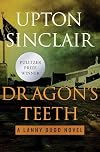
Winner of the Pulitzer Prize: Lanny Budd faces the unstoppable tide of Nazi terror in the third installment of Upton Sinclair's monumental saga of twentieth-century world history In the wake of the 1929 stock market crash, Lanny Budd's financial acumen and his marriage into great wealth enable him to continue the lifestyle he has always enjoyed. But the devastation the collapse has wrought on ordinary citizens has only strengthened Lanny's socialist ideals-much to the chagrin of his heiress show more wife, Irma, a confirmed capitalist. In Germany to visit relatives, Lanny encounters a disturbing atmosphere of hatred and jingoism. His concern over the growing popularity of the Nazi Party escalates when he meets Adolf Hitler, the group's fanatical leader, and the members of his inner circle. But Lanny's gravest fear is the threat a national socialist government poses to the German Jewish family of Hansi, the musician husband of Lanny's sister, Bess-a threat that will impel the international art dealer to risk his wealth, his future, even his life in a courageous attempt to rescue his loved ones from a terrible fate. Winner of the 1943 Pulitzer Prize for Fiction, Dragon's Teeth brilliantly captures the nightmarish march toward the Second World War. An astonishing mix of history, adventure, and romance, the Lanny Budd Novels are a testament to the breathtaking scope of Upton Sinclair's vision and his singular talents as a storyteller. show lessTags
Recommendations

































Member Reviews
Initially, I enjoyed the book for the quality of writing, yet I wondered what the book was actually about. Slowly, it's development began to move forward slowly revealing it's topic in much the way as landscape becomes more and more clear in the early hours of dawn, sharpening with the light from the rising sun as all becomes bathed in light.
Lanny Budd is a well-off American who has married a very rich American girl. They love one another dearly but politically are very different, which is important in the European world in which they live. Set in the time of the rise of National Socialism in Germany
But what struck me most, as I read this book, was the uncomfortable comparisons of the path "Hitlerites" took as they gained more and more power and the path the Tea Party in this country is taking. And how, in Germany, the ultimate power brokered to Hitler came from the wealthy businessmen and factory owners. How, in this country, the wealthy businessmen are pushing the same agendas in this country. To quote Lanny Budd, "They seek to create a nation of slaves." The Nazi's succeeded in changing Germany. Will the Tea Party succeed? The Germans never believed the Nazi changes could ever happen in a civilized nation. But it did. Will it happen here? It could. Because too many of us are so foolish as to believe it never could, and that is the only opening the politicians need. After all, it was the capitalists of Germany, and not the Socialists, who ultimately put Hitler in power.
Summary: As Irma’s fortune wanes, Lanny uses his art dealings both for income and to secure release of the Robins, who are swept up in the anti-Semitism of pre-war Nazi Germany.
This is the third of eleven books Upton Sinclair wrote around young, well-connected Lanny Budd, set in the years between the two wars and World War 2. In my review of book #2, I noted a Matthew Arnold quote about “Wandering between two worlds, one dead,/The other powerless to be born.” and hoping the wandering would end with this book. If anything, Lanny and Irma’s wanderings around Europe seem more pronounced with yacht trips and migrations from Bienvenu on the Riviera to Paris, Berlin, and Munich.
If there is a plot line, it revolves around the Robin show more family, a Jewish financier and his sons, Hansi and Freddi and their spouses. Hansi and Freddi were swept up into Lanny’s “pink” socialism, while Johannes had cultivated a business relationship with Lanny’s father, a gun manufacturer. Johannes thinks his affluence protects him and his family. It turned out otherwise. Lanny negotiates the family’s freedom with Hermann Goring, at the cost of the Robin fortune. But Freddi is left behind, and eventually reported in Dachau. Much of the story revolves Lanny’s efforts to get him out of Germany.
Under his trade as an art dealer, he goes in and out of Germany, holding shows of his step father, Marcel Detaze’s paintings. He mutes his socialism and cultivates ties with Goebbels, Goring, and even Hitler, who he meets twice. Throughout, the question is really who is using who, but a significant part of the narrative is an expose’ of the growing persecution of the Jews, the “disappearings,” and the ambitions of the Fuhrer.
Lanny and Irma make a glamour couple with her fortune and his looks, though that fortune is “declining” due to the crash of the market. In this book, one senses increasing tension between the daughter of capitalists and the socialist Lanny. Each indulge to a point the wishes of others, but Lanny’s efforts to rescue his Jewish, socialist friends at the risk of his life clearly strains the relationship as Irma sees more clearly who she married, and Lanny wrestles with the circuits around Europe, seeing and being seen. Irma wants to host a salon. Lanny wants to find some greater purpose, preferably resisting the rising Nazi threat, whose measure he has accurately taken.
This book won a Pulitzer in 1943. I personally wonder what this says about other published works of that year. Most of the action and excitement happens in the last 100 pages of a 600 page book. The rest is hundreds of pages of wanderings around Europe whose main purpose is to show Western society’s last flurry’s as Nazism arose–the dissolution of the French government against the backdrop of a German society buying order and prosperity at the cost of the suppression of the Jews and the rise of tyranny. I do think Sinclair could have cut at least 200 pages out of this book without harm either to the plot or Sinclair’s polemic purposes. show less
This is the third of eleven books Upton Sinclair wrote around young, well-connected Lanny Budd, set in the years between the two wars and World War 2. In my review of book #2, I noted a Matthew Arnold quote about “Wandering between two worlds, one dead,/The other powerless to be born.” and hoping the wandering would end with this book. If anything, Lanny and Irma’s wanderings around Europe seem more pronounced with yacht trips and migrations from Bienvenu on the Riviera to Paris, Berlin, and Munich.
If there is a plot line, it revolves around the Robin show more family, a Jewish financier and his sons, Hansi and Freddi and their spouses. Hansi and Freddi were swept up into Lanny’s “pink” socialism, while Johannes had cultivated a business relationship with Lanny’s father, a gun manufacturer. Johannes thinks his affluence protects him and his family. It turned out otherwise. Lanny negotiates the family’s freedom with Hermann Goring, at the cost of the Robin fortune. But Freddi is left behind, and eventually reported in Dachau. Much of the story revolves Lanny’s efforts to get him out of Germany.
Under his trade as an art dealer, he goes in and out of Germany, holding shows of his step father, Marcel Detaze’s paintings. He mutes his socialism and cultivates ties with Goebbels, Goring, and even Hitler, who he meets twice. Throughout, the question is really who is using who, but a significant part of the narrative is an expose’ of the growing persecution of the Jews, the “disappearings,” and the ambitions of the Fuhrer.
Lanny and Irma make a glamour couple with her fortune and his looks, though that fortune is “declining” due to the crash of the market. In this book, one senses increasing tension between the daughter of capitalists and the socialist Lanny. Each indulge to a point the wishes of others, but Lanny’s efforts to rescue his Jewish, socialist friends at the risk of his life clearly strains the relationship as Irma sees more clearly who she married, and Lanny wrestles with the circuits around Europe, seeing and being seen. Irma wants to host a salon. Lanny wants to find some greater purpose, preferably resisting the rising Nazi threat, whose measure he has accurately taken.
This book won a Pulitzer in 1943. I personally wonder what this says about other published works of that year. Most of the action and excitement happens in the last 100 pages of a 600 page book. The rest is hundreds of pages of wanderings around Europe whose main purpose is to show Western society’s last flurry’s as Nazism arose–the dissolution of the French government against the backdrop of a German society buying order and prosperity at the cost of the suppression of the Jews and the rise of tyranny. I do think Sinclair could have cut at least 200 pages out of this book without harm either to the plot or Sinclair’s polemic purposes. show less
These books are so great, history lessons and exciting stories all in one. Must say, not a big fan of Irma, I wonder if the two of those kids are gonna make it. Also, read the lion’s share of this in isolation recovering from COVID.
Reason read: Pulitzer winner 1943, TIOLI
An American in Germany fights against the Nazi Terror. A "saga of the 20th century world history". There really is nothing new under the sun. Reading this is like reading something than could be occuring now. Racism is one of the themes so that is not a new topic. It is promoting "pink" or socialism and opposed to jingoism (extreme patriotism, for of aggression". "...loud voices--economic determinism. The nearer the country to crisis the more noise its intellectuals made." It was an interesting book, I guess a part of a series. I won't read further. I think it was a bit long and definitely a promotion of socialism over capitalism. The author's bias was obvious.
An American in Germany fights against the Nazi Terror. A "saga of the 20th century world history". There really is nothing new under the sun. Reading this is like reading something than could be occuring now. Racism is one of the themes so that is not a new topic. It is promoting "pink" or socialism and opposed to jingoism (extreme patriotism, for of aggression". "...loud voices--economic determinism. The nearer the country to crisis the more noise its intellectuals made." It was an interesting book, I guess a part of a series. I won't read further. I think it was a bit long and definitely a promotion of socialism over capitalism. The author's bias was obvious.
I read this as a library book. For a GR rating, I selected, in error, the edition that broke it into two volumes. So now I am rewriting my review.
This was a powerful book, about the rise and power of the Nazis.
I got a lot out of reading it, although not in the sense of great pleasure. Strong emotion and a taste of the evil that was Hitler. I find it hard to understand those who followed him willingly. It's a book that is truly unforgettable.
This was a powerful book, about the rise and power of the Nazis.
I got a lot out of reading it, although not in the sense of great pleasure. Strong emotion and a taste of the evil that was Hitler. I find it hard to understand those who followed him willingly. It's a book that is truly unforgettable.
This novel was outstanding and introduced me to Upton Sinclair's 11 volume Lanny Budd series. Dragon's Teeth is the 3rd book of the series and won the Pulitzer Prize for fiction in 1942. Lanny Budd is a 30-something rich American living in Europe in the early 1930's. The plot revolves around the rise of Hitler in Germany and the beginning of Jewish persecution and the competing forces of socialism, facism, communism and capitalism. Lanny's sister's husband, Freddi Robbin is Jewish and Freddi's family has close connections to the Budds and their struggles in Europe create a riveting plot within the larger historical context.
553. Dragon's Teeth by Upton Sinclair (read 13 Sep 1958) (Pulitzer fiction prize for 1943) This was the sequel to Between Two Worlds. which I read right before I read this. I found both books enjoyable books to read.
Members
- Recently Added By
Author Information

246+ Works 21,963 Members
Upton Sinclair, a lifelong vigorous socialist, first became well known with a powerful muckraking novel, The Jungle, in 1906. Refused by five publishers and finally published by Sinclair himself, it became an immediate bestseller, and inspired a government investigation of the Chicago stockyards, which led to much reform. In 1967 he was invited by show more President Lyndon Johnson to "witness the signing of the Wholesome Meat Act, which will gradually plug loopholes left by the first Federal meat inspection law" (N.Y. Times), a law Sinclair had helped to bring about. Newspapers, colleges, schools, churches, and industries have all been the subject of a Sinclair attack, analyzing and exposing their evils. Sinclair was not really a novelist, but a fearless and indefatigable journalist-crusader. All his early books are propaganda for his social reforms. When regular publishers boycotted his work, he published himself, usually at a financial loss. His 80 or so books have been translated into 47 languages, and his sales abroad, especially in the former Soviet Union, have been enormous. (Bowker Author Biography) show less
Some Editions
Awards and Honors
Awards
Series

Work Relationships
Common Knowledge
- Canonical title*
- Drakentanden
- Original title
- Dragon's Teeth
- Alternate titles*
- Drakentanden : roman
- Original publication date
- 1942 (English) (English); 1948 (Nederlands) (Nederlands)
- People/Characters
- Lanny Budd (Lanning Prescott Budd); Beauty Budd (Mabel Blackless); Jesse Blackless; Johannes Robin (Rabinowich); Robbie Budd; Kurt Meissner
- Important places
- Juan-les-Pins, Alpes-Maritimes, Provence-Alpes-Côte d'Azur, France; Paris, Île-de-France, France; Berlin, Germany
- First words
- Lanny Budd was the only occupant of a small-sized reception-room.
- Last words
- (Click to show. Warning: May contain spoilers.)"O Jerusalem, Jerusalem, thou that killest the prophets, and stonest them which are sent unto thee, how often would I have gathered thy children together, even as a hen gathereth her chickens under her wings, and ye would not! Behold, your house is left unto you desolate."
- Original language*
- Engels
*Some information comes from Common Knowledge in other languages. Click "Edit" for more information.
Classifications
- Genres
- General Fiction, Fiction and Literature, Historical Fiction
- DDC/MDS
- 813.52 — Literature & rhetoric American literature in English American fiction in English 1900-1999 1900-1945
- LCC
- PS3537 .I85 .D83 — Language and Literature American literature American literature Individual authors 1900-1960
- BISAC
Statistics
- Members
- 343
- Popularity
- 91,720
- Reviews
- 8
- Rating
- (3.82)
- Languages
- 6 — Danish, Dutch, English, Italian, Norwegian (Bokmål), Spanish
- Media
- Paper, Audiobook, Ebook
- ISBNs
- 9
- ASINs
- 23