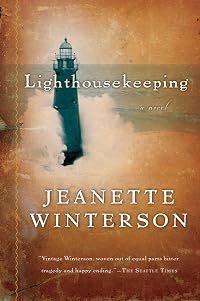
Lighthousekeeping
by Jeanette Winterson
On This Page
Description
An orphaned girl is held spellbound by the tales of a lighthouse keeper on the Scottish coast, in a novel by the Costa Award-winning author of The Passion.After her mother is literally swept away by the savage winds off the Atlantic coast of Salts, Scotland, never to be seen again, the orphaned Silver is feeling particularly unmoored. Taken in by the mysterious keeper of a lighthouse on Cape Wrath, Silver finds an anchor in Mr. Pew—blind, as old and legendary as a unicorn, and a yarn show more spinner of persuasive power.
The tale he has to tell Silver is that of a nineteenth-century clergyman named Babel Dark, whose life was divided between a loving light and a mask of deceit. Peopled with such luminaries as Charles Darwin and Robert Louis Stevenson, Mr. Pew's story within a story within a story soon unfolds like a map. It's one that Silver must follow if she's to be led through her own darkness, and to find her own meaning in life, in this novel by a winner of the Costa, Lambda, and E.M. Forster Awards, the author of Oranges are Not the Only Fruit; Why Be Happy When You Could Be Normal? and other acclaimed works.
"In her sea-soaked and hypnotic eighth novel, Winterson turns the tale of an orphaned young girl and a blind old man into a fable about love and the power of storytelling...Atmospheric and elusive, Winterson's high-modernist excursion is an inspired meditation on myth and language."—The New Yorker
. show less
Tags
Recommendations


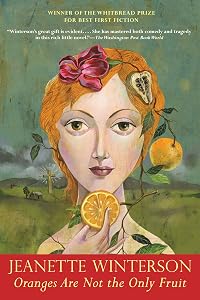

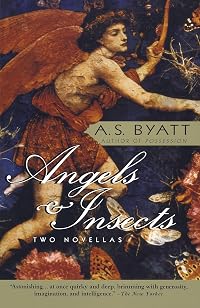
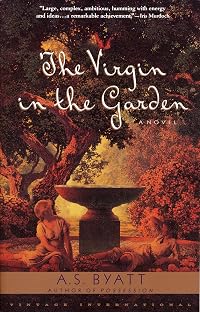
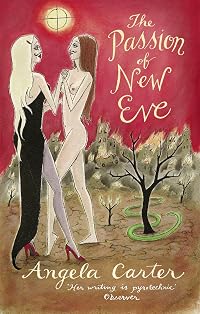






Member Recommendations
Member Reviews
Sometimes I read a novel and can't help suspecting that it was born in some kind of drunken parlour game where friends write down random ideas on a piece of paper and the author is challenged to write a novel tying together all the plot elements she draws out of a hat. "Robert Louis Stevenson, Tristan & Isolde, Capri, adoption, Great Exhibition, Charles Darwin, Death in Venice, car-wash, ...," it must have gone on this occasion.
Whether or not that's what really happened, the result is an ingenious pastiche of the postmodern-Victorian-novel genre (think French lieutenant's woman or Possession), opening with the memorably Chaplinesque image of the narrator and her mother living in a house built on such a steep slope that they weren't show more allowed spaghetti or peas. It's great fun and runs at a lightning pace, we get bombarded with casual references to Treasure Island, Dr Jekyll, and much else, and there's a semi-serious underlying idea about the importance of stories in helping us to make sense of an impossibly dynamic universe. show less
Whether or not that's what really happened, the result is an ingenious pastiche of the postmodern-Victorian-novel genre (think French lieutenant's woman or Possession), opening with the memorably Chaplinesque image of the narrator and her mother living in a house built on such a steep slope that they weren't show more allowed spaghetti or peas. It's great fun and runs at a lightning pace, we get bombarded with casual references to Treasure Island, Dr Jekyll, and much else, and there's a semi-serious underlying idea about the importance of stories in helping us to make sense of an impossibly dynamic universe. show less
An extraordinary, lyrical book that is about the power of storytelling in - and about - our lives.
Other themes are light/dark/blindness (literal and metaphorical), outcasts, and the contrast between permanence and immobility (symbolised by the lighthouse) and change (people and the sea).
The fictional characters (one of whom has strong parallels with Winterson - see below) have some interaction with real characters and their works (Darwin, Robert Louis Stevenson and Wagner), and a broadly realistic story is sprinkled with slightly fairytale-like qualities, especially at the start, which also has comical aspects! Yet somehow, Winterson conjures this odd medley into something coherent, beautiful and profound.
Plot
There are two main show more narrative strands, both set in the small and remote Scottish village of Salts, and its lighthouse: mysterious Victorian priest, Babel Dark, and Silver, a girl orphaned in 1969.
Silver is the narrator, and the opening chapters reminded me of a Roald Dahl's children's story: she and her shamed mother live outside the village, in a house cut into the hill such that it has a sloping floor, furniture has to be nailed down, they can only "eat food that stuck to the plate", and their dog has developed back legs shorter than the front.
A tragi-comic accident leaves Silver an orphan. After a short spell with a Dahlian spinster, she goes to live with Pew the blind lighthousekeeper, and the book loses the comedy, but retains some magic. "Some of the light went out of me, it seemed proper that I should go and live in a place where all the light shone outwards."
Narrative structure, stories, storytelling
Don't expect a single, linear narrative of a consistent style. "A beginning, a middle and an end is the proper way to tell a story. But I have difficulty with that method." It doesn't matter because "The continuous narrative of existence is a lie... there are lit-up moments, and the rest is dark."
Pew is a master storyteller, and Silver weaves his stories into the one she is telling. The boundaries of fact and fiction are often blurred within her world (as in this book itself, with its mention of real historical figures): Pew will describe doing something that happened before he was born, and when challenged, dismisses it as his second sight or "well, the Pew that was born then", whilst retaining the suggestion that in some mysterious way it was actually him.
Perhaps part of the reasons for Silver's blending of fact and fiction was prompted by this: a psychiatrist defines psychosis as being out of touch with reality, and her response is "Since then, I have been trying to find out what reality is, so that I can touch it."
The musings on stories are the most lyrical and magical aspects, and suggest the tangled ways in which they thread through our lives. "In fairy stories, naming is knowledge" and that is reflected in this story in several key ways.
Most stories never finish, "There was an ending - there always is - but the story went on past the ending - it always does". Similarly, "There's no story that's the start of itself, any more than a child comes into the world without parents."
"All the stories must be told... Maybe all stories are worth hearing, but not all stories are worth telling... The stories themselves make the meaning."
If you had forty minutes to tell your life story, what would you say? (This isn't a long book, but there's more than forty minutes' worth.)
The final chapters are more overtly philosophical, with less actual story. I think they're none the worse for that, but some may be disconcerted by the chane.
Silver as Winterson?
Winterson's first book, Oranges are Not the Only Fruit (https://www.goodreads.com/review/show/29005789), was explicitly a fictionalised version of her childhood, and recently, she published the more factual "Why be Happy when you Could be Normal?" (https://www.goodreads.com/review/show/332816058), but there are many aspects of Winterson in this as well: an orphan born in 1959, who finds solace in stories and libraries, "had to grow up on my own", and forges her own life. Some of the problems Silver encounters in later life also echo Winterson's own(e.g. consultations with mental health professionals) . She also finds the positive in the hardest circumstances, "We are lucky, even the worst of us, because daylight comes" (in "Why be Happy", she is grateful that the church taught her how important it is to concentrate on good things).
It goes further: the beloved mother in this "longed for me to be free, and did everything she could to make sure it never happened", and in "Why be happy", she makes an identical observation about the awful Mrs W (quoted in my review, linked above).
Weaknesses
For such a carefully crafted book, it is a little heavy-handed at times. These are rare, minor faults in the overall context and content, and are recorded here more for my personal records than to spoil it for anyone else, hence the spoiler tag.
In particular, the names Dark and Lux are as subtle as a sledgehammer. Also, the symbolism of the lighthouse is occasionally spelt out more than it needs to be: a birth coinciding with completion of this phallic symbol, and a passage, "He was like this lighthouse... He was lonely and aloof... The instruments were in place... but the light was not lit."
Quotes and new idioms
* "A silent, taciturn clamp of a man."
* "She was one of those people for whom yes is always an admission of guilt or failure. No was power."
* "I was not much longer than my socks."
* "The wind was strong enough to blow the fins off a fish."
* "Our business was light, be we lived in darkness... The darkness had to be brushed away... Darkness squatted on the chairs and hung like a curtain across the stairway... I learned to see in it, I learned to see through it, and I learned to see the darkness of my own."
* "As dull as a day at sea with no wind."
* "Someone whose nature was as unmiraculous as a bucket."
* "He turned as pale as a skinned plaice."
* "The fossil record is always there, whether or not you discover it. The brittle ghosts of the past. Memory is not like the surface of water - either troubled or still. Memory is layered."
* When contemplating writing Dr Jeckyll and Mr Hyde, Stevenson posits (in this book) that all men have atavistic qualities: "Parts of themselves that lay like developed negatives? Shadow selves, unpictured but present?"
* "Women raising empty forks to glossy famished lips".
* "The light was as intense as a love affair."
* "I went outside, tripping over slabs of sunshine the size of towns. The sun was like a crowd of people, it was a party, it was music. The sun was blaring through the walls of the houses and beating down the steps. The sun was drumming time into the stone. The sun was rhythming the day."
See also
One of the magical stories in Daisy Johnson's Fen features a female lighthouse keeper. I think it's a story Winterson would like, and may have been slightly inspirational for. See my review HERE. show less
Other themes are light/dark/blindness (literal and metaphorical), outcasts, and the contrast between permanence and immobility (symbolised by the lighthouse) and change (people and the sea).
The fictional characters (one of whom has strong parallels with Winterson - see below) have some interaction with real characters and their works (Darwin, Robert Louis Stevenson and Wagner), and a broadly realistic story is sprinkled with slightly fairytale-like qualities, especially at the start, which also has comical aspects! Yet somehow, Winterson conjures this odd medley into something coherent, beautiful and profound.
Plot
There are two main show more narrative strands, both set in the small and remote Scottish village of Salts, and its lighthouse: mysterious Victorian priest, Babel Dark, and Silver, a girl orphaned in 1969.
Silver is the narrator, and the opening chapters reminded me of a Roald Dahl's children's story: she and her shamed mother live outside the village, in a house cut into the hill such that it has a sloping floor, furniture has to be nailed down, they can only "eat food that stuck to the plate", and their dog has developed back legs shorter than the front.
A tragi-comic accident leaves Silver an orphan. After a short spell with a Dahlian spinster, she goes to live with Pew the blind lighthousekeeper, and the book loses the comedy, but retains some magic. "Some of the light went out of me, it seemed proper that I should go and live in a place where all the light shone outwards."
Narrative structure, stories, storytelling
Don't expect a single, linear narrative of a consistent style. "A beginning, a middle and an end is the proper way to tell a story. But I have difficulty with that method." It doesn't matter because "The continuous narrative of existence is a lie... there are lit-up moments, and the rest is dark."
Pew is a master storyteller, and Silver weaves his stories into the one she is telling. The boundaries of fact and fiction are often blurred within her world (as in this book itself, with its mention of real historical figures): Pew will describe doing something that happened before he was born, and when challenged, dismisses it as his second sight or "well, the Pew that was born then", whilst retaining the suggestion that in some mysterious way it was actually him.
Perhaps part of the reasons for Silver's blending of fact and fiction was prompted by this: a psychiatrist defines psychosis as being out of touch with reality, and her response is "Since then, I have been trying to find out what reality is, so that I can touch it."
The musings on stories are the most lyrical and magical aspects, and suggest the tangled ways in which they thread through our lives. "In fairy stories, naming is knowledge" and that is reflected in this story in several key ways.
Most stories never finish, "There was an ending - there always is - but the story went on past the ending - it always does". Similarly, "There's no story that's the start of itself, any more than a child comes into the world without parents."
"All the stories must be told... Maybe all stories are worth hearing, but not all stories are worth telling... The stories themselves make the meaning."
If you had forty minutes to tell your life story, what would you say? (This isn't a long book, but there's more than forty minutes' worth.)
The final chapters are more overtly philosophical, with less actual story. I think they're none the worse for that, but some may be disconcerted by the chane.
Silver as Winterson?
Winterson's first book, Oranges are Not the Only Fruit (https://www.goodreads.com/review/show/29005789), was explicitly a fictionalised version of her childhood, and recently, she published the more factual "Why be Happy when you Could be Normal?" (https://www.goodreads.com/review/show/332816058), but there are many aspects of Winterson in this as well: an orphan born in 1959, who finds solace in stories and libraries, "had to grow up on my own", and forges her own life. Some of the problems Silver encounters in later life also echo Winterson's own
It goes further: the beloved mother in this "longed for me to be free, and did everything she could to make sure it never happened", and in "Why be happy", she makes an identical observation about the awful Mrs W (quoted in my review, linked above).
Weaknesses
For such a carefully crafted book, it is a little heavy-handed at times. These are rare, minor faults in the overall context and content, and are recorded here more for my personal records than to spoil it for anyone else, hence the spoiler tag.
Quotes and new idioms
* "A silent, taciturn clamp of a man."
* "She was one of those people for whom yes is always an admission of guilt or failure. No was power."
* "I was not much longer than my socks."
* "The wind was strong enough to blow the fins off a fish."
* "Our business was light, be we lived in darkness... The darkness had to be brushed away... Darkness squatted on the chairs and hung like a curtain across the stairway... I learned to see in it, I learned to see through it, and I learned to see the darkness of my own."
* "As dull as a day at sea with no wind."
* "Someone whose nature was as unmiraculous as a bucket."
* "He turned as pale as a skinned plaice."
* "The fossil record is always there, whether or not you discover it. The brittle ghosts of the past. Memory is not like the surface of water - either troubled or still. Memory is layered."
* When contemplating writing Dr Jeckyll and Mr Hyde, Stevenson posits (in this book) that all men have atavistic qualities: "Parts of themselves that lay like developed negatives? Shadow selves, unpictured but present?"
* "Women raising empty forks to glossy famished lips".
* "The light was as intense as a love affair."
* "I went outside, tripping over slabs of sunshine the size of towns. The sun was like a crowd of people, it was a party, it was music. The sun was blaring through the walls of the houses and beating down the steps. The sun was drumming time into the stone. The sun was rhythming the day."
See also
One of the magical stories in Daisy Johnson's Fen features a female lighthouse keeper. I think it's a story Winterson would like, and may have been slightly inspirational for. See my review HERE. show less
I tried to read one of Janette Winterson's books several years ago but gave up on it. It leaned towards magical realism, a genre I'm not fond of, and I gave up on it. Still, I decided to give this little book a chance, and I'm vert glad that I did. I rarely reread books, but I think I'll be returning to 'Lighthousekeeping.'
Outcast from the Scottish town of Salts after becoming pregnant out of wedlock, a woman and her daughter Silver move into an unstable house cut into the side of the rocky coast. When an accident leaves Silver orphaned, the only person willing to take her in is Pew, the blind, elderly lighthouse keeper. There have always been Pews keeping this lighthouse, he tells her, and Pew plans for Silver to take over when he show more passes on. The two of them bond over Pew's wonderful stories of his ancestors and of Babel Dark, minister and son of a town founder who led a mysterious double life. Among the "real" persons who inhabit the stories are Robert Louis Stevenson and Charles Darwin. Pew claims that both visited his lighthouse, and their meetings with Babel Dark both opened possibilities and created conflicts within him. When circumstances force Silver to set out on her own, she becomes a storyteller as well.
Winterson's writing is beautiful, often magical, and the interwoven plots are both quiet and compelling. She injects a measure of philosophy into her tale--something I find that most writers botch with heavy handedness, but her touch is light and therefore all the more effective. It's only near the end of the book that you realize how many themes she has managed to explore: the nature and origin of man, our relationship to God (if there is one), the enduring need for love, the importance of personal history and personal myths, the value of storytelling as a connection between people both past and present, and much, much more. 'Lighthousekeeping' is a short novel with a long and wide-ranging impact. Don't miss it! show less
Outcast from the Scottish town of Salts after becoming pregnant out of wedlock, a woman and her daughter Silver move into an unstable house cut into the side of the rocky coast. When an accident leaves Silver orphaned, the only person willing to take her in is Pew, the blind, elderly lighthouse keeper. There have always been Pews keeping this lighthouse, he tells her, and Pew plans for Silver to take over when he show more passes on. The two of them bond over Pew's wonderful stories of his ancestors and of Babel Dark, minister and son of a town founder who led a mysterious double life. Among the "real" persons who inhabit the stories are Robert Louis Stevenson and Charles Darwin. Pew claims that both visited his lighthouse, and their meetings with Babel Dark both opened possibilities and created conflicts within him. When circumstances force Silver to set out on her own, she becomes a storyteller as well.
Winterson's writing is beautiful, often magical, and the interwoven plots are both quiet and compelling. She injects a measure of philosophy into her tale--something I find that most writers botch with heavy handedness, but her touch is light and therefore all the more effective. It's only near the end of the book that you realize how many themes she has managed to explore: the nature and origin of man, our relationship to God (if there is one), the enduring need for love, the importance of personal history and personal myths, the value of storytelling as a connection between people both past and present, and much, much more. 'Lighthousekeeping' is a short novel with a long and wide-ranging impact. Don't miss it! show less
Silver, an orphan girl, is apprenticed to Mr Pew the lighthousekeeper. Pew, blind and ancient, is a great teller of stories about the village's history. His tales focus on Babel Dark, a Victorian priest with a mysterious double life, who is unnerved by his discussions with Darwin (and discovery of a cave of fossils) and may have inspired Robert Louis Stevenson's most famous creation(s). At some point, round about the time that the decision is made to automate the lighthouse, the reader realises that the stories are actually about the many layers of our pasts, our lives, our various stories - and above all, the way that love both creates, and is built of, layers of memories.
I started out thinking that this could be described as magical show more realism, but actually it's more like poetry - a flood of metaphors and interlinked ideas, sometimes elliptical.
Sample: You were chopping vegetables and telling me about a day in Thailand when you had seen turtles hatch in the sand. Not many of them make it to the sea, and once there, the sharks are waiting for them. Days disappear and get swallowed up much like that, but the ones like these, the ones that make it, swim out and return for the rest of your life. Thank you for making me happy. show less
I started out thinking that this could be described as magical show more realism, but actually it's more like poetry - a flood of metaphors and interlinked ideas, sometimes elliptical.
Sample: You were chopping vegetables and telling me about a day in Thailand when you had seen turtles hatch in the sand. Not many of them make it to the sea, and once there, the sharks are waiting for them. Days disappear and get swallowed up much like that, but the ones like these, the ones that make it, swim out and return for the rest of your life. Thank you for making me happy. show less
My rating is a 3.5 that weighs towards 4 because I don't think I find this book especially memorable, but it was a dream to read. There's a great simplicity to it, even with a multiplicity of stories occurring. There's a great amount of beauty to it, to the images of the lighthouse interior frozen in time, to the house leaning from the cliff and the leaning pets and people in it, to the seaside towns and the sun glimmering off the water and ghostly ships and sailboats. I love the sea (whenever I say that I think, who doesn't?, but there must be some who are unaffected), I like being near or on open water, and this book captures whatever it is about bodies of water--openness, depth, the unknowable, the unfathomable. How much of the sea show more is conjecture, because how much is unexplained and undiscovered? How much is the sea a story we tell each other over and over?
I've been complaining frequently about being let down by language, thirsting for something that I keep expecting to find in particular books. It exists here, at last. There are ways in which Winterson is sparse and oblique (short sentences, brief pages, this book should be even slimmer than it looks), but without sacrificing the richness of her writing. (I'm still unsatisfied, though. I still crave more.) show less
I've been complaining frequently about being let down by language, thirsting for something that I keep expecting to find in particular books. It exists here, at last. There are ways in which Winterson is sparse and oblique (short sentences, brief pages, this book should be even slimmer than it looks), but without sacrificing the richness of her writing. (I'm still unsatisfied, though. I still crave more.) show less
her writing is so intelligent and gossamery. i tend to acutely feel i wish i were smarter when i read winterson. i know i've missed references and depth to this one, but still found it mostly captivating. and so many passages just beautiful.
"It was a long story, and like most of the stories in the world, never finished. There was an ending - there always is - but the story went on past the ending - it always does."
"Like and like go together. Likeness is liking, whatever they say about opposites."
"I had no idea where to look, or what I was looking for, but I know now that all the important journeys start that way."
"Tell me a story, Pew.
What kind of story, child?
A story with a happy ending.
There's no such thing in all the world.
As a show more happy ending?
As an ending."
"Psychosis: out of touch with reality.
Since then, I have been trying to find out what reality is, so that I can touch it."
"I unlatched the shutters. The light was as intense as a love affair. I was blinded, delighted, not just because it was warm and wonderful, but because nature measures nothing. Nobody needs this much sunlight. Nobody needs droughts, volcanoes, monsoons, tornadoes either, but we get them, because our world is as extravagant as a world can be. We are the ones obsessed by measurement. The world just pours it out."
"I went outside, tripping over slabs of sunshine the size of towns. The sun was like a crowd of people, it was a party, it was music. The sun was blaring through the walls of the houses and beating them down the steps. The sun was drumming time into the stone. The sun was rhythming the day." show less
"It was a long story, and like most of the stories in the world, never finished. There was an ending - there always is - but the story went on past the ending - it always does."
"Like and like go together. Likeness is liking, whatever they say about opposites."
"I had no idea where to look, or what I was looking for, but I know now that all the important journeys start that way."
"Tell me a story, Pew.
What kind of story, child?
A story with a happy ending.
There's no such thing in all the world.
As a show more happy ending?
As an ending."
"Psychosis: out of touch with reality.
Since then, I have been trying to find out what reality is, so that I can touch it."
"I unlatched the shutters. The light was as intense as a love affair. I was blinded, delighted, not just because it was warm and wonderful, but because nature measures nothing. Nobody needs this much sunlight. Nobody needs droughts, volcanoes, monsoons, tornadoes either, but we get them, because our world is as extravagant as a world can be. We are the ones obsessed by measurement. The world just pours it out."
"I went outside, tripping over slabs of sunshine the size of towns. The sun was like a crowd of people, it was a party, it was music. The sun was blaring through the walls of the houses and beating them down the steps. The sun was drumming time into the stone. The sun was rhythming the day." show less
Another story about storytelling. Winterson's books usually slide through my mind like fine silk leaving only an impression of strange beauty. Another orphan finds what family she can with a dog and a blind lighthousekeeper and stories found in the lighthouse. The dominant story is of a 19th century man named Babel Dark. Darwin and Jekyll and Hyde and seahorses and how love batters its way in. (August 19, 2005)
Members
- Recently Added By
Lists

Top Five Books of 2021
604 works; 181 members

I Could Live There
185 works; 12 members

Books Read in 2021
5,361 works; 114 members

Lighthouses in literature
23 works; 6 members

Top Five Books of 2023
767 works; 317 members

Books Read in 2025
4,128 works; 98 members
Author Information

56+ Works 37,201 Members
Jeanette Winterson was born in Manchester, England in 1959 and graduated from St. Catherine's College, Oxford. Her book, Oranges Are Not the Only Fruit, is a semi-autobiographical account of her life as a child preacher (she wrote and gave sermons by the time she was eight years old). The book was the winner of the Whitbread Prize for best first show more fiction and was made into an award-winning TV movie. The Passion won the John Llewelyn Rhys Memorial Prize for best writer under thirty-five, and Sexing the Cherry won the American Academy of Arts and Letters' E. M. Forster Award. (Bowker Author Biography) Jeanette Winterson lives in London & the Cotswolds. (Publisher Provided) show less
Some Editions
Awards and Honors
Awards
Series
Belongs to Publisher Series
Common Knowledge
- Canonical title
- Lighthousekeeping
- Original title
- Lighthousekeeping
- Original publication date
- 2004
- People/Characters*
- Silver; Pew; Babel Dark
- Important places
- Scotland, UK
- Epigraph
- ‘Remember you must die’
Muriel Spark
‘Remember you must live’
Ali Smith - Dedication
- For Deborah Warner
- First words
- My mother called me Silver.
- Quotations
- There is so little of life, and it is fraught with chance. We meet, we don't meet, we take the wrong turning, and still bump into each other. We conscientiously choose the ‘right road' and it leads nowhere.
There's a booth in Grand Central Station where you can go and record your life. You talk. It tapes. It's the modern-day confessional—no priest, just your voice in the silence. What you were, digitally saved for the future. ... (show all)Forty minutes is yours. So what would you say in those forty minutes—what would be your death-bed decisions? What of your life will sink under the waves, and what will be like the lighthouse, calling you home?
The continuous narrative of existence is a lie. There is no continuous narrative, there are lit-up moments, and the rest is dark. - Last words
- (Click to show. Warning: May contain spoilers.)But what else can I say?
- Original language
- English
*Some information comes from Common Knowledge in other languages. Click "Edit" for more information.
Classifications
Statistics
- Members
- 1,971
- Popularity
- 10,771
- Reviews
- 61
- Rating
- (3.70)
- Languages
- 17 — Danish, Dutch, English, Estonian, Finnish, French, German, Italian, Japanese, Latvian, Norwegian (Bokmål), Farsi/Persian, Polish, Portuguese, Spanish, Swedish, Turkish
- Media
- Paper, Audiobook, Ebook
- ISBNs
- 42
- ASINs
- 14