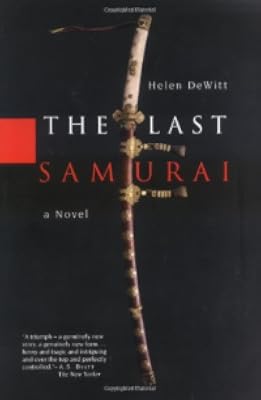
The Last Samurai
by Helen DeWitt
On This Page
Description
Sibylla, an American-at-Oxford turned loose on London, finds herself trapped as a single mother after a misguided one-night stand. High-minded principles of child-rearing work disastrously well. J.S. Mill (taught Greek at three) and Yo Yo Ma (Bach at two) claimed the methods would work with any child; when these succeed with the boy Ludo, he causes havoc at school and is home again in a month. (Is he a prodigy, a genius? Readers looking over Ludo's shoulder find themselves easily reading show more Greek and more.) Lacking male role models for a fatherless boy, Sibylla turns to endless replays of Kurosawa's masterpiece Seven Samurai. But Ludo is obsessed with the one thing he wants and doesn't know: his father's name. At eleven, inspired by his own take on the classic film, he sets out on a secret quest for the father he never knew. He'll be punched, sliced, and threatened with retribution. He may not live to see twelve. Or he may find a real samurai and save a mother who thinks boredom a fate worse than death. show lessTags
Recommendations

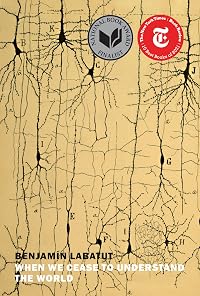

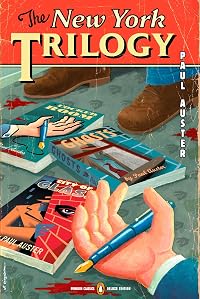
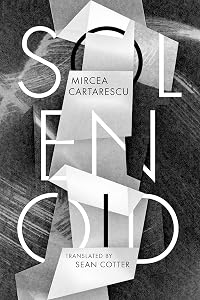
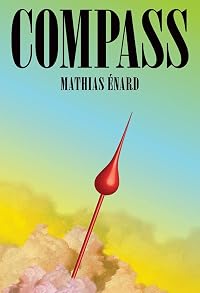
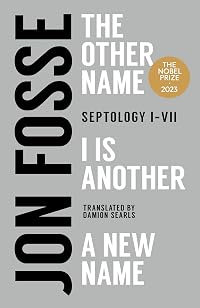
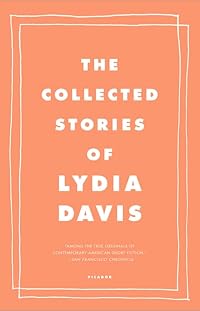
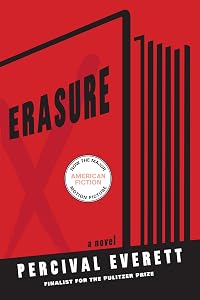
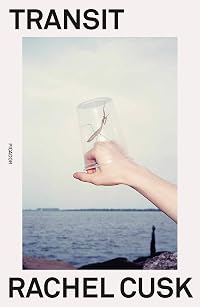
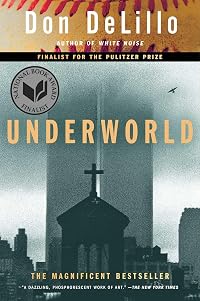
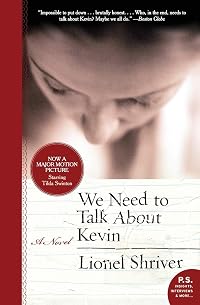
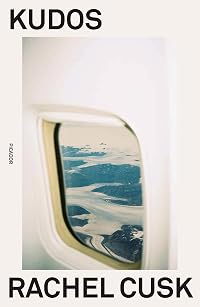
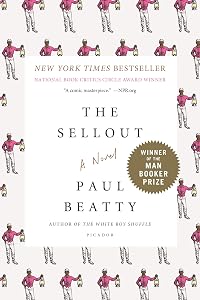



Member Recommendations
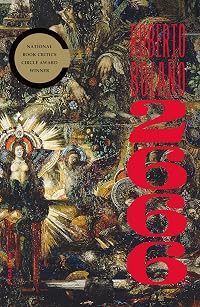
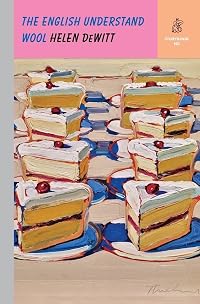
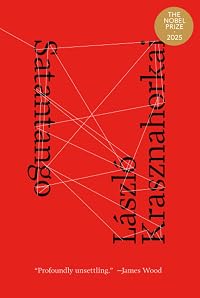
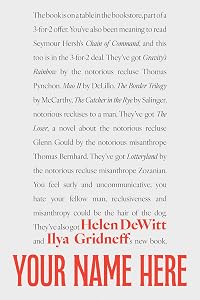
girlunderglass More young prodigies one falls head over heels with.
Katya0133 another book about a child prodigy, very different in style, but I enjoyed both
Member Reviews
Helen DeWitt's extraordinary debut, The Last Samurai, centers on the relationship between Sibylla, a single mother of precocious and rigorous intelligence, and her son, who, owing to his mother's singular attitude to education, develops into a prodigy of learning. Ludo reads Homer in the original Greek at 4 before moving on to Hebrew, Japanese, Old Norse, and Inuit; studying advanced mathematical techniques (Fourier analysis and Laplace transformations); and, as the title hints, endlessly watching and analyzing Akira Kurosawa's masterpiece, The Seven Samurai. But the one question that eludes an answer is that of the name of his father: Sibylla believes the film obliquely provides the male role models that Ludo's genetic father cannot, show more and refuses to be drawn on the question of paternal identity. The child thinks differently, however, and eventually sets out on a search, one that leads him beyond the certainties of acquired knowledge into the complex and messy world of adults.The novel draws on themes topical and perennial--the hothousing of children, the familiar literary trope of the quest for the (absent) father--and as such, divides itself into two halves: the first describes Ludo's education, the second follows him in his search for his father and father figures. The first stresses a sacred, Apollonian pursuit of logic, precise (if wayward) erudition, and the erratic and endlessly fascinating architecture of languages, while the second moves this knowledge into the world of emotion, human ambitions, and their attendant frustrations and failures.The Last Samurai is about the pleasure of ideas, the rich varieties of human thought, the possibilities that life offers us, and, ultimately, the balance between the structures we make of the world and the chaos that it proffers in return. Stylistically, the novel mirrors this ambivalence: DeWitt's remarkable prose follows the shifts and breaks of human consciousness and memory, capturing the intrusions of unspoken thought that punctuate conversation while providing tantalizing disquisitions on, for example, Japanese grammar or the physics of aerodynamics. It is remarkable, profound, and often very funny. Arigato DeWitt-sensei. --Burhan Tufail show less
This is a peculiar and awkward book but I really liked it. It really made me question why my child can't already read Japanese and do complicated maths - maybe I just don't have high enough expectations for what children can learn! How hard can it be to learn one Kanji every day?
We start with the mother's viewpoint and although she's clever and strange she is also trapped by her immigration status, by being a single mother and by her outlook on life. Later we get more from her sons point of view, who is by all measures a genius and educated beyond his years. But both of them lack human understanding and emotional intelligence.
I found this mix really fascinating and entertaining - there are lots of funny conversations and it's a very show more self consciously clever book. Ludo's search for his father is a little longwinded in places, and breaks the earlier flow a bit, the structure feels a bit uneven and odd. But it's very original and really thought provoking too. show less
We start with the mother's viewpoint and although she's clever and strange she is also trapped by her immigration status, by being a single mother and by her outlook on life. Later we get more from her sons point of view, who is by all measures a genius and educated beyond his years. But both of them lack human understanding and emotional intelligence.
I found this mix really fascinating and entertaining - there are lots of funny conversations and it's a very show more self consciously clever book. Ludo's search for his father is a little longwinded in places, and breaks the earlier flow a bit, the structure feels a bit uneven and odd. But it's very original and really thought provoking too. show less
The Last Samurai by Helen DeWitt
Hands down this is one of the best novels I have read in several years. Helen DeWitt has written a tour de force, a brilliant, funny, sometimes tragic tale about a single mother and her precocious young son, Ludo, whom she also endearingly calls The Phenomenon.
The Last Samurai follows the education and adventures of Ludo. His mother Sibylla meagerly supports the both, typing out copy for popular hobby magazines of mostly obscure pursuits. Home schooled, modeled after JS Mill and Yo Yo Ma , Ludo, by the age of 4, is familiar reading in both Greek and Latin and by the age of 11 has added Hebrew, Arabic, French, Japanese and several other languages. He and his mom spend most days on the London tube’s show more Circle Line, with shopping bags of esoteric texts in mathematics, physics and the humanities. People are often mystified by Ludo’s fund of knowledge and his clever conversations.
Sybill often comments on Ludo’s facile mind and her view of education:
“there was no shame in ignorance but in the refusal to learn.”
“He [Ludo] is capable of logical thought…it makes him appear exceptionally intelligent. The fact is that most people are illogical out of habit rather than stupidity; they could probably be rational quite easily if they were properly taught.”
Frustrated by her own life journey: “how cruel that we must wake each time to answer to the same name, revive the same memories, take up the same habits and stupidities that we shouldered the day before and lay down to sleep”; she often lets Ludo explore the city by himself believing that experience and instilled confidence are important aspects of education.
Sybill, obsessed with the Kurosawa film, Seven Samurai, continuously watches the film with Ludo, hoping he will find ideal male role models amongst the depicted samurai fighters.
Ludo continuously inquires as to “who is my father” to which his mom does not reply yet he eventually finds a hidden envelope marked “not to be opened until my death” and discovers that his father was a travel writer. Not knowing his name Ludo takes off on a crash course reading of travel writers imagining that Thor Hyderthol or Bruce Chatwin might be the man he is looking for.
Ludo finally discovers his father is Val Peters, a travel writer of mediocre talent whom he visits one day under the guise of collecting for charity. Invited in they have a brief yet moving encounter about books, languages, education, Ludo leaving with 2 autographed books but choosing not to inform him that he is his son.
Ludo concludes that he will hunt out his own father, he’ll pick one who lives up to the standards of a samurai, one who demonstrates courage, guile, compassion and humanity. A series of men are chosen each with an unusual backstory: an Oxford trained linguist who searches the globe for distinct forgotten dialects; a Nobel Award winning astronomer with a TV show on which is a boy, a mathematical savant, he discovered in the Amazon jungles; a world famous painter who made his mark diving in a bathysphere so he might discover and then depict the genuine blue colors of the deep sea; a professional gambler, bridge player and
bon vivant whose game skills sees right through Ludo’s ruse.
Indeed all unusual men:
“People who generalize about people are dismissed as superficial. It’s only when you’ve known large numbers of people that you can spot the unusual ones-when you look at each one as if you’d never seen one before, they all look alike”.
Ludo’s search for the hero father figure appears in a section of the book entitled. “A Good Samurai Will Parry the Blow”. As Ludo approaches each famous man he steels himself by repeating a line form the Kurosawa movie, “I drew my bamboo sword and raised it, I drew it back in a sweeping motion…” summoning the courage to say the line “I am your son”. Curiously most of the men believe him, each one having had a tryst encounter, a memorable night, an affair which could have easily produced a son. Due to their own wishes to have a son and Ludo’s unusual level of intelligence and cleverness they believe it is so. Astonished, Ludo then has to convince each man that indeed they are not his biological father.
Near the end of the book he encounters a famous journalist who after years of captivity and torture has safely returned to England On the cusp of taking his life, Ludo engages him in discussion about Sybill’s struggles with suicidal thoughts, with The Samaritans a group that helps people in distress. Red Devlin though is haunted with trauma wishing that “the world would be quite a pretty place if the only people tormented by atrocities were those who committed them”.
If I could, I would give The Last Samurai 6 stars! One of the best novels I have ever read. A book about a genius created by a brilliant, witty writer. A book spewing imagination, intelligence, humor and tragedy.
In DeWitt’s own words, her Afterword, she asserts that perhaps Ludo was not a genius, “that like JS Mill thought that he had no special aptitude or intelligence, only the advantage of an unusual education; we still don’t know whether he was unduly modest.”
She wrote a story about a fatherless boy, a clever little guy whose mother exposed him to dozens of languages and books on mathematics, physics and the humanities. She writes, “its much harder to imagine what one might have been with better chances, greater challenges. Since there is no age at which the opportunities offered Ludo are the norm, we don’t know whether he was a genius or not-only that he is an oddity in a society with very low expectations.” show less
Hands down this is one of the best novels I have read in several years. Helen DeWitt has written a tour de force, a brilliant, funny, sometimes tragic tale about a single mother and her precocious young son, Ludo, whom she also endearingly calls The Phenomenon.
The Last Samurai follows the education and adventures of Ludo. His mother Sibylla meagerly supports the both, typing out copy for popular hobby magazines of mostly obscure pursuits. Home schooled, modeled after JS Mill and Yo Yo Ma , Ludo, by the age of 4, is familiar reading in both Greek and Latin and by the age of 11 has added Hebrew, Arabic, French, Japanese and several other languages. He and his mom spend most days on the London tube’s show more Circle Line, with shopping bags of esoteric texts in mathematics, physics and the humanities. People are often mystified by Ludo’s fund of knowledge and his clever conversations.
Sybill often comments on Ludo’s facile mind and her view of education:
“there was no shame in ignorance but in the refusal to learn.”
“He [Ludo] is capable of logical thought…it makes him appear exceptionally intelligent. The fact is that most people are illogical out of habit rather than stupidity; they could probably be rational quite easily if they were properly taught.”
Frustrated by her own life journey: “how cruel that we must wake each time to answer to the same name, revive the same memories, take up the same habits and stupidities that we shouldered the day before and lay down to sleep”; she often lets Ludo explore the city by himself believing that experience and instilled confidence are important aspects of education.
Sybill, obsessed with the Kurosawa film, Seven Samurai, continuously watches the film with Ludo, hoping he will find ideal male role models amongst the depicted samurai fighters.
Ludo continuously inquires as to “who is my father” to which his mom does not reply yet he eventually finds a hidden envelope marked “not to be opened until my death” and discovers that his father was a travel writer. Not knowing his name Ludo takes off on a crash course reading of travel writers imagining that Thor Hyderthol or Bruce Chatwin might be the man he is looking for.
Ludo finally discovers his father is Val Peters, a travel writer of mediocre talent whom he visits one day under the guise of collecting for charity. Invited in they have a brief yet moving encounter about books, languages, education, Ludo leaving with 2 autographed books but choosing not to inform him that he is his son.
Ludo concludes that he will hunt out his own father, he’ll pick one who lives up to the standards of a samurai, one who demonstrates courage, guile, compassion and humanity. A series of men are chosen each with an unusual backstory: an Oxford trained linguist who searches the globe for distinct forgotten dialects; a Nobel Award winning astronomer with a TV show on which is a boy, a mathematical savant, he discovered in the Amazon jungles; a world famous painter who made his mark diving in a bathysphere so he might discover and then depict the genuine blue colors of the deep sea; a professional gambler, bridge player and
bon vivant whose game skills sees right through Ludo’s ruse.
Indeed all unusual men:
“People who generalize about people are dismissed as superficial. It’s only when you’ve known large numbers of people that you can spot the unusual ones-when you look at each one as if you’d never seen one before, they all look alike”.
Ludo’s search for the hero father figure appears in a section of the book entitled. “A Good Samurai Will Parry the Blow”. As Ludo approaches each famous man he steels himself by repeating a line form the Kurosawa movie, “I drew my bamboo sword and raised it, I drew it back in a sweeping motion…” summoning the courage to say the line “I am your son”. Curiously most of the men believe him, each one having had a tryst encounter, a memorable night, an affair which could have easily produced a son. Due to their own wishes to have a son and Ludo’s unusual level of intelligence and cleverness they believe it is so. Astonished, Ludo then has to convince each man that indeed they are not his biological father.
Near the end of the book he encounters a famous journalist who after years of captivity and torture has safely returned to England On the cusp of taking his life, Ludo engages him in discussion about Sybill’s struggles with suicidal thoughts, with The Samaritans a group that helps people in distress. Red Devlin though is haunted with trauma wishing that “the world would be quite a pretty place if the only people tormented by atrocities were those who committed them”.
If I could, I would give The Last Samurai 6 stars! One of the best novels I have ever read. A book about a genius created by a brilliant, witty writer. A book spewing imagination, intelligence, humor and tragedy.
In DeWitt’s own words, her Afterword, she asserts that perhaps Ludo was not a genius, “that like JS Mill thought that he had no special aptitude or intelligence, only the advantage of an unusual education; we still don’t know whether he was unduly modest.”
She wrote a story about a fatherless boy, a clever little guy whose mother exposed him to dozens of languages and books on mathematics, physics and the humanities. She writes, “its much harder to imagine what one might have been with better chances, greater challenges. Since there is no age at which the opportunities offered Ludo are the norm, we don’t know whether he was a genius or not-only that he is an oddity in a society with very low expectations.” show less
The rather singular Sibylla is the product of rather curious parents. Although we don’t see her early life here, we can only imagine it to be, well, rather singular. Eventually she blags her way into Oxford university and is suitably astounding. But at some point she finds herself in need of money, which initiates a series of events (I’m skipping over a bit here) which culminate in the birth of her son, Ludo. (Actually that now seems like rather a lengthy elision.)
Ludo might be described as exceptional, having started learning Ancient Greek at the age of four. But by comparison to J.S. Mill, he was already a late bloomer. For me, however, it’s really Ludo’s mother, Sibylla, who is more fascinating. Because it’s her effort of show more will, and unacknowledged brilliance, that opens the doors for Ludo. He merely has to walk through. Of course when the story turns to Ludo’s quest for his father, or possible father, Sibylla’s presence in the story gets sidelined somewhat. That was probably inevitable, but it makes the last third of the novel somewhat less interesting. (Though perhaps it’s more interesting for other people.)
Helen DeWitt’s writing is engaging and full of charm (though that rather makes it sound superficial, and it’s definitely not that). I loved the intense treatment of Kurosawa’s Seven Samurai, and even though I couldn’t read the Japanese or the Ancient Greek passages, I did not find that problematic. (Just a bit personally disappointing.)
So easy to recommend. show less
Ludo might be described as exceptional, having started learning Ancient Greek at the age of four. But by comparison to J.S. Mill, he was already a late bloomer. For me, however, it’s really Ludo’s mother, Sibylla, who is more fascinating. Because it’s her effort of show more will, and unacknowledged brilliance, that opens the doors for Ludo. He merely has to walk through. Of course when the story turns to Ludo’s quest for his father, or possible father, Sibylla’s presence in the story gets sidelined somewhat. That was probably inevitable, but it makes the last third of the novel somewhat less interesting. (Though perhaps it’s more interesting for other people.)
Helen DeWitt’s writing is engaging and full of charm (though that rather makes it sound superficial, and it’s definitely not that). I loved the intense treatment of Kurosawa’s Seven Samurai, and even though I couldn’t read the Japanese or the Ancient Greek passages, I did not find that problematic. (Just a bit personally disappointing.)
So easy to recommend. show less
Let me start off by saying, because I'll be posting this to my blog, that this book has nothing to do with the film starring Tom Cruise. The film was fine, I don't have anything against it, but the stories could not be more different, except that they both have to do with Samurai, in one way or another.
Helen DeWitt put everything into this book. That's not to say she tried to cram the whole world into 500 pages, it's just to say that she put herself into this book. All of it. I have to believe that. The scope of it, the emotion, the stories--it must have taken everything she had.
It's a wonderful book.
It's a wonderful book about a boy and his mother and about genius and heroism and goodness. There's also a fair amount of stuff in there show more about various languages and some mathematics and music, and some of it's quite technical. But this should not dissuade you from reading it! You do not need to understand irregular Arabic verb forms to be utterly taken in by the tale she's telling. And it's completely satisfying.
A final word of advice if you have the book on your shelf and are thinking about cracking it open: after about 50 pages, you will want to know what else DeWitt has written, and you will Google her name and discover, to your dismay, that she has written only one other book and that this book is only available as an ebook on her website. Then you will find some interviews with her, or you will find her blog, and you will discover that she has not been treated kindly by the publishing biz. Don't read these things. For weeks after I read that stuff, all I could hear in my head when I opened to my bookmark was the voice of the writer, Helen DeWitt, who has been beaten up by a business gone crazy in its death throes, and not the voice of her narrator.
Don't let this happen to you. Read the book in full. Let it take you in. Then write a nice review of it, or buy it for a friend who likes a good story, or write a glowing letter to Ms. DeWitt thanking her for writing it.
It's that good. show less
Helen DeWitt put everything into this book. That's not to say she tried to cram the whole world into 500 pages, it's just to say that she put herself into this book. All of it. I have to believe that. The scope of it, the emotion, the stories--it must have taken everything she had.
It's a wonderful book.
It's a wonderful book about a boy and his mother and about genius and heroism and goodness. There's also a fair amount of stuff in there show more about various languages and some mathematics and music, and some of it's quite technical. But this should not dissuade you from reading it! You do not need to understand irregular Arabic verb forms to be utterly taken in by the tale she's telling. And it's completely satisfying.
A final word of advice if you have the book on your shelf and are thinking about cracking it open: after about 50 pages, you will want to know what else DeWitt has written, and you will Google her name and discover, to your dismay, that she has written only one other book and that this book is only available as an ebook on her website. Then you will find some interviews with her, or you will find her blog, and you will discover that she has not been treated kindly by the publishing biz. Don't read these things. For weeks after I read that stuff, all I could hear in my head when I opened to my bookmark was the voice of the writer, Helen DeWitt, who has been beaten up by a business gone crazy in its death throes, and not the voice of her narrator.
Don't let this happen to you. Read the book in full. Let it take you in. Then write a nice review of it, or buy it for a friend who likes a good story, or write a glowing letter to Ms. DeWitt thanking her for writing it.
It's that good. show less
What to say about a book written by someone who is so smart she make David Foster Wallace look like a remedial grade-school student?
It's a frustratingly brilliant book in that there is so much information that the brain and eye skip over because of difficulty, and make re-reading page-by-page nearly essential because it feels like the book is imparting secret truths about life.
Amongst those truths: the brilliant almost never end up where you think they will, opportunity is often more important than innate intelligence, formal education is less important that one thinks though interaction with extremely smart people is crucial to development, culture is reflected through language and language impacts culture and individuals in show more interesting ways, music and cinema each are their own sorts of languages, and a dozen more.
The change in perspective in the second section is a bit jarring at first, but stick with it, please. I assure you it is worth it. show less
It's a frustratingly brilliant book in that there is so much information that the brain and eye skip over because of difficulty, and make re-reading page-by-page nearly essential because it feels like the book is imparting secret truths about life.
Amongst those truths: the brilliant almost never end up where you think they will, opportunity is often more important than innate intelligence, formal education is less important that one thinks though interaction with extremely smart people is crucial to development, culture is reflected through language and language impacts culture and individuals in show more interesting ways, music and cinema each are their own sorts of languages, and a dozen more.
The change in perspective in the second section is a bit jarring at first, but stick with it, please. I assure you it is worth it. show less
A really striking story about a single mother raising an incredibly talented child in a very unconventional way. The mother is also incredibly gifted and unusual. The novel asks you to imagine the extraordinary things we could achieve if we abandoned Sesame Street for kids and gave them access to Greek and deep maths and the ancient great works and classical music. The book is written with much reduced punctuation which somehow makes it more intimate and immediate. Strongly recommended.
Members
- Recently Added By
Lists

Vulture's 100 Best Books of the 21st Century (So Far)
98 works; 9 members

International IMPAC Dublin Literary Award
179 works; 6 members

Books Read in 2003
261 works; 7 members

Blackwell's Five Foot Bookshelf
72 works; 4 members

A Novel Cure
742 works; 23 members

Franklit
95 works; 1 member

Top Five Books of 2023
767 works; 317 members

The Atlantic's The Great American Novel
136 works; 12 members
NYT 100 best books of 21st C
100 works; 31 members

Top Five Books of 2024
795 works; 264 members

Gen X Library
245 works; 4 members

02
28 works; 1 member
Author Information

7+ Works 3,783 Members
Helen Dewitt was born in 1957 in Takoma Park, Maryland. She grew up mainly in South America. She started a degree at Smith College in 1975 and dropped out twice, the first time to read Eliot and Proust, the second time to go to Oxford to study classics and philosophy. She received a B. A. at Lady Margaret Hall and a doctorate at Brasenose, then show more spent a year as junior research fellow at Somerville before deciding to give up academic life in 1989. She now lives in England. (Bowker Author Biography) show less
Some Editions
Awards and Honors
Awards
Distinctions
Common Knowledge
- Original publication date
- 2000
- People/Characters
- Sibylla; Ludo
- Important places
- London, England, UK; United Kingdom
- Dedication
- To Ann Cotton
- First words
- My father's father was a Methodist minister.
- Last words
- (Click to show. Warning: May contain spoilers.)I said
Make this CD and I'll teach you to play Straight No Chaser.
He said
Done. - Original language
- English
Classifications
Statistics
- Members
- 2,391
- Popularity
- 8,235
- Reviews
- 67
- Rating
- (4.20)
- Languages
- 15 — Danish, Dutch, English, Estonian, Finnish, French, German, Italian, Norwegian (Bokmål), Norwegian, Polish, Portuguese, Russian, Spanish, Swedish
- Media
- Paper, Audiobook, Ebook
- ISBNs
- 40
- ASINs
- 9