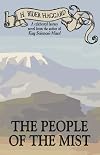
The People of the Mist
by H. Rider Haggard
On This Page
Description
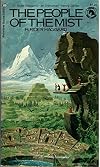
Though best known for creating the series featuring the unforgettable adventurer Allan Quatermain, author Henry Rider Haggard's other action-adventure heroes are just as compelling and believable. The People of the Mist recounts explorer Leonard Outram's exploits in Africa. Haggard loyalists and other fans of the genre are sure to delight in this thrill-a-minute page-turner..
Tags
Recommendations





Member Reviews
This had exciting parts interspersed with somewhat duller episodes, though the climax of the main plot was as gripping as anything else I have read by the author. I found the main two characters unsympathetic and the black servant Otter tby far the most likeable character (followed by the priest Francisco). Otter accompanies the hero and his bride back to England at the end, but even though they obviously like him and even admire him to some extent, they still treat him like a well loved pet dog rather than a fellow human. A sign of the times of course and the attitude towards Africans here is not as negative as in some other works of the time, but sad even so.
On the whole, I enjoyed the story, but there were times it was hard to continue reading. Some old British novels contain superfluous details, stodgy. 'At length', the author eventually gets to the point. 'Presently', I admit I skimmed some paragraphs that were predictable. The author's use of 'at length' and 'presently' was excessive.
In a couple scenes, a character is describing events to another or translating for one that speaks another language, events that the reader is already well aware. This could go on for several paragraphs.
On the up-side, the narrative occasionally shifts to the significance of the adventure or how the characters are changed by their experiences. Those paragraphs sneak up on you. 'Leonard and Juanna were show more making acquaintance with the fact that fortune never gives with both hands, as the French say, but loves to rob with one while she bestows with the other.'
I try to judge a book within the historical context that it was written. This was 1894, and an author needs to understand his audience, or 'customer', so to speak. If you can overlook the flaws that didn't matter in 1894, then you might enjoy this book.
With Thanks to Project Gutenberg for providing a free copy. show less
In a couple scenes, a character is describing events to another or translating for one that speaks another language, events that the reader is already well aware. This could go on for several paragraphs.
On the up-side, the narrative occasionally shifts to the significance of the adventure or how the characters are changed by their experiences. Those paragraphs sneak up on you. 'Leonard and Juanna were show more making acquaintance with the fact that fortune never gives with both hands, as the French say, but loves to rob with one while she bestows with the other.'
I try to judge a book within the historical context that it was written. This was 1894, and an author needs to understand his audience, or 'customer', so to speak. If you can overlook the flaws that didn't matter in 1894, then you might enjoy this book.
With Thanks to Project Gutenberg for providing a free copy. show less
When I was a teenager a novel by Haggard called Wisdom's Daughter caught my eye. I loved that historical fantasy set in Ancient Egypt and bought up every Haggard book I could find, one book short of a dozen. It's decades later, they were still on my shelves, and I found I could vividly remember all but two--Heart of the World and People of the Mist. That puts People of the Mist at the bottom of the pile for me--although for what it's worth, I did like this more than Heart of the World.
Haggard's style is probably not going to be congenial to the average contemporary reader. I've seen it called "overwritten" and it can be stiff and melodramatic. Once you've read a few of his books, you can begin to see them as formulaic. Leonard and show more Juanna, the hero and heroine of the novel, aren't as memorable as Alan Quartermain (a ancestor of Indiana Jones) or Ayesha (aka She-Who-Must-Be-Obeyed) but I did find them interesting, even if not completely fleshed out figures. You don't read Haggard the way you do Hardy or Eliot for great prose about the Human Condition (tm). And yes, there is racial and gender stereotyping--some may feel offended at Haggard's tendency to call people of pre-industrial cultures "savages." But he's only as bad as his (Victorian) times--not, like say Lovecraft, worse. What you do read Haggard for is adventures in colorful settings. There's hardly a page not filled with action, and he's the king of the tale of the "lost civilization." So yes, I was entertained. I wouldn't chose this as my first Haggard book--I'd recommend instead one of the Ayesha novels (Wisdom's Daughter, She) or Alan Quartermain (such as the ever-popular King Solomon's Mines or his Viking tale Eric Brighteyes. But if you do then find Haggard fun, this is worth a try. show less
Haggard's style is probably not going to be congenial to the average contemporary reader. I've seen it called "overwritten" and it can be stiff and melodramatic. Once you've read a few of his books, you can begin to see them as formulaic. Leonard and show more Juanna, the hero and heroine of the novel, aren't as memorable as Alan Quartermain (a ancestor of Indiana Jones) or Ayesha (aka She-Who-Must-Be-Obeyed) but I did find them interesting, even if not completely fleshed out figures. You don't read Haggard the way you do Hardy or Eliot for great prose about the Human Condition (tm). And yes, there is racial and gender stereotyping--some may feel offended at Haggard's tendency to call people of pre-industrial cultures "savages." But he's only as bad as his (Victorian) times--not, like say Lovecraft, worse. What you do read Haggard for is adventures in colorful settings. There's hardly a page not filled with action, and he's the king of the tale of the "lost civilization." So yes, I was entertained. I wouldn't chose this as my first Haggard book--I'd recommend instead one of the Ayesha novels (Wisdom's Daughter, She) or Alan Quartermain (such as the ever-popular King Solomon's Mines or his Viking tale Eric Brighteyes. But if you do then find Haggard fun, this is worth a try. show less
If you like things like Indiana Jones and Tomb Raider, you might like H. Rider Haggard. He's the author of many treasure and adventure books, including the Allen Quartermain series that had a movie made of them.
This one has some fun twists to the quest theme because it is about a man who lost his fortune and vows with his brother to get the family estate back. There aren't too many magical or surreal twists, everything is conceivable and yet still quite fantastic. Full of adventure and danger, it keeps you interested the entire way, with great sub-plots to keep it going.
One of the great attractions of H. Rider Haggard, and The People of the Mist in specific is that the language and descriptions are delightfully old fashioned. The dialog show more uses great, full language, the kind of language that we read in old books, but never seem to hear any more. Not in a boring way, but in a rich, interesting and descriptive way. Pretty much everything someone says is said the way you *wished* you could say things but never do.
I wouldn't say this is 'easy' reading because the language and density does slow you down, but it isn't philosophical or deep. In a way, it is nice that it is slow, the way that it is nice to eat a big steak slowly instead of wolfing it down.
Escapism at its best! show less
This one has some fun twists to the quest theme because it is about a man who lost his fortune and vows with his brother to get the family estate back. There aren't too many magical or surreal twists, everything is conceivable and yet still quite fantastic. Full of adventure and danger, it keeps you interested the entire way, with great sub-plots to keep it going.
One of the great attractions of H. Rider Haggard, and The People of the Mist in specific is that the language and descriptions are delightfully old fashioned. The dialog show more uses great, full language, the kind of language that we read in old books, but never seem to hear any more. Not in a boring way, but in a rich, interesting and descriptive way. Pretty much everything someone says is said the way you *wished* you could say things but never do.
I wouldn't say this is 'easy' reading because the language and density does slow you down, but it isn't philosophical or deep. In a way, it is nice that it is slow, the way that it is nice to eat a big steak slowly instead of wolfing it down.
Escapism at its best! show less
It was a good book, especially if you like Victorian adventure stories. I do and this was almost as good as King Solomon's Mines. There was a love interest that was mostly annoying since it was rife with misunderstanding and the end was a bit fluffy.
Rather bombastic and too contrived. Nothing more than a story to pass brainless hours. One very positive note: use of some excellent vocabulary.
Lost world story. A aristocrat who has lost everything goes to Africa to make his fortune. He meets a beautiful woman. He and his companions are trapped by the people of the mist.
Members
- Recently Added By
Lists

Ballantine Adult Fantasy Series
85 works; 8 members
Author Information

Sir Henry Rider Haggard (1856-1925) is best remembered for his 34 adventure fantasy novels set in exotic locations. As a child, Haggard, whose father was an English barrister, was considered dim-witted and was inclined to daydreaming. His parents ended his formal education when he was seventeen, and he was sent to work in South Africa, where his show more imagination was inspired by the people, animals, and jungle. He became close friends with authors Rudyard Kipling and Andrew Lang. Haggard's most popular books are King Solomon's Mines (1886) and She (1887). He also wrote short stories, as well as nonfiction on topics such as gardening, English farming, and rural life, interests which led to duties on government commissions concerned with land maintenance. For his literary contributions and his government service, Haggard was knighted in 1912. Several of Haggard's novels have been filmed. She was filmed in 1965, starring Ursula Andress. King Solomon's Mines was filmed with Stewart Granger and Deborah Kerr in 1950, and again with Richard Chamberlain and Sharon Stone in 1985. Also, the novel Allan Quatermain was filmed as Allan Quatermain and the Lost City of Gold with Richard Chamberlain and Sharon Stone in 1986. (Bowker Author Biography) show less
Some Editions
Awards and Honors
Series
Belongs to Publisher Series
Henry Rider Haggard (Band 12)
Heyne Science Fiction & Fantasy (06/4148)
Work Relationships
Common Knowledge
- Canonical title
- The People of the Mist
- Original title
- The People of the Mist
- Original publication date
- 1894
- People/Characters
- Jane Beach; Nam; Olfam; Otter; Leonard Outram; Thomas Outram (Tom) (show all 9); Antonio Pereira (the Yellow Devil); Juanna Rodd (the Shepherdess of Heaven); Soa
- Important places
- Outram Hall, England, UK; Grave Mountain; Manica Moutains, Eastern Africa; Africa; Zambezi River
- First words
- The January afternoon was passing into night, the air was cold and still, so still that not a single twig of the naked beech-trees stirred; on the grass of the meadows lay a thin white rime, half frost, half snow; the firs st... (show all)ood out blackly against a steel-hued sky, and over the tallest of them hung a single star.
- Last words
- (Click to show. Warning: May contain spoilers.)"Mother, may Otter get the spear and the rope and tell us the story of how he dragged you and father up the ice-bridge?"
Classifications
Statistics
- Members
- 573
- Popularity
- 51,508
- Reviews
- 10
- Rating
- (3.51)
- Languages
- English, French, German
- Media
- Paper, Audiobook, Ebook
- ISBNs
- 87
- ASINs
- 36