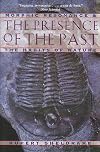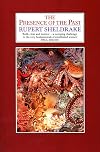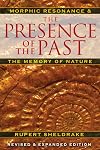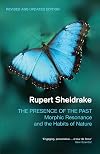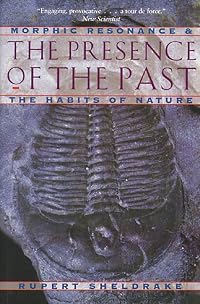
The Presence of the Past: Morphic Resonance and the Habits of Nature
by Rupert Sheldrake
On This Page
Description
"Explains how self-organizing systems, from crystals to human societies, share collective memories that influence their form and behavior"--Tags
Recommendations









Member Reviews
1. A radical ground-breaking hypothesis that challenges the fundamental assumptions of modern science by suggesting that nature itself has a consciousness. Sheldrake is especially appealing to those interested in holistic science. Line drawings. Source: Publisher
2. Rupert Sheldrake's theory of morphic resonance challenges the fundamental assumptions of modern science. An accomplished biologist, Sheldrake proposes that all natural systems, from crystals to human society, inherit a collective memory that influences their form and behavior. Rather than being ruled by fixed laws, nature is essentially habitual. The Presence of the Past lays out the evidence for Sheldrake's controversial theory, exploring its implications in the fields of show more biology, physics, psychology, and sociology. At the same time, Sheldrake delivers a stinging critique of conventional scientific thinking. In place of the mechanistic, neo-Darwinian worldview he offers a new understanding of life, matter, and mind. Source: GoodReads show less
2. Rupert Sheldrake's theory of morphic resonance challenges the fundamental assumptions of modern science. An accomplished biologist, Sheldrake proposes that all natural systems, from crystals to human society, inherit a collective memory that influences their form and behavior. Rather than being ruled by fixed laws, nature is essentially habitual. The Presence of the Past lays out the evidence for Sheldrake's controversial theory, exploring its implications in the fields of show more biology, physics, psychology, and sociology. At the same time, Sheldrake delivers a stinging critique of conventional scientific thinking. In place of the mechanistic, neo-Darwinian worldview he offers a new understanding of life, matter, and mind. Source: GoodReads show less
In seeking to explain how the practice of pecking the tops off milk bottles spread across the world (almost magically) and other similar evidence of 'learning' across vast space, Sheldrake proposes that memory is inherent in nature; that nature has a 'morphic field' which guides and shapes growth in both the plant world and the animal world; and that this inherent memory depends on 'morphic resonance', a process which involves action at a distance in both space and time. He claims that our own memories result from our tuning in to ourselves in the past.
This is a rather brief summary of a challenging theory. Since science progresses in the tiniest leaps at the margin, and senior academics are not known to be willing to research something show more so far from their comfort zones, one needs to suspend what one 'knows' and consider unprovable matters to be receptive to Sheldrake's attempted explanation. But do we not accept the unconscious (how does one prove scientifically its existence?) or Dawkins' memes, 'punctuated equilibrium' in evolution theory, etc. etc?
Worth reading, were one to have an open mind. Yet, not convincing. show less
This is a rather brief summary of a challenging theory. Since science progresses in the tiniest leaps at the margin, and senior academics are not known to be willing to research something show more so far from their comfort zones, one needs to suspend what one 'knows' and consider unprovable matters to be receptive to Sheldrake's attempted explanation. But do we not accept the unconscious (how does one prove scientifically its existence?) or Dawkins' memes, 'punctuated equilibrium' in evolution theory, etc. etc?
Worth reading, were one to have an open mind. Yet, not convincing. show less
That past, present and future somehow co-exist it's an understanding I felt as true almost a year ago, so I agree with the hypothesis presented in this book, however, the author keeps repeating the same concept for 486 pages... it's really not necessary, also considering his logic passages are not necessarily that logic...and it's not that with this book he really proves anything from a rational-scientific point of view.
LA PRESENCIA DEL PASADO RESONANCIA MORFICA Y HABITOS DE LA NATURALEZA
Desafiando suposiciones fundamentales de la ciencia, esta hipótesis revolucionaria sugiere que la Naturaleza tiene memoria. No es una máquina y de esta manera, cada tipo de sistema (se trate de cristales, pájaros o sociedades) se forma a partir de un único campo mórfico con una memoria colectiva o asociada, y no a partir de leyes inmutables universales.
Desafiando suposiciones fundamentales de la ciencia, esta hipótesis revolucionaria sugiere que la Naturaleza tiene memoria. No es una máquina y de esta manera, cada tipo de sistema (se trate de cristales, pájaros o sociedades) se forma a partir de un único campo mórfico con una memoria colectiva o asociada, y no a partir de leyes inmutables universales.
Feb 12, 2025Spanish
Ratings
Members
- Recently Added By
Author Information

41+ Works 3,759 Members
Rupert Sheldrake is the former director of studies in biochemistry and cell biology at Cambridge University. He lives in London.
Common Knowledge
- Dedication
- To all my teachers, past and present
- First words
- We inherited a dual vision of the world from nineteenth-century science: on the one hand a great evolutionary process on earth, and on the other, the physical eternity of a mechanistic universe.
- Last words
- (Click to show. Warning: May contain spoilers.)Only faith, love, mystical insight, contemplation, enlightenment, or the grace of God can take us beyond them.
Classifications
Statistics
- Members
- 398
- Popularity
- 78,183
- Reviews
- 5
- Rating
- (3.29)
- Languages
- English, German, Spanish
- Media
- Paper, Ebook
- ISBNs
- 18
- UPCs
- 1
- ASINs
- 4