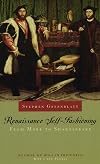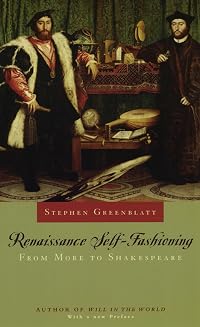
Renaissance Self-Fashioning: From More to Shakespeare
by Stephen Greenblatt
On This Page
Description
Renaissance Self-Fashioning is a study of sixteenth-century life and literature that spawned a new era of scholarly inquiry. Stephen Greenblatt examines the structure of selfhood as evidenced in major literary figures of the English Renaissance-More, Tyndale, Wyatt, Spenser, Marlowe, and Shakespeare-and finds that in the early modern period new questions surrounding the nature of identity heavily influenced the literature of the era. Now a classic text in literary studies, Renaissance show more Self-Fashioning continues to be of interest to students of the Renaissance, English literature, and the new historicist tradition, and this new edition includes a preface by the author on the book's creation and influence. "No one who has read [Greenblatt's] accounts of More, Tyndale, Wyatt, and others can fail to be moved, as well as enlightened, by an interpretive mode which is as humane and sympathetic as it is analytical. These portraits are poignantly, subtly, and minutely rendered in a beautifully lucid prose alive in every sentence to the ambivalences and complexities of its subjects."-Harry Berger Jr., University of California, Santa Cruz. show lessTags
Recommendations







Member Reviews
This is a collection of essays of Literary criticism of some of the seminal works of the 16th century. The book concerns itself in taking a holistic view of the texts and authors under discussion and so the culture in which the authors lived and worked becomes as important as the the works themselves. This is the sort of literary criticism that I find the most beneficial to a better understanding of literature from this period and is one of the reasons why I have chosen to absorb myself in all things sixteenth century. Greenblatt was on a winner with me from the start and I found his book very interesting, also his writing is lively, rich in detail and encourages his readers to take perhaps another look at the texts themselves. There show more are dangers in Greenblatt’s approach and the most significant one is that the criticism will place too much influence on the surrounding culture so that in an attempt to get inside the minds of the authors the critic may be misinterpreting the works, especially if he has set himself with a theme or new idea from the start and he tries to make the works fit into that: Greenblatt could be accused of this, but this is for the reader to decide.
“At the Table of the Great: Mores Self-fashioning and Self-Cancellation” takes as its central text Sir Thomas Mores Utopia. It asks the question of how Thomas More could write an idealised tract on an imaginary land that seemed so realistic, (it had people wondering how they could get there) and so different from Tudor England and yet ten years later he was enthusiastically torturing and burning protestant heretics who he saw as a challenge to everything fundamentally English. The Island of Utopia seems on first reading to demonstrate an enlightened view on a society, where every individual is encouraged to seek a work/life balance for himself and his community with a clear indication that togetherness and equality will reap the best rewards. For 21st century readers this first impression is offset by some very dark clouds indeed: for example the need for a system of slavery, and almost a complete absence of privacy. Greenblatt’s reading of the text shows that in some ways Utopia bore similarities to the culture of Tudor England and Tudor power and while it certainly could be interpreted at a critique of Tudor society it was also an attempt by More to fantasise on his own internal struggles.
“The Word of God in the Age of Mechanical Reproduction” takes as its central text Tyndale’s ‘Obedience of a Christian Man’ A text that benefited from being able to be printed relatively cheaply and celebrated as a seminal text given to Henry VIII by the protestant Anne Boleyn. The Obedience of a Christian Man was no less than a battleground for the soul of Christians and was answered by Thomas More from the catholic side first by a refutation in print and then by savage repression. Greenblatt is excellent in describing this battle of the religions in an understandable way for his modern readers, some examples from Obedience of a Christian Man are highlighted with some insightful commentary that really brings this intense struggle to life. Tudor power once again becomes a central issue with Tyndale’s works in Greenblatt’s opinion being no less than an attempt at a grab for power. He is able to build on his ideas from the first essay on Thomas More and in doing so produces my favourite essay of the six.
“Power, Sexuality, and Inwardness in Wyatt’s Poetry”. The central texts here are some examples from Sir Thomas Wyatt’s poems. The most notable are Wyatt’s translations of the Penitential Psalms which Greenblatt claims reveal much about Wyatt’s inner self and the culture of the times. He closes another excellent essay with close readings of Wyatt’s two most famous poems; “Whoso list to Hunt” and “They flee from me that sometimes did me seek.” Two of Wyatt’s poems that appeal to the modern reader, because of what can be read into them with our knowledge of Wyatt’s eventful life: Imprisoned twice in the Tower of London and once being suspected of being Anne Boleyn’s lover. Someone has said that for a woman, Wyatt would have been the most dangerous of lovers with his ability to charm and manipulate for his own ends and these poems are full of the inner Wyatt. However it may be unfair to judge the man from these two examples, because much of Wyatts poetry is for amusement in the courtly love tradition, he composed many of them as songs, he was by all accounts an excellent musician.
“To Fashion a Gentleman: Spenser and the Destruction of the Bower of Bliss”. In this chapter Greenblatt recaps on the previous three chapters and then launches into an episode from The Faerie Queen: Guyon the knight of Temperance and his complete destruction of the bower of Bliss. Spenser is portrayed by Greenblatt as the arch colonialist who carried out what today would be seen as horrendous crimes in Ireland. There is no doubt that The Faerie Queen is a homage to Gloriana (Queen Elizabeth I ) and so Greenblatt’s view on the idea of Spenser’s knight being involved in a struggle to assert the power of Queen Elizabeth is on safe ground. But as in all of these essays there is much more going on as Greenblatt guides us through the culture and society of the court of Queen Elizabeth I: for example there is an excellent section on the importance of rhetoric in the society and literature of the time.
“Marlowe and the Will to Absolute Play” takes as its central text Marlowe’s play “Tamburlaine the Great” I was at a disadvantage here because this is the only text that I had not read myself, but I still enjoyed Greenblatt’s discussion, however whether I agree with his views on Marlowe’s play will have to wait until I have read it. The title of the chapter with its reference to “Will” leads us nicely into the final chapter.
"The Improvisation of Power," which takes as its central text Othello. I was on safer ground here because Othello is one of my favourite Shakespeare plays and even though I know it fairly well I still found much that was insightful in Greenblatts commentary. I did not agree with everything he claimed to read into the text, but nevertheless enjoyed the discussion and noticed that Greenblatt had finally got the P word (that is power) into the title of his essay. Greenblatt is not very kind to Tudor society and culture. The impression he leaves is of a repressive absolute monarchy where image counts for almost everything and this had an effect on the literature that resulted from this culture of repression.
There is an introduction (and an epilogue) to these essays where Greenblatt explains why he has used the title “Renaissance Self fashioning.” I did not fully understand it on first reading and after going back to the introduction after reading the essays I was still not sure I understood the supposed glue that binds these essays together. No matter; the essays themselves are so rich in content that I will return to them from time to time. I have hardly been able to do them justice in this brief review. Excellent and 4.5 stars. show less
“At the Table of the Great: Mores Self-fashioning and Self-Cancellation” takes as its central text Sir Thomas Mores Utopia. It asks the question of how Thomas More could write an idealised tract on an imaginary land that seemed so realistic, (it had people wondering how they could get there) and so different from Tudor England and yet ten years later he was enthusiastically torturing and burning protestant heretics who he saw as a challenge to everything fundamentally English. The Island of Utopia seems on first reading to demonstrate an enlightened view on a society, where every individual is encouraged to seek a work/life balance for himself and his community with a clear indication that togetherness and equality will reap the best rewards. For 21st century readers this first impression is offset by some very dark clouds indeed: for example the need for a system of slavery, and almost a complete absence of privacy. Greenblatt’s reading of the text shows that in some ways Utopia bore similarities to the culture of Tudor England and Tudor power and while it certainly could be interpreted at a critique of Tudor society it was also an attempt by More to fantasise on his own internal struggles.
“The Word of God in the Age of Mechanical Reproduction” takes as its central text Tyndale’s ‘Obedience of a Christian Man’ A text that benefited from being able to be printed relatively cheaply and celebrated as a seminal text given to Henry VIII by the protestant Anne Boleyn. The Obedience of a Christian Man was no less than a battleground for the soul of Christians and was answered by Thomas More from the catholic side first by a refutation in print and then by savage repression. Greenblatt is excellent in describing this battle of the religions in an understandable way for his modern readers, some examples from Obedience of a Christian Man are highlighted with some insightful commentary that really brings this intense struggle to life. Tudor power once again becomes a central issue with Tyndale’s works in Greenblatt’s opinion being no less than an attempt at a grab for power. He is able to build on his ideas from the first essay on Thomas More and in doing so produces my favourite essay of the six.
“Power, Sexuality, and Inwardness in Wyatt’s Poetry”. The central texts here are some examples from Sir Thomas Wyatt’s poems. The most notable are Wyatt’s translations of the Penitential Psalms which Greenblatt claims reveal much about Wyatt’s inner self and the culture of the times. He closes another excellent essay with close readings of Wyatt’s two most famous poems; “Whoso list to Hunt” and “They flee from me that sometimes did me seek.” Two of Wyatt’s poems that appeal to the modern reader, because of what can be read into them with our knowledge of Wyatt’s eventful life: Imprisoned twice in the Tower of London and once being suspected of being Anne Boleyn’s lover. Someone has said that for a woman, Wyatt would have been the most dangerous of lovers with his ability to charm and manipulate for his own ends and these poems are full of the inner Wyatt. However it may be unfair to judge the man from these two examples, because much of Wyatts poetry is for amusement in the courtly love tradition, he composed many of them as songs, he was by all accounts an excellent musician.
“To Fashion a Gentleman: Spenser and the Destruction of the Bower of Bliss”. In this chapter Greenblatt recaps on the previous three chapters and then launches into an episode from The Faerie Queen: Guyon the knight of Temperance and his complete destruction of the bower of Bliss. Spenser is portrayed by Greenblatt as the arch colonialist who carried out what today would be seen as horrendous crimes in Ireland. There is no doubt that The Faerie Queen is a homage to Gloriana (Queen Elizabeth I ) and so Greenblatt’s view on the idea of Spenser’s knight being involved in a struggle to assert the power of Queen Elizabeth is on safe ground. But as in all of these essays there is much more going on as Greenblatt guides us through the culture and society of the court of Queen Elizabeth I: for example there is an excellent section on the importance of rhetoric in the society and literature of the time.
“Marlowe and the Will to Absolute Play” takes as its central text Marlowe’s play “Tamburlaine the Great” I was at a disadvantage here because this is the only text that I had not read myself, but I still enjoyed Greenblatt’s discussion, however whether I agree with his views on Marlowe’s play will have to wait until I have read it. The title of the chapter with its reference to “Will” leads us nicely into the final chapter.
"The Improvisation of Power," which takes as its central text Othello. I was on safer ground here because Othello is one of my favourite Shakespeare plays and even though I know it fairly well I still found much that was insightful in Greenblatts commentary. I did not agree with everything he claimed to read into the text, but nevertheless enjoyed the discussion and noticed that Greenblatt had finally got the P word (that is power) into the title of his essay. Greenblatt is not very kind to Tudor society and culture. The impression he leaves is of a repressive absolute monarchy where image counts for almost everything and this had an effect on the literature that resulted from this culture of repression.
There is an introduction (and an epilogue) to these essays where Greenblatt explains why he has used the title “Renaissance Self fashioning.” I did not fully understand it on first reading and after going back to the introduction after reading the essays I was still not sure I understood the supposed glue that binds these essays together. No matter; the essays themselves are so rich in content that I will return to them from time to time. I have hardly been able to do them justice in this brief review. Excellent and 4.5 stars. show less
A fairly interesting (and certainly seminal) work although the best chapters are on Marlowe.
Ratings
Members
- Recently Added By
Lists

Works Cited in From Shame to Sin by Kyle Harper
219 works; 1 member
Author Information

119+ Works 18,829 Members
Stephen Greenblatt is a literary critic, theorist and scholar. He is the author of Three Modern Satirists: Waugh, Orwell, and Huxley (1965); Renaissance Self-Fashioning: From More to Shakespeare (1980); Learning to Curse: Essays in Early Modern Culture (1990); Redrawing the Boundaries: The Transformation of English and American Literary Studies show more (1992); The Norton Shakespeare (1997); Will in the World: How Shakespeare Became Shakespeare (2004); Shakespeare's Freedom (2010); and The Swerve: How the World Became Modern (2011). (Bowker Author Biography) show less
Common Knowledge
- People/Characters
- Thomas More; William Shakespeare
- Important events
- Renaissance
- Dedication
- To Joshua and Aaron
- First words
- (Intro)
My subject is self-fashioning from More to Shakespeare; my starting point is quite simply that in sixteenth-century England there were both selves and a sense that they could be fashioned.
(Chap 1)
A dinner party at Cardinal Woolsey's. - Last words
- (Click to show. Warning: May contain spoilers.)As for myself, I have related this brief story of my encounter with the distraught father on the plane because I want to bear witness at the close to my overwhelming need to sustain the illusion that I am the principal maker of my own identity.
Classifications
- Genres
- Literature Studies and Criticism, Nonfiction
- DDC/MDS
- 820.9384 — Literature & rhetoric English & Old English literatures English and Old English (Anglo-Saxon) literatures History, description, critical appraisal of works in more than one form Literature dealing with specific themes and subjects Philosophic and abstract themes Philosophic themes
- LCC
- PR429 .S45 .G7 — Language and Literature English English Literature By period Modern Elizabethan era (1550-1640)
- BISAC
Statistics
- Members
- 422
- Popularity
- 73,383
- Reviews
- 2
- Rating
- (4.06)
- Languages
- English
- Media
- Paper, Ebook
- ISBNs
- 4
- UPCs
- 1
- ASINs
- 3