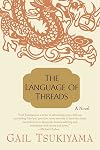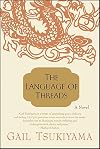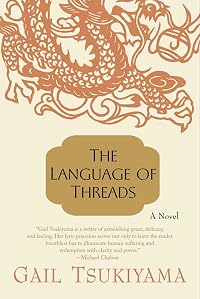
The Language of Threads
by Gail Tsukiyama
On This Page
Description
After the Japanese invade China, a woman in the silk trade flees her village, taking along an orphaned "silk sister." The two find refuge in Hong Kong, only to lose everything when World War II breaks out and the Japanese come again.Tags
Recommendations

Member Reviews
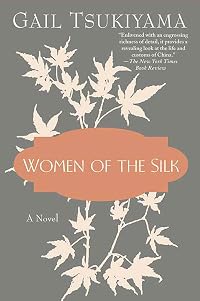
My only complaint is that this book wasn't published in one volume with 'Women of the Silk', because both books didn't really feel like separate tales. Rather, they felt more like two halves of one tale, especially because of the way 'Women of the Silk' ended and this one begun. Still, it was a lovely and poignant tale as Pei has to deal with the tumult of the Japanese invading China (this book starts in the late 1930's) and shows that even no matter how tenacious and determined some people are (like Caroline Finch) they still can't overcome certain difficulties. Surviving hard times is not just a matter of tenacity or resourcefulness, it's also luck - good or bad, so while this story is bittersweet and realistic, it's also an enjoyable show more tale. I only wish that we had seen something bad happen to Fong, since she was such a nasty little thing. show less
The Language of Threads is the sequel to Tsukiyama's successful first novel 'Women of the Silk'. It tells the story of Pei, who travels with the orphan Ji Shen to Hong Kong. She has to start her life anew, whilst living through the Japanese occupation. This is a story set in a fascinating time and place, with some interesting characters.
I think that this book is an improvement over its predecessor. The writing is much less laboured, and the dialogue flows a little better. The characters are fleshed out a little more, and we understand their motivations better. The book refers often to events and actions in the preceding book - I think you would really have to have read 'Women of the Silk' to know what is being talked about some of the show more time.
This is not the best novel i have read set in this time or place, but stacked up against her previous effort, it looks okay. Tsukiyama is obviously finding herself as a writer the more she does it, and if i come across another of her novels in the future i will probably read it. show less
I think that this book is an improvement over its predecessor. The writing is much less laboured, and the dialogue flows a little better. The characters are fleshed out a little more, and we understand their motivations better. The book refers often to events and actions in the preceding book - I think you would really have to have read 'Women of the Silk' to know what is being talked about some of the show more time.
This is not the best novel i have read set in this time or place, but stacked up against her previous effort, it looks okay. Tsukiyama is obviously finding herself as a writer the more she does it, and if i come across another of her novels in the future i will probably read it. show less
What an interesting and nice book this was.
I have put off reading it for quite some time, I'm not exactly sure why. It may have been the cover, or the mention of 'dramatic story' in the blurp on the back cover.
The book is not dramatic in the sense of 'exaggerated'. It is Pei and Ji Shen's story in all its beauty and ugliness.
The book was interesting, because I had no idea that the Japanese had also invaded and occupied so much of China and Hong Kong. I guess one's never too old to learn :-)
I have put off reading it for quite some time, I'm not exactly sure why. It may have been the cover, or the mention of 'dramatic story' in the blurp on the back cover.
The book is not dramatic in the sense of 'exaggerated'. It is Pei and Ji Shen's story in all its beauty and ugliness.
The book was interesting, because I had no idea that the Japanese had also invaded and occupied so much of China and Hong Kong. I guess one's never too old to learn :-)
The Language of Threads by Gail Tsukiyama is the sequel to her Women of the Silk and is a story about Chinese women before, during and after World War II. In this book we follow Pei as she and her young friend Ji Shen arrive in Hong Kong and set out to establish a life for themselves in that busy city. She has some connections with other “silk sisters” and is able to find a job and get Ji Shen enrolled in school, but she gets blamed or something she didn’t do and gets fired. Luckily she meets and begins to work for a British woman, Caroline Finch. Of course life changes again when the Japanese invade and conquer Hong Kong. Mrs. Finch is removed to a concentration camp and Pei and Ji Shen must survive as best they can.
There are show more plenty of struggles for these women and the author inserts plenty of history as well. Pei is rather a stoic person and keeps her thoughts to herself, she is one who puts her head down and works through stress and drama. Pei does eventually prosper as she establishes a business and is able to begin a search for her sister who is living in Communist China.
The Language of Threads is definitely a sequel and there are many references to places, people, and events from that first book so I would recommend that people start with Women of the Silk. And while I didn’t feel an emotional connection to the story, I was engrossed by the story of women helping other women and in particular, the struggles on one woman to find a place of safety for herself and those she loves. show less
There are show more plenty of struggles for these women and the author inserts plenty of history as well. Pei is rather a stoic person and keeps her thoughts to herself, she is one who puts her head down and works through stress and drama. Pei does eventually prosper as she establishes a business and is able to begin a search for her sister who is living in Communist China.
The Language of Threads is definitely a sequel and there are many references to places, people, and events from that first book so I would recommend that people start with Women of the Silk. And while I didn’t feel an emotional connection to the story, I was engrossed by the story of women helping other women and in particular, the struggles on one woman to find a place of safety for herself and those she loves. show less
The Language of Threads – Tsukiyama
4 stars
This sequel to Women of the Silk continues the story of Pei and the orphaned Ji Shen as they flee to Hong Kong in the wake of the Japanese invasion. The story progresses through the Japanese occupation, the Communist take-over and the post war recovery of Hong Kong. As the central character, Pei struggles to support herself and Ji Shen while continuing to grieve for her partner, Lin. One or two other characters from the first story continue in this one. The book ends with the aging Pei returning, full circle, to her origins, in memory, and with a visit to Communist China.
As in the first book, Language of Threads explores the lives of women who are without the protection of traditional family show more relationships. The “sisterhood” of the silk industry continues to provide support for the refugees in Hong Kong even though the industry itself is gone. In this way Pei and Ji Shen are not without the means to find shelter and employment. Pei is even able to provide the young Ji Shen with the advantage of an education; until the Japanese invasion. Employment includes a brief but fulfilling relationship with the English widow, Mrs. Finch. Mrs. Finch provides Tsukiyama with another outlet to explore the creation of a non-traditional family. Themes of friendship, love and loyalty permeate this book.
Tsukiyama writes in a rather understated manner. I sometimes find myself wanting more detail to support the apparent depth of the relationships between her characters. On the other hand, her characters tend to be people who allow their actions to speak for the depth of their feeling.
I would recommend reading these two books rather closely together. Pei’s growth as a character is tied by many threads to the events of the first book. show less
Absolutely loved it. It's a sequel to [The Women of Silk]. The story continues with Pei and Ji Shen fleeing China to Hong Kong because of the Japanese occupation. There they start to build a new life for themselves. Pei's strength and resilience is put to the test many times over as she learns how to fend for herself and then look after Ji Shen in this new world, taking on new work as a laundress, a domestic helper and later on a seamstress. As the Japanese bomb Hong Kong, round up the British into POW camps in Stanley, life becomes even more difficult, with food shortages and avoiding the Japanese soldiers and Triads. But the silver lining is the silk sisters have managed to gather together once more, this time, to live together once show more more and pool their resources for their survival.
It's the 2nd book in a month where I've read about the cruel atrocities inflicted on their victims and it's difficult to think that those individuals are ancestors to current day Japanese, who are fun, reserved, and mostly kind and considerate.
Narratives told from the perspective of Pei, Ji Shen, Li (Pei's sister), Mrs Finch (a British employer), Song Lee (a silk sister), and a few other characters, this is a book that's hard to put down once you get started on it. show less
It's the 2nd book in a month where I've read about the cruel atrocities inflicted on their victims and it's difficult to think that those individuals are ancestors to current day Japanese, who are fun, reserved, and mostly kind and considerate.
Narratives told from the perspective of Pei, Ji Shen, Li (Pei's sister), Mrs Finch (a British employer), Song Lee (a silk sister), and a few other characters, this is a book that's hard to put down once you get started on it. show less
This was a sequel to an earlier book that I haven't read. I think I would have enjoyed it more had I read the first book. I have read a lot of historical fiction about WWII but not about the Japanese invasion of Hong Kong so that was an interesting perspective.
Members
- Recently Added By
Lists

Asian American Literature
46 works; 6 members
Author Information

12 Works 7,371 Members
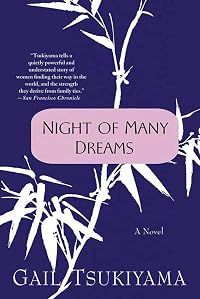
Gail Tsukiyama was born in San Francisco, where she later pursued her B. A. and M. A. at San Francisco State University. Tsukiyama is a lecturer at the San Francisco State University and a book reviewer for the San Francisco Chronicle. Tsukiyama has written Night of Many Dreams, Women of the Silk, and The Samurai's Garden. She is also the show more recipient of an Academy of American Poets award. (Bowker Author Biography) show less
Work Relationships
Common Knowledge
- Canonical title
- The Language of Threads
- Original publication date
- 1999
- People/Characters
- Pei; Ji Shen; Quan; Mrs. Finch; Song Lee; Ah Woo (show all 8); Li; Gong
- Important places
- Hong Kong; Yung Kee, China; Stanley Camp
- Epigraph
- As I look at the moon my mind goes roaming, till I live again the autumns that I knew long ago. --Saigyo
- Dedication
- For Grace
- First words
- Pei glanced down into the dark, glassy water of Hong Kong harbor and suddenly felt shy and wordless.
- Last words
- (Click to show. Warning: May contain spoilers.)She stopped and drew in the fragrant memory of the sisterhood and Lin, stirring and settling somewhere deep down inside of her.
- Canonical DDC/MDS
- 813.54
- Canonical LCC
- PS3570.S84
Classifications
Statistics
- Members
- 818
- Popularity
- 33,749
- Reviews
- 20
- Rating
- (3.91)
- Languages
- Dutch, English
- Media
- Paper, Ebook
- ISBNs
- 6
- ASINs
- 6