On This Page
Description
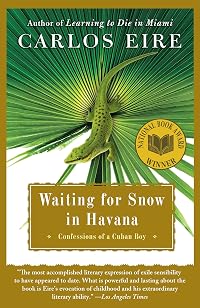
A childhood in a privileged household in 1950s Havana was joyous and cruel, like any other-but with certain differences. The neighbor's monkey was liable to escape and run across your roof. Surfing was conducted by driving cars across the breakwater. Lizards and firecrackers made frequent contact.Carlos Eire's childhood was a little different from most. His father was convinced he had been Louis XVI in a past life. At school, classmates with fathers in the Batista government were attended by show more chauffeurs and bodyguards. At a home crammed with artifacts and paintings, portraits of Jesus spoke to him in dreams and nightmares.Then, in January 1959, the world changes: Batista is suddenly gone, a cigar-smoking guerrilla has taken his place, and Christmas is cancelled. The echo of firing squads is everywhere. And, one by one, the author's schoolmates begin to disappear-spirited away to the United States. Carlos will end up there himself, without his parents, never to see his father again.Narrated with the urgency of a confession, Waiting for Snow in Havana is both an ode to a paradise lost and an exorcism. More than that, it captures the terrible beauty of those times when we are certain we have died-and then are somehow, miraculously, reborn. show lessTags
Recommendations








Member Reviews
"[Fidel] was telling us what was good. Telling us how we should think. He was telling us what to choose and how to choose it. He was telling us we had no choice. And he was telling us we were free. Free at last."
It's unsettling when a quote about Fidel Castro sounds eerily familiar to the narratives we're hearing today in supposedly democratic countries. This made me pay even closer attention to Carlos Eire's story.
In his memoir, Carlos tells the story of his life in Cuba as a young boy until he boarded a plane at 11 years old with his older brother, and without his parents, bound for a new life in the U.S.
The lack of a cohesive timeline made this a challenging read for me. You never knew where you were going to be—in place and show more time—with each chapter, which caused some emotional disconnection. However, Carlos' poetic writing drew me back and kept me interested until the end.
Another initial irritation for me was a lack of emotion given the serious shit that was going down in Carlos' life. But, it clicked when I imagined how my own son would have handled some of the situations.
I realized that Carlos was authentically portraying how his young boy self deflected, projected, adapted, denied, and tried to make the best of all the craziness around him…exactly like most young boys would. Until he couldn’t any more. The moment I realized this was the moment my irritation turned to heartache.
Mission accomplished. I definitely have more insight into what happened to Cuba and her people when the Revolution hit in 1958...and, have so much more empathy for all who were displaced. Truly heartbreaking. show less
It's unsettling when a quote about Fidel Castro sounds eerily familiar to the narratives we're hearing today in supposedly democratic countries. This made me pay even closer attention to Carlos Eire's story.
In his memoir, Carlos tells the story of his life in Cuba as a young boy until he boarded a plane at 11 years old with his older brother, and without his parents, bound for a new life in the U.S.
The lack of a cohesive timeline made this a challenging read for me. You never knew where you were going to be—in place and show more time—with each chapter, which caused some emotional disconnection. However, Carlos' poetic writing drew me back and kept me interested until the end.
Another initial irritation for me was a lack of emotion given the serious shit that was going down in Carlos' life. But, it clicked when I imagined how my own son would have handled some of the situations.
I realized that Carlos was authentically portraying how his young boy self deflected, projected, adapted, denied, and tried to make the best of all the craziness around him…exactly like most young boys would. Until he couldn’t any more. The moment I realized this was the moment my irritation turned to heartache.
Mission accomplished. I definitely have more insight into what happened to Cuba and her people when the Revolution hit in 1958...and, have so much more empathy for all who were displaced. Truly heartbreaking. show less
Considering that Carlos Eire was only eleven years old when he left Cuba, this book could have gone wrong in a lot of different ways. From a certain perspective, it's nothing but a series of childhood reminiscences, not too different from the kind that any upper-middle class Cuban boy of his generation might have. He talks about Cuba's beautiful skies, its seashore, its daily rituals, and a bit about its fragile social structure. But he mines this material for all that it's worth. And specifically because his life is now a closed book, every one of these forty brief chapters is impregnated with terrible longing and loss. It also helps that the author's got a sharp eye, a good sense of structure -- these little chapters frequently show more connect to others or circle back on themselves -- and a well-developed sense of irony. Considering that his father -- athough often kind, caring and boyishly playful -- actually seems to have believed himself to be a reincarnation of Louis XIV of France, he probably needed that last quality.
But "Waiting for Snow in Havana" also goes deeper, in some ways, than the average midlife memoir has to. Like Eire, I moved countries at a young age, although, unlike him, I've never been any sort of refugee. Even so, I found parts of this book excruciatingly difficult to read, and the author's description of the profound effect that this event had on not just his life but on his deepest self rings very true. Eire still considers him fundamentally, inalterably Cuban, and the reader can sense how the memories he includes here have sustained him throughout his life. At the same time, the rude shock of being separated from his family and culture and losing his social status also shaped his adulthood. In its last chapters, we can see that "Waiting for Snow in Havana" is much more than an exercise in upper-class nostalgia. Eire fully embraces the fact that he had to face great adversity and grow from it: he's turned his exile and the sometimes fragmentary memories he took from Cuba into a way to discover himself and who he is. This book won't suit anyone, but I suspect that lots of people who's had suffered a serious geographic dislocation at some point during their lives -- who've had to leave everything behind and move on -- will find it to be seriously inspiring testimony. show less
But "Waiting for Snow in Havana" also goes deeper, in some ways, than the average midlife memoir has to. Like Eire, I moved countries at a young age, although, unlike him, I've never been any sort of refugee. Even so, I found parts of this book excruciatingly difficult to read, and the author's description of the profound effect that this event had on not just his life but on his deepest self rings very true. Eire still considers him fundamentally, inalterably Cuban, and the reader can sense how the memories he includes here have sustained him throughout his life. At the same time, the rude shock of being separated from his family and culture and losing his social status also shaped his adulthood. In its last chapters, we can see that "Waiting for Snow in Havana" is much more than an exercise in upper-class nostalgia. Eire fully embraces the fact that he had to face great adversity and grow from it: he's turned his exile and the sometimes fragmentary memories he took from Cuba into a way to discover himself and who he is. This book won't suit anyone, but I suspect that lots of people who's had suffered a serious geographic dislocation at some point during their lives -- who've had to leave everything behind and move on -- will find it to be seriously inspiring testimony. show less
Carlos Eire was one of 14,000 children airlifted out of Cuba without their parents during "Operation Peter Pan" between 1960 and 1962. This funny, poignant, sad, insightful, and informative memoir won the National Book Award in 2003 and rightfully so. Carlos was 11 when he and his brother Tony, who was 13, landed in Miami believing that their parents were soon to follow. In the hour flight from Havana, Carlos went from being a privileged fair skinned Cuban boy to being a "spic."
The majority of this book is set in Havana where Carlos enjoys a care-free and privileged life with a thick layer of Catholicism and extended family. His father is a eccentric art-collecting judge, his mother a woman with a crippled leg due to polio and show more dedicated to her children. The antics of Carlos and his brother, Tony, are often hilarious but life is changing as Fidel Castro ousts President Batista on January 1 1959. Suddenly, there is gunfire in the streets, Christmas is made illegal, relatives are imprisoned, and parents are scrambling for ways to protect their children by sending them to the United States.
Eire is an absolutely beautiful writer. Filled with humor, philosophy, and a sprinkling of theology, "Waiting for snow in Havana" provides the reader with a chance to walk in the shoes of a young immigrant who was thrown into a strange new world. Eire is currently a professor of theology at Yale. show less
The majority of this book is set in Havana where Carlos enjoys a care-free and privileged life with a thick layer of Catholicism and extended family. His father is a eccentric art-collecting judge, his mother a woman with a crippled leg due to polio and show more dedicated to her children. The antics of Carlos and his brother, Tony, are often hilarious but life is changing as Fidel Castro ousts President Batista on January 1 1959. Suddenly, there is gunfire in the streets, Christmas is made illegal, relatives are imprisoned, and parents are scrambling for ways to protect their children by sending them to the United States.
Eire is an absolutely beautiful writer. Filled with humor, philosophy, and a sprinkling of theology, "Waiting for snow in Havana" provides the reader with a chance to walk in the shoes of a young immigrant who was thrown into a strange new world. Eire is currently a professor of theology at Yale. show less
Carlos Eire was born in Havana, Cuba in 1950 to an affluent immigrant family from Spain. His father was a judge with many privileges, who thought he was the reincarnation of Louis XVI, and who loved his art collection. Eire attended a private Catholic school and after school ran amok with his neighborhood friends, lighting firecrackers, having rock fights, and killing lizards. His life abruptly changed in January 1959 when revolutionary forces led by Fidel Castro ousted US-back Batista. Not only were many of his family's privileges revoked, but reforms effected everyone in the country, from the institution of rationing to Che's monetary policies. He, like everyone else, watched the nightly executions of the revolution's enemies on show more television and had family members imprisoned and tortured.
Cuban parents, remembering the nearly 3,000 children who were evacuated to Russia during the Spanish Civil War, feared that a similar government action was in the works in Cuba. The United States and the Catholic Church initiated Operation Pedro Pan, a plan to evacuate children (without their parents) to the US to escape feared communist influence. Carlos, aged eleven, and his older brother, Tony, were two of the 14,000 children airlifted out of Cuba between 1960 and 1962. It was a traumatic event in his life, and it was more than three years before his mother could join them.
Despite the foreshadowing of the revolution and emigration, most of the book is an exuberant, wistful memoir about a carefree childhood in tropical Cuba. I enjoyed the book very much, both for it's style and for the historical view of pre-revolution Cuba. The book is subtitled, "Confessions of a Cuban Boy", referring both to his devout Catholic upbringing and revelations about his less than ideal behavior as a child. Eire wrote a sequel, Learning to Die in Miami, about his life after being airlifted out of Cuba. Waiting for Snow in Havana won the National Book Award in 2003. show less
Cuban parents, remembering the nearly 3,000 children who were evacuated to Russia during the Spanish Civil War, feared that a similar government action was in the works in Cuba. The United States and the Catholic Church initiated Operation Pedro Pan, a plan to evacuate children (without their parents) to the US to escape feared communist influence. Carlos, aged eleven, and his older brother, Tony, were two of the 14,000 children airlifted out of Cuba between 1960 and 1962. It was a traumatic event in his life, and it was more than three years before his mother could join them.
Despite the foreshadowing of the revolution and emigration, most of the book is an exuberant, wistful memoir about a carefree childhood in tropical Cuba. I enjoyed the book very much, both for it's style and for the historical view of pre-revolution Cuba. The book is subtitled, "Confessions of a Cuban Boy", referring both to his devout Catholic upbringing and revelations about his less than ideal behavior as a child. Eire wrote a sequel, Learning to Die in Miami, about his life after being airlifted out of Cuba. Waiting for Snow in Havana won the National Book Award in 2003. show less
Cuba...land of tangerine sunsets and turquoise waves...steamy heat and voodoo curses. I loved reading the memoir of a judge's son who is close to my age but who grew up in very different circumstances. Carlos's first 11 years were the carefree days of a child of means. Days of family gatherings, bike riding, swimming, movies, and tormenting the ubiquitous lizards -- minus half a star for that! The revolution is hinted at from time to time, and like a bruise one can't help touching to see if it still hurts, Carlos returns over and over to those tumultuous times that shaped his years of childhood until he was "expelled from paradise."
14,000 children left Cuba without their parents in the early 1960s because they didn't need the visas that show more took up to a year to obtain. The idea was that the parents would soon follow them to a reunion in the U.S. These youngsters left their country and families carrying only two sets of clothes, a hat, and a book..."the only hint of mercy." It was an abrupt transition from life in Cuba to the U.S. Almost four years in orphanages and foster homes passed until Carlos and his brother Tony were able to join their mother in Chicago:
..."As the train began to roll past the steel mills and oil refineries on the South Side of Chicago, it seemed we had passed through the gates of hell. We saw acres and acres of smokestacks shooting out flames, huge twisting labyrinths of pipes, mazes of twisting stairs, giant spheres, and colossal storage tanks. But it was the flames that make me reel. Big, noisy flames. Balls of flame. Jets. Plumes. Flares. Soft, dancing flames that swayed in the wind and made the chimneys look like giant candles at Satan's dinner table. Fountains of fire. Satan's Versailles." (195)
Carlos writes with pathos and passion about his memories of his homeland - a country that is part of him but still a place he will not visit while it is under the oppressive Castro regime. I guess in his case it's true that you can't go home again. show less
14,000 children left Cuba without their parents in the early 1960s because they didn't need the visas that show more took up to a year to obtain. The idea was that the parents would soon follow them to a reunion in the U.S. These youngsters left their country and families carrying only two sets of clothes, a hat, and a book..."the only hint of mercy." It was an abrupt transition from life in Cuba to the U.S. Almost four years in orphanages and foster homes passed until Carlos and his brother Tony were able to join their mother in Chicago:
..."As the train began to roll past the steel mills and oil refineries on the South Side of Chicago, it seemed we had passed through the gates of hell. We saw acres and acres of smokestacks shooting out flames, huge twisting labyrinths of pipes, mazes of twisting stairs, giant spheres, and colossal storage tanks. But it was the flames that make me reel. Big, noisy flames. Balls of flame. Jets. Plumes. Flares. Soft, dancing flames that swayed in the wind and made the chimneys look like giant candles at Satan's dinner table. Fountains of fire. Satan's Versailles." (195)
Carlos writes with pathos and passion about his memories of his homeland - a country that is part of him but still a place he will not visit while it is under the oppressive Castro regime. I guess in his case it's true that you can't go home again. show less
Eire's experiences and the writing that eludicates them into vibrancy gained this memoir five stars. The sentences flow from prose to poetic, and he describes the surroundings so well, without dragging the pace down. I didn't know a lot about Cuba during the time of Castro coming into power, but now I understand why Cuban exiles in the UNited States feel so strongly. Definite recommendation.
Subtitled “Confessions of a Cuban Boy,” this memoir first caught my eye because of the great title, then because it was written by one of the boys separated from his family during the early reign of Fidel Castro, during the Operation Pedro Pan exodus, an attempt to save children of those deemed against the Revolution, those most in danger.
The book almost lost me when the author along with other little boys, cruel as children often can be, started torturing lizards, symbolic of much to come. I expected a typical memoir but that is certainly not what I got. The writing is not linear, the author speaks to us readers directly, and frequently gives hints of what is to come, promises to tell us more later. The style is quirky and was a show more bit disconcerting to me until I gave myself over to the author's story.
The child, Carlos, most often refers to his father as Louis XVI, as his father claimed to be in a former life, and his mother as Marie Antoinette, although she did not claim to be a reincarnation. His father was a judge and an attorney, one of the privileged ones under Batista. Childhood in Havana is painted in pictures vibrant and astounding, family and friends all coming to life. Very little of the book deals with Carlos or his family after Carlos was separated from his brother, the only person he knew in the United States, as soon as they landed.
Some examples of the author's style of prose:
“Crotons of all kinds. Giant philodendrons. Caladiums. Flowers. Palms in all shapes and sizes. Especially royal palms, so tall, so regal. So Cuban. Palms that pierce my heart and entrails to this very day.”
“I was one of the lucky ones. Fidel couldn't obliterate me as he did all the other children, slicing off their heads over so slowly, and replacing them with fearful, slavish copies of his own. New heads held in place by two bolts, like Boris Karloff's in Frankenstein, one bolt forged from fear, the other from illusion.”
“If Adam and Eve hadn't screwed up so badly, and their children had been able to play in the Garden of Eden, they would have laughed just like we did that day, when we threw rocks at one another on the edge of the turquoise sea.”
“To understand Fidel you have to be out of your mind. To live with the memories, too, it helps to have lucid moments that others mistake for delusions.”
This lyrical memoir is written with a strange mix of philosophy, religion, symbolism, and an adult's remembrance of his childhood: family, Havana, and the politics of the day. It is serious, touching, beautiful, funny, and entertaining. I loved it. show less
The book almost lost me when the author along with other little boys, cruel as children often can be, started torturing lizards, symbolic of much to come. I expected a typical memoir but that is certainly not what I got. The writing is not linear, the author speaks to us readers directly, and frequently gives hints of what is to come, promises to tell us more later. The style is quirky and was a show more bit disconcerting to me until I gave myself over to the author's story.
The child, Carlos, most often refers to his father as Louis XVI, as his father claimed to be in a former life, and his mother as Marie Antoinette, although she did not claim to be a reincarnation. His father was a judge and an attorney, one of the privileged ones under Batista. Childhood in Havana is painted in pictures vibrant and astounding, family and friends all coming to life. Very little of the book deals with Carlos or his family after Carlos was separated from his brother, the only person he knew in the United States, as soon as they landed.
Some examples of the author's style of prose:
“Crotons of all kinds. Giant philodendrons. Caladiums. Flowers. Palms in all shapes and sizes. Especially royal palms, so tall, so regal. So Cuban. Palms that pierce my heart and entrails to this very day.”
“I was one of the lucky ones. Fidel couldn't obliterate me as he did all the other children, slicing off their heads over so slowly, and replacing them with fearful, slavish copies of his own. New heads held in place by two bolts, like Boris Karloff's in Frankenstein, one bolt forged from fear, the other from illusion.”
“If Adam and Eve hadn't screwed up so badly, and their children had been able to play in the Garden of Eden, they would have laughed just like we did that day, when we threw rocks at one another on the edge of the turquoise sea.”
“To understand Fidel you have to be out of your mind. To live with the memories, too, it helps to have lucid moments that others mistake for delusions.”
This lyrical memoir is written with a strange mix of philosophy, religion, symbolism, and an adult's remembrance of his childhood: family, Havana, and the politics of the day. It is serious, touching, beautiful, funny, and entertaining. I loved it. show less
Members
- Recently Added By
Published Reviews
Eire's complex, introspective memoir begins the day his world changed: when Castro's troops sent President Batista into exile far from Cuba in 1959. The son of a judge who believed himself to be Louis XVI reincarnated, Carlos, along with his older brother, Tony, spent his days playing with fireworks and lizards. He attended an elite school, where Batista's children were his classmates. Carlos' show more biggest worries were the disapproving stares he received from a portrait of Maria Theresa of Austria and Jesus, who would sometimes appear in the window to him. All of that changed when Castro came to power; suddenly, attending a prestigious school or driving a classy car was dangerous. The Eire family remained in Cuba even as others left, until finally Eire's parents sent Carlos and Tony to Florida, where a very different life awaited them. Years passed before their mother joined them, but Carlos never saw his father again. In this open, honest, and at times angry memoir, Eire bares his soul completely and captivates the reader in the process. show less
added by kthomp25
Lists

Childhood: Books for or about children in different cultures around the wor
345 works; 18 members

Literary Works Read in College
316 works; 15 members

Books About Boys
175 works; 15 members

Adult Books for YA Readers
194 works; 6 members
Author Information

9+ Works 2,064 Members
Carlos Eire is the T. Lawrason Riggs Professor of History and Religious Studies at Yale University.
Awards and Honors
Awards
Distinctions
Notable Lists
Series

Common Knowledge
- Original publication date
- 2003
- People/Characters
- Fidel Castro; Carlos Eire
- Important places
- Havana, Cuba
- Important events
- Cuban Revolution
- Epigraph
- I spit on fools who fail to include breasts in their metaphysics,
Star-gazers who have not enumerated them among the moons of the earth
- - Charles Simic, "Breasts" - Dedication
- For John-Carlos, Grace, and Bruno
- First words
- The world changed while I slept, and much to my surprise, no one had consulted me.
- Publisher's editor
- Klayman, Rachel
Classifications
- Genres
- Biography & Memoir, Nonfiction
- DDC/MDS
- 972.9123063092 — History & geography History of North America Mexico, Central America, West Indies, Bermuda West Indies (Antilles) and Bermuda; Caribbean Cuba Havana
- LCC
- E184 .C97 .E37 — History of the United States United States Elements in the population Afro-Americans
- BISAC
Statistics
- Members
- 1,196
- Popularity
- 20,949
- Reviews
- 28
- Rating
- (3.92)
- Languages
- 6 — Dutch, English, Finnish, German, Italian, Spanish
- Media
- Paper, Audiobook, Ebook
- ISBNs
- 22
- ASINs
- 12