
The Erie Canal
by Martha E. Kendall
On This Page
Description
The story of the Erie Canal, which connected Albany, New York, to Buffalo, New York, and was completed in 1825.Tags
Recommendations




























Member Reviews
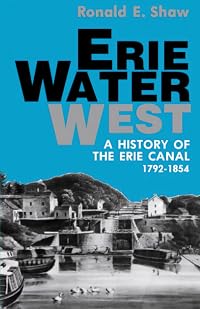
This brief, 128-page look at the Erie Canal chronicles the history as well as the impact of the Erie Canal on the United States and the world. Completed in 1825, the Erie Canal was known as the 8th wonder of the world. The 363 mile long canal was the largest in the world, contained 83 locks, and climbed 675 feet! Before the canal opened, a trip from Albany to Buffalo might take as long as six weeks. After the canal opened, the trip was pared down to one week.
The Erie Canal does more than present the facts, however. It places the Canal in the context of its time, explaining the difficulties and technology required to cut a 400 mile, 60 foot wide swath through virgin forests, swamps, and cliffs; the ingenuity needed to design a system of show more locks to carry the man-made river up a 66 foot escarpment before the era of concrete or dynamite; the reality of raising children on board a canal “line boat,” (mothers often tethered their toddlers to chains in case they fell in!) Kendall also includes broader topics in history and science by incorporating the canal’s impact on immigration, industrialism, westward expansion, invention, and slavery (the canal was used as part of the Underground Railroad system, bringing slaves closer to freedom in Canada).
The black and white illustrations are a mix of period photos, maps, line drawings, paintings, etchings and postcards, with a few modern photos in the “Wheels of Progress” chapter. This well-researched book is completed with Chronology, Glossary, and Resources pages, in addition to an extensive index.
The Erie Canal is a fascinating glimpse into one of the nations, and particularly New York’s, proudest achievements. Teachers should embrace this book for its cross-disciplinary possibilities. Best for 5th grade and up, teachers or history-loving librarians! show less
The Erie Canal does more than present the facts, however. It places the Canal in the context of its time, explaining the difficulties and technology required to cut a 400 mile, 60 foot wide swath through virgin forests, swamps, and cliffs; the ingenuity needed to design a system of show more locks to carry the man-made river up a 66 foot escarpment before the era of concrete or dynamite; the reality of raising children on board a canal “line boat,” (mothers often tethered their toddlers to chains in case they fell in!) Kendall also includes broader topics in history and science by incorporating the canal’s impact on immigration, industrialism, westward expansion, invention, and slavery (the canal was used as part of the Underground Railroad system, bringing slaves closer to freedom in Canada).
The black and white illustrations are a mix of period photos, maps, line drawings, paintings, etchings and postcards, with a few modern photos in the “Wheels of Progress” chapter. This well-researched book is completed with Chronology, Glossary, and Resources pages, in addition to an extensive index.
The Erie Canal is a fascinating glimpse into one of the nations, and particularly New York’s, proudest achievements. Teachers should embrace this book for its cross-disciplinary possibilities. Best for 5th grade and up, teachers or history-loving librarians! show less
Members
- Recently Added By
Author Information
19 Works 381 Members
Awards and Honors
Awards
Classifications
- Genres
- Nonfiction, Kids, Tween
- DDC/MDS
- 386.48 — Society, government, & culture Commerce, communications & transportation regulations Inland waterway and ferry transportation Canals
- LCC
- HE396 .E6 .K46 — Social sciences Transportation and communications Transportation and communications Water transportation Waterways
- BISAC
Statistics
- Members
- 26
- Popularity
- 1,040,769
- Reviews
- 1
- Rating
- (4.00)
- Languages
- English
- Media
- Paper
- ISBNs
- 2