On This Page
Description
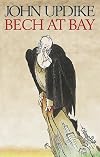
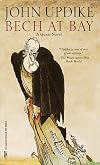
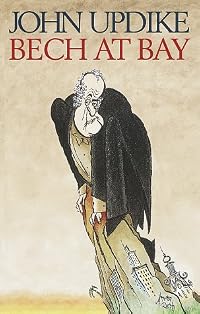
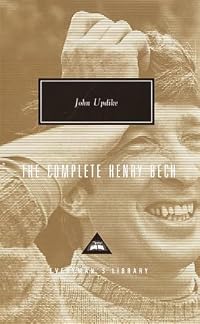
A collection of stories satirizing the American literary scene. All feature Henry Bech, an obscure Jewish writer who is awarded the Nobel Prize. In Bech in Czech, he visits Czechoslovakia and discovers the ghosts of East European Jewry.Tags
Recommendations

















Member Reviews
The last in the Bech trilogy sees our author moving into old age and...ultimate...recognition in the literary world. Made president of an elite - and utterly pseudo- group of top artists; experiencing the growing sue culture, over one off-the-cuff comment; taking up the new world of the Internet ("Envy and resentment poured toward him out of the American vastness, from every state including Hawaii and Alaska, like a kind of lateral sleet rattling on the tin roof of his rickety privacy."
Late fatherhood....and the highly readable if unbelievable chapter "Bech Noir" as Bech seeks to deal with some of those critics whose dismissive words have blighted his life.
Probably the best of the trilogy: John Updike brilliantly evokes life in one's show more declining years.. show less
Late fatherhood....and the highly readable if unbelievable chapter "Bech Noir" as Bech seeks to deal with some of those critics whose dismissive words have blighted his life.
Probably the best of the trilogy: John Updike brilliantly evokes life in one's show more declining years.. show less
Bech, with his fading skills and writer's block is a perfect paradigm for an achiever/academic in his descent. The funnier series in Updike's opus.
Ratings
Members
- Recently Added By
Author Information

340+ Works 53,353 Members
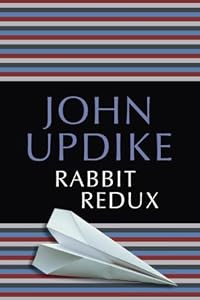
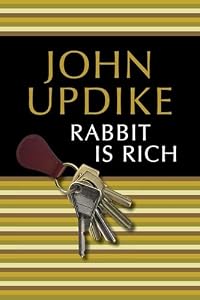
American novelist, poet, and critic John Updike was born in Reading, Pennsylvania on March 18, 1932. He received an A.B. degree from Harvard University, which he attended on a scholarship, in 1954. After graduation, he accepted a one-year fellowship to study painting at the Ruskin School of Drawing and Fine Art in Oxford, England. After returning show more from England in 1955, he worked for two years on the staff of The New Yorker. This marked the beginning of a long relationship with the magazine, during which he has contributed numerous short stories, poems, and book reviews. Although Updike's first published book was a collection of verse, The Carpentered Hen and Other Tame Creatures (1958), his renown as a writer is based on his fiction, beginning with The Poorhouse Fair (1959). During his lifetime, he wrote more than 50 books and primarily focused on middle-class America and their major concerns---marriage, divorce, religion, materialism, and sex. Among his best-known works are the Rabbit tetrology---Rabbit, Run (1960), Rabbit Redux (1971), Rabbit Is Rich (1981), and Rabbit at Rest (1988). Rabbit, Run introduces Harry "Rabbit" Angstrom as a 26-year-old salesman of dime-store gadgets trapped in an unhappy marriage in a dismal Pennsylvania town, looking back wistfully on his days as a high school basketball star. Rabbit Redux takes up the story 10 years later, and Rabbit's relationship with representative figures of the 1960s enables Updike to provide social commentary in a story marked by mellow wisdom and compassion in spite of some shocking jolts. In Rabbit Is Rich, Harry is comfortably middle-aged and complacent, and much of the book seems to satirize the country-club set and the swinging sexual/social life of Rabbit and his friends. Finally, in Rabbit at Rest, Harry arrives at the age where he must confront his mortality. Updike won the Pulitzer Prize for both Rabbit Is Rich and Rabbit at Rest. Updike's other novels range widely in subject and locale, from The Poorhouse Fair, about a home for the aged that seems to be a microcosm for society as a whole, through The Court (1978), about a revolution in Africa, to The Witches of Eastwick (1984), in which Updike tries to write from inside the sensibilities of three witches in contemporary New England. The Centaur (1963) is a subtle, complicated allegorical novel that won Updike the National Book Award in 1964. In addition to his novels, Updike also has written short stories, poems, critical essays, and reviews. Self-Consciousness (1989) is a memoir of his early life, his thoughts on issues such as the Vietnam War, and his attitude toward religion. He was elected to the American Academy of Arts and Letters in 1977. He died of lung cancer on January 27, 2009 at the age of 76. (Bowker Author Biography) John Updike was born in 1932, in Shillington, Pennsylvania. Since 1957 he has lived in Massachusetts. His novels have won the Pulitzer Prize, the National Book Award, the National Book Critics Circle Award, & the Howells Medal. (Publisher Provided) John Updike was born in 1932 and attended Harvard College and the Ruskin School of Drawing and Fine Art in Oxford, England. Form 1955 to 1957 he was a staff member of The New Yorker, which he contributed numerous writings. Updike's art criticism has appeared in publications including Arts and Antiques, The New Republic, The New York Times Book Review, and Realites, among many others. He is the author of such best-selling novels as Rabbit Run and Rabbit is Rich. His many works of fiction, poetry and criticism have been awarded the Pulitzer Prize, the National Book Award, the American Book Award, and the National Book Critics Circle Award. For the past 40 years he has lived in Massachusetts. (Publisher Provided) John Updike is the author of some 50 books, including collections of short stories, poems, & criticism. His novels have won the Pulitzer Prize, the National Book Award, the National Book Critics Circle Award, & the Howells Medal. Born in Shillington, Pennsylvania, in 1932, he has lived in Massachusetts since 1957. (Publisher Provided) show less
Series

Common Knowledge
- Original title
- Bech at Bay
- Original publication date
- 1998
- People/Characters
- Henry Bech; Rachel "Robin" Teagarten
- Important places
- New York, New York, USA
- Dedication
- To the youngest people I know: Sawyer Michael Updike; Adele Catlin Bernhard; Helen Ruggles Bernhard; Seneca Dunn Freylue; Isabel Mei-Huei Bernhard
- First words
- The American Ambassador's residence in Prague has been called the last palace built in Europe.
- Last words
- (Click to show. Warning: May contain spoilers.)Then she lifted her right hand, where all could see, and made the gentle clasping and unclasping motion that signifies bye-bye.
- Publisher's editor
- Jones, Judith
- Original language*
- Ingles
*Some information comes from Common Knowledge in other languages. Click "Edit" for more information.
Classifications
Statistics
- Members
- 314
- Popularity
- 101,293
- Reviews
- 2
- Rating
- (3.50)
- Languages
- 7 — Catalan, English, French, German, Hungarian, Portuguese, Spanish
- Media
- Paper, Ebook
- ISBNs
- 19
- ASINs
- 5