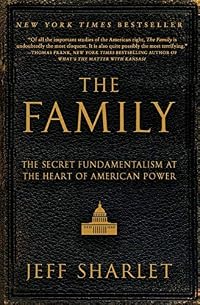
The Family: The Secret Fundamentalism at the Heart of American Power
by Jeff Sharlet
On This Page
Description
They insist they are just a group of friends, yet they funnel millions of dollars through tax-free corporations. They claim to disdain politics, but congressmen of both parties describe them as the most influential religious organization in Washington. They say they are not Christians, but simply believers. Behind the scenes at every National Prayer Breakfast since 1953 has been the Family, an elite network dedicated to a religion of power for the powerful. Their goal is "Jesus plus show more nothing." Their method is backroom diplomacy. The Family is the startling story of how their faith-part free-market fundamentalism, part imperial ambition-has come to be interwoven with the affairs of nations around the world. show lessTags
Recommendations









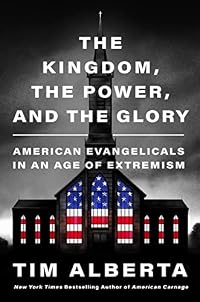
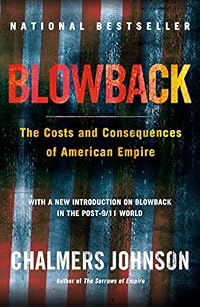
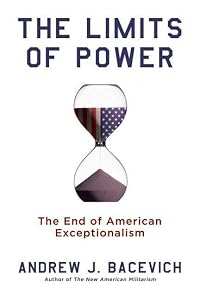
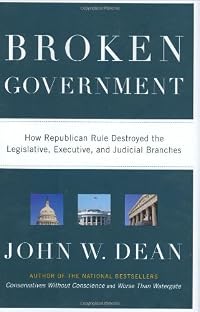
Member Recommendations

Member Reviews
Extensive research embedded, dedicated journalist = scary product. I used to read Robert Ludlum because he spun a good yarn, but this work of non-fiction is no yarn, because The Family is real, pervasive and infecting the U.S. like a malevolent virus. And not just the U.S. - they back some of the worst dictatorships. Think of the most backward public figures in recent years - John Ashcroft, Tom Coburn, James Inhofe, John Ensign, Sam Brownback - all Family. These people scare me - they have money and they have a jihadist mindset with their own interpretation of Christianity.
They insist they are just a group of friends, yet they funnel millions of dollars through tax-free corporations. They claim to disdain politics, but congressmen of both parties describe them as the most influential religious organization in Washington. They say they are not Christians, but simply believers. Behind the scenes at every National Prayer Breakfast since 1953 has been the Family, an elite network dedicated to a religion of power for the powerful. Their goal is "Jesus plus nothing." Their method is backroom diplomacy. The Family is the startling story of how their faith—part free-market fundamentalism, part imperial ambition—has come to be interwoven with the affairs of nations around the world.
This is a scary book when you really think about what the author has researched and presented to us. The most important point I took from the reading was that there is a well-hidden movement within the Christian fundamentalists that has positioned itself to influence the government of this and other countries toward the goal of imposing a Taliban-like society on everyone. By this I mean totalitarian, religious-focused, faith-based, and rulled by the elite. The Taliban is the same -- the elite are exempted from the strict rules because they set the rules. Religion is used to control the masses either through coercion or through the rigid structuring of the peoples' lives. I kept having flashes of Margaret Atwood's Handmaid's Tale as the show more ultimate destination of the Family.
An interesting aspect of the Family's belief system is one discussed often in the Atheist forums - the fact that people take a basic story, like that of Jesus from the Bible, and read into it whatever they want to project to achieve their own goals. In the case of the Family, they've distorted the Bible Jesus into some sort of capitalist warrior with his only goal to take over the world by whatever means is necessary. They truely believe that the end justifies the means. This is the scariest part of religion in general, people can twist an idea to whatever purpose they wish, and those really good at influencing others through their words and writings can take a horribly distorted idea and make it seem like a very reasonable approach.
It worries me that many of our leaders have bought into these warped ideas. I have to wonder if people see these ideas as a way to justify doing things they know are wrong, but would rather have the benefits derived from the power and authority they control instead of using their positions to help others and improve the human condition.
The earthquake in Haiti last week was an interesting occurance given the author's mention of the role of the Family in Haiti's politics. The people in Haiti suffer possibly because of the support we've given the dictatorships of the past trying to fight the Family's fear of communism and non-Christian beliefs.
Ironically, the Family's ultimate goal is a religious dictatorship without capitalism, skepticism, or freedom. show less
An interesting aspect of the Family's belief system is one discussed often in the Atheist forums - the fact that people take a basic story, like that of Jesus from the Bible, and read into it whatever they want to project to achieve their own goals. In the case of the Family, they've distorted the Bible Jesus into some sort of capitalist warrior with his only goal to take over the world by whatever means is necessary. They truely believe that the end justifies the means. This is the scariest part of religion in general, people can twist an idea to whatever purpose they wish, and those really good at influencing others through their words and writings can take a horribly distorted idea and make it seem like a very reasonable approach.
It worries me that many of our leaders have bought into these warped ideas. I have to wonder if people see these ideas as a way to justify doing things they know are wrong, but would rather have the benefits derived from the power and authority they control instead of using their positions to help others and improve the human condition.
The earthquake in Haiti last week was an interesting occurance given the author's mention of the role of the Family in Haiti's politics. The people in Haiti suffer possibly because of the support we've given the dictatorships of the past trying to fight the Family's fear of communism and non-Christian beliefs.
Ironically, the Family's ultimate goal is a religious dictatorship without capitalism, skepticism, or freedom. show less
They insist they are just a group of friends, yet they funnel millions of dollars through tax-free corporations. They claim to disdain politics, but congressmen of both parties describe them as the most influential religious organization in Washington. They say they are not Christians, but simply believers.
Behind the scenes at every National Prayer Breakfast since 1953 has been the Family, an elite network dedicated to a religion of power for the powerful. Their goal is "Jesus plus nothing." Their method is backroom diplomacy. The Family is the startling story of how their faith—part free-market fundamentalism, part imperial ambition—has come to be interwoven with the affairs of nations around the world.
Behind the scenes at every National Prayer Breakfast since 1953 has been the Family, an elite network dedicated to a religion of power for the powerful. Their goal is "Jesus plus nothing." Their method is backroom diplomacy. The Family is the startling story of how their faith—part free-market fundamentalism, part imperial ambition—has come to be interwoven with the affairs of nations around the world.
A slow, dense read, but well worth it. I read this to follow up the Netflix documentary "The Family" and it definitely expanded and deepened the subject, including the history of fundamentalist movements in the U.S. going back centuries.
What strikes me the most about "The Family" is that it promotes into leadership one gender only: men, men, men... and completely excludes women. This is not an oversight -- it is a basic premise of their form of religion. Very strange in a democracy with a strong value of equal rights (or so we've been led to believe).
The book was written in 2008. The recent documentary is much more current and includes information about Trump and his evangelical supporters.
What strikes me the most about "The Family" is that it promotes into leadership one gender only: men, men, men... and completely excludes women. This is not an oversight -- it is a basic premise of their form of religion. Very strange in a democracy with a strong value of equal rights (or so we've been led to believe).
The book was written in 2008. The recent documentary is much more current and includes information about Trump and his evangelical supporters.
A must read for everyone who wants to understand how we went from being a secular country to being a "Christian" nation. This was not chance; it was planned. Sharlet is a compelling writer, and provides convincing details to lay out the agenda of the powerful men who have passed through the C Street house and become part of our government at all levels.
Jeff Sharlet investigates a religious organization called the Family, a fundamentalist Christian group which puts much of its emphasis on "leadership" (or, to use a less charitable word, "power"), and which possesses a surprising amount of clout in American politics. He opens by talking a little about the organization, its people, and its principles, including recounting his own experiences with the group, then spends the bulk of the book exploring the history of the Family and its precursors, highlighting the often rather startling influence that this very narrow breed of evangelical Christianity has had on politics both foreign and domestic. He then devotes a couple of chapters to the social attitudes of its adherents and their place show more in the so-called "culture wars."
It's an interesting and important subject, one that (distressingly, for those of us who believe strongly in the separation of Church and State) is extremely relevant to the current political landscape in America. Unfortunately, I don't feel like I got quite as much out of this book as I wanted to. It's a complicated topic that requires clear and careful journalism, and while Sharlet has obviously done vast amounts of research, he comes across as less "clear and careful journalist" and more "frustrated literary novelist," writing in a style that includes lush and often slightly fanciful descriptions of people's physical appearances and personalities and interactions, lots of rhetorical rambling, and turns of phrase or even whole paragraphs that leave me imagining the author sitting back and smiling in satisfaction at his own linguistic cleverness. None of which is necessarily a bad thing, and it works pretty well in the chapters where he's giving us glimpses of ordinary individuals and using that to convey some of the flavor of this particular theology and culture. But when it comes to his presentation of the historical facts, I think it muddles things a bit and dilutes some of the rather important points he's trying to make.
Which isn't to say that the book didn't have any impact. Mostly, it's left me feeling depressed. I like to believe that compromise and mutual understanding are always possible, but occasionally I have to acknowledge the fact that some worldviews are just intrinsically irreconcilable, and it's hard to escape the conclusion that we have some of those battling it out in America today. show less
It's an interesting and important subject, one that (distressingly, for those of us who believe strongly in the separation of Church and State) is extremely relevant to the current political landscape in America. Unfortunately, I don't feel like I got quite as much out of this book as I wanted to. It's a complicated topic that requires clear and careful journalism, and while Sharlet has obviously done vast amounts of research, he comes across as less "clear and careful journalist" and more "frustrated literary novelist," writing in a style that includes lush and often slightly fanciful descriptions of people's physical appearances and personalities and interactions, lots of rhetorical rambling, and turns of phrase or even whole paragraphs that leave me imagining the author sitting back and smiling in satisfaction at his own linguistic cleverness. None of which is necessarily a bad thing, and it works pretty well in the chapters where he's giving us glimpses of ordinary individuals and using that to convey some of the flavor of this particular theology and culture. But when it comes to his presentation of the historical facts, I think it muddles things a bit and dilutes some of the rather important points he's trying to make.
Which isn't to say that the book didn't have any impact. Mostly, it's left me feeling depressed. I like to believe that compromise and mutual understanding are always possible, but occasionally I have to acknowledge the fact that some worldviews are just intrinsically irreconcilable, and it's hard to escape the conclusion that we have some of those battling it out in America today. show less
Members
- Recently Added By
Lists

HarperCollins Publishers
144 works; 3 members

Movies/Shows
617 works; 7 members
Author Information

11+ Works 2,019 Members
Jeff Sharlet is a visiting research scholar at New York University's Center for Religion and Media. He is a contributing editor for Harper's and Rolling Stone, the coauthor, with Peter Manseau, of Killing the Buddha, and the editor of The Revealer.org. He lives in Brooklyn, New York.
Common Knowledge
- Original publication date
- 2008
- People/Characters
- Abraham Vereide; Doug Coe
- Related movies
- The Family (2019 | IMDb)
- First words
- Not long after September 11, 2001, a man I'll call Zeke came to New York to survey the ruins of secularism.
- Quotations
- "The United States is also a one-party state," Julius Nyerere, the first president of Tanzania, once observed in defending his own one-party system. "But with typical American extravagance, they have two of them."
- Blurbers
- Ehrenreich, Barbara ; Perlstein, Rick ; Frank, Thomas ; McLaren, Brian; Kazin, Michael; Applegate, Debby (show all 9); Miller, Mark Crispin; Schaeffer, Frank; Winston, Diane
Classifications
Statistics
- Members
- 1,112
- Popularity
- 22,675
- Reviews
- 30
- Rating
- (3.90)
- Languages
- English, Spanish
- Media
- Paper, Audiobook, Ebook
- ISBNs
- 9
- UPCs
- 2
- ASINs
- 9