Doctor Who and the Doomsday Weapon
by Malcolm Hulke
Doctor Who: Target Novelisations: Publication order (6), Doctor Who: Target Novelisations: Doctor Who Library order (23), Doctor Who: Target Novelisations: Broadcast order (58), Doctor Who {non-TV} (Novelisations — Novelisation)
On This Page
Description
The evil Master has stolen the Time Lord's file on the horrifying Doomsday Weapon, with which he will blast whole planets out of existence and make himself ruler of the Galaxy! The Time Lords direct Doctor Who and Jo Grant to a bleak planet in the year 2471, where they find colonists from Earth under threat from mysterious, savage, monster lizards with frightful claws! Hidden upon the planet is the Doomsday Weapon, for which the Master is intently searching. Geoffrey Beevers, who played an show more incarnation of the Master in the classic BBC Doctor Who TV series, reads Malcolm Hulke's complete and unabridged novelization. show lessTags
Recommendations


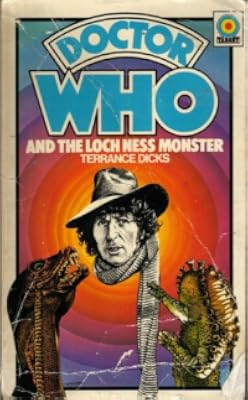





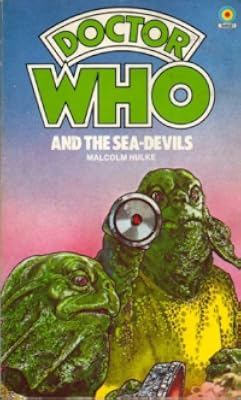





Member Reviews
I found this one at the thrift store I frequent (there’s only two in my area) and decided why not – I have three other Doctor Who books published by Target Books I bought when I was teenager from a thrift store in Berdoo that is long gone at this point. I was pleasantly surprised, and not just because it was an easy read either.
As Dent sat there, touching the controls of the IMC spaceship, he felt happy and secure in the fact that he was an IMC man, with an IMC wife, IMC children, with a four-room IMC home. His present and his future were as secure as IMC, and IMC would go on forever. [pg.51]
It has an anti-corporate anti-imperialist theme established around page 50, and not subtly, that runs through to the end. The story concerns a show more paranoid bunch of interplanetary settlers fleeing the overcrowded fully corporate-ruled future Earth for the planet the Doctor and Jo find themselves stranded on. A ship full of mining corporation types is initially hiding in the background trying to scare the colonists away then outrightly try to take the barren planet, so that they can completely strip it bare, by force. There is also a race of apparently harmless “primitives” who have somehow “regressed” from a high-tech society leaving behind some ruins. Eventually, The Master becomes involved as an arbiter between the corporate ship captain Dent and the colonists because he wants the ultimate weapon built by the primitives which was ultimately the cause of why they devolved. Pretty typical Dr. Who.
If there was one thing Dent hated it was people who could think and reason. [pg.55]
There is some building of the anti-corporate theme by having the corporates having absolute hatred for those who can think and reason, those who didn’t/couldn’t/wouldn’t “fit in”, and for aliens. Feels somewhat timely to me. I was disappointed that there were no “real” monsters in this one, as corporate greed and unchecked power are the monsters featured here.
“Earth’s needs,” mused the Doctor, “or your corporation’s profits?”
“What’s good for IMC is good for Earth,” said Dent rather smugly, realizing that he was now blustering against the Doctor’s calm. “There are over a hundred thousand million people back on Earth, and they need all the minerals we can find!”
“What those people need,” said the Doctor, “are new worlds to live on, like this one. Worlds where they can live like human beings again, instead of like battery hens.”
“That’s not my concern,” said Dent. “Minerals are needed. It’s my job to get them.” [56]
The main theme is supported by several instances where the corporatists are fully anti-individualist and where they prefer order and profit over anything else. All their actions are in pursuit of these two goals sometimes even over each other though that avenue is never fully explored by the author just sort of mentioned here and there.
[…] Dent liked Morgan. Morgan was ambitious and totally unscrupulous. Dent felt you could always trust people like that. [pg.57]
The addition of the bible on page 117 however, raised my hackles a bit not just because I’m an atheist either. It served as a last-minute foreshadowing of another quickly added theme of self-sacrifice. It foreshadows the self-sacrifice of the Guardian to destroy the weapon after The Master proved it was a bad idea to let him have it and the leader of the colonists (John Ashe) who sacrifices himself by piloting the colonists’ ship which explodes to distract Captain Dent and his men. At its first appearance, it did springboard off the anti-corporate theme by having Dent read it unable to understand the sacrifice presented in it. However, it happens near the end just to service the plot. It was jarring and telegraphed the ending.
The three IMC security guards found the rocky slope hard going. They weren’t used to this kind of physical activity, and their uniforms restricted them. But they pressed on as best they could because they all had IMC living units back on Earth that they didn’t want to lose, and IMC wives, and their children were in IMC schools that were very exclusive, and if they got the durilinium from this planet they would all get good IMC bonuses. Above all, they hated all colonists because they were eccentric and didn’t conform to the society on Earth, and sometimes they smelt of sweat. [pg.80]
Overall, if you’re familiar with Doctor Who then I would recommend this one. It’s a quick read and has some interesting and relevant themes, it is also not subtle at all while establishing its main theme. If you’re not familiar with the Doctor, then it is easy enough to get through that I might recommend it, but as sci-fi goes, this is pulpy, adventure type science fiction.
“You’re nothing more than criminals,” Jo shouted.
“We obey our orders.” Said Allen. “There can’t be anything wrong in obeying orders.” [pg.75] show less
As Dent sat there, touching the controls of the IMC spaceship, he felt happy and secure in the fact that he was an IMC man, with an IMC wife, IMC children, with a four-room IMC home. His present and his future were as secure as IMC, and IMC would go on forever. [pg.51]
It has an anti-corporate anti-imperialist theme established around page 50, and not subtly, that runs through to the end. The story concerns a show more paranoid bunch of interplanetary settlers fleeing the overcrowded fully corporate-ruled future Earth for the planet the Doctor and Jo find themselves stranded on. A ship full of mining corporation types is initially hiding in the background trying to scare the colonists away then outrightly try to take the barren planet, so that they can completely strip it bare, by force. There is also a race of apparently harmless “primitives” who have somehow “regressed” from a high-tech society leaving behind some ruins. Eventually, The Master becomes involved as an arbiter between the corporate ship captain Dent and the colonists because he wants the ultimate weapon built by the primitives which was ultimately the cause of why they devolved. Pretty typical Dr. Who.
If there was one thing Dent hated it was people who could think and reason. [pg.55]
There is some building of the anti-corporate theme by having the corporates having absolute hatred for those who can think and reason, those who didn’t/couldn’t/wouldn’t “fit in”, and for aliens. Feels somewhat timely to me. I was disappointed that there were no “real” monsters in this one, as corporate greed and unchecked power are the monsters featured here.
“Earth’s needs,” mused the Doctor, “or your corporation’s profits?”
“What’s good for IMC is good for Earth,” said Dent rather smugly, realizing that he was now blustering against the Doctor’s calm. “There are over a hundred thousand million people back on Earth, and they need all the minerals we can find!”
“What those people need,” said the Doctor, “are new worlds to live on, like this one. Worlds where they can live like human beings again, instead of like battery hens.”
“That’s not my concern,” said Dent. “Minerals are needed. It’s my job to get them.” [56]
The main theme is supported by several instances where the corporatists are fully anti-individualist and where they prefer order and profit over anything else. All their actions are in pursuit of these two goals sometimes even over each other though that avenue is never fully explored by the author just sort of mentioned here and there.
[…] Dent liked Morgan. Morgan was ambitious and totally unscrupulous. Dent felt you could always trust people like that. [pg.57]
The addition of the bible on page 117 however, raised my hackles a bit not just because I’m an atheist either. It served as a last-minute foreshadowing of another quickly added theme of self-sacrifice. It foreshadows the self-sacrifice of the Guardian to destroy the weapon after The Master proved it was a bad idea to let him have it and the leader of the colonists (John Ashe) who sacrifices himself by piloting the colonists’ ship which explodes to distract Captain Dent and his men. At its first appearance, it did springboard off the anti-corporate theme by having Dent read it unable to understand the sacrifice presented in it. However, it happens near the end just to service the plot. It was jarring and telegraphed the ending.
The three IMC security guards found the rocky slope hard going. They weren’t used to this kind of physical activity, and their uniforms restricted them. But they pressed on as best they could because they all had IMC living units back on Earth that they didn’t want to lose, and IMC wives, and their children were in IMC schools that were very exclusive, and if they got the durilinium from this planet they would all get good IMC bonuses. Above all, they hated all colonists because they were eccentric and didn’t conform to the society on Earth, and sometimes they smelt of sweat. [pg.80]
Overall, if you’re familiar with Doctor Who then I would recommend this one. It’s a quick read and has some interesting and relevant themes, it is also not subtle at all while establishing its main theme. If you’re not familiar with the Doctor, then it is easy enough to get through that I might recommend it, but as sci-fi goes, this is pulpy, adventure type science fiction.
“You’re nothing more than criminals,” Jo shouted.
“We obey our orders.” Said Allen. “There can’t be anything wrong in obeying orders.” [pg.75] show less
Well. It's. The thing is.
This could use a serious continuity edit. Or maybe a decision on the part of the author as to who he was writing for. Because it switches kind of abruptly from lighthearted adventure in space to political philosophy, and I liked the space adventure a lot more. Because as a dystopia, it was not that awesome.
Also when I can mentally replace Three with Ten and Roger Delgado with John Simm, albeit with a few mental gymnastics, your characterization might be a little thin. Although I will admit that it probably speaks more to the fashion in which the Doctor is an archetype than it demonstrates the author's inability to create a three-dimensional character.
This could use a serious continuity edit. Or maybe a decision on the part of the author as to who he was writing for. Because it switches kind of abruptly from lighthearted adventure in space to political philosophy, and I liked the space adventure a lot more. Because as a dystopia, it was not that awesome.
Also when I can mentally replace Three with Ten and Roger Delgado with John Simm, albeit with a few mental gymnastics, your characterization might be a little thin. Although I will admit that it probably speaks more to the fashion in which the Doctor is an archetype than it demonstrates the author's inability to create a three-dimensional character.
http://nhw.livejournal.com/1033342.html?#cutid4
This was one of those books which, on rereading, failed to live up to my fond childhood memories. Hulke irritatingly switches between writing down for a younger audience and meandering into heavy-handed political parable. For whatever reason, it is written as if it were Jo Grant's first story; and the introduction is much more clumsily handled than in Doctor Who and the Terror of the Autons. The back-story of the human colonists is ripped off unimaginatively from dozens of better sf books about future dystopias. And the whole plot basically makes no sense. The least good of the Hulke books so far.
This was one of those books which, on rereading, failed to live up to my fond childhood memories. Hulke irritatingly switches between writing down for a younger audience and meandering into heavy-handed political parable. For whatever reason, it is written as if it were Jo Grant's first story; and the introduction is much more clumsily handled than in Doctor Who and the Terror of the Autons. The back-story of the human colonists is ripped off unimaginatively from dozens of better sf books about future dystopias. And the whole plot basically makes no sense. The least good of the Hulke books so far.
Ratings
Members
- Recently Added By
Lists

Books Read in 2020
4,379 works; 123 members
Author Information

Some Editions
Series


Work Relationships
Is contained in
Is an adaptation of
Common Knowledge
- Alternate titles
- Doctor Who and the Colony in Space
- Original publication date
- 1974-04
- People/Characters
- The Doctor (3rd); Jo Grant; Alistair Gordon Lethbridge-Stewart (Brigadier); The Master; John Benton
- Important places
- Uxarieus
- First words
- The young Time Lord sat at the side of the old Keeper of the Time Lords' Files at the control console.
- Last words
- (Click to show. Warning: May contain spoilers.)"I think I'm just beginning to gain it."
Classifications
Statistics
- Members
- 501
- Popularity
- 60,407
- Reviews
- 3
- Rating
- (3.33)
- Languages
- Dutch, English
- Media
- Paper, Audiobook, Ebook
- ISBNs
- 14
- ASINs
- 11