On This Page
Description
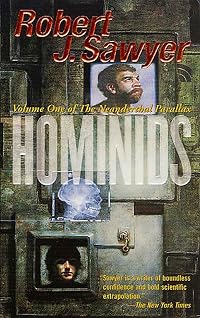
Hominids examines two unique species of people. We are one of those species; the other is the Neanderthals of a parallel world where they become the dominant intelligence. The Neanderthal civilization has reached heights of culture and science comparable to our own, but with radically different history, society, and philosophy. Ponter Boddit, a Neanderthal physicist, accidentally pierces the barrier between the worlds and is transferred to our universe. Almost immediately recognized as a show more Neanderthal, but only much later as a scientist, he is quarantined and studied, alone and bewildered, a stranger in a strange land. But Ponter is also befriended -- by a doctor and a physicist who share his questing intelligence, and especially by Canadian geneticist Mary Vaughan, a woman with whom he develops a special rapport. Ponter's partner, Adikor Huld, finds himself with a messy lab, a missing body, suspicious people all around and an explosive murder trial. How can he possibly prove his innocence when he has no idea what actually happened to Ponter? "A rapidly plotted, anthropologically saturated speculative novel... with] Sawyer-signature wide appeal." -The Globe & Mail show lessTags
Recommendations




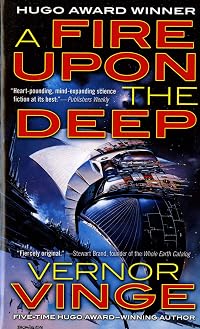
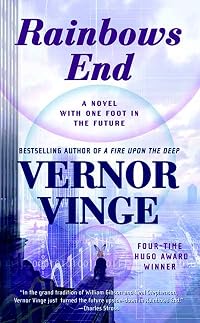
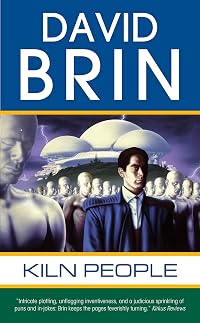
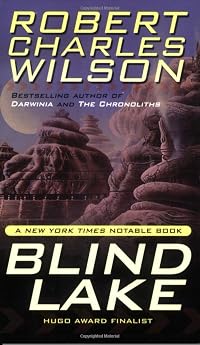
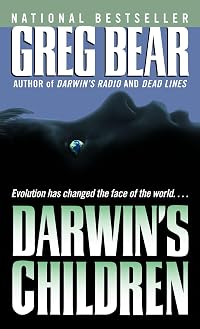
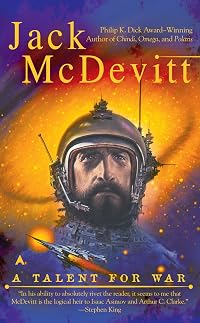
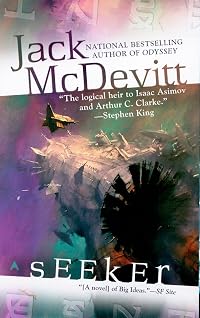
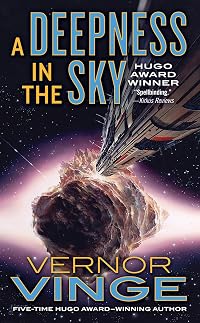
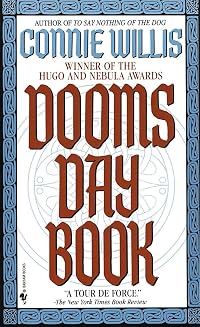
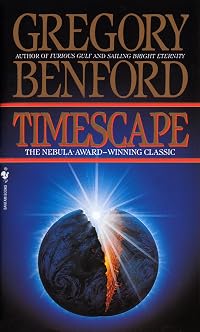
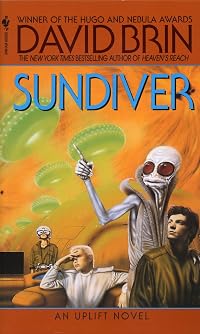
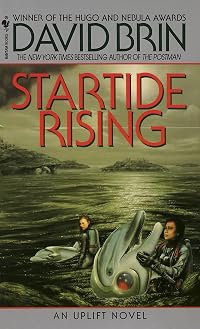



Member Recommendations

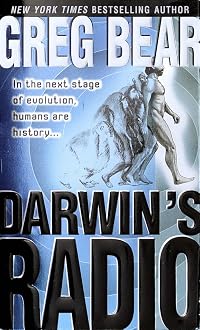
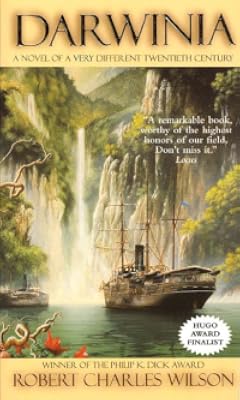
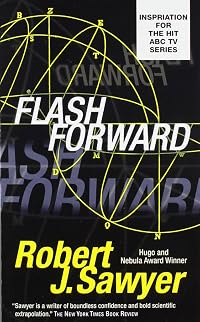
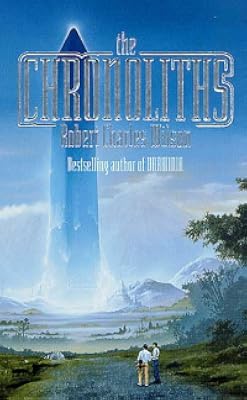
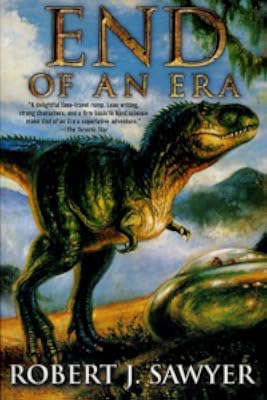
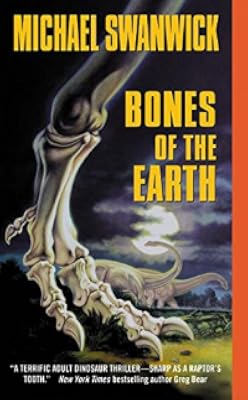
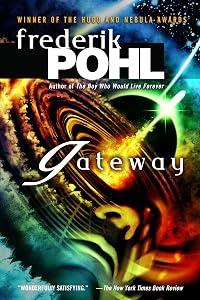
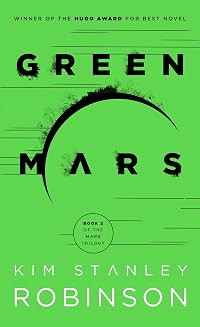
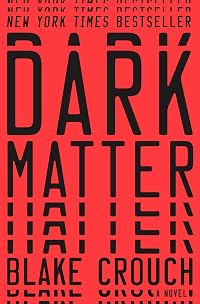
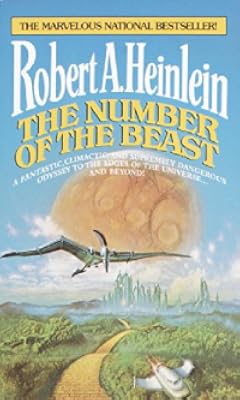
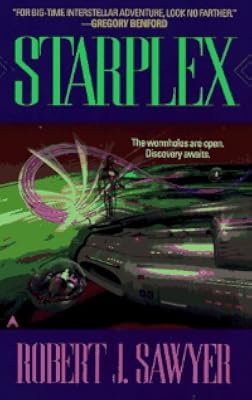
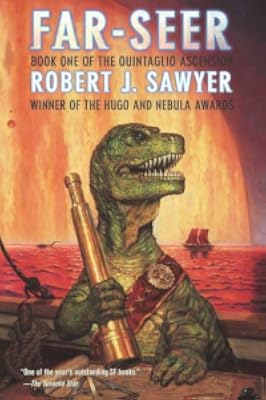
hobreads Another author's take of contact between Neanderthal man and modern humankind.
Member Reviews
I'm not usually much for science fiction, but I loved Hominids. The concept of an alternative universe in which it is the Neanderthals who survived rather than Homo sapiens sapiens is incredibly clever. And Sawyer's assumption that, had they survived, Neanderthals would have, like us, evolved science, culture, and civilization makes perfect sense.
Sawyer spins a modern tale of Gulliver among the Lilliputians, a naïf who is both inspired and appalled by the good and bad in human civilization. I won't spoil the novel by giving too much away -- suffice it to say that the reader comes away re-evaluating much of society.
When someone who doesn't usually read SF likes a book this much, it's high praise, indeed.
Sawyer spins a modern tale of Gulliver among the Lilliputians, a naïf who is both inspired and appalled by the good and bad in human civilization. I won't spoil the novel by giving too much away -- suffice it to say that the reader comes away re-evaluating much of society.
When someone who doesn't usually read SF likes a book this much, it's high praise, indeed.
I read this as part of my "reading all the Hugo winners" goal.
All I have to say is: This book was up against China Mieville's 'The Scar' - and THIS won? WHAT?
Sorry, but this is just not a very good book.
The premise is that, due to an accident that occurs during a quantum physics experiment, a Neanderthal scientist from a parallel universe where humanity is the race that went extinct, finds himself stranded in our world.
There's plenty to work with there, lots of potential. However, that potential is not realized.
The book is written in the style I like to refer to as "late 20th-century Mainstream Bestseller." However, this breezy beach-read style is broken up by extended awkward and unbelievable dialogues. Sawyer's point is to show the show more problems of our society by contrasting it with his imaginary Neanderthal society. Unfortunately, his way of doing this is to get two characters stuck in a room together and make them talk at length, in a very stilted, artificial manner about the topic at hand.
So we get to hear polemics on religion, gender relations, overpopulation, etc, etc. I absolutely agree with some of Sawyer's opinions, I disagree strongly with others. Whether or not I agree with his points is not relevant, the problem is that the topics are introduced and discussed in such a clunky fashion.
Also, as a woman, I felt that Sawyer showed a significant lack of understanding of women in general. His depiction of the reactions of a female character who is raped read like they come straight out of some psychology text, without ever genuinely getting inside her head or creating empathy. I also objected to his depiction of a gender-separatist society that apparently has developed because women are so bitchy due to PMS that men have to live separately from them. I will admit the actual existence of PMS (supposedly it occurs in 2 to 5% of women), and maybe Neanderthals could potentially be more susceptible to it. But yeah, Sawyer's depiction of women in general rubbed me the wrong way. show less
All I have to say is: This book was up against China Mieville's 'The Scar' - and THIS won? WHAT?
Sorry, but this is just not a very good book.
The premise is that, due to an accident that occurs during a quantum physics experiment, a Neanderthal scientist from a parallel universe where humanity is the race that went extinct, finds himself stranded in our world.
There's plenty to work with there, lots of potential. However, that potential is not realized.
The book is written in the style I like to refer to as "late 20th-century Mainstream Bestseller." However, this breezy beach-read style is broken up by extended awkward and unbelievable dialogues. Sawyer's point is to show the show more problems of our society by contrasting it with his imaginary Neanderthal society. Unfortunately, his way of doing this is to get two characters stuck in a room together and make them talk at length, in a very stilted, artificial manner about the topic at hand.
So we get to hear polemics on religion, gender relations, overpopulation, etc, etc. I absolutely agree with some of Sawyer's opinions, I disagree strongly with others. Whether or not I agree with his points is not relevant, the problem is that the topics are introduced and discussed in such a clunky fashion.
Also, as a woman, I felt that Sawyer showed a significant lack of understanding of women in general. His depiction of the reactions of a female character who is raped read like they come straight out of some psychology text, without ever genuinely getting inside her head or creating empathy. I also objected to his depiction of a gender-separatist society that apparently has developed because women are so bitchy due to PMS that men have to live separately from them. I will admit the actual existence of PMS (supposedly it occurs in 2 to 5% of women), and maybe Neanderthals could potentially be more susceptible to it. But yeah, Sawyer's depiction of women in general rubbed me the wrong way. show less
Ponter Boddit is a theoretical physicist working with his professional and life partner--his man-mate--Adikor on a quantum computer, deep in the bowels of a nickel mine, when something goes horribly wrong and, from Adikor's perspective, Ponter disappears.
From Ponter's perspective, he's suddenly in a tankful of water in a large, dark room.
Ponter and Adikor are Neanderthals, from a world where H. sapiens sapiens died out, and H. sapiens neanderthalis survived to become the dominant species.
Now Ponter is stuck in our world, where he emerged into the heavy water tank of a neutrino detector deep in a nickel mine in northern Ontario. Reuben Montego, a medical doctor, and Mary Vaughn, a very distinguished geneticist who has done work on show more recovered Neanderthal DNA, are two of his major allies in this world, but he's facing a huge challenge, building a new life for himself, isolated from everything he's ever known. And since Neanderthal society is much lower-density, the total Neanderthal population much lower, and they never developed agriculture but instead have systemitized hunter-gatherer food collection and distribution, modern industrial civilization with a population in the billions, is very tough for him to quickly absorb.
Meanwhile, back home in the Neanderthal world, the woman-mate of Ponter's late woman-mate has accused Adikor of murdering Ponter. She's not deterred by the lack of a body; Adikor was the only person there when he disappeared, Adikor has a volatile temper, and Adikor, to her way of thinking, must have been jealous of Ponter's greater prominence in their shared profession.
Also, Adikor can't explain quantum physics in a way that makes sense to an adjudicator who was apparently never required to study any science.
There's a lot to like about this book. The science is interesting, though not as new and startling as it was in 2002, and the Neanderthal society is really, really interesting. And who can dislike a world where woolly mammoths still roam North America?
But I do have some problems with it, too.
I won't deal with Mary Vaughn's rape and its aftermath, as others have done that at some length.
It's more than a mite annoying that the contrast between our society and Ponter's is largely used as an opportunity for one-sided criticism of ours. H. sapiens hunted most of the megafauna to extinction. (This is no longer believed to be true.) H. sapiens wiped out H. neanderthalis. (This is no longer believed to be true, and with another decade of research, we now know there was interbreeding among Sapiens, Neanderthals, and Denisovans.) We still have violent crime. We do not successfully feed all of our very large population. We pollute the air. And, oh dear, we have religion.
What's interesting is that Ponter assumes without question that H. sapiens wiped out H. neanderthalis in our world, and H. sapiens wiped out H. sapiens in his world. It would seem that there's another possibility, especially since the means by which the Neanderthals have effectively culled violent behavior from their genome could not possibly have begun until they had advanced scientifically enough to reason out the genetics.
What's annoying is the discussion of religion between Ponter and Mary. Mary's a Catholic as well as a world-class geneticist, and might reasonably be expected to have a slightly more sophisticated understanding of religion. It's treated as an unquestionable fact that religious believers believe that religion, belief in God, is a necessary precursor of morality. That's a belief that is troublesome in many ways as well as demonstrably false. But having been raised Catholic myself, albeit in a different country than Mary was, I was taught that, on the contrary, the moral impulse comes first. "If anyone says "I love God," and hates his brother, he is a liar, because he who does not love his brother whom he has seen, cannot love God whom he has not seen." 1 John 4:20 (English Standard Version) In short, that the innate moral impulse is a necessary, but not a sufficient, condition for belief in God.
Robert J. Sawyer is a smart guy, and knows how to do research. Perhaps he didn't realize he needed to do research on this. Certainly, if he had incorporated this view of the relationship between religion and morality, as taught by the religion Mary is said to believe in, it would have made Mary's position in that discussion rather stronger--perhaps uncomfortably so, for the agenda Mr. Sawyer seems to have been pursuing.
Now, it's not that he portrays the Neanderthals as perfect. By no means. It's just that Neanderthal failings seem to be matters of individual character, while Sapiens failings are shown as systemic and pervasive, despite the fine characters of Ponter's friends in this universe.
I think the ideological blinders do weaken the story and the book overall, but I like Ponter, Adikor, and their friends on both sides of the portal, and overall I enjoyed the book.
Recommended with reservations. show less
From Ponter's perspective, he's suddenly in a tankful of water in a large, dark room.
Ponter and Adikor are Neanderthals, from a world where H. sapiens sapiens died out, and H. sapiens neanderthalis survived to become the dominant species.
Now Ponter is stuck in our world, where he emerged into the heavy water tank of a neutrino detector deep in a nickel mine in northern Ontario. Reuben Montego, a medical doctor, and Mary Vaughn, a very distinguished geneticist who has done work on show more recovered Neanderthal DNA, are two of his major allies in this world, but he's facing a huge challenge, building a new life for himself, isolated from everything he's ever known. And since Neanderthal society is much lower-density, the total Neanderthal population much lower, and they never developed agriculture but instead have systemitized hunter-gatherer food collection and distribution, modern industrial civilization with a population in the billions, is very tough for him to quickly absorb.
Meanwhile, back home in the Neanderthal world, the woman-mate of Ponter's late woman-mate has accused Adikor of murdering Ponter. She's not deterred by the lack of a body; Adikor was the only person there when he disappeared, Adikor has a volatile temper, and Adikor, to her way of thinking, must have been jealous of Ponter's greater prominence in their shared profession.
Also, Adikor can't explain quantum physics in a way that makes sense to an adjudicator who was apparently never required to study any science.
There's a lot to like about this book. The science is interesting, though not as new and startling as it was in 2002, and the Neanderthal society is really, really interesting. And who can dislike a world where woolly mammoths still roam North America?
But I do have some problems with it, too.
I won't deal with Mary Vaughn's rape and its aftermath, as others have done that at some length.
It's more than a mite annoying that the contrast between our society and Ponter's is largely used as an opportunity for one-sided criticism of ours. H. sapiens hunted most of the megafauna to extinction. (This is no longer believed to be true.) H. sapiens wiped out H. neanderthalis. (This is no longer believed to be true, and with another decade of research, we now know there was interbreeding among Sapiens, Neanderthals, and Denisovans.) We still have violent crime. We do not successfully feed all of our very large population. We pollute the air. And, oh dear, we have religion.
What's interesting is that Ponter assumes without question that H. sapiens wiped out H. neanderthalis in our world, and H. sapiens wiped out H. sapiens in his world. It would seem that there's another possibility, especially since the means by which the Neanderthals have effectively culled violent behavior from their genome could not possibly have begun until they had advanced scientifically enough to reason out the genetics.
What's annoying is the discussion of religion between Ponter and Mary. Mary's a Catholic as well as a world-class geneticist, and might reasonably be expected to have a slightly more sophisticated understanding of religion. It's treated as an unquestionable fact that religious believers believe that religion, belief in God, is a necessary precursor of morality. That's a belief that is troublesome in many ways as well as demonstrably false. But having been raised Catholic myself, albeit in a different country than Mary was, I was taught that, on the contrary, the moral impulse comes first. "If anyone says "I love God," and hates his brother, he is a liar, because he who does not love his brother whom he has seen, cannot love God whom he has not seen." 1 John 4:20 (English Standard Version) In short, that the innate moral impulse is a necessary, but not a sufficient, condition for belief in God.
Robert J. Sawyer is a smart guy, and knows how to do research. Perhaps he didn't realize he needed to do research on this. Certainly, if he had incorporated this view of the relationship between religion and morality, as taught by the religion Mary is said to believe in, it would have made Mary's position in that discussion rather stronger--perhaps uncomfortably so, for the agenda Mr. Sawyer seems to have been pursuing.
Now, it's not that he portrays the Neanderthals as perfect. By no means. It's just that Neanderthal failings seem to be matters of individual character, while Sapiens failings are shown as systemic and pervasive, despite the fine characters of Ponter's friends in this universe.
I think the ideological blinders do weaken the story and the book overall, but I like Ponter, Adikor, and their friends on both sides of the portal, and overall I enjoyed the book.
Recommended with reservations. show less
Robert J. Sawyer’s tenth novel, Hugo award-winning “Hominids” jump-starts a thoughtful and imaginative trilogy, “The Neanderthal Parallax”, which explores an alternate evolutionary stream where Neanderthals became the dominant intelligent species on the planet. Sawyer makes up for his somewhat lackluster prose with well-researched paleoanthropological information and theoretical physics played out by charming untraditional characters from two parallel universes. I recommend Sawyer’s trilogy for readers well-read in SF who seek challenging ideas that push the boundaries of cutting-edge science and alternate social practices. The trilogy explores the lives and cultures of two unique species of people, Homo sapiens and Homo show more neanderthalis, through the premise of existing parallel universes and what might happen if they “collided”. During a quantum-computing experiment, Ponter Boddit, a Neanderthal physicist, accidently pierces the barrier separating his universe from ours, plunging him into a land both familiar and strange. Having left behind his family, a mystery, and his colleague -- now accused of murder -- Ponter’s search for home forces him to navigate his way among the curious and suspicious “Gliksins” who have in his world been extinct for 40,000 years. In our universe it is his kind who have been extinct for so long.
All three books move at a ponderous pace before finally accelerating into high gear. In “Humans” this only happens by chapter 17 (about a hundred pages into the book).
Certainly Sawyer’s characters radiate warmth and evoke our sympathy, but they remain avatars to the main driver of the trilogy, Sawyer’s imaginative ideas in science and social paradigms. While there is nothing new about the idea of parallel universes, Sawyer uses it ingeniously to launch his premise, of an alternate evolution where Neanderthals inherited the “big leap forward” into higher-consciousness, in order to explore an alternate zeitgiest and to comment on our own. The world of the Neanderthals unfurls before us through the counterpoint intrigue of their universe and our own. Sawyer’s alternative societal choices, illustrated through Neanderthal culture show us by example the foolishness of some of our own paradigms, social taboos and prejudices as he explores concepts of morality, gender, faith and love. Author David Brin says: “The biggest job of science fiction is to portray the Other. To help us imagine the strange and see the familiar in eerie new ways. Nobody explores this territory more boldly than Robert Sawyer.” One of Sawyer’s most ingenius concepts is a society wherein females live together with their same-sex mate apart from males who live with their same-sex mate and then get together with their opposite-sex mate only part of each month at the right time to conceive (or not). Of course this is feasible because when women live together for any length of time, it has been shown that they develop synchronus menstral cycles. I found Sawyer’s treatment of this bisexual life-style sensitively and insightfully portrayed.
With respect to language, there is no special magic or brilliance to Sawyer’s writing, particularly in how he constructs his sentences or how he chooses to illustrate his worlds. The writing in Neanderthal Parallax runs lackluster with copious mundane detail, such as the colour of someone’s phone or the brand of potato chips. For instance, do I need to know that Mary had “become quite taken with Upstate Dairy’s Extreme Chocolate Milk, which, like the Fabulous Heluva Good French Onion Dip, wasn’t available in Toronto”? Do I care? There were also too many corny references for my taste to vernacular of our subculture, including “Star Trek” scenes. There are much more effective ways to illustrate a character’s predelictions than with clutter of this sort. In the second book, “Humans”, Sawyer’s passing reference to the demise of New York’s Trade towers appears dropped in gratuitously and, I found, trivialized the tragedy as a result. While this detail was no doubt intended to enrich his created world with a sense of concrete reality (not unlike many mainstream literery works) it also threw me, the reader, out of his “fictive dream” many a time. It detracted from the story’s compelling potential and slowed the pace considerably. There is a place and a method for adding this sort of detail. If simply dropped in, with an inkling of “self-cleverness”, such detail becomes trite and the reader’s involvement with the story is compromised. The reader becomes less participant and more observer. There is nothing wrong with reader as observer. Many classics, written in the “omniscient” voice (as opposed to limited third person) offset the inevitable distancing from the characters by seducing the reader with something else: vivid narrative rich in subtle, lyrical metaphor, evokative imagery or depth of theme. Sawyer provides none of these, so we are left with a need, a yearning for connection in some other way.
There are also times, many times, when Sawyer’s research overwhelms the story with a littany of expository information. For instance, when one of his characters is brutally attacked, permanently changing their physiology and consequently their mental behavior, instead of letting us witness the transformation in the character, we are presented with copious data from the character’s own research, as if Sawyer just had to include all the research he’d conducted on the subject. This, coupled with Sawyer’s mundane detail, reads more like a travelogue, a topography of life without its depth. Those few times when he seamlessly infuses information in story stand out as a result. Two examples include the utterly fascinationg discourse between Louise Benoit and Jock Krieger about CEMI theory and the conversation between neuroscientist Veronica Shannon and Ponter and Mary about the relationship of religious experience with brain chemistry, both in the third book, “Hybrids.” Sawyer seems to do best with dialogue, and some of it is clever. One example comes to mind in a scene between Mary and her Neanderthal friend, Bandra, where Mary defends Homo sapien’s right to breed: “I guess we believe that superseding the brutality of natural selection is the hallmark of civilization.”
To his credit, Sawyer’s “home-spun” style has its charm, providing us with some of that connection we yearn for through his characters. Sawyer’s main characters unfold with a realism that evokes strong empathy in the reader. I like his characters, pimples and all. I particularly like how he has tapped into his geographic heritage to give us full-bodied characters with uniquely Canadian backgrounds, like Louise Benoit, the statuesque French Canadian post-doc in quantum physics.
Sawyer’s greatest skill as a fiction writer lies in how he marries his ordinary people in an ordinary world to extraordinary ideas and circumstance. And it is for this reason, I think, that he time and again arouses wide public readership and continues to be nominated and to win Hugos and Nebulas. The Neanderthal Parallax is no different. I recommend this trilogy for not only Sawyer’s interesting thoughts on paleoantrhopology and quantum theory but for the questions he raises about how we define our humanity. This is good classic SF. Sawyer’s “Neanderthal Parallax” incites intellectual thought and lingers like a rich flavourful coffee. show less
All three books move at a ponderous pace before finally accelerating into high gear. In “Humans” this only happens by chapter 17 (about a hundred pages into the book).
Certainly Sawyer’s characters radiate warmth and evoke our sympathy, but they remain avatars to the main driver of the trilogy, Sawyer’s imaginative ideas in science and social paradigms. While there is nothing new about the idea of parallel universes, Sawyer uses it ingeniously to launch his premise, of an alternate evolution where Neanderthals inherited the “big leap forward” into higher-consciousness, in order to explore an alternate zeitgiest and to comment on our own. The world of the Neanderthals unfurls before us through the counterpoint intrigue of their universe and our own. Sawyer’s alternative societal choices, illustrated through Neanderthal culture show us by example the foolishness of some of our own paradigms, social taboos and prejudices as he explores concepts of morality, gender, faith and love. Author David Brin says: “The biggest job of science fiction is to portray the Other. To help us imagine the strange and see the familiar in eerie new ways. Nobody explores this territory more boldly than Robert Sawyer.” One of Sawyer’s most ingenius concepts is a society wherein females live together with their same-sex mate apart from males who live with their same-sex mate and then get together with their opposite-sex mate only part of each month at the right time to conceive (or not). Of course this is feasible because when women live together for any length of time, it has been shown that they develop synchronus menstral cycles. I found Sawyer’s treatment of this bisexual life-style sensitively and insightfully portrayed.
With respect to language, there is no special magic or brilliance to Sawyer’s writing, particularly in how he constructs his sentences or how he chooses to illustrate his worlds. The writing in Neanderthal Parallax runs lackluster with copious mundane detail, such as the colour of someone’s phone or the brand of potato chips. For instance, do I need to know that Mary had “become quite taken with Upstate Dairy’s Extreme Chocolate Milk, which, like the Fabulous Heluva Good French Onion Dip, wasn’t available in Toronto”? Do I care? There were also too many corny references for my taste to vernacular of our subculture, including “Star Trek” scenes. There are much more effective ways to illustrate a character’s predelictions than with clutter of this sort. In the second book, “Humans”, Sawyer’s passing reference to the demise of New York’s Trade towers appears dropped in gratuitously and, I found, trivialized the tragedy as a result. While this detail was no doubt intended to enrich his created world with a sense of concrete reality (not unlike many mainstream literery works) it also threw me, the reader, out of his “fictive dream” many a time. It detracted from the story’s compelling potential and slowed the pace considerably. There is a place and a method for adding this sort of detail. If simply dropped in, with an inkling of “self-cleverness”, such detail becomes trite and the reader’s involvement with the story is compromised. The reader becomes less participant and more observer. There is nothing wrong with reader as observer. Many classics, written in the “omniscient” voice (as opposed to limited third person) offset the inevitable distancing from the characters by seducing the reader with something else: vivid narrative rich in subtle, lyrical metaphor, evokative imagery or depth of theme. Sawyer provides none of these, so we are left with a need, a yearning for connection in some other way.
There are also times, many times, when Sawyer’s research overwhelms the story with a littany of expository information. For instance, when one of his characters is brutally attacked, permanently changing their physiology and consequently their mental behavior, instead of letting us witness the transformation in the character, we are presented with copious data from the character’s own research, as if Sawyer just had to include all the research he’d conducted on the subject. This, coupled with Sawyer’s mundane detail, reads more like a travelogue, a topography of life without its depth. Those few times when he seamlessly infuses information in story stand out as a result. Two examples include the utterly fascinationg discourse between Louise Benoit and Jock Krieger about CEMI theory and the conversation between neuroscientist Veronica Shannon and Ponter and Mary about the relationship of religious experience with brain chemistry, both in the third book, “Hybrids.” Sawyer seems to do best with dialogue, and some of it is clever. One example comes to mind in a scene between Mary and her Neanderthal friend, Bandra, where Mary defends Homo sapien’s right to breed: “I guess we believe that superseding the brutality of natural selection is the hallmark of civilization.”
To his credit, Sawyer’s “home-spun” style has its charm, providing us with some of that connection we yearn for through his characters. Sawyer’s main characters unfold with a realism that evokes strong empathy in the reader. I like his characters, pimples and all. I particularly like how he has tapped into his geographic heritage to give us full-bodied characters with uniquely Canadian backgrounds, like Louise Benoit, the statuesque French Canadian post-doc in quantum physics.
Sawyer’s greatest skill as a fiction writer lies in how he marries his ordinary people in an ordinary world to extraordinary ideas and circumstance. And it is for this reason, I think, that he time and again arouses wide public readership and continues to be nominated and to win Hugos and Nebulas. The Neanderthal Parallax is no different. I recommend this trilogy for not only Sawyer’s interesting thoughts on paleoantrhopology and quantum theory but for the questions he raises about how we define our humanity. This is good classic SF. Sawyer’s “Neanderthal Parallax” incites intellectual thought and lingers like a rich flavourful coffee. show less
Hominids is an extremely well-written novel. It tells the story of a Neanderthal physicist living in an alternate timeline where humans, not Neanderthals, went extinct. The Neanderthal physicist, while working on a quantum computing experiment, is accidentally transported to an alternate universe, our universe. The novel then splits into two stories. The story of the Neanderthal's friend at home who is trying to retrieve the lost Neanderthal while fending off an accusation of murder against his friend. And the story of the Neanderthal and his interactions with humanity. Sawyer is a brilliant writer, and the book was never dull. The trial of Adikor, the Neanderthal's friend, was especially gripping. So much so that I often skipped ahead show more to read more of the trial before going back. But it was all well-paced, well-characterized reading.
It was also pure nonsense. I'm no scientist, and I have no doubt that Sawyer had basis for all of his ideas in this novel. Normally, I wouldn't question the science in a book, because perfect accuracy is not the point of science fiction. But midway through the book it was painfully obvious what Sawyer was doing. The Neanderthal, Ponter, became a mouthpiece for everything Sawyer doesn't like about modern human culture. The Neanderthals were not a realistic society with flaws and strengths, they were the culmination of what humans could be, in Sawyer's mind at least. The criminal justice system, religion, the media, even some aspects of the scientific community are his targets. Sometimes with justification, but never with nuance. The Neanderthal society is presented as almost perfect, due to a combination of culture and technology. They are at one with their surroundings, have no religion, and little crime thanks to unhackable surveillance devices. Logically of course all systems have a weakness, and Sawyer has clearly never read 1984 but then again, Neanderthals are just that great.
Sawyer throws humanity a few bones. Our fundamental violence and competitiveness did allow us to go to the Moon. But that's about the only thing we can do better than our cousins and even that we screwed up. It's ridiculous, not because humanity is portrayed negatively. I'm all for pointing out our flaws. But because the Neanderthal society is portrayed as so utopian. What few flaws he identifies in their society are minor and I'm not sure were intentional. They practice eugenics, castration, and 24 hour surveillance, but Sawyer makes sure to balance that with the very emotional inclusion of a female scientist who is brutally raped, so you see that all that terrible stuff would actually make society better. Yes, at one point we see a Neanderthal who is driven to grief by unfair aspects of their society, but Sawyer clearly is advocating the Neanderthal approach to crime stopping.
What makes this worse is the scientific certitude with which Sawyer writes. It's a fictional book and he doesn't claim otherwise. But he does have sources at the end of his novel, which lead you to believe a lot of the extrapolations he is making are justified scientifically, when they are not. Does not finding any evidence of ritual burial mean Neanderthals didn't have religion? Is there any solid evidence Neanderthals had any more respect for the environment than humans? Etc. I say no. I say we can put pretty much any face we want on Neanderthal culture because we will never know what they were really like. There may or may not be evidence for some of Sawyer's claims. But to have a society be so idealistic is just not believable. All societies have flaws, major flaws, not the minor foibles of these Neanderthals. You can, in fact, present a superior society that shows humanities faults without the pie in the sky version of Neanderthals.
I could forgive a lot about this book if it weren't so heavy handed. Sawyer spends so much time explaining why humans are bad and neanderthals are good that he forgets about the story. It turns out that it takes about five minutes to bring our friend Ponter home. Buried in this are some actually interesting quantum ideas about the way consciousness may or may not affect the universe. But even these are ruined by the cheap why they are used to further the rushed ending. So what did we learn? What changes were made in the characters and in the societies? For me, not much. It all felt very empty.
Sawyer is a better writer than that. I've never read a book that was so interesting and well-paced, that left me feeling so disappointed.
By the way, humans also hunted Neanderthals to extinction, as well as all mega-fauna on the planet. Climate changes played no role in any of it. show less
It was also pure nonsense. I'm no scientist, and I have no doubt that Sawyer had basis for all of his ideas in this novel. Normally, I wouldn't question the science in a book, because perfect accuracy is not the point of science fiction. But midway through the book it was painfully obvious what Sawyer was doing. The Neanderthal, Ponter, became a mouthpiece for everything Sawyer doesn't like about modern human culture. The Neanderthals were not a realistic society with flaws and strengths, they were the culmination of what humans could be, in Sawyer's mind at least. The criminal justice system, religion, the media, even some aspects of the scientific community are his targets. Sometimes with justification, but never with nuance. The Neanderthal society is presented as almost perfect, due to a combination of culture and technology. They are at one with their surroundings, have no religion, and little crime thanks to unhackable surveillance devices. Logically of course all systems have a weakness, and Sawyer has clearly never read 1984 but then again, Neanderthals are just that great.
Sawyer throws humanity a few bones. Our fundamental violence and competitiveness did allow us to go to the Moon. But that's about the only thing we can do better than our cousins and even that we screwed up. It's ridiculous, not because humanity is portrayed negatively. I'm all for pointing out our flaws. But because the Neanderthal society is portrayed as so utopian. What few flaws he identifies in their society are minor and I'm not sure were intentional. They practice eugenics, castration, and 24 hour surveillance, but Sawyer makes sure to balance that with the very emotional inclusion of a female scientist who is brutally raped, so you see that all that terrible stuff would actually make society better. Yes, at one point we see a Neanderthal who is driven to grief by unfair aspects of their society, but Sawyer clearly is advocating the Neanderthal approach to crime stopping.
What makes this worse is the scientific certitude with which Sawyer writes. It's a fictional book and he doesn't claim otherwise. But he does have sources at the end of his novel, which lead you to believe a lot of the extrapolations he is making are justified scientifically, when they are not. Does not finding any evidence of ritual burial mean Neanderthals didn't have religion? Is there any solid evidence Neanderthals had any more respect for the environment than humans? Etc. I say no. I say we can put pretty much any face we want on Neanderthal culture because we will never know what they were really like. There may or may not be evidence for some of Sawyer's claims. But to have a society be so idealistic is just not believable. All societies have flaws, major flaws, not the minor foibles of these Neanderthals. You can, in fact, present a superior society that shows humanities faults without the pie in the sky version of Neanderthals.
I could forgive a lot about this book if it weren't so heavy handed. Sawyer spends so much time explaining why humans are bad and neanderthals are good that he forgets about the story. It turns out that it takes about five minutes to bring our friend Ponter home. Buried in this are some actually interesting quantum ideas about the way consciousness may or may not affect the universe. But even these are ruined by the cheap why they are used to further the rushed ending. So what did we learn? What changes were made in the characters and in the societies? For me, not much. It all felt very empty.
Sawyer is a better writer than that. I've never read a book that was so interesting and well-paced, that left me feeling so disappointed.
By the way, humans also hunted Neanderthals to extinction, as well as all mega-fauna on the planet. Climate changes played no role in any of it. show less
Hominids is an interesting spin on utopian science-fiction, with a keen attention to detail. In a parallel universe, neanderthals have become the dominant hominid species. Two neanderthals physicists are working on a quantum computer when they accidentally open a portal to our planet. One of them is sucked through, and arrives in the Sudbury Neutrino Observatory. The plot continues along two arcs, revealing differences between the two species. Pontor, "our" neanderthal, learns English with the help of his computer and a small group of Canadian scientists, while the world does a very realistic flip out. In the other universe, Adikor, Pontor's partner is accused of murder, and has to clear his name through a very unusual justice show more system.
The most interesting parts are those relating to the neanderthals. They're a utopian society, high-tech but still ecologically sustainable, with little violence and social crime. Men and women are mostly segregated in different parts of the city, coming together for a monthly sexual holiday that is only set to a fertile period every 10 years. Elders make the key political decisions, and public safety enforced by a system of private and voluntary recordings. The 'Omelass moment' is that violence has been eliminated by brutal culling. Anyone 50% related to a murder (parents, siblings, children) is sterilized, and over time the propensity for violence has been mostly bred out of neanderthals. Over all, though, neanderthal society is peaceful and rational, a blend of biological basis and cultural aspirations, and almost irritating perfect.
The Canadian B plot is less interesting, mostly because contemporary Canadian society is the opposite of exotic. Characters are rational scientists, Sawyer has done his research on neanderthals and quantum physics, and the interludes about how the press and the world see the visitor from another universe as proof of their prejudices seems about right. I'm not knowledgeable enough about physics to have an opinion about Copenhagen vs. Many Worlds Interpretations, but Sawyer does, and the cosmology of consciousness drives this book. The Canadian characters were (for quiet professionals) pleasantly diverse: Anglo, French, Jamaican, Indian. I enjoyed the budding romance between Pontor and viewpoint Canadian geneticist Mary Vaughn.
Mary's story is the turd in the punch-bowl, however. We're introduced to her with a rape by an unknown assailant, and her difficulty dealing with it due to the patriarchy and Catholic guilt. It's realistic and treated with appropriate gravity, but also entirely gratuitous. show less
The most interesting parts are those relating to the neanderthals. They're a utopian society, high-tech but still ecologically sustainable, with little violence and social crime. Men and women are mostly segregated in different parts of the city, coming together for a monthly sexual holiday that is only set to a fertile period every 10 years. Elders make the key political decisions, and public safety enforced by a system of private and voluntary recordings. The 'Omelass moment' is that violence has been eliminated by brutal culling. Anyone 50% related to a murder (parents, siblings, children) is sterilized, and over time the propensity for violence has been mostly bred out of neanderthals. Over all, though, neanderthal society is peaceful and rational, a blend of biological basis and cultural aspirations, and almost irritating perfect.
The Canadian B plot is less interesting, mostly because contemporary Canadian society is the opposite of exotic. Characters are rational scientists, Sawyer has done his research on neanderthals and quantum physics, and the interludes about how the press and the world see the visitor from another universe as proof of their prejudices seems about right. I'm not knowledgeable enough about physics to have an opinion about Copenhagen vs. Many Worlds Interpretations, but Sawyer does, and the cosmology of consciousness drives this book. The Canadian characters were (for quiet professionals) pleasantly diverse: Anglo, French, Jamaican, Indian. I enjoyed the budding romance between Pontor and viewpoint Canadian geneticist Mary Vaughn.
Mary's story is the turd in the punch-bowl, however. We're introduced to her with a rape by an unknown assailant, and her difficulty dealing with it due to the patriarchy and Catholic guilt. It's realistic and treated with appropriate gravity, but also entirely gratuitous. show less
This is one terrific book but that's really not a surprise to me. I haven't read everything Sawyer has written. As a matter of fact I think I've only been reading his stuff since 2009 so this book, which was published in 2002, is new to me. However, everything I have read by him has been very good. And there is the small matter that it won the 2003 Hugo Award so many other people thought it was good too.
Located 2100 metres underground in a disused nickel mine in Ontario is the Sudbury Neutrino Observatory (SNO). It is located there because cosmic rays cannot penetrate that deep under the Canadian shield but neutrinos can. When neutrinos hit the neutron of a hydrogen atom in heavy water the collision causes a light to be emitted and this show more can be detected. The data gathered at SNO confirmed that neutrinos oscillate which physicists had predicted. This is important in the world of physics. In fact, the scientist who led the discovery, Art McDonald, was co-winner of the Nobel Prize for Physics in 2015.
This book starts with a scientist from another reality being transposed into the SNO detector. Ponter Boddit is from a version of earth where the Neanderthals survived and homo sapiens died out. In his reality the subterranean location was the ideal spot to set up a quantum computer which is a computer that uses other realities to perform complex calculations very quickly. The computer opened a portal into SNO and Ponter and a large quantity of air were exchanged with a volume of heavy water.
Of course, the appearance of a Neanderthal in modern day Canada creates quite a stir. Mary Vaughan, a geneticist from Toronto who sequenced part of the Neanderthal genome from some bones, is asked to travel to Sudbury to authenticate that Ponter is genuine. Mary, who is traumatized by being raped, takes this opportunity to get some distance from the scene of the rape. She has not told anyone about the rape, certainly not the Toronto police.
Back on Ponter's home world his disappearance has created another stir. Everyone in that world wears an implant that acts as a personal computer and a recording device. Ponter's device cannot communicate from the reality Ponter is now in. His co-worker and man-mate, Adikor Huld, has been charged with Ponter's murder since he was the last person to be with Ponter.
As we travel between the two worlds we discover just how different they are. In the Neanderthal reality wooly mammoths still roam the earth, there is virtually no crime and the population is far less than the human world. Neanderthals still live like hunter gatherers so there is no farming. Violence has been bred out of the genome because anyone who behaved violently was castrated as were all of their relatives who shared fifty percent of their genes. It sounds pretty idyllic but maybe there are a few worms in the apple.
I really appreciated how Sawyer portrayed women in this book. I thought he showed a lot of empathy for Mary, the victim of rape. Even more interesting to me was the depiction of the sexual dynamics in the Neanderthal world. Although I did wonder why the children had to stay with the females while they were young. Maybe Sawyer will address that in later books of this trilogy. I guess I'll have to read them to find out. show less
Located 2100 metres underground in a disused nickel mine in Ontario is the Sudbury Neutrino Observatory (SNO). It is located there because cosmic rays cannot penetrate that deep under the Canadian shield but neutrinos can. When neutrinos hit the neutron of a hydrogen atom in heavy water the collision causes a light to be emitted and this show more can be detected. The data gathered at SNO confirmed that neutrinos oscillate which physicists had predicted. This is important in the world of physics. In fact, the scientist who led the discovery, Art McDonald, was co-winner of the Nobel Prize for Physics in 2015.
This book starts with a scientist from another reality being transposed into the SNO detector. Ponter Boddit is from a version of earth where the Neanderthals survived and homo sapiens died out. In his reality the subterranean location was the ideal spot to set up a quantum computer which is a computer that uses other realities to perform complex calculations very quickly. The computer opened a portal into SNO and Ponter and a large quantity of air were exchanged with a volume of heavy water.
Of course, the appearance of a Neanderthal in modern day Canada creates quite a stir. Mary Vaughan, a geneticist from Toronto who sequenced part of the Neanderthal genome from some bones, is asked to travel to Sudbury to authenticate that Ponter is genuine. Mary, who is traumatized by being raped, takes this opportunity to get some distance from the scene of the rape. She has not told anyone about the rape, certainly not the Toronto police.
Back on Ponter's home world his disappearance has created another stir. Everyone in that world wears an implant that acts as a personal computer and a recording device. Ponter's device cannot communicate from the reality Ponter is now in. His co-worker and man-mate, Adikor Huld, has been charged with Ponter's murder since he was the last person to be with Ponter.
As we travel between the two worlds we discover just how different they are. In the Neanderthal reality wooly mammoths still roam the earth, there is virtually no crime and the population is far less than the human world. Neanderthals still live like hunter gatherers so there is no farming. Violence has been bred out of the genome because anyone who behaved violently was castrated as were all of their relatives who shared fifty percent of their genes. It sounds pretty idyllic but maybe there are a few worms in the apple.
I really appreciated how Sawyer portrayed women in this book. I thought he showed a lot of empathy for Mary, the victim of rape. Even more interesting to me was the depiction of the sexual dynamics in the Neanderthal world. Although I did wonder why the children had to stay with the females while they were young. Maybe Sawyer will address that in later books of this trilogy. I guess I'll have to read them to find out. show less
Members
- Recently Added By
Lists

Hugo Award Winning Novels
63 works; 23 members

Hugo Awards - Best Novel
69 works; 10 members

Tagged Parallel Worlds
43 works; 11 members

Jean's Sci Fi/Fantasy Reading list
189 works; 12 members

Books Read in 2018
4,360 works; 110 members

Evergreen Award™ Winners and Nominees 2005–2024
200 works; 3 members
Author Information

107+ Works 20,046 Members
Robert J. Sawyer was born in Ottawa on April 29, 1960, but raised in Toronto. In 1980, while still in high school, Sawyer submitted a short story to the the Rochester Museum and Science Center, which was running a contest for light show ideas. Sawyer didn't win, but the Museum purchased his story Motive anyway and it ran for 192 performances. show more Sawyer went on to attend Toronto's Ryerson Polytechnical Institute, majoring in Radio and Television Arts. In September 1979, he had his first piece of fiction published at the end of his first year, in Ryerson's literary annual, White Wall Review. Sawyer graduated from Ryerson in 1982. Sawyer was hired back the following semester to teach television studio production techniques to second- and third-year students. In the four months interim, he worked for minimum wage at the local SF bookstore, spending all his earnings on books. From 1984 to 1992, while teaching, Sawyer also coordinated a social group of Toronto-area science-fiction writers founded by SF editor Judith Merril. He established a Canadian region of the Science Fiction and Fantasy Writers of America; and in 1998, served as that organization's president. Sawyer also retained freelance nonfiction writing contracts, writing articles for newspapers and magazines, press releases and brochures for corporations, newsletters for government departments. He churned out vast amounts of promotional materials and over 200 articles for computing and personal-finance magazines in a span of five years. But in that time, his only really significant publication was the novelette Golden Fleece, which appeared as the cover story in the September 1988 edition of Amazing Stories. The novel-length Golden Fleece was sold to Warner Books a year later in 1989. The sales of his first five books were uninspiring and Sawyer faced being dropped by his publisher. Sawyer decided to take the time to write a book, without a contract, take as long as necessary, and produce a blockbuster. He also wanted to tackle a controversial issue and deal with it head on. With that in mind, Sawyer wrote The Terminal Experiment, about abortion and the soul. His publisher rejected it on grounds of controversy. HarperPrism then bought the book and serialization rights were sold to Analog, the number-one best-selling English-language SF magazine. The Terminal Experiment went on to win the Science Fiction and Fantasy Writers of America's Nebula Award for Best Novel of 1995. His novel Frameshift was his first book published in hardcover, and was nominated for the Hugo Award, and won Japan's Seiun Award for best foreign novel of the year. (Bowker Author Biography) show less
Some Editions
Awards and Honors
Series

Work Relationships
Is contained in
Common Knowledge
- Canonical title
- Hominids
- Original publication date
- 2002-05
- People/Characters
- Ponter Boddit; Mary Vaughan; Adikor Huld; Louise Benoît; Paul Kiriyama; Bonnie Jean Mah (show all 14); Delag Buwst; Naonihal Singh; Jasmel Ket; Scott Naylor; Albert Shawwanossoway; Lurt Fradlo; Daklar Bolbay; Hak
- Important places
- Sudbury Neutrino Observatory, Sudbury, Ontario, Canada
- Dedication
- For Marcel Gagné and Sally Tomasevic, Dude and The Other Dude, Great People, Great Friends
- First words
- The blackness was absolute.
- Last words
- (Click to show. Warning: May contain spoilers.)Mary Vaughan continued on past the wall, forward, into the future.
- Publisher's editor
- Hartwell, David G.
- Blurbers
- Wilson, Robert Charles; Gear, W. Michael; Gear, Kathleen O'Neal
- Original language
- English
Classifications
Statistics
- Members
- 2,052
- Popularity
- 10,171
- Reviews
- 67
- Rating
- (3.60)
- Languages
- 8 — Czech, English, French, German, Italian, Polish, Spanish, Turkish
- Media
- Paper, Audiobook, Ebook
- ISBNs
- 21
- ASINs
- 11