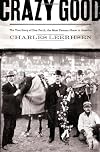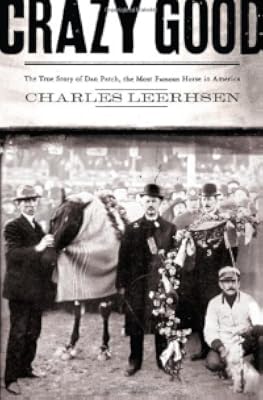
Crazy Good: The True Story of Dan Patch, the Most Famous Horse in America
by Charles Leerhsen
On This Page
Description
A hundred years ago, the most famous athlete in America was a horse. But Dan Patch was more than a sports star; he was a cultural icon in the days before the automobile. Born crippled and unable to stand, he was nearly euthanized. For a while, he pulled the grocer's wagon in his hometown of Oxford, Indiana. But when he was entered in a race at the county fair, he won -- and he kept on winning. Harness racing was the top sport in America at the time, and Dan, a pacer, set the world record for show more the mile. He eventually lowered the mark by four seconds, an unheard-of achievement that would not be surpassed for decades. America loved Dan Patch, who, though kind and gentle, seemed to understand that he was a superstar: he acknowledged applause from the grandstands with a nod or two of his majestic head and stopped as if to pose when he saw a camera. He became the first celebrity sports endorser; his name appeared on breakfast cereals, washing machines, cigars, razors, and sleds. At a time when the highest-paid baseball player, Ty Cobb, was making $12,000 a year, Dan Patch was earning over a million dollars. But even then horse racing attracted hustlers, cheats, and touts. Drivers and owners bet heavily on races, which were often fixed; horses were drugged with whiskey or cocaine, or switched off with "ringers." Although Dan never lost a race, some of his races were rigged so that large sums of money could change hands. Dan's original owner was intimidated into selling him, and America's favorite horse spent the second half of his career touring the country in a plush private railroad car and putting on speed shows for crowds that sometimes exceeded 100,000 people. But the automobile cooled America's romance with the horse, and by the time he died in 1916, Dan was all but forgotten. His last owner, a Minnesota entrepreneur gone bankrupt, buried him in an unmarked grave. His achievements have faded, but throughout the years, a faithful few kept alive the legend of Dan Patch, and in Crazy Good, Charles Leerhsen travels through their world to bring back to life this fascinating story of triumph and treachery in small-town America and big-city racetracks. show lessTags
Recommendations











Member Recommendations

Member Reviews
In contrast to Laura Hilldebrand's wildly popular Seabuscuit, Leerhsen's tale of Dan Patch is hardly on anyone's must read list. It's a shame because while the two author's styles differ, the subject of the latter is just as interesting as the former. Fewer folks are familiar with trotters and pacers, but a hundred years ago they were as or more popular than thoroughbreds eventually became decades latter. Leerhsen relates not only the story of Dan Patch but also the rise of the trotters and pacers, the racing world and how Dan Patch for a time became the most well know horse in the world. An excellent social history as well, the book's only failing is when the author injects his own first person stories recounting his efforts to show more research the story. They just aren't all that interesting and break the flow of the narrative. However, they constitute only a small part of the whole book and some people might actually like them. show less
Born in 1896 in the small town of Oxford, Indiana, the horse that was to become a cultural icon was almost put down immediately due to a crippled rear leg. The offspring of an obscurely bred, lame mare and nasty-tempered stallion with a decent harness racing record, Dan Patch went on to become the first horse to pace a mile in 1:56 seconds. He eventually lowered that record, albeit under slightly dubious circumstances, to 1:55.
Dan Patch paced naturally, no hobbles required. (If you've ever seen a trotter race, and it's rare to find a track still in operation anymore, you'll likely have seen horses race in hobbles & assorted other paraphenalia intended to keep them from breaking gait.) He was something of fluke in other ways, too - show more traveling exceedingly well, handling crouds with equanimity, and taking almost every publicity event in stride.
The story Leerhsen writes is at once less and more than the simple biography of a great horse. It's a chatty, sometimes catty, account of a horse's life, of the lives and personalities of the men who surrounded him, and also a window into another time. show less
Dan Patch paced naturally, no hobbles required. (If you've ever seen a trotter race, and it's rare to find a track still in operation anymore, you'll likely have seen horses race in hobbles & assorted other paraphenalia intended to keep them from breaking gait.) He was something of fluke in other ways, too - show more traveling exceedingly well, handling crouds with equanimity, and taking almost every publicity event in stride.
The story Leerhsen writes is at once less and more than the simple biography of a great horse. It's a chatty, sometimes catty, account of a horse's life, of the lives and personalities of the men who surrounded him, and also a window into another time. show less
This is a good read. I spent 43 years in Lexington, Kentucky and all my sons became racing fans by going to the Red Mile, a stop on the Grand Circuit. They have all long since switched to the thoroughbreds. The biographer gives good insights on how he researched the book, managing at the same time to shed light on the people involved in the story both now and in the past. I am about 2/3's through it and really enjoy it.
6/5/10 Still reading and still like it. Leerhsen is a funny writer. One thing that puzzles me is why he refers to the Breeder's Track in Lexington rather than the Red Mile. The Red Mile was established in 1875. I have found no other reference to it being called the Breeder's Track.
6/7/10 Kind of a sad ending, for both the show more horse and its owner. show less
6/5/10 Still reading and still like it. Leerhsen is a funny writer. One thing that puzzles me is why he refers to the Breeder's Track in Lexington rather than the Red Mile. The Red Mile was established in 1875. I have found no other reference to it being called the Breeder's Track.
6/7/10 Kind of a sad ending, for both the show more horse and its owner. show less
Ratings
Members
- Recently Added By
Author Information

5+ Works 637 Members
Charles Leerhsen has written for Sports Illustrated, Esquire, Rolling Stone, The New York Times Magazine, Smithsonian, Money, and other publications. His previous books include Ty Cobb: A Terrible Beauty, Crazy Good: The True Story of Dan Patch, the Most Famous Horse in America, and Blood and Smoke: A True Tale of Mystery, Mayhem, and the Birth of show more the Indy 500. He is an adjunct professor at the City University of New York's Graduate School of Journalism and lives in Brooklyn with his wife, the writer Sarah Saffian. show less
Common Knowledge
- People/Characters
- Dan Patch
- Dedication
- To Charles Edward Leerhsen, my dad
- First words
- One afternoon in July of 2005, Diane Kleinsteiber, a fifty-something pottery-store clerk from Watertown, Wisconsin, arrived without appointment at the Razor's Edge hair salon in Savage, Minnesota, and asked to see the proprie... (show all)tor, Jens Bohn.
- Last words
- (Click to show. Warning: May contain spoilers.)Everyone in the barn knew what that meant, and we gasped, and when Bob tried to say thank you, he couldn't for a moment because he was crying.
Classifications
- Genres
- Nonfiction, Sports and Leisure, History, General Nonfiction, Biography & Memoir
- DDC/MDS
- 636.1750929 — Applied science & technology Agriculture Farm Animals & Pets Horses Standardbreds, Morgans, light harness horses
- LCC
- SF343 .D3 .L44 — Agriculture Animal husbandry. Animal science Animal culture Horses Racing
- BISAC
Statistics
- Members
- 122
- Popularity
- 266,256
- Reviews
- 3
- Rating
- (3.98)
- Languages
- English
- Media
- Paper, Ebook
- ISBNs
- 5
- ASINs
- 3