On This Page
Description
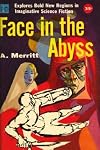
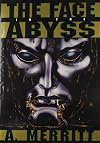
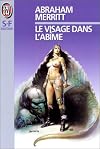
The tale is brilliant It is full of weird imagination, marvelous writing, horror, beauty, and it may well be called the most visual book ever written for the world of fantasy. It is a grand book with a grand cast of characters. Visualize, if you are able, a monstrous head that cries tears of gold, locked deep in a cavern out of time forgotten. Consider also the incredible, Snake Mother, who is both human and reptilian, and her battle with the thing called the Lord of Evil.Tags
Recommendations

















Member Reviews
2/5
Going into The Face in the Abyss, the two pieces of context I had were that: One) Merritt was an inspiration to some of the weird fiction guys (Lovecraft among them) and, two) that Merritt is known as having some of the most purple prose among his contemporaries, both things that I agree with upon finishing the novel.
The Face in the Abyss starts out as a more standard pulpy adventure story of four morally corrupt Americans in the Andes trying to find lost Incan artifacts, but abruptly progresses (because it's a fix-up novel with a very visible seam) into a lost race story with dinosaurs, demigods, and human-animal hybrids. The ancient lost race that our main character discovers came to Earth untold millennia ago, possessing show more extremely advanced technologies that allowed them to prevent aging and death. It's a fantasy story that has the trimmings of science fiction, though I think that anybody reading it with the expectation of anything science fiction related will be sorely disappointed. The main plot revolves around a cliche battle between good and evil, as differing ideologies amongst the few remaining members of race creates tension and conflict.
This all being said, most of the The Face in the Abyss is wrapped up in the long-winded descriptions of the settings that the main character passes through. Merritt LOVES to expound on the visual qualities of light shafts, rock faces, jewels, banisters, pendants, pools, passageways, etc. My critique here is not that adorned writing can't be good, or that spending time on the visuals isn't valuable, but Merritt spends so much time doing it that it gets in the way of any decent pacing, character work, or theme exploration. There simply isn't space for much else other than the purple writing. It feels dated in many ways, and took forever to force my way through writing that felt like trying to run through a pool of honey.
There were a few passages where Merritt proves himself capable of writing something of higher quality, specifically I'm think of the first encounter with THE face in THE abyss, and the first encounter with the aptly named "Lord of Evil". Unfortunately these passages are the exception to the rule. Visuals alone, while they might be particularly good ones, aren't enough to carry a novel.
This is certainly not Merritt's most acclaimed work, so at some point I'll have to at least return to read The Moon Pool to see if it is marginally more readable. show less
Going into The Face in the Abyss, the two pieces of context I had were that: One) Merritt was an inspiration to some of the weird fiction guys (Lovecraft among them) and, two) that Merritt is known as having some of the most purple prose among his contemporaries, both things that I agree with upon finishing the novel.
The Face in the Abyss starts out as a more standard pulpy adventure story of four morally corrupt Americans in the Andes trying to find lost Incan artifacts, but abruptly progresses (because it's a fix-up novel with a very visible seam) into a lost race story with dinosaurs, demigods, and human-animal hybrids. The ancient lost race that our main character discovers came to Earth untold millennia ago, possessing show more extremely advanced technologies that allowed them to prevent aging and death. It's a fantasy story that has the trimmings of science fiction, though I think that anybody reading it with the expectation of anything science fiction related will be sorely disappointed. The main plot revolves around a cliche battle between good and evil, as differing ideologies amongst the few remaining members of race creates tension and conflict.
This all being said, most of the The Face in the Abyss is wrapped up in the long-winded descriptions of the settings that the main character passes through. Merritt LOVES to expound on the visual qualities of light shafts, rock faces, jewels, banisters, pendants, pools, passageways, etc. My critique here is not that adorned writing can't be good, or that spending time on the visuals isn't valuable, but Merritt spends so much time doing it that it gets in the way of any decent pacing, character work, or theme exploration. There simply isn't space for much else other than the purple writing. It feels dated in many ways, and took forever to force my way through writing that felt like trying to run through a pool of honey.
There were a few passages where Merritt proves himself capable of writing something of higher quality, specifically I'm think of the first encounter with THE face in THE abyss, and the first encounter with the aptly named "Lord of Evil". Unfortunately these passages are the exception to the rule. Visuals alone, while they might be particularly good ones, aren't enough to carry a novel.
This is certainly not Merritt's most acclaimed work, so at some point I'll have to at least return to read The Moon Pool to see if it is marginally more readable. show less
A lost world fantasy, reminiscent of Edgar Rice Burroughs or Arthur Conan Doyle (The Lost World), featuring dinosaur survivals in a remote area of Peru, cut off from contact with the outside world, but with an early genetic engineering vibe - a race who originated in the South Pole before a polar shift made that area uninhabitable have somehow banished death (while at the same time making it impossible to have children, in order to keep their numbers in check), and have manipulated others into particular physical types such as humanoid spiders called Weavers.
The protagonist stumbles upon this remnant of an advanced civilisation as part of an expedition looking for fabled riches. He falls out with the expedition leader when the latter show more assaults a young woman who originates from the hidden race. She later returns to lead them to the riches the other expedition members crave, though the protagonist cares only for her welfare, having instantly fallen in love with her. The riches then turn out to be a form of judgement. After that, the story takes a different turn as the hero becomes entangled with an imminent civil war between factions in the lost world, the apparent good guys being led by an apparent human-reptilian hybrid, the Snake Mother, who may be less human than she leads him to perceive.
The story concentrates on action, but flags in places, and has very little character development. The protagonist and his would-be girlfriend are particularly cardboard. The book has elements which later would become fantasy tropes such as a dark lord (it was published in 1931, apparently based on magazine stories dating from the 1920s). In some ways it better fits the label of science fantasy, as the various ray-weapons etc are, we're told by the Snake Mother, all products of the former civilisation of which she is the only direct member, and not magical. Obviously it cannot avoid being dated by today's viewpoints, though, to the author's credit, manages to avoid racism in relation to the Native Americans who form the labour force and are the spear carriers in the armies of the various factions. But it rather loses impetus by the end and fizzles out, and has rather too rambling a plotline to always hold interest, hence only 2 stars for me. show less
The protagonist stumbles upon this remnant of an advanced civilisation as part of an expedition looking for fabled riches. He falls out with the expedition leader when the latter show more assaults a young woman who originates from the hidden race. She later returns to lead them to the riches the other expedition members crave, though the protagonist cares only for her welfare, having instantly fallen in love with her. The riches then turn out to be a form of judgement. After that, the story takes a different turn as the hero becomes entangled with an imminent civil war between factions in the lost world, the apparent good guys being led by an apparent human-reptilian hybrid, the Snake Mother, who may be less human than she leads him to perceive.
The story concentrates on action, but flags in places, and has very little character development. The protagonist and his would-be girlfriend are particularly cardboard. The book has elements which later would become fantasy tropes such as a dark lord (it was published in 1931, apparently based on magazine stories dating from the 1920s). In some ways it better fits the label of science fantasy, as the various ray-weapons etc are, we're told by the Snake Mother, all products of the former civilisation of which she is the only direct member, and not magical. Obviously it cannot avoid being dated by today's viewpoints, though, to the author's credit, manages to avoid racism in relation to the Native Americans who form the labour force and are the spear carriers in the armies of the various factions. But it rather loses impetus by the end and fizzles out, and has rather too rambling a plotline to always hold interest, hence only 2 stars for me. show less
Completely over the top pulp adventure with dinosaurs and ray guns, force fields and genetic engineering, a Dark Lord and a Snake Goddess. This is great stuff, i'm not a big fan of pulps but this has a more descriptive style than most. Its sort of like half-way between Burroughs and H.P.Lovecraft.
In structure its a bit like the 'Chronicles of Riddick' in that it started out as a short story and years later the author expanded it into other crazyness. Unlike 'Pitch Black' however its the crazy over the top part of this which is really enjoyable. There is the usual princess and blank slate protagonist but some of the side characters have real personality which makes up for the card board cutout hero.
Also you might get a strong 'Lord of show more the Rings' vibe in places, i'm assuming thats coincidence and that Tolkien never read this but you never know :) .
The author throws absolutely every idea he can into this story, if you ever wanted to try a pulp this is the one to start with. show less
In structure its a bit like the 'Chronicles of Riddick' in that it started out as a short story and years later the author expanded it into other crazyness. Unlike 'Pitch Black' however its the crazy over the top part of this which is really enjoyable. There is the usual princess and blank slate protagonist but some of the side characters have real personality which makes up for the card board cutout hero.
Also you might get a strong 'Lord of show more the Rings' vibe in places, i'm assuming thats coincidence and that Tolkien never read this but you never know :) .
The author throws absolutely every idea he can into this story, if you ever wanted to try a pulp this is the one to start with. show less
The first quarter of this novel is a readable adventure story: a group of men come together to explore the South American jungle in search of riches. There is even some decent character development and nice imagery. Then . . . things completely fall apart. It becomes science fiction/fantasy. It becomes monotonous, with long passages constantly describing rays, mists, caverns, crypts, passageways, pools, flashes, and other vague terms applicable to the hidden world of spidermen, tame dinosaurs, lizard people, snake goddesses, and dark lords. Oh, yea. There is a big battle at the end. You'll never guess who wins.
There is also the matter of the writing. As with the storyline, it's a tale of two stories. The first quarter of the book is show more acceptable. But the sf/fantasy is messy. Its prose is tortured. Word choices become repetitive. And even the simple syntax is clumsy and confusing. It's simply bad writing. show less
There is also the matter of the writing. As with the storyline, it's a tale of two stories. The first quarter of the book is show more acceptable. But the sf/fantasy is messy. Its prose is tortured. Word choices become repetitive. And even the simple syntax is clumsy and confusing. It's simply bad writing. show less
Of all of Merritt's books, I think this one really impressed me the most. Although "lost worlds" fantasy is a relic of the 40s, this one is still a great story and rich in both detail and diversion.
A classic. Merritt is one of the classic authors in the genre and I cannot imagine that any devotee of fantasy/science fiction wouldn't want to have his works in their library.
read this a long time ago
Members
- Recently Added By
Author Information

73+ Works 3,165 Members
Some Editions
Series

Belongs to Publisher Series
Work Relationships
Common Knowledge
- Canonical title
- Face in the Abyss
- Original title
- The Face in the Abyss (1923) (1923); The Snake Mother (1930) (1930)
- Alternate titles*
- Das Gesicht im Abgrund
- Original publication date
- 1931
- People/Characters
- Nicholas Graydon; Adana, the Snake Mother; Regor; Suarra; Huon; Nimir, Lord of Evil (show all 13); Soames; Starrett; Dancret; Kon; Dorina; Lantlu; Tyddo, Lord of Folly
- Important places
- South America; Yu-Atlanchi
- First words*
- Nicholas Graydon begegnete Starrett in Quito.
- Last words*
- (Click to show. Warning: May contain spoilers.)Das verborgene Gemach, in dem die Schlangenmutter schlief, war versiegelt.
- Disambiguation notice
- Novel consisting of the novella of the same name and its sequel The Snake Mother
*Some information comes from Common Knowledge in other languages. Click "Edit" for more information.
Classifications
Statistics
- Members
- 336
- Popularity
- 94,676
- Reviews
- 8
- Rating
- (3.34)
- Languages
- 5 — English, French, German, Hungarian, Spanish
- Media
- Paper, Ebook
- ISBNs
- 30
- ASINs
- 16