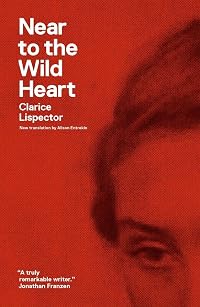
Near to the Wild Heart
by Clarice Lispector
On This Page
Description
This new translation of Clarice Lispector's sensational first book tells the story of a middle class woman's life from childhood through an unhappy marriage and its dissolution to transcendence.Near to the Wild Heart, published in Rio de Janeiro in 1943, introduced Brazil to what one writer called "Hurricane Clarice": a twenty-three-year-old girl who wrote her first book in a tiny rented room and then baptized it with a title taken from Joyce: "He was alone, unheeded, near to the wild heart show more of life."
The book was an unprecedented sensation — the discovery of a genius. Narrative epiphanies and interior monologue frame the life of Joana, from her middle-class childhood through her unhappy marriage and its dissolution to transcendence, when she proclaims: "I shall arise as strong and comely as a young colt."
. show less
Tags
Recommendations

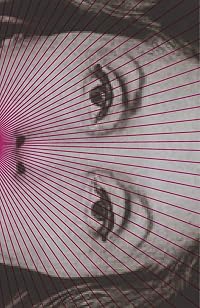
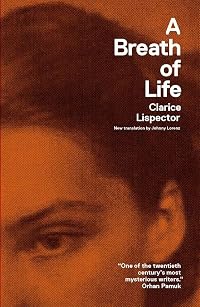

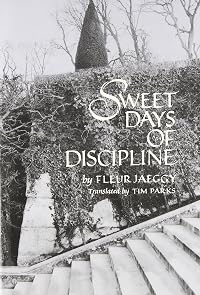
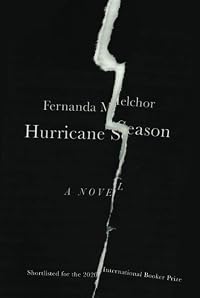
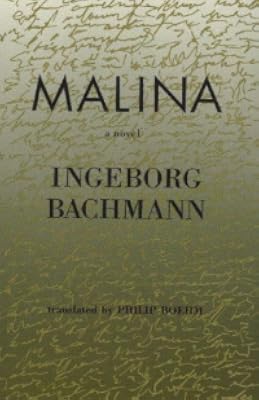
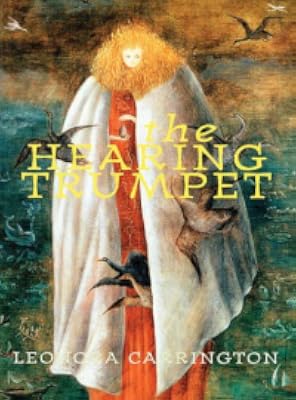
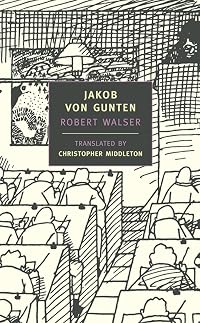



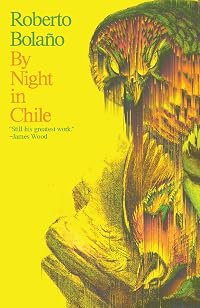
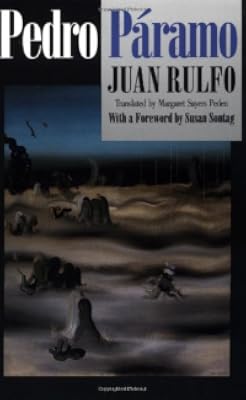

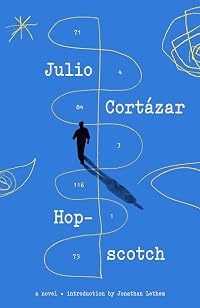



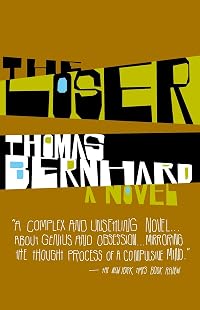
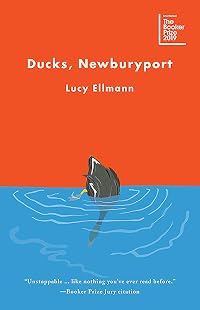
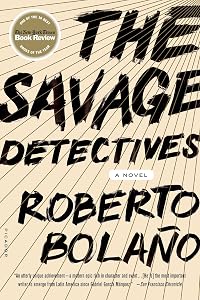
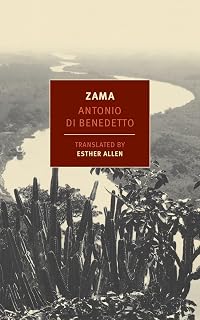
Member Recommendations

Petroglyph Even though Near to the wild heart was written some twenty years prior to Wide Sargasso Sea, these two share numerous features: the interior monologue, the lyricism, the heroine mostly living inside her skull, the central character who doesn’t see a way out of their mental frustrations with life. Lispector kicked all that up a few notches, but to me these two belong close together on my mental shelves.
30
Member Reviews
It was hard for me to like Near to the Wild Heart, Clarice Lispector's debut novel. Not because it was poorly written. To the contrary. At times the prose was absolutely beautiful. It was because Joana, the main character, was so very difficult for me to like. While so many find Joana a nonconformist and romanticize her detachment, I found her deeply dysfunctional, carrying early trauma that painted her entire existence. Through Lispector's stream of consiousness narrative, you walk in the shoes of someone that views life critically and with a lack of emotion, as if she watches life through a window instead of fully participating in it, and purposefully rejecting the joys life offers. I found Joana pure salt. No sugar. "Joana was a show more cloud about to rain." Yes. If this book was a color, it would be grey. show less
Lispector was transcendent from the beginning. I was at a loss many times while reading this. ‘Joana’s Walk,’ ‘Joana’s Joys,’ the confrontations with Lídia and Otávio—revelatory chapters that changed the way I understand my own feelings.
This book challenges the limits of a single thought. It scrambles time. It’s aware of its own nonsense and, beside that nonsense, possesses a clarity I’ve rarely encountered in literature…outside of Lispector’s other works.
I gave up on annotating. Joana was too absurd. I think it’s for the best that I couldn’t read this in Portuguese because if I got any closer to the full meaning I may have imploded.
This book challenges the limits of a single thought. It scrambles time. It’s aware of its own nonsense and, beside that nonsense, possesses a clarity I’ve rarely encountered in literature…outside of Lispector’s other works.
I gave up on annotating. Joana was too absurd. I think it’s for the best that I couldn’t read this in Portuguese because if I got any closer to the full meaning I may have imploded.
Of course I'd known about Lispector for a while, and she was on my list of "authors I really know I should read someday," but I found something about the way people talked about her to be just a little bit... intimidating. But when I went on my Women in Translation Month shopping trip, this was the only recognizable woman in translation I found (in the new books section, anyway), so this is what I got. Appropriate it's the first book I read for Women in Translation Month this year.
I don't know what I was worried about. I was in love with the fierce and wild Joana from the very beginning. On the second page she announces to her father that she's made up a poem called "The Sun and I." "The hens in the yard have eaten the worms but I show more didn't see them." The surety in herself, the disappointment that her dad doesn't get it -- I adored her. As she grows, the richness of her introspective interiority only grows, as does her determination to not sway from whatever she feels to be right for herself. No matter what others might think is good or evil, normal or strange. How can you not root for a character like that, especially since everyone else seems simple, weak, conventional by comparison.
The book wanders a bit toward the end and I started to wonder where it was going, but it ended with the same fierce resolution it began with. A wonderful book, and I am glad to finally know what all the fuss over Lispector is about. show less
I don't know what I was worried about. I was in love with the fierce and wild Joana from the very beginning. On the second page she announces to her father that she's made up a poem called "The Sun and I." "The hens in the yard have eaten the worms but I show more didn't see them." The surety in herself, the disappointment that her dad doesn't get it -- I adored her. As she grows, the richness of her introspective interiority only grows, as does her determination to not sway from whatever she feels to be right for herself. No matter what others might think is good or evil, normal or strange. How can you not root for a character like that, especially since everyone else seems simple, weak, conventional by comparison.
The book wanders a bit toward the end and I started to wonder where it was going, but it ended with the same fierce resolution it began with. A wonderful book, and I am glad to finally know what all the fuss over Lispector is about. show less
As this slips in and out of consciousness it stays at the bottom of a dreary pool of misery. An enduring dissatisfaction pervades throughout the novel where the unconventional woman in focus, Joana, is anchored down by existential anguish. And perhaps like most of us drift from one “life milestone” to another: at times to be in touch, tethered with our own being, on others to be in an “acceptable” headspace of living. It rides the same train of life’s cyclic clichés. But the dissatisfaction of marriage and relationships glare and glimmer without hope and further tumbles down when indifference shadows them into obscurity and neglect. The minimal encounter with other women (or lack thereof) are somehow fraught with negative show more feelings that there is a sense of isolation in Joana’s thoughts and views which are so often interspersed with others’. It is all very grim and infectiously so.
Near to the Wild Heart is chipping cold on its edges and doesn’t beat for anything but in its bouts of unanswered questions on one’s purpose and reason. Here, mortality is never fully grieved whilst love lost is willingly misplaced. Yet the most embittered turn to these underwhelming circumstances, of burrowed emotions and apathetic reactions, is the belief that an exterior alteration is causal to contentment. Motherhood is similarly treated as such—both as a product of female rivalry and societal expectations born out of the “patriarchal womb.” Beyond all of this I can say Near to the Wild Heart only nearly sadly hits. It is most often than not near to the wildest delusions to cope. show less
Near to the Wild Heart is chipping cold on its edges and doesn’t beat for anything but in its bouts of unanswered questions on one’s purpose and reason. Here, mortality is never fully grieved whilst love lost is willingly misplaced. Yet the most embittered turn to these underwhelming circumstances, of burrowed emotions and apathetic reactions, is the belief that an exterior alteration is causal to contentment. Motherhood is similarly treated as such—both as a product of female rivalry and societal expectations born out of the “patriarchal womb.” Beyond all of this I can say Near to the Wild Heart only nearly sadly hits. It is most often than not near to the wildest delusions to cope. show less
Near to the Wild Heart sucked me in and its unexpected palpations in the quiet suction, like bring stuck in a whirlpool of green, have lodged themselves into my heart, my brain, even maybe my calves. It's hard to read Lispector without holding my breath and each book of hers feels like a beautiful and terrible gift.
This is beyond exquisite. I injected half the book in one sitting and had stop because I was getting woozy on a Lispector overdose. She adroitly does things to language and words, even in translation from Portuguese to English that is just breathtaking. I am having trouble reconciling that it was published in 1943 as it reads so contemporary. Reading Lispector is breathing flames under the muse for me and I’m reconsidering how to write fiction.
I’m terrible at fiction. I always feel so damned constricted when trying to form the rules of the game, my writing comes out halting and unsure. I’ve got brilliant ideas for stories, I see the stories in my head as they are played out but getting them onto paper? No. The ease of my language show more sounds immature and protracted. Sure, you could argue if I practice more it would mature and grow and there is some truth into that. But I think because I’ve been reading tightly bound prose for so long, I’m near drunk on Lispector’s stream of consciousness and realising that yes, this is how you do it. This is how you give birth to a story and how it will end.
Feral. Unstructured and messy, like life. show less
I’m terrible at fiction. I always feel so damned constricted when trying to form the rules of the game, my writing comes out halting and unsure. I’ve got brilliant ideas for stories, I see the stories in my head as they are played out but getting them onto paper? No. The ease of my language show more sounds immature and protracted. Sure, you could argue if I practice more it would mature and grow and there is some truth into that. But I think because I’ve been reading tightly bound prose for so long, I’m near drunk on Lispector’s stream of consciousness and realising that yes, this is how you do it. This is how you give birth to a story and how it will end.
Feral. Unstructured and messy, like life. show less
Clarice Lispector was born in Ukraine but moved to Brazil with her parents as a young child. Near to the Wild Heart was her first novel, published in 1943 around the time of her twenty-third birthday. It was greeted with great acclaim, and won the author the prestigious Graça Aranha Prize. Lispector writes in a stream of consciousness style which is reminiscent of modernist writers like Virginia Woolf and James Joyce. The epigraph for the novel comes from Joyce’s Portrait of the Artist as a Young Man.
“He was alone. He was unheeded, happy, and near to the wild heart of life.”
A slim novel, it is nevertheless challenging, beautifully written – the perspective changes throughout, and is impressionistic, dreamlike and introspective. show more I was reminded particularly of Virginia Woolf – it being a very long time since I attempted James Joyce (one novel was enough). The central character; Joana continually asking herself philosophical questions – questioning her relationship with everything including objects around her. Much, I think is therefore required of the reader, and I’m certain some of it went over my head. Apologies if I have made this sound difficult and dull, although maybe not easy – Lispector’s prose is glorious, and even those more difficult sections are a joy to read.
“When I suddenly see myself in the depths of the mirror, I take fright. I can scarcely believe that I have limits, that I am outlined and defined. I feel myself to be dispersed in the atmosphere, thinking inside other creatures, living inside things beyond myself. When I suddenly see myself in the mirror, I am not startled because I find myself ugly or beautiful. I discover, in fact, that I possess another quality. When I haven’t looked at myself for some time, I almost forget that I am human, I tend to forget my past, and I find myself with the same deliverance from purpose and conscience as something that is barely alive. I am also surprised to find as I gaze into the pale mirror with open eyes that there is so much in me beyond what is known, so much that remains ever silent.”
There is not an enormous amount of plot, which is not something that ever really bothers me. The novel tells the story of Joana, from her childhood, alone with her father, writing him poetry, through the changes that come to her childhood and adolescence, to her marriage to Otávio, through to her decision to make her own way in the world. Even as a child Joana is free thinking and unusual. Lispector’s descriptions of Joana’s thought processes and interactions with the world around her are quite wonderful.
“She lay belly-down in the sand, hand covering her face, leaving only a tiny crack for air. It grew dark dark and circles and red blotches, full, tremulous spots slowly began to appear, growing and shrinking. The grains of sand nipped her skin, buried themselves in it. Even with her eyes closed she felt that on the beach the waves were sucked back by the sea quickly quickly, also with closed eyelids. Then they meekly returned, palms splayed body loose. It was good to hear their sound.”
There is an untamed, creativity to Joana, her father calls her his little egg. The novel moves back and forth from the present time, when Joana is a young, married woman, to her past, her childhood and later the years she spends living with her aunt.
“The aunt’s house was a refuge where the wind and the light didn’t enter. The maid sat down with a sigh in the dismal entrance hall, where, among the heavy, dark furniture, the smiles of framed men glowed slightly. Joana remained standing, barely breathing in the lukewarm smell that came sweet and still after the pungent ocean air. Mould and tea with sugar.”
When Joana’s father dies, Joana is sent to another part of the country to an Aunt. Who lives near the beach. Her life changes, her wildness leading her Aunt to call her a viper. The aunt remains rather afraid of Joana. As an adolescent Joana becomes fascinated with her teacher, regarding his wife jealously, arranging a meeting with him a few years later, just before her marriage. Joana marries Otávio, who had previously been engaged to Lídia, although he doesn’t seem very committed to marriage with Joana. Even when Otávio continues his relationship with Lídia, and makes her pregnant, Joana seems more taken up with her interior life, than what is happening in her marriage. Her musings on life, death and discovering who it is she really is are very much at the heart of this extraordinary novel.
As a character Joana is quite difficult to get a firm handle on, despite the fact the novel is very largely taken up with her progress through life, she remains quite elusive. Joana is quite disconnected from the world she inhabits, and from the people around her – her emotions are very cool often she views her own emotions as if from the outside.
I both enjoyed and was confounded by this novel – overall this was a quite wonderful reading experience. Near to the Wild Heart is a novel I should probably get more out of with a second reading. I can’t help but wonder about the young woman who wrote it, what a mind she must have had. I’m sure I will read more by her in time. Clarice Lispector has been a good discovery for me – a challenging literary novelist in translation. I wonder which I should read next? show less
“He was alone. He was unheeded, happy, and near to the wild heart of life.”
A slim novel, it is nevertheless challenging, beautifully written – the perspective changes throughout, and is impressionistic, dreamlike and introspective. show more I was reminded particularly of Virginia Woolf – it being a very long time since I attempted James Joyce (one novel was enough). The central character; Joana continually asking herself philosophical questions – questioning her relationship with everything including objects around her. Much, I think is therefore required of the reader, and I’m certain some of it went over my head. Apologies if I have made this sound difficult and dull, although maybe not easy – Lispector’s prose is glorious, and even those more difficult sections are a joy to read.
“When I suddenly see myself in the depths of the mirror, I take fright. I can scarcely believe that I have limits, that I am outlined and defined. I feel myself to be dispersed in the atmosphere, thinking inside other creatures, living inside things beyond myself. When I suddenly see myself in the mirror, I am not startled because I find myself ugly or beautiful. I discover, in fact, that I possess another quality. When I haven’t looked at myself for some time, I almost forget that I am human, I tend to forget my past, and I find myself with the same deliverance from purpose and conscience as something that is barely alive. I am also surprised to find as I gaze into the pale mirror with open eyes that there is so much in me beyond what is known, so much that remains ever silent.”
There is not an enormous amount of plot, which is not something that ever really bothers me. The novel tells the story of Joana, from her childhood, alone with her father, writing him poetry, through the changes that come to her childhood and adolescence, to her marriage to Otávio, through to her decision to make her own way in the world. Even as a child Joana is free thinking and unusual. Lispector’s descriptions of Joana’s thought processes and interactions with the world around her are quite wonderful.
“She lay belly-down in the sand, hand covering her face, leaving only a tiny crack for air. It grew dark dark and circles and red blotches, full, tremulous spots slowly began to appear, growing and shrinking. The grains of sand nipped her skin, buried themselves in it. Even with her eyes closed she felt that on the beach the waves were sucked back by the sea quickly quickly, also with closed eyelids. Then they meekly returned, palms splayed body loose. It was good to hear their sound.”
There is an untamed, creativity to Joana, her father calls her his little egg. The novel moves back and forth from the present time, when Joana is a young, married woman, to her past, her childhood and later the years she spends living with her aunt.
“The aunt’s house was a refuge where the wind and the light didn’t enter. The maid sat down with a sigh in the dismal entrance hall, where, among the heavy, dark furniture, the smiles of framed men glowed slightly. Joana remained standing, barely breathing in the lukewarm smell that came sweet and still after the pungent ocean air. Mould and tea with sugar.”
When Joana’s father dies, Joana is sent to another part of the country to an Aunt. Who lives near the beach. Her life changes, her wildness leading her Aunt to call her a viper. The aunt remains rather afraid of Joana. As an adolescent Joana becomes fascinated with her teacher, regarding his wife jealously, arranging a meeting with him a few years later, just before her marriage. Joana marries Otávio, who had previously been engaged to Lídia, although he doesn’t seem very committed to marriage with Joana. Even when Otávio continues his relationship with Lídia, and makes her pregnant, Joana seems more taken up with her interior life, than what is happening in her marriage. Her musings on life, death and discovering who it is she really is are very much at the heart of this extraordinary novel.
As a character Joana is quite difficult to get a firm handle on, despite the fact the novel is very largely taken up with her progress through life, she remains quite elusive. Joana is quite disconnected from the world she inhabits, and from the people around her – her emotions are very cool often she views her own emotions as if from the outside.
I both enjoyed and was confounded by this novel – overall this was a quite wonderful reading experience. Near to the Wild Heart is a novel I should probably get more out of with a second reading. I can’t help but wonder about the young woman who wrote it, what a mind she must have had. I’m sure I will read more by her in time. Clarice Lispector has been a good discovery for me – a challenging literary novelist in translation. I wonder which I should read next? show less
Members
- Recently Added By
Lists

1940s
221 works; 25 members
Lithub: 50 Great Classic Novels Under 200 pages
50 works; 10 members

50 Books by Women Authors
50 works; 10 members

Latin American Literature
50 works; 11 members

Lithub: The 50 Best Contemporary Novels Under 200 Pages
50 works; 4 members

Anti-heroines in fiction
59 works; 9 members

Books by Jewish Authors
68 works; 5 members

Canon de la narrativa universal del s. XX (cicutadry)
499 works; 3 members

Greatest brazilian novels of 20th century
50 works; 2 members
Author Information

151+ Works 12,878 Members
Clarice Lispector was born in the Ukraine and was taken to Brazil as a young child. She was a law student, editor, translator, and newswriter, who traveled widely, spending eight years in the United States. "Family Ties" (1960) is a collection of short stories revealing Lispector's existentialist view of life and demonstrating that even family show more ties and social relationships are temporary. Although tied to each other and to the outside world, the characters are finally totally alone and separate. Lispector received praise from American critics for "The Apple in the Dark" (1967), a novel about a guilt-ridden man's search for the ultimate knowledge (Eve's apple), which he believes will bring him hope. Lispector's books are being translated into various languages in Europe, especially in France, where the critic Helene Cixous is one of her great admirers and a promoter of her works. (Bowker Author Biography) show less
Some Editions
Awards and Honors
Series
Belongs to Publisher Series
Common Knowledge
- Canonical title
- Near to the Wild Heart
- Original title
- Perto do coração selvagem; Perto do coração selvagem
- Original publication date
- 1943-12
- People/Characters
- Joana; Otávio; Lidia; the aunt; the man
- Important places
- Brazil
- Epigraph
- "He was alone. He was unheeded, happy, and near to the wild heart of life."
James Joyce - First words
- Her Father's typewriter went clack-clack...clack-clack-clack...
- Last words*
- (Click to show. Warning: May contain spoilers.)..., oh Herr, und alles möge kommen und auf mich herabfallen, sogar das Unverständnis meiner selbst in gewissen weissen Momenten, weil es reicht, mich zu erfüllen, und dann wird nichts meinem Weg bis zum Tod-ohne-Angst entgegenstehen, von jeglichem Kampf oder Ausruhen werde ich mich stark und schön erheben wie ein junges Pferd.
- Original language
- Brazilian Portuguese
*Some information comes from Common Knowledge in other languages. Click "Edit" for more information.
Classifications
- Genres
- Fiction and Literature, General Fiction
- DDC/MDS
- 869.3 — Literature & rhetoric Spanish Literature Literatures of Portuguese and Galician languages Portuguese fiction
- LCC
- PQ9697 .L585 .P413 — Language and Literature French, Italian, Spanish and Portuguese literatures Portuguese literature Provincial, local, colonial, etc. Brazil
- BISAC
Statistics
- Members
- 1,269
- Popularity
- 19,309
- Reviews
- 31
- Rating
- (3.84)
- Languages
- 15 — Catalan, Danish, English, Estonian, Finnish, French, German, Italian, Norwegian (Bokmål), Polish, Spanish, Swedish, Turkish, Portuguese (Portugal), Portuguese (Brazil)
- Media
- Paper, Audiobook, Ebook
- ISBNs
- 47
- ASINs
- 10