Digital Apollo: Human and Machine in Spaceflight
by David A. Mindell
On This Page
Description
How human pilots and automated systems worked together to achieve the ultimate in flight--the lunar landings of NASA's Apollo program.As Apollo 11's Lunar Module descended toward the moon under automatic control, a program alarm in the guidance computer's software nearly caused a mission abort. Neil Armstrong responded by switching off the automatic mode and taking direct control. He stopped monitoring the computer and began flying the spacecraft, relying on skill to land it and earning show more praise for a triumph of human over machine. In Digital Apollo, engineer-historian David Mindell takes this famous moment as a starting point for an exploration of the relationship between humans and computers in the Apollo program. In each of the six Apollo landings, the astronaut in command seized control from the computer and landed with his hand on the stick. Mindell recounts the story of astronauts' desire to control their spacecraft in parallel with the history of the Apollo Guidance Computer. From the early days of aviation through the birth of spaceflight, test pilots and astronauts sought to be more than "spam in a can" despite the automatic controls, digital computers, and software developed by engineers.Digital Apollo examines the design and execution of each of the six Apollo moon landings, drawing on transcripts and data telemetry from the flights, astronaut interviews, and NASA's extensive archives. Mindell's exploration of how human pilots and automated systems worked together to achieve the ultimate in flight--a lunar landing--traces and reframes the debate over the future of humans and automation in space. The results have implications for any venture in which human roles seem threatened by automated systems, whether it is the work at our desktops or the future of exploration. show lessTags
Recommendations









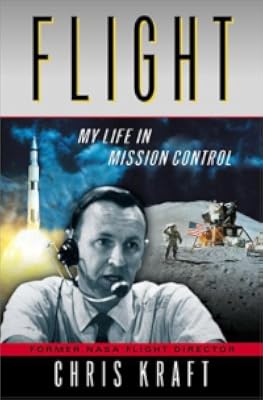



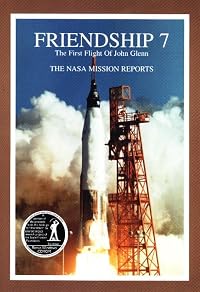
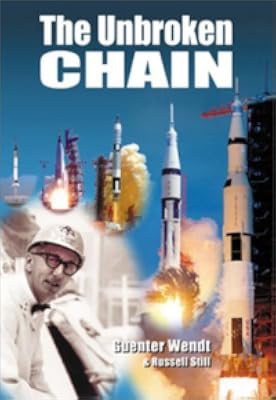
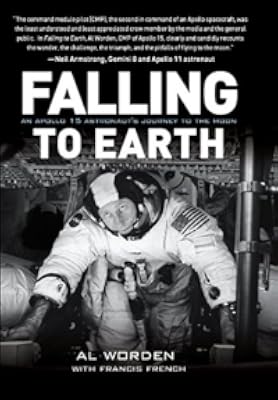


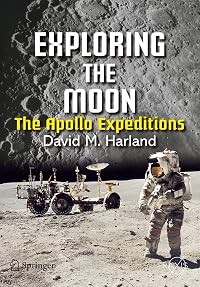


Member Recommendations
by anonymous user
Member Reviews
Digital Apollo is the serious, sober, scholarly take on the golden age of the space program, the same basic ground as Tom Wolfe's classic account The Right Stuff, but with a unique and fascinating viewpoint on how Apollo drove innovation in human and computer interaction.
Lunar Excursion Module Eagle in orbit
Public Service Broadcasting - Go! a kicking rad song about the Apollo landing.
The basic conflict was one which stretched back to the dawn of flight, of airmen versus chauffeurs. Airmen preferred nimble, high performance machines, which represented a kind of macho challenge to be mastered. Chauffeurs were mere bus drivers, overseeing a complex machine. In the early 1960s, as the space program spun up, this was exemplified by conflict show more between astronaut/test pilot culture, which saw the human as both the pinnacle of precise control in the face of danger and an accurate engineering participant, and the rocket boys, who believed that rockets were too fast and complex for any human being to control, and that ICBMs provided a model for automated navigation.
The Apollo program that resulted was a synthesis, mediated by the key technologies of the Apollo Guidance Computer, the DSKY numeric input/display unit, and the MIT Instrument Laboratory as the primary contractor. Effectively, astronauts were flying a digital simulation of their own craft, with inputs being translated via various programs into thruster burns. The actual flight behavior of the lunar module was too unruly for even the best pilots to safely manage without computer controls. While it would have been theoretically possible to navigate to the moon via star sextant and sliderule, digital precision saved precious fuel and astronaut time.
While the Apollo Guidance Computer was woefully small and slow by modern standards (my microwave has higher specs), it was a wonder of engineering. Most computers in the 1960s were room sized mainframes that ran batches of punch cards. The Apollo computer was small and light, and ran in a novel asynchronous interactive mode, where many subprograms competed for resources, and functions could be changed on the fly by astronaut input. And unlike my microwave, it had to be absolutely reliable over hundreds of hours in the harshest conditions. Software in the 1960s was a new field, and unlike today with reasonable architecture, friendly syntax highlighting, test suites, and rapid deployment to production, AGC code was literally woven bit by bit into ropes of core memory at great effort and expense by 'Little Old Ladies'.
As Mindell closes by discussing, while the AGC was critical to every flight, astronauts flew the final approach by hand. While they mostly trusted the computer to handle the physics of descent, it couldn't distinguish a safe landing zone from a crater or house-sized boulders. Even as balky errors in Apollo 11 and Apollo 14 threatened safe landing, neither related to core computer functions, the AGC's robust architecture and ability to rapidly recover from faults saved the day. The AGC was the predecessor of all modern fly-by-wire technologies, used on anything with wings larger than a Cessna 172, as well as an entire paradigm that computers are something a human interacts with, rather than a tool for automating calculation.
I'll admit that Digital Apollo hits my tastes straight on, but it's truly a great work of scholarship. show less
Lunar Excursion Module Eagle in orbit
Public Service Broadcasting - Go! a kicking rad song about the Apollo landing.
The basic conflict was one which stretched back to the dawn of flight, of airmen versus chauffeurs. Airmen preferred nimble, high performance machines, which represented a kind of macho challenge to be mastered. Chauffeurs were mere bus drivers, overseeing a complex machine. In the early 1960s, as the space program spun up, this was exemplified by conflict show more between astronaut/test pilot culture, which saw the human as both the pinnacle of precise control in the face of danger and an accurate engineering participant, and the rocket boys, who believed that rockets were too fast and complex for any human being to control, and that ICBMs provided a model for automated navigation.
The Apollo program that resulted was a synthesis, mediated by the key technologies of the Apollo Guidance Computer, the DSKY numeric input/display unit, and the MIT Instrument Laboratory as the primary contractor. Effectively, astronauts were flying a digital simulation of their own craft, with inputs being translated via various programs into thruster burns. The actual flight behavior of the lunar module was too unruly for even the best pilots to safely manage without computer controls. While it would have been theoretically possible to navigate to the moon via star sextant and sliderule, digital precision saved precious fuel and astronaut time.
While the Apollo Guidance Computer was woefully small and slow by modern standards (my microwave has higher specs), it was a wonder of engineering. Most computers in the 1960s were room sized mainframes that ran batches of punch cards. The Apollo computer was small and light, and ran in a novel asynchronous interactive mode, where many subprograms competed for resources, and functions could be changed on the fly by astronaut input. And unlike my microwave, it had to be absolutely reliable over hundreds of hours in the harshest conditions. Software in the 1960s was a new field, and unlike today with reasonable architecture, friendly syntax highlighting, test suites, and rapid deployment to production, AGC code was literally woven bit by bit into ropes of core memory at great effort and expense by 'Little Old Ladies'.
As Mindell closes by discussing, while the AGC was critical to every flight, astronauts flew the final approach by hand. While they mostly trusted the computer to handle the physics of descent, it couldn't distinguish a safe landing zone from a crater or house-sized boulders. Even as balky errors in Apollo 11 and Apollo 14 threatened safe landing, neither related to core computer functions, the AGC's robust architecture and ability to rapidly recover from faults saved the day. The AGC was the predecessor of all modern fly-by-wire technologies, used on anything with wings larger than a Cessna 172, as well as an entire paradigm that computers are something a human interacts with, rather than a tool for automating calculation.
I'll admit that Digital Apollo hits my tastes straight on, but it's truly a great work of scholarship. show less
I absolutely loved reading Digital Apollo! I'm an EE professor who teaches a lot of both hardware and (embedded) software, so the subject, while nearly 50 years old, is still very relevant to the types of things that I teach. The human-machine interface, how software can replace hardware as a source of automation, and the implications of replacing an aviator with a "machine" are all still relevant today. You might say that Apollo was the genesis to many of these problems.
Firstly, it's fascinating to read this book if nothing but to learn about how embedded computing was handled 50 years ago. Software development was nowhere near as rigorous as it is today, nor was it taken even a quarter as seriously. Integrated circuit chips were new, show more and having two NOR gates on a single chip was a big deal. Wires wrapped around magnetic cores were used for memory. Yet, all of the hardware and software limitations of the day successfully landed SIX missions on the Moon, not to mention saved the lives of the astronauts in Apollo 13. I seriously could not get enough, reading about this.
In addition, this book is also about the interplay between the astronauts (mostly the pilots) and the guidance system developers. There were many opinions regarding fully automated landings vs. fully manual landings. The truth is that each of the Apollo landings was somewhere in the grey area in between both extremes. People involved in the Apollo program had no idea how much pilots could even handle for a landing, and if fully manual landings were even possible. To this end, they designed a training machine built to reproduce the LM as much as possible that could be used on Earth. That type of engineering solution to a problem (how can you practice landing on the Moon if you only get one shot to land there?) was really interesting to read about, and isn't discussed in most Apollo literature.
Finally, I got to read more about the actual lunar landings in this book than in any other book I've read about Apollo. They were fascinating, and, tying in with the above paragraph, really highlighted the subtle interplay between human and machine.
This is not an action-packed book about the heyday of Apollo. I loved the book and even I found it slow-going at times. That said, I would not recommend this book if you are not really into the topic at hand. Otherwise, it gets my full seal of approval! show less
Firstly, it's fascinating to read this book if nothing but to learn about how embedded computing was handled 50 years ago. Software development was nowhere near as rigorous as it is today, nor was it taken even a quarter as seriously. Integrated circuit chips were new, show more and having two NOR gates on a single chip was a big deal. Wires wrapped around magnetic cores were used for memory. Yet, all of the hardware and software limitations of the day successfully landed SIX missions on the Moon, not to mention saved the lives of the astronauts in Apollo 13. I seriously could not get enough, reading about this.
In addition, this book is also about the interplay between the astronauts (mostly the pilots) and the guidance system developers. There were many opinions regarding fully automated landings vs. fully manual landings. The truth is that each of the Apollo landings was somewhere in the grey area in between both extremes. People involved in the Apollo program had no idea how much pilots could even handle for a landing, and if fully manual landings were even possible. To this end, they designed a training machine built to reproduce the LM as much as possible that could be used on Earth. That type of engineering solution to a problem (how can you practice landing on the Moon if you only get one shot to land there?) was really interesting to read about, and isn't discussed in most Apollo literature.
Finally, I got to read more about the actual lunar landings in this book than in any other book I've read about Apollo. They were fascinating, and, tying in with the above paragraph, really highlighted the subtle interplay between human and machine.
This is not an action-packed book about the heyday of Apollo. I loved the book and even I found it slow-going at times. That said, I would not recommend this book if you are not really into the topic at hand. Otherwise, it gets my full seal of approval! show less
This book was incredible! The chapters on the approach, descent, and landing of the Eagle on the moon (Apollo 11) comprise a gripping tale of the way in which machines and people can cooperate to perform extraordinary things, and, incidentally, demonstrates how the pernicious evil of obscurantism has infected modern writing about technology, by way of actually explaining the computer systems and the engineering challenges that the flight presented. I would give my left arm for books like this to be written about the innumerable other places in modern life where machines are critically important (e.g. the petroleum industry).
As mere PC user with very little to no knowledge of the 'inner secrets' and history of data processing, this book was a 'beast' to read.
Even if fascinating, more than much of the content was way over my head, like 'hardwired software' and 'read-only rope memory'.
I also found the 'man vs machine' issue fascinating from todays point of view. Maybe a bit long-haired though.
My guess is that you have to have more than average computer knowledge and interest in the issue to get the full advantage of the book.
In the end I'm sure that those who has those qualifications will have a good and interesting time reading this book.
Even if fascinating, more than much of the content was way over my head, like 'hardwired software' and 'read-only rope memory'.
I also found the 'man vs machine' issue fascinating from todays point of view. Maybe a bit long-haired though.
My guess is that you have to have more than average computer knowledge and interest in the issue to get the full advantage of the book.
In the end I'm sure that those who has those qualifications will have a good and interesting time reading this book.
This is an excellent book about a critical element of the moon landing program, the development and integration of computer systems needed to get the command and lunar module to the moon and return safely. Technically knowledgeable readers (software developers) might find the book a bit light on technical content. But for anyone with an interest in the history of computing this book is a real gem.
An excellent book on the development and integration of the flight computer to the Apollo Command Module and the Lunar Module. How it was decided on what roll the astronauts would have on actually flying the Apollo ships.
Excellent history of the Apollo computer systems and detailed accounts of each moon landing.
Members
- Recently Added By
Lists

Big Data
52 works; 2 members

University Presses
155 works; 1 member
Author Information

5 Works 434 Members
David A. Mindell is Dibner Professor of the History of Engineering and Manufacturing and Professor of Aeronautics and Astronautics at the Massachusetts Institute of Technology. He is author or editor of several books, including Digital Apollo: Human and Machine in Spaceflight and Between Human and Machine: Feedback, Control, and Computing before show more Cybernetics, the latter published by Johns Hopkins. The first edition of Iron Coffin, titled War, Technology, and Experience aboard the USS Monitor, won the Sally Hacker Prize from the Society for the History of Technology in 2001. show less
Awards and Honors
Common Knowledge
- People/Characters
- Neil Armstrong; Richard Battin; Werner von Braun
- Important places
- The Moon (Luna)
- Important events
- Apollo program
Classifications
- Genres
- Nonfiction, Technology, Science & Nature, History, General Nonfiction
- DDC/MDS
- 629.47 — Applied science & technology Engineering Transportation Vehicles Spacecraft & Vehicles
- LCC
- TA167 .M59 — Technology Engineering Civil engineering (General). Engineering (General). Civil engineering (General) Human engineering
- BISAC
Statistics
- Members
- 249
- Popularity
- 130,458
- Reviews
- 9
- Rating
- (4.35)
- Languages
- English
- Media
- Paper, Audiobook, Ebook
- ISBNs
- 7
- ASINs
- 6