On This Page
Description
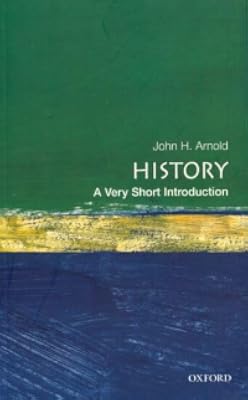
This essay about how we study and understand history invites us to think about various questions provoked by our investigation of history, and explores the ways these questions have been answered in the past.Tags
Recommendations








Member Reviews
A lot of textbooks, when discussing literary genres, use a sentence which can be summarized as "Herodotus invented history". The first time I saw it I was confused by two things - how history can be considered literature (we were talking about literary genres after all) and how can history be invented - it had always been there... Arnold covers both of these topics and a lot more in his excellent introduction to history.
History can mean a lot of things - it can be the story of what happened, it can be the writing about it, it can be the research of it or even History - that almost force that governs everyone's life. Arnold explores all of those meanings and connects them in a way that shows that as different as they can be, they are all show more the sides of the same coin. And he does that with the oldest weapon in a historian's arsenal - by telling us stories.
The book is an overview of the development and current state of historiography and history but instead of just introducing us to the different people, methods and controversies, Arnold uses real tales from the past and then shows how they were used (and abused) and reported by historians in different times. The book starts with a murder, loops back to catch up with the Greeks and then moves swiftly through history to get to where we are now. It is a short book so you would not think that this many stories and lives (and pictures) would fit and somehow they do. Some of the writing can get a bit too academic but even when it does, it has a purpose.
A lot of what the book deals with is the changing perception of what truth and history are and how connected they must be. It is fascinating to see how the way history was written shifts between its different branches - from political to social, from specialized to general and back again. All of the examples are from European and US histories which made me wonder how would this book read if it was done by the authors from another part of the word, using their own history to draw both the examples and what they signify. Most of them are from the English-language perspective although there are a few notes about the French historians and how they differ from the English language ones. It would have been fascinating to have a lot more examples both from continental Europe and from around the world. But then writing a unified history of the history of history will require a lot more pages. And this book, exactly as is, is a good enough introduction for an English language speaker. show less
History can mean a lot of things - it can be the story of what happened, it can be the writing about it, it can be the research of it or even History - that almost force that governs everyone's life. Arnold explores all of those meanings and connects them in a way that shows that as different as they can be, they are all show more the sides of the same coin. And he does that with the oldest weapon in a historian's arsenal - by telling us stories.
The book is an overview of the development and current state of historiography and history but instead of just introducing us to the different people, methods and controversies, Arnold uses real tales from the past and then shows how they were used (and abused) and reported by historians in different times. The book starts with a murder, loops back to catch up with the Greeks and then moves swiftly through history to get to where we are now. It is a short book so you would not think that this many stories and lives (and pictures) would fit and somehow they do. Some of the writing can get a bit too academic but even when it does, it has a purpose.
A lot of what the book deals with is the changing perception of what truth and history are and how connected they must be. It is fascinating to see how the way history was written shifts between its different branches - from political to social, from specialized to general and back again. All of the examples are from European and US histories which made me wonder how would this book read if it was done by the authors from another part of the word, using their own history to draw both the examples and what they signify. Most of them are from the English-language perspective although there are a few notes about the French historians and how they differ from the English language ones. It would have been fascinating to have a lot more examples both from continental Europe and from around the world. But then writing a unified history of the history of history will require a lot more pages. And this book, exactly as is, is a good enough introduction for an English language speaker. show less
Truly a very short introduction (123 pages) to the development of the field of history and historiography. And very digestible too considering it comes from the Oxford University Press, and it’s more academic than I would normally pick up. (I have no formal training in history. I don’t think I even took a history class at university. But, I do enjoy casually exploring the subject).
The final chapter (the Telling of Truth) left the greatest impact on me. The chapter is about how historians have silenced others for centuries, but the rise of social history has started to give voices to these (marginalized) groups. It was especially interesting since, as an American, I’ve been witnessing how these voices often get cast as show more “revisionist” by people when it dissents from the history they grew up with. People often want history to be a single, objective truth, and that simply isn’t possible (and the author argues that’s actually dangerous). I know their intent is to diminish the work of others because ultimately they are uncomfortable with grappling history that looks ugly. But also, I guess I don’t understand why people understand “history” as something static in the first place. Plots on a timeline may remain in place, but the conclusions we draw from evidence changes as we discover more sources that provide more context for the events in our past. In a way, are we not constantly “revising” history as these new sources surface? Bodies of academic work published during the mid-1900s and generally accepted as History-with-a-capital-H at the time, have been challenged and may not even stand the test of time anymore.
On another note, the chapter about cat killing was fascinating and I’m surprised house cats have managed to survive as a species. show less
The final chapter (the Telling of Truth) left the greatest impact on me. The chapter is about how historians have silenced others for centuries, but the rise of social history has started to give voices to these (marginalized) groups. It was especially interesting since, as an American, I’ve been witnessing how these voices often get cast as show more “revisionist” by people when it dissents from the history they grew up with. People often want history to be a single, objective truth, and that simply isn’t possible (and the author argues that’s actually dangerous). I know their intent is to diminish the work of others because ultimately they are uncomfortable with grappling history that looks ugly. But also, I guess I don’t understand why people understand “history” as something static in the first place. Plots on a timeline may remain in place, but the conclusions we draw from evidence changes as we discover more sources that provide more context for the events in our past. In a way, are we not constantly “revising” history as these new sources surface? Bodies of academic work published during the mid-1900s and generally accepted as History-with-a-capital-H at the time, have been challenged and may not even stand the test of time anymore.
On another note, the chapter about cat killing was fascinating and I’m surprised house cats have managed to survive as a species. show less
A good and well written introduction to what history means, how it's used, how it's done. You could always argue for X thing to be included but I think he covers most things you could expect to. Most chapters he focuses on a particular event from history and uses it to discuss a different aspect of how we understand history, how historical analysis is done, the struggle of approaching something like "the truth". Each of these events are interesting in themselves - an early 1300s murder to avoid someone exposing "heretics" to the inquisition, the story of a puritan preacher who went from England to America and back again and the family he left behind...
Often the book focuses more on asking questions than giving answers, but that's kind show more of the point - it's great for questioning the assumptions people might come into history with and pointing out how difficult it is to provide a definite understanding of the past. show less
Often the book focuses more on asking questions than giving answers, but that's kind show more of the point - it's great for questioning the assumptions people might come into history with and pointing out how difficult it is to provide a definite understanding of the past. show less
HISTORY, A Very Short Introduction, by John H. Arnold (pp 123). This an utterly fascinating explanation of history, how it’s written, who writes it, what it’s based on, and so much more. HISTORY is fascinating in part because of the polarization of viewpoints in our daily lives, including current day journalism and books we read written by authors who explain what’s happening, invariably from one or another viewpoint. We often think of history as a recitation of mostly verifiable facts put into a logical (and correct) order, and only slightly if at all influenced by the historian. Arnold contends—accurately in my opinion—few of the facts we rely on, at least with respect to human behavior (as opposed to the existence of a show more physical artifact), is truly verifiable. All history is written for a purpose, by someone with a perspective, based on a finite number of historical occurrences, and with gaps in knowledge that require guessing by each author. Historical facts or events are necessarily seen amidst incomplete contexts. The author illustrates many of his assertions by using several historical personages (some widely know, others less so) and events in which they were involved. To illustrate part of the difficulty of writing history, let alone reading it and trying to decide what is true irrespective of the author’s beliefs, I give the following example. (The U.S. Civil War is not mentioned in this book.)
Think of a famous general (in part because we often read about history as it was influenced or even directed by near-mythical heroes) who has just won a major battle. An author may assert that generalship determined the outcome. However, what might another historian emphasize in explaining the outcome of that conflict? Possibly the foe’s abysmal generalship was determinative, and not the hero’s. Other factors that might have been important and deserve emphasis could be: weather, weaponry, defenses, logistics (who was well fed and had enough bullets), the morale of the soldiers, illness and disease of combatants, political forces (why the battle was being fought), terrain, exhaustion of key players, everything leading up to the battle, and so much more. Without some idea of other key elements, we have to accept the historians assertion that McClellan outgeneraled Lee. Of course, good historians take into account other factors, but did they emphasize or even know about the most influential?
Was the “win” unfair because it was influenced by captured battle plans? Did the fact that casualties were horrific on both sides make it effectively a loss for both? Did the fact it gave Lincoln the victory he needed to issue the emancipation make it a resounding victory? Did the fact that Lee, who was heavily outnumbered, retreated an continued fighting for two years make it a loss for the Union? Did the winning general’s subsequent removal because of poor performance affect one’s view of the outcome? There are lots of opinions out there, but which is the best conclusion?
And that’s history. show less
Think of a famous general (in part because we often read about history as it was influenced or even directed by near-mythical heroes) who has just won a major battle. An author may assert that generalship determined the outcome. However, what might another historian emphasize in explaining the outcome of that conflict? Possibly the foe’s abysmal generalship was determinative, and not the hero’s. Other factors that might have been important and deserve emphasis could be: weather, weaponry, defenses, logistics (who was well fed and had enough bullets), the morale of the soldiers, illness and disease of combatants, political forces (why the battle was being fought), terrain, exhaustion of key players, everything leading up to the battle, and so much more. Without some idea of other key elements, we have to accept the historians assertion that McClellan outgeneraled Lee. Of course, good historians take into account other factors, but did they emphasize or even know about the most influential?
Was the “win” unfair because it was influenced by captured battle plans? Did the fact that casualties were horrific on both sides make it effectively a loss for both? Did the fact it gave Lincoln the victory he needed to issue the emancipation make it a resounding victory? Did the fact that Lee, who was heavily outnumbered, retreated an continued fighting for two years make it a loss for the Union? Did the winning general’s subsequent removal because of poor performance affect one’s view of the outcome? There are lots of opinions out there, but which is the best conclusion?
And that’s history. show less
There are many stories we can tell about the past, and we are not, perhaps, as free as we might imagine in our choice of which stories to tell, or where those stories end. John Arnold's Very Short Introduction is a stimulating essay about how we study and understand history. The book begins by inviting us to think about various questions provoked by our investigation of history, and explores the ways these questions have been answered in the past. Concepts such as causation, interpretation, and periodization, are introduced by means of concrete examples of how historians work, giving the reader a sense of the excitement of discovering not only the past, but also ourselves.
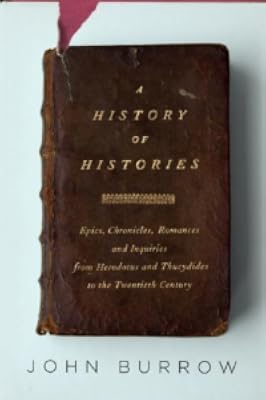
John Arnold is a professor of Medieval history in England and has written an excellent 123 page introduction to the field of history. He illustrates his narrative with obscure but interesting examples from Medieval and early Modern to show how historians approach their craft, the kinds of questions they ask, how primary sources are used, and issues such as periodization. He also has an excellent but brief "history of history" from the Greeks to the modern era touching on some of the most important authors and books (for a more in-depth look, see Burrow's excellent A History of Histories (2008)).
Although a lot of this is already familiar to me, probably the most interesting revelation was how historians (and their works) can be show more classified into "camps" or tribes. History is always more than "just the facts", there is an underlying purpose and approach. However historians are notoriously sly about revealing their position for fear of being seen as prejudiced or non-objective, it usually has to be dug out by the reader or exposed by an intelligent reviewer what approach they are taking. Arnold classifies most histories into three main camps: political, social and cultural. Each sees the prime mover of history through a different lens and borrows techniques and concepts from other fields (political science, anthropology, sociology, economics, etc..). Further, within each camp, historians can often have a key philosophical difference, as seen through the question: were people in the past similar to us, or different from us? This is for example what sets the Annales school apart, they see people of the past as being different from us, exotic and therefore open to a wide range of possible interpretation. Arnold offers his own solution to the problem: people of the past were both, just as people around the world today are both similar and different from us. Arnold likewise has an "on the fence" answer to the old question of what the prime mover of history is- he sees it as simply a series of contingencies, one accident after the next with no single person or institution in control of what happens. In the end I really enjoyed this VSI because Arnold writes with a novelists care, engaging the reader with stories and narrative.
--Review by Stephen Balbach, via CoolReading (c) 2008 cc-by-nd show less
Although a lot of this is already familiar to me, probably the most interesting revelation was how historians (and their works) can be show more classified into "camps" or tribes. History is always more than "just the facts", there is an underlying purpose and approach. However historians are notoriously sly about revealing their position for fear of being seen as prejudiced or non-objective, it usually has to be dug out by the reader or exposed by an intelligent reviewer what approach they are taking. Arnold classifies most histories into three main camps: political, social and cultural. Each sees the prime mover of history through a different lens and borrows techniques and concepts from other fields (political science, anthropology, sociology, economics, etc..). Further, within each camp, historians can often have a key philosophical difference, as seen through the question: were people in the past similar to us, or different from us? This is for example what sets the Annales school apart, they see people of the past as being different from us, exotic and therefore open to a wide range of possible interpretation. Arnold offers his own solution to the problem: people of the past were both, just as people around the world today are both similar and different from us. Arnold likewise has an "on the fence" answer to the old question of what the prime mover of history is- he sees it as simply a series of contingencies, one accident after the next with no single person or institution in control of what happens. In the end I really enjoyed this VSI because Arnold writes with a novelists care, engaging the reader with stories and narrative.
--Review by Stephen Balbach, via CoolReading (c) 2008 cc-by-nd show less
I am relatively surprised that I enjoyed this book.
It is an easy claim to make that Arnold doesn't like political history and would rather study social history. However, I feel like he doesn't make that claim. Throughout 7 chapters we are introduced to various figures in history arguing that without the ordinary people, there wouldn't be a history. While this claim is bold which minimises political ramifications, he argues it's just one explanation. He never says that one interpretation of history is definitive. Each historian discusses something they find interesting in an arbitrary time period and as a result, not everything is discussed.
He provides a balanced view of each school of thought in history and historiography which I show more definitely found interesting as a history major.
I'd definitely recommend this book to anyone who wants to perhaps challenge their understanding of history and its purpose. show less
It is an easy claim to make that Arnold doesn't like political history and would rather study social history. However, I feel like he doesn't make that claim. Throughout 7 chapters we are introduced to various figures in history arguing that without the ordinary people, there wouldn't be a history. While this claim is bold which minimises political ramifications, he argues it's just one explanation. He never says that one interpretation of history is definitive. Each historian discusses something they find interesting in an arbitrary time period and as a result, not everything is discussed.
He provides a balanced view of each school of thought in history and historiography which I show more definitely found interesting as a history major.
I'd definitely recommend this book to anyone who wants to perhaps challenge their understanding of history and its purpose. show less
Members
- Recently Added By
Lists

r/AskHistorians' Recommended Books
1,068 works; 17 members
Author Information

12+ Works 1,178 Members
John H. Arnold is Professor of Medieval History at the University of Cambridge.
Series

Work Relationships
Is contained in
Common Knowledge
- Canonical title
- History: A Very Short Introduction
- Original title
- History: A Very Short Introduction
- Original publication date
- 2000-06-15
- People/Characters
- François Baudouin; Jean Bodin; George Burdett; William Camden; Nicolas Contat; Geoffroi d'Ablis (show all 29); Guilhem de Area; Pierre de Area; Philippe de Larnat; Géraud de Rodes; Guilhem de Rodes; Raimond de Rhodes; Jacques-Auguste de Thou; Guilhem Déjean; Jean du Tillet; Edward Gibbon; Herodotus; Hume, David, 1711-1776; John of Salisbury; Karl Marx; Nabonidus; William of Malmesbury; Leopold von Ranke; Thucydides; Sojourner Truth; David Underdown; Lorenzo Valla; Voltaire "François-Marie Arouet", 1694-1778; John Winthrop
- Dedication
- For Mum, Dad, Ruth, and Victoria
- First words
- There are perhaps three kinds of books one can write on the subject of 'history' in general. (Preface)
Here is a true story. - Last words
- (Click to show. Warning: May contain spoilers.)To him, then, we give the last words: "But this is true too: stories can save us."
- Blurbers
- Lowenthal, David; Burke, Peter; Porter, Dorothy; Freedman, Paul; Ascherson, Neal
- Original language
- English
Classifications
Statistics
- Members
- 970
- Popularity
- 27,122
- Reviews
- 15
- Rating
- (3.78)
- Languages
- 9 — Chinese, English, Estonian, German, Hungarian, Farsi/Persian, Portuguese, Spanish, Turkish
- Media
- Paper, Audiobook, Ebook
- ISBNs
- 20
- ASINs
- 5