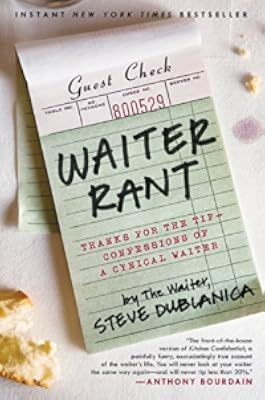
Waiter Rant: Thanks for the Tip--Confessions of a Cynical Waiter
by Steve Dublanica
On This Page
Description
Taken from the popular blog, WaiterRant.net, tells the story from the server's point of view about customer stupidity, arrogance, misbehavior and even human grace.Tags
Recommendations
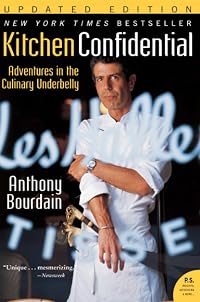
















Member Recommendations
Member Reviews
I have been reading Good Reads reviews for a while now, and have learned a bit of code that works for me. If reviewers complain that the protagonist is arrogant, self-obsessed, or something of that ilk, I am generally going to like the book. Maybe I am arrogant and/or self-obsessed, I don't know, but from my perspective characters thus described are generally either very self-aware, intellectually confident and archly funny or self-deluded, intellectually confident, and interesting. Either way, its a good start for a good read. This is not a hard and fast rule, but one that works for me more often than it fails.
This book is insightful, funny, informative, and relatable. Is the memoirist pompous? He is. Is he sometimes whiny? He is. But show more he is also, as the cliché states, a keen observer of the human condition. He gets to be the fly on the wall and let's us spy on behavior many of us don't see every day. He also allows us to glimpse his personal journey, warts and all. I briefly waited tables in college, but my interest and POV is more as a person who has for the past 30ish years eaten in a lot of restaurants. With that perspective, I mostly enjoyed this one. Though I see the authors plan to write professionally has not thus far lead to professional success, he has managed to crank out one book worth reading, and that is better than most writers accomplish. show less
This book is insightful, funny, informative, and relatable. Is the memoirist pompous? He is. Is he sometimes whiny? He is. But show more he is also, as the cliché states, a keen observer of the human condition. He gets to be the fly on the wall and let's us spy on behavior many of us don't see every day. He also allows us to glimpse his personal journey, warts and all. I briefly waited tables in college, but my interest and POV is more as a person who has for the past 30ish years eaten in a lot of restaurants. With that perspective, I mostly enjoyed this one. Though I see the authors plan to write professionally has not thus far lead to professional success, he has managed to crank out one book worth reading, and that is better than most writers accomplish. show less
I'm attracted to work/career memoirs, particularly if they involve humorous stories about working with the public. I've never worked in the restaurant industry, but I still found Steve Dublanica's memoir to be fascinating, hilarious, and horrifying all at the same time.
The book covers all sorts of stories, from his first time waiting tables to the time he served Russell Crowe, to the couple who threw a conniption fit because they couldn't get a "good" table in the back during the dinner hour. Dublanica has already classified himself as a cynic, but he spends a fair amount of time in the book analyzing why these customers (and other troublesome diners) behave the way they do. His conclusions point to an excess of narcissism and the show more prevalence of a culture based on instant gratification - a cynical and depressing perspective of the American population to be sure, but as Dublanica reminds us, 80% of the people coming into a restaurant only want to enjoy a good meal. It's the other 20% that are raving psychopaths incapable of functioning in the outside world.
In addition, here's a lot of insider information about how restaurants are run, why so many restaurants collapse under subpar management, and how some corrupt owners use blackmail and general bullying to keep their pockets lined and their employees obedient. Makes me grateful that I've never worked in the food industry before...
For anyone who works customer service or works with the public, there is a lot of relatable material in here, regardless of your profession. The only downside to this was that I tended to relate a little TOO much and found myself getting angry while reading this book. Not a pleasant sensation, but if Dublanica's intention was to make people care about what happens in the restaurant business, he succeeded tenfold.
And as an added bonus, he includes a couple of appendices towards the end about how to be a good customer the next time you go out to eat. (For example, it's always best to ask for separate checks BEFORE the waiter takes your order. Otherwise it just creates an extra hassle at the end of the meal.)
Recommended for: anyone in the food industry, anyone with an interest in work-related memoirs, anyone who has had to work customer service, anyone who likes their reading with a healthy dose of dry humor and cynicism.
Readalikes:
Weird Things Customers Say in Bookstores - Jen Campbell. While this book focuses on the book industry instead of the food industry, and is a collection of small snippets from multiple book store employees as opposed to an actual memoir, it's absolutely hilarious and easy to relate to.
Cruising Attitude: Tales of Crashpads, Crew Drama, and Crazy Passengers at 35,000 Feet - Heather Poole. This memoir's combination of juicy gossip and eye-opening information gives readers an inside look at the world of a flight attendant.
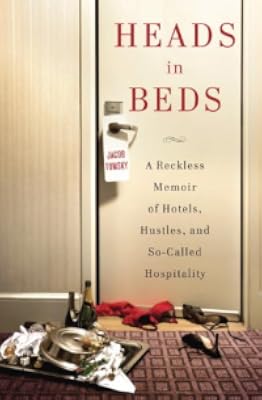
Heads in Beds: A Reckless Memoir of Hotels, Hustles, and So-Called Hospitality - Jacob Tomsky. Just like Dublanica, Jacob Tomsky never INTENDED to work where he does, and now he has a huge list of stories that chronicle the highs and lows of working in the hospitality industry. Plus tips on how to get the most out of your hotel stay. show less
The book covers all sorts of stories, from his first time waiting tables to the time he served Russell Crowe, to the couple who threw a conniption fit because they couldn't get a "good" table in the back during the dinner hour. Dublanica has already classified himself as a cynic, but he spends a fair amount of time in the book analyzing why these customers (and other troublesome diners) behave the way they do. His conclusions point to an excess of narcissism and the show more prevalence of a culture based on instant gratification - a cynical and depressing perspective of the American population to be sure, but as Dublanica reminds us, 80% of the people coming into a restaurant only want to enjoy a good meal. It's the other 20% that are raving psychopaths incapable of functioning in the outside world.
In addition, here's a lot of insider information about how restaurants are run, why so many restaurants collapse under subpar management, and how some corrupt owners use blackmail and general bullying to keep their pockets lined and their employees obedient. Makes me grateful that I've never worked in the food industry before...
For anyone who works customer service or works with the public, there is a lot of relatable material in here, regardless of your profession. The only downside to this was that I tended to relate a little TOO much and found myself getting angry while reading this book. Not a pleasant sensation, but if Dublanica's intention was to make people care about what happens in the restaurant business, he succeeded tenfold.
And as an added bonus, he includes a couple of appendices towards the end about how to be a good customer the next time you go out to eat. (For example, it's always best to ask for separate checks BEFORE the waiter takes your order. Otherwise it just creates an extra hassle at the end of the meal.)
Recommended for: anyone in the food industry, anyone with an interest in work-related memoirs, anyone who has had to work customer service, anyone who likes their reading with a healthy dose of dry humor and cynicism.
Readalikes:
Weird Things Customers Say in Bookstores - Jen Campbell. While this book focuses on the book industry instead of the food industry, and is a collection of small snippets from multiple book store employees as opposed to an actual memoir, it's absolutely hilarious and easy to relate to.
Cruising Attitude: Tales of Crashpads, Crew Drama, and Crazy Passengers at 35,000 Feet - Heather Poole. This memoir's combination of juicy gossip and eye-opening information gives readers an inside look at the world of a flight attendant.
Heads in Beds: A Reckless Memoir of Hotels, Hustles, and So-Called Hospitality - Jacob Tomsky. Just like Dublanica, Jacob Tomsky never INTENDED to work where he does, and now he has a huge list of stories that chronicle the highs and lows of working in the hospitality industry. Plus tips on how to get the most out of your hotel stay. show less
Brilliant, really. I've never worked as a server, but my mom did and my daughter does. I've heard a lot of insider stories, but these are written masterfully and with such great humor.
I've mentioned this book (or a story in it) many times in conversation since finishing it less than a week ago. It doesn't matter if you're a waiter or not. It's a satisfying read. You will learn a lot about yourself, and might think twice about eating out again.
I can't help but think Steve and I would have been BFFs in an alternate universe. He's the perfect combination of snarky and serious. He's got a good head on his shoulders. And he has a great command for the English language, or an amazing editor. Or both. Could be both. I highlighted a lot in this show more ebook and intend to go back and re-read a lot of the gems! show less
I've mentioned this book (or a story in it) many times in conversation since finishing it less than a week ago. It doesn't matter if you're a waiter or not. It's a satisfying read. You will learn a lot about yourself, and might think twice about eating out again.
I can't help but think Steve and I would have been BFFs in an alternate universe. He's the perfect combination of snarky and serious. He's got a good head on his shoulders. And he has a great command for the English language, or an amazing editor. Or both. Could be both. I highlighted a lot in this show more ebook and intend to go back and re-read a lot of the gems! show less
How did I come to possess this book? Well, the combination of a Books-A-Million going out of business sale, my mistaken assumption that it would be a collection of essays written by various people who had once waited tables, and a cover blurb from Anthony Bourdain calling it "painfully funny" was apparently a heady combination that led to this bit of buyer's remorse.
To be fair, this is not a bad book, nor is it a terribly interesting one. Alas, Waiter Rant is by one waiter who depends upon his anonymity as he blogs about his job while still in the trenches (he has since been revealed to be Steve Dublanica). Dublanica finds himself middle-aged and without steady employment, so takes a wait job as a stopgap between careers--and then show more never really leaves. The rest of the book follows his adventures and misadventures with the surly kitchen staff, incompetent wait staff, and the snooty, entitled patrons who can make a waiter's life a living hell.
I assumed (based on the description and various blurbs) that all of this would be funny. Except it's not. By one-third of the way through, it failed to elicit a chuckle, a twitter, a smirk, or even one of those weird laughs that consist of basically blowing air out of your nose really hard when something catches you kind of off-guard and you're not sure if it's appropriate to laugh. And I like to think that I'm not humor impaired. I laugh and laugh often. The problem here is that being cynical is not the same as being funny. Now when funny and cynical come together with a dash of acerbic wit, it can be a beautiful and miraculous thing (I'm looking at you, Anthony Bourdain), but there's no magic here and I'm reading it because--once again, I'm looking at you Anthony Bourdain.
The other reason it failed to entertain me is because its main message seems to be that people suck. And they do, I'll not argue against that. But waiters don't have the market cornered on I-don't-get-paid-enough-to-put-up-with-ungrateful-and-crazy-all-day-long. Anyone who has any job that requires contact with the public knows this spiel. I've been a waiter, a cashier, a secretary, a teacher and the dynamic is always the same--as long as there's a customer, someone's going to be an asshole because you're there to serve them and, by God, that means doing precisely what they want when they want it and if not then they will be talking to your supervisor. Having lived this, reading about it is not how I want to spend my hours away from work.
Throughout, Dublanica comes across as some kind of super-waiter and, while I have no reason to doubt that he was good at his job and took it seriously, his stories fail to come to life as he seems incapable of portraying himself as flawed. He always seems to have the upper-hand and becomes the sage keeper of knowledge for the younger employees. It also makes the dining experience seem all about the waiter: what's best for the waiter, how to keep your waiter happy, tips that help make the waiter's job easier, etc. as though it's the customer's job to cater to the waiter. Now, as previously mentioned, I've been a waitress (briefly; as part of my training, I was seriously told to "kiss the babies and flirt with the old men"--homey don't play that game so apparently my "perkitude" wasn't up to their standards and I was unceremoniously fired). And, yes, people can treat waiters terribly and there are things one can and should do to make a dining experience pleasant for all involved. Most of those things involve simple human decency. But Dublanica makes it sound like such a one-sided affair that waiters should be leaving tips to customers who jump through all the hoops outlined in the book to make it a pleasure to serve them.
While some of the information about the dynamic that exists among the employees in a restaurant is mildly interesting, there's nothing really surprising here.
Cross posted at This Insignificant Cinder show less
To be fair, this is not a bad book, nor is it a terribly interesting one. Alas, Waiter Rant is by one waiter who depends upon his anonymity as he blogs about his job while still in the trenches (he has since been revealed to be Steve Dublanica). Dublanica finds himself middle-aged and without steady employment, so takes a wait job as a stopgap between careers--and then show more never really leaves. The rest of the book follows his adventures and misadventures with the surly kitchen staff, incompetent wait staff, and the snooty, entitled patrons who can make a waiter's life a living hell.
I assumed (based on the description and various blurbs) that all of this would be funny. Except it's not. By one-third of the way through, it failed to elicit a chuckle, a twitter, a smirk, or even one of those weird laughs that consist of basically blowing air out of your nose really hard when something catches you kind of off-guard and you're not sure if it's appropriate to laugh. And I like to think that I'm not humor impaired. I laugh and laugh often. The problem here is that being cynical is not the same as being funny. Now when funny and cynical come together with a dash of acerbic wit, it can be a beautiful and miraculous thing (I'm looking at you, Anthony Bourdain), but there's no magic here and I'm reading it because--once again, I'm looking at you Anthony Bourdain.
The other reason it failed to entertain me is because its main message seems to be that people suck. And they do, I'll not argue against that. But waiters don't have the market cornered on I-don't-get-paid-enough-to-put-up-with-ungrateful-and-crazy-all-day-long. Anyone who has any job that requires contact with the public knows this spiel. I've been a waiter, a cashier, a secretary, a teacher and the dynamic is always the same--as long as there's a customer, someone's going to be an asshole because you're there to serve them and, by God, that means doing precisely what they want when they want it and if not then they will be talking to your supervisor. Having lived this, reading about it is not how I want to spend my hours away from work.
Throughout, Dublanica comes across as some kind of super-waiter and, while I have no reason to doubt that he was good at his job and took it seriously, his stories fail to come to life as he seems incapable of portraying himself as flawed. He always seems to have the upper-hand and becomes the sage keeper of knowledge for the younger employees. It also makes the dining experience seem all about the waiter: what's best for the waiter, how to keep your waiter happy, tips that help make the waiter's job easier, etc. as though it's the customer's job to cater to the waiter. Now, as previously mentioned, I've been a waitress (briefly; as part of my training, I was seriously told to "kiss the babies and flirt with the old men"--homey don't play that game so apparently my "perkitude" wasn't up to their standards and I was unceremoniously fired). And, yes, people can treat waiters terribly and there are things one can and should do to make a dining experience pleasant for all involved. Most of those things involve simple human decency. But Dublanica makes it sound like such a one-sided affair that waiters should be leaving tips to customers who jump through all the hoops outlined in the book to make it a pleasure to serve them.
While some of the information about the dynamic that exists among the employees in a restaurant is mildly interesting, there's nothing really surprising here.
Cross posted at This Insignificant Cinder show less
"The front-of-house version of 'Kitchen Confidential'" this is not (sorry Tony). It's a vehicle for Dublanica's cod-philosophical musings with a few tame stories about the waiting trade thrown in. If you think that I'm being harsh, try this: "My psychological makeup is composed of many factors, but I think my fear of destruction is partly related to learning I had a twin brother who died at birth." Or how about, "The Bistro's been like a womb I've been afraid to leave" or "I learned that love is only one ingredient among many in a relationship". I could go on. And on. And on. He does. Cod 'n' chips, innit.
Where's the gonzo? Where's the schlock horror? Where's underbelly? Where's the inside stuff that we don't know already? The chapter show more titled `Substance Abuse', for example, is mostly spent informing us that service staff often drink a lot. `Vengeance is Mine' should have been a litany of outrageous, devious, laugh-out-loud one-upmanship. Instead we get pranks that your eight-year old daughter might come up with: one waiter asked if the mistress of a disliked customer was his daughter [*Blammo!*]. Dublanica told another man that his credit card was denied! When it wasn't! [*KaPOK!*]. Worst of all a whole, tedious chapter is given over to the fact that waiters like getting big tips but don't like people who are mean.
I could forgive some of these shortcomings but the writing is just too clumsy. Dublanica borrows heavily from `How Not to Write a Novel': the forced, extended dialogues to make a clever-clever point; the esprit d'escalier bitching; the "I'm such a screw up" pre-emptive strike etc. etc.
A wasted opportunity and solid proof that a good blog does not necessarily translate into a good book. show less
Where's the gonzo? Where's the schlock horror? Where's underbelly? Where's the inside stuff that we don't know already? The chapter show more titled `Substance Abuse', for example, is mostly spent informing us that service staff often drink a lot. `Vengeance is Mine' should have been a litany of outrageous, devious, laugh-out-loud one-upmanship. Instead we get pranks that your eight-year old daughter might come up with: one waiter asked if the mistress of a disliked customer was his daughter [*Blammo!*]. Dublanica told another man that his credit card was denied! When it wasn't! [*KaPOK!*]. Worst of all a whole, tedious chapter is given over to the fact that waiters like getting big tips but don't like people who are mean.
I could forgive some of these shortcomings but the writing is just too clumsy. Dublanica borrows heavily from `How Not to Write a Novel': the forced, extended dialogues to make a clever-clever point; the esprit d'escalier bitching; the "I'm such a screw up" pre-emptive strike etc. etc.
A wasted opportunity and solid proof that a good blog does not necessarily translate into a good book. show less
Summary: Steve didn't ever imagine that he'd find himself starting out in the restaurant business waiting tables at the age of 31. He also didn't imagine himself starting an anonymous tell-all blog about the ups and downs of the life of a waiter, and he probably really didn't imagine that blog winning a bunch of writing awards, and eventually being parlayed into a book deal. But it did, and this is the book. Much like a front-of-the-house version of Kitchen Confidential, Waiter Rant provides a behind-the-scenes look at what's really going on among the servers of your favorite restaurants. Dublanica suggests that people let their guard down when they're eating, even when they're dining out, and the things that your waiter has seen and show more heard range from obnoxious to outrageous to truly touching. He also covers topics like tipping and why you should do it (and how waiters can recognize bad tippers long before the bill finally arrives), tensions between the owner and the employees and how that can affect the service, and why people become waiters in the first place, why they stay, and what can happen to them along the way.
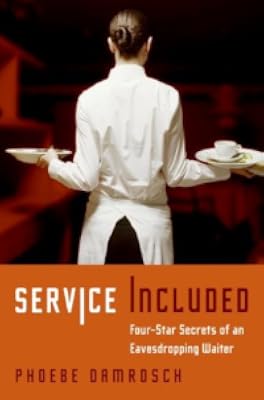
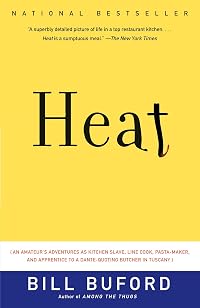
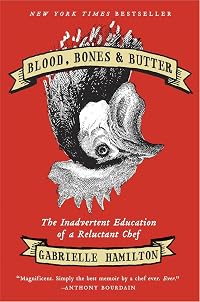
Review: This book was basically like literary candy for me. I mean, I loved Kitchen Confidential enough to convince me that I didn't hate memoirs as a genre, and I've read several other restaurant memoirs in the intervening years (Blood, Bones, and Butter, Heat and Service Included). Waiter Rant takes an approach that's more similar to Kitchen Confidential than the other two, in that while it is a memoir, and does have stories about the author's career path, and previous jobs, and personal life, and coworkers, and transition from waiting tables into writing books, etc., a lot of the book is much more general. Dublanica - who was anonymous while he was writing his blog, and prior to publication of this book - tells specific stories about things that happened to him, fights and flirtations with his coworkers, particular problematic customers, how things were at his restaurant, but he himself is only very rarely the focus of the story, and he always manages to bring it back around to a generalizable topic, a point that would be applicable to any waiter anywhere. I appreciated this, because that's what I was there to read (and fortunately, the parts that are more about the man than the job were also interesting, well-written, and mostly brief).
A lot of what Dublanica says is common sense (or should be): be a reliable and generous tipper, don't try to snake a better table by pretending to be a friend of the owner (particularly if you're going to be belligerent about it), don't expect awesome service during Mother's Day brunch, etc. But he also reminded me of something that should have been obvious, but aren't necessarily - particularly just how much your waiter sees, hears, and notices. He doesn't talk a lot about the possibility of your server adulterating your food, but it turns out that there are other, subtler ways a waiter has to counter bad behavior of various kinds. (I will admit, I am now a little more self-conscious when dining out, not because I'm ever badly behaved, but because who knows which waiter is listening to and judging my conversation?)
Overall, did I learn anything about the food service industry from this book that I hadn't already gleaned from other things I've read and seen? Not really. But that doesn't mean that I didn't enjoy the heck out of myself while reading it. 4 out of 5 stars.
Recommendation: Kitchen Confidential and its ilk of behind-the-scenes day-in-the-life type memoirs are the obvious readalikes. show less
Review: This book was basically like literary candy for me. I mean, I loved Kitchen Confidential enough to convince me that I didn't hate memoirs as a genre, and I've read several other restaurant memoirs in the intervening years (Blood, Bones, and Butter, Heat and Service Included). Waiter Rant takes an approach that's more similar to Kitchen Confidential than the other two, in that while it is a memoir, and does have stories about the author's career path, and previous jobs, and personal life, and coworkers, and transition from waiting tables into writing books, etc., a lot of the book is much more general. Dublanica - who was anonymous while he was writing his blog, and prior to publication of this book - tells specific stories about things that happened to him, fights and flirtations with his coworkers, particular problematic customers, how things were at his restaurant, but he himself is only very rarely the focus of the story, and he always manages to bring it back around to a generalizable topic, a point that would be applicable to any waiter anywhere. I appreciated this, because that's what I was there to read (and fortunately, the parts that are more about the man than the job were also interesting, well-written, and mostly brief).
A lot of what Dublanica says is common sense (or should be): be a reliable and generous tipper, don't try to snake a better table by pretending to be a friend of the owner (particularly if you're going to be belligerent about it), don't expect awesome service during Mother's Day brunch, etc. But he also reminded me of something that should have been obvious, but aren't necessarily - particularly just how much your waiter sees, hears, and notices. He doesn't talk a lot about the possibility of your server adulterating your food, but it turns out that there are other, subtler ways a waiter has to counter bad behavior of various kinds. (I will admit, I am now a little more self-conscious when dining out, not because I'm ever badly behaved, but because who knows which waiter is listening to and judging my conversation?)
Overall, did I learn anything about the food service industry from this book that I hadn't already gleaned from other things I've read and seen? Not really. But that doesn't mean that I didn't enjoy the heck out of myself while reading it. 4 out of 5 stars.
Recommendation: Kitchen Confidential and its ilk of behind-the-scenes day-in-the-life type memoirs are the obvious readalikes. show less
I enjoyed this tremendously- a quite cathartic read for anyone who has done time in the service industry. It's funny, too. I didn't expect to be unable to put it down, or to finish it so quickly. Very well-written, not whiny or adolescent in the slightest. It's really a memoir, but it reads like a novel. It isn't boring or self-serving. It isn't a vanity project. A page-turner.
Members
- Recently Added By
Lists

Books read in 2014
66 works; 1 member

The 99% -- Most Readable Non-Fiction
37 works; 8 members
Author Information

2 Works 1,545 Members
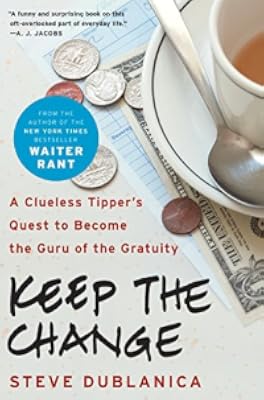
Steve Dublanica, waited his first table at age thirty-one. In 2004, he started his extremely popular blog, WaiterRant.net, eventually winning the 2006 Bloggie Award for Best Writing of a Weblog. He has been interviewed nationwide, including on The Oprah Winfrey Show and Today. He is the author of Keep the Change and Waiter Rant. (Bowker Author show more Biography) show less
Some Editions
Awards and Honors
Awards
Distinctions
Common Knowledge
- Original publication date
- 2008-07-29
- Dedication
- This book is dedicated to my mother, my father, and everyone who's ever waited tables.
- First words
- Preface
I'm a waiter. - Quotations
- I know a restaurant where a couple's amorous thrusting snapped the bathroom sink right off the wall.
When did making people stop having sex become part of my job?
The gap between management and staff can make the Gaza Strip look like a resort town. And Fluvio? He can be the culinary version of Yasir Arafat.
If you were to suggest to Fluvio that an applicant's papers might be counterfeit, “I don't work for Homeland Security” would be his standard response.
Without illegal immigrants the restaurant business in this country would come to a shuddering halt.
Whipped by the breeze generated from constantly opening and closing doors, the fly strips fluttered in the artificial wind like glistening black-studded pennants hung by primitive tribesmen trying to scare outsiders away from... (show all) singer kind of sacrificial burial pit.
When I hear a guy refer to his mother in this way, the theme music from Psycho starts playing inside my head.
Mother's Day has evolved into a Yom Kippur for guilty children everywhere.
Before the call ended he told me he still considered me a friend. That pissed me off. If he were my friend, he'd have called me to see how I was doing at least once.
Seeing the Bistro is like passing my boyhood home after my parents sold it. Sure, the building holds many memories—but I don't live there anymore. - Last words
- (Click to show. Warning: May contain spoilers.)Sometimes I love this job.
- Blurbers
- Bourdain, Anthony
Classifications
- Genres
- General Nonfiction, Biography & Memoir, Nonfiction, Food & Cooking
- DDC/MDS
- 647.95068 — Applied science & technology Home economics & family management Management of public households (Institutional housekeeping) Specific kinds of public households and institutions Eating and drinking places modified standard subdivisions
- LCC
- TX925 .D83 — Technology Home economics Home economics Hospitality industry. Hotels, clubs,
- BISAC
Statistics
- Members
- 1,386
- Popularity
- 17,092
- Reviews
- 93
- Rating
- (3.40)
- Languages
- English, Italian, Spanish
- Media
- Paper, Audiobook, Ebook
- ISBNs
- 19
- ASINs
- 7