On This Page
Description
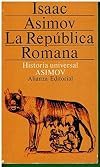
J'entends raconter, dans ce livre, la premiere partie de l'histoire romaine : celle de son ascension a la puissance. Elle contient une suite extraordinaire de triomphes et de desastres, de faits de bravoure au combat et de betise dans la paix, d'intrigues sordides et d'idealisme glorieux. Et j'entends privilegier ici les transports de la guerre et de la politique.Tags
Recommendations



















Member Recommendations


Member Reviews
Superbe. Une simple histoire, chronologique de Rome, mais qui est très précise, donne vraiment toutes les histoires, les grandes et les petites. C’est un grand plaisir car c’est très bien écrit et donc à conseiller à toutes les personnes qui ne connaissent rien à cela.
Jul 4, 2025French
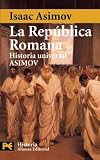
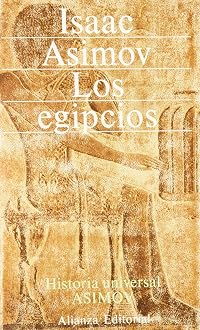
La serie informalmente titulada «Historia Universal Asimov» reúne las obras dedicadas por el gran novelista y divulgador científico a la evolución política, cultural y material de la especie humana. «La República Romana» abarca el lapso transcurrido entre la fundación de Roma en 753 a.C. y el 29 a.C. –momento en el que Octavio se hace con el poder absoluto–, y comprende el periodo monárquico, el ascenso de Roma a gran potencia tras su triunfo en las Guerras Púnicas y las diferentes guerras civiles que pusieron fin al periodo republicano.
Jul 6, 2022Spanish
Buen resumen
Mar 1, 2018Spanish
LA REPÚBLICA ROMANA abarca el lapso transcurrido entre la fundación de Roma en el 753 a.C. y el 29 a.C. -momento en el que Octavio se hace con el poder absoluto-, que comprende el periodo monárquico, el ascenso de Roma a gran potencia tras su triunfo en las Guerras Púnicas y las diferentes guerras civiles que pusieron fin al periodo republicano.
Jan 15, 2011Spanish
ÑB-2
Dec 7, 2020Catalan
Ratings
Members
- Recently Added By
Lists

Europe
205 works; 6 members

Books Read in 2004
200 works; 7 members

Books Read in 2015
3,299 works; 126 members

EGBERTINA'S List of childhood books worthy of merit or unspeakable delight
155 works; 6 members

Favorite Childhood Books
1,646 works; 518 members
Author Information

2,400+ Works 293,077 Members
Isaac Asimov was born in Petrovichi, Russia, on January 2, 1920. His family emigrated to the United States in 1923 and settled in Brooklyn, New York, where they owned and operated a candy store. Asimov became a naturalized U.S. citizen at the age of eight. As a youngster he discovered his talent for writing, producing his first original fiction at show more the age of eleven. He went on to become one of the world's most prolific writers, publishing nearly 500 books in his lifetime. Asimov was not only a writer; he also was a biochemist and an educator. He studied chemistry at Columbia University, earning a B.S., M.A. and Ph.D. In 1951, Asimov accepted a position as an instructor of biochemistry at Boston University's School of Medicine even though he had no practical experience in the field. His exceptional intelligence enabled him to master new systems rapidly, and he soon became a successful and distinguished professor at Columbia and even co-authored a biochemistry textbook within a few years. Asimov won numerous awards and honors for his books and stories, and he is considered to be a leading writer of the Golden Age of science fiction. While he did not invent science fiction, he helped to legitimize it by adding the narrative structure that had been missing from the traditional science fiction books of the period. He also introduced several innovative concepts, including the thematic concern for technological progress and its impact on humanity. Asimov is probably best known for his Foundation series, which includes Foundation, Foundation and Empire, and Second Foundation. In 1966, this trilogy won the Hugo award for best all-time science fiction series. In 1983, Asimov wrote an additional Foundation novel, Foundation's Edge, which won the Hugo for best novel of that year. Asimov also wrote a series of robot books that included I, Robot, and eventually he tied the two series together. He won three additional Hugos, including one awarded posthumously for the best non-fiction book of 1995, I. Asimov. "Nightfall" was chosen the best science fiction story of all time by the Science Fiction Writers of America. In 1979, Asimov wrote his autobiography, In Memory Yet Green. He continued writing until just a few years before his death from heart and kidney failure on April 6, 1992. (Bowker Author Biography) show less
Some Editions
Series

Belongs to Publisher Series
Common Knowledge
- Canonical title*
- La República Romana
- Original title
- The Roman Republic
- Original publication date
- 1966
- Important places*
- Ancient Rome; Roma, Imperio Romano
*Some information comes from Common Knowledge in other languages. Click "Edit" for more information.
Classifications
- Genres
- History, Nonfiction
- DDC/MDS
- 937.02 — History & geography History of ancient world (to ca. 499) Italian Peninsula to 476 and adjacent territories to 476 Republic 509-31 B.C.
- LCC
- DG231.7 .A8 — History of Europe, Asia, Africa and Oceania City History of Italy Ancient Italy. Rome to 476 History By period Kings and Republic, 753-27 B.C.
- BISAC
Statistics
- Members
- 202
- Popularity
- 161,027
- Reviews
- 5
- Rating
- (3.75)
- Languages
- 5 — Dutch, English, French, Russian, Spanish
- Media
- Paper
- ISBNs
- 8
- ASINs
- 2