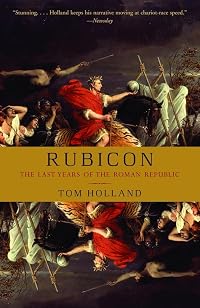
Rubicon: The Last Years of the Roman Republic
by Tom Holland
On This Page
Description
Recounts the fall of the Roman Republic, tracing the events that marked the final century B.C. and discussing such topics as the rise of Alexandria and the contributions of such figures as Caesar, Cleopatra, Brutus, and Augustus. In 49 B.C., the seven hundred fifth year since the founding of Rome, Julius Caesar crossed a small border river called the Rubicon and plunged Rome into cataclysmic civil war. Tom Holland's enthralling account tells the story of Caesar's generation, witness to the show more twilight of the Republic and its bloody transformation into an empire. From Cicero, Spartacus, and Brutus, to Cleopatra, Virgil, and Augustus, here are some of the most legendary figures in history brought thrillingly to life. Combining verve and freshness with scrupulous scholarship, Rubicon is not only an engrossing history of this pivotal era but a uniquely resonant portrait of a great civilization in all its extremes of self-sacrifice and rivalry, decadence and catastrophe, intrigue, war, and world-shaking ambition. show lessTags
Recommendations

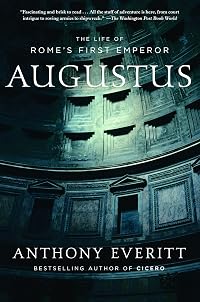

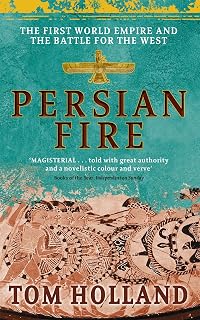
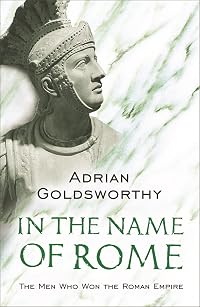

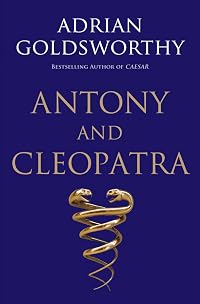
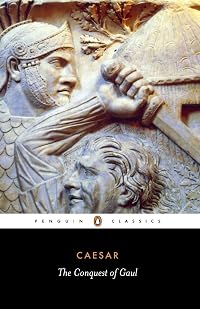
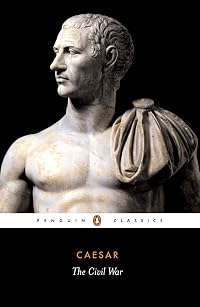
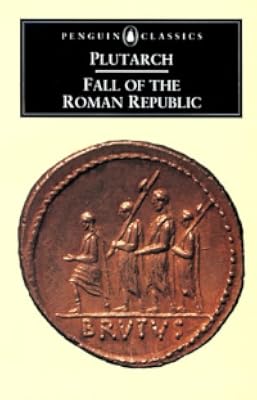







Member Recommendations
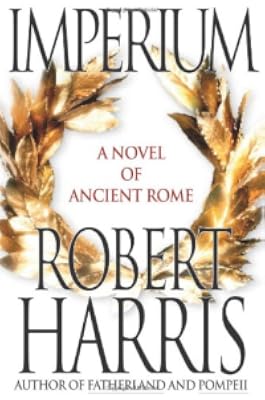
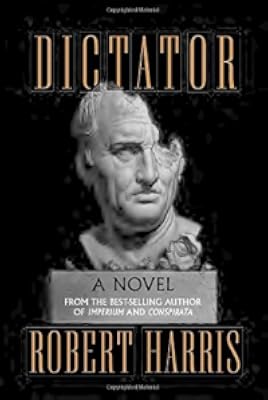
YossarianXeno Rubicon and Imperium are both exceptionally well-written and researched accounts, one non-fiction and the other fiction, of the politics of Rome covering much of the same period.
50

statmonkey Rubicon gives the other side of the story, telling how the Republic that Mithradates fought came to be. The Poison King details how Romes biggest rival came to be a threat and what was really going on in Pontus before and after Sulla. The books complement each other very well.
20
santhony The same narrative approach to history.

Thruston Syme's dense Tacitean style is a world away from Holland's light narrative sweep, but he conveys the same sense of excitement and tension, albeit with the confines of a much more scholarly approach.
Member Reviews
The fall of the Republic and the rise of the Empire, not that Rome wasn't already an Empire when the Republic fell. Built on slavery, it celebrated liberty, but how could you appreciate liberty without lots of slaves deprived of their liberty to contrast with your? Such was the mindset of the Romans, according to this immensely readable book, and it is one of a number of paradoxes that fueled the Roman's drive to take over the world, usually with thinly justified pre-emptive strikes against anyone who was even vaguely threatening or disrespectful, then robbing and enslaving and squeezing the survivors unmercifully, creating enormous wealth and opportunities for corruption. Which was, to the Roman mind, as it should be.
I admit my sense show more of the history of Rome is vague and spotty, filled with cinematic and televisual pageantry rather than a solid conception of its general shape. Still, so much of this is familiar, so many names echoing out of the past, and it's nice to have it brought more sharply into focus. Extraordinary men rise and do extraordinary things to great praise and adulation, then the extraordinary men are brought low, because Rome loves extraordinary men, it just doesn't like them. A swirling vortex of rising and falling leads almost inevitably to chaos and anarchy and a brutal and deadly struggle. The story is often garish and lurid and unimaginably brutal and violent. It's also fascinating and compelling. Holland creates a driving narrative, and while one is automatically suspicious of narratives imposed on history, still it grabs the attention and does not let go. show less
I admit my sense show more of the history of Rome is vague and spotty, filled with cinematic and televisual pageantry rather than a solid conception of its general shape. Still, so much of this is familiar, so many names echoing out of the past, and it's nice to have it brought more sharply into focus. Extraordinary men rise and do extraordinary things to great praise and adulation, then the extraordinary men are brought low, because Rome loves extraordinary men, it just doesn't like them. A swirling vortex of rising and falling leads almost inevitably to chaos and anarchy and a brutal and deadly struggle. The story is often garish and lurid and unimaginably brutal and violent. It's also fascinating and compelling. Holland creates a driving narrative, and while one is automatically suspicious of narratives imposed on history, still it grabs the attention and does not let go. show less
There are certainly other popular histories on the Roman Republic, but the subject isn’t as popular as the Roman Empire, and I get the sense that most of them start with, understandably, the compelling subject of Julius Caesar, founder of the Imperial Julio-Claudian dynasty.
This is an extremely compelling and readable account of the Roman Republic starting with the usual place its decline is marked from, the murder of the reforming Gracchi Brothers in 133 and 123 BC.
Holland doesn’t follow the usual academic structure of following the chronology and political themes of the Republic’s collapse. He’s interested in capturing the personalities and the spirit of the Romans, the people that gave us so many cultural gifts and, up close, show more are so alien. The narrative flow wanders back in time on occasion, at just the right moment, to give us the context of the developing disaster. A timeline is helpfully provided to anchor the reader as well as maps and extensive notes, usually form ancient sources.
Of those ancient sources, Holland admits we have only a few of the accounts the Romans wrote of those times to build a story from.
Holland has two great themes, two causes for Republican collapse.
The first echoes the moralists of the time. The simple Roman people had become too rich, particularly after 146 BC when the wealth of the East and Carthaginian silver mines flowed to the capital. The territories, especially became too great of a source of wealth for the Roman elite not to grasp with rapacious publicani, private tax collectors, provincial governorships, and military commands to win even more honor and conquer more rich lands.
The second is the Roman culture, a worldview that emphasized competition, the pursuit of honor and glory but was so distrustful of the brilliant and ambitious that elaborate checks on their power had developed, the strange, cluttered system of Roman government. But, increasingly, the Roman elite were no longer willing to just bask in the limelight of a mere year’s long consulship, the Republic’s most coveted office. They wanted those jobs as governors and commanders and tax farmers.
The Romans, by Holland’s light, were a rapacious lot in terms of glory and money. What, asked the other peoples of the Mediterranean, could you expect from a city whose founders were suckled by wolves?
The wealth – extracted through tribute, taxes, and looting – of the East fueled a wave of villa building among the rich. Pompey built a vast theater. Fish farming became a crazy. Foppish young men, like Caesar in and too loose toga, began to be seen.
The famed Roman courts were one arena of this competition for honor and office. They had the general outlines of ours, but combat was conducted by private parties. Both defense and prosecutor often represented clients or political factions. In following the career of Cicero, we learn how he carefully honed his rhetoric – and his gestures and the stage managing of appropriate histrionics among the witnesses, audience, and accused – to become the most famed attorney in Rome and attain a consulship. Acknowledging the theatrics of the profession, Holland notes that prosecutor and actor derive from the same Latin word.
To show the truth behind some charges, Holland gives us the account of one publican charged with extorting from provincials. On conviction, he happily went into exile – at the site of his supposed crimes where the locals welcomed him back.
But he was not the usual sort of publican. King Mithridates of Pontus invaded Roman Greece. Despite his reputation with the Greeks as a “matricidal barbarian”, they worked with him in a vast conspiracy that, overnight, killed 80,000 Romans and Italians in Greece. But, despite the usual Roman claim that it conquered in self-defense or to preserve its honor, Sulla made a peace treaty with him. There were more important things than avenging dead Romans. He had to get back to Rome to battle with Marius.
And the East had other effects on the Roman patricians, the commanders of legions like Pompey and Caesar. In Egypt, Pompey began to become enamored of the deeds of Alexander the Great and his quest for a world state. In Holland’s view, Caesar, when he took up with Cleopatra, perhaps begin to envision a fusing of Oriental and Roman political ideals, a theocratic monarchy to rule the world. The East, after all, had less of a problem with god-kings than the prickly Romans did.
Even the unbending and austere Cato, after being governor of Cyprus, began to rationalize a Roman Empire as a force for good benefitting its non-Roman subjects.
Freedom was not some universal aspiration or desired state for the Romans. It was a chance to prove you were better than somebody else. Nobody questioned slavery – not even the slaves. Spartacus was unable to convince his followers in Italy to flee. Instead, they wanted to live there like their former masters and paid the price.
Holland’s book is full of incident and detail.
We get the background on Sulla, the first Roman to lead an army on Rome and to be involved in the killing of Roman commanders. A dissolute, poor young man lived with lowlifes – prostitutes, actors, and drag-queens -- until the age of 30 when he cashed in on his good looks and charm. A famous courtesan left him her estate. He would go on to become Rome’s first absolute dictator, a man who nailed names up on the Forum doors, a notice that their lives and fortunes were now forfeit. Yet, he never forgot his lowlife friends in his days of power, even paying the untalented ones to stop embarrassing themselves. And he lived up to his self-given nickname Felix, “Lucky”. He died in bed.
And, ambiguously, he resigned his dictatorship before he died. It was this – and his contempt of the plebians – that endeared him to some Senators and would eventually, in Holland’s eyes, cause them to hatch a plot against Caesar, a man, after achieving absolute power, who showed no signs of giving it up.
As for Pompey, Holland reminds us that he was not just some old guy bested by Caesar but a noted Roman general in his own day. The Roman Senate gave him a three-year remit to take care of piracy in the Mediterranean – the Roman war on terror. He accomplished his mission in three months. But Holland also shows he was a vain man always looking for acclaim and woefully self-deluded when called upon to defend Rome from Caesar. It turns out that he could not, just by stamping his feet, raise enough men to defeat Caesar, his former father-in-law. He was also mocked by his political opponents for being too fond of his wife.
The one Roman people didn’t make fun of was Crassus, the richest man in Rome, and a sinister political operator frequently switching sides. He once remarked that you never had enough money until you could pay for your own private army. Most famously, he made money by showing up at burning buildings and buying them from the owner. But he also made plenty of money by adding names to Sulla’s proscription list. The East held sway over him too. Searching for glory and riches, he led an army to one of Rome’s greatest defeats at Carrhae. His head ended up as a prop in a local performance of Euripedes’ The Bacchae.
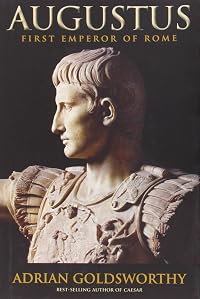
And, of course, there is Caesar. Holland concentrates more on his political scheming and vote getting than battlefield exploits, and his portrayal is less sympathetic than that in Adrian Goldsworthy’s biography. There is no doubting that his conquering of Gaul and invasion of Britain was an illegal – Caesar himself had recently introduced laws against such acts by governors –a quest for fame and fortune, but it’s hard not to see him as a good alternative to the chaos of the ostensible Republic. Even Cicero noted, after Caesar’s assassination, that the Romans had their freedom back. But did they have their Republic back? Even Holland admits that Caesar’s famous clemency against his foes was a sign he didn’t intend to be another Sulla. (On the other hand, Caesar, in the cleanup of Roman opponents in Spain, seems to have become increasingly less tolerant and more brutal towards these holdouts.)
Holland also looks at many other things. The increasing resort to armed gangs to murder and intimidate political opponents and their connection to the collegia, the small communities throughout Rome that sometimes combined organized crime and political action with more commercial activities. We hear of the many Roman women, shut out of former political life, who influenced events whether through mothering, whispering secrets with lovers, or being the center of political scandals. Following the austere, childhood of Caesar, we learn it was that it was not atypical. There are surprisingly few toys in Roman archaeological sites. Roman children were started early on their duties as citizens and mothers. We hear of Sibylline prophecies of doom for Rome.
The one thing I would quibble about is that I don’t think the book gives enough coverage to Sulla’s great political opponent, the Roman general Marius. In my reading of Roman history, Marius’ military reforms, while perhaps the only option at the time for solving the problems of levying citizens for Rome’s constant wars not only created the private armies he, Sulla, Caesar, Pompey, Mark Antony, and Octavian used but also laid the groundwork for the destruction of the Western Empire. As Adrian Goldsworthy argued in How Rome Fell, more Roman soldiers died there at the hands of other Roman soldiers than barbarian. show less
This is an extremely compelling and readable account of the Roman Republic starting with the usual place its decline is marked from, the murder of the reforming Gracchi Brothers in 133 and 123 BC.
Holland doesn’t follow the usual academic structure of following the chronology and political themes of the Republic’s collapse. He’s interested in capturing the personalities and the spirit of the Romans, the people that gave us so many cultural gifts and, up close, show more are so alien. The narrative flow wanders back in time on occasion, at just the right moment, to give us the context of the developing disaster. A timeline is helpfully provided to anchor the reader as well as maps and extensive notes, usually form ancient sources.
Of those ancient sources, Holland admits we have only a few of the accounts the Romans wrote of those times to build a story from.
Holland has two great themes, two causes for Republican collapse.
The first echoes the moralists of the time. The simple Roman people had become too rich, particularly after 146 BC when the wealth of the East and Carthaginian silver mines flowed to the capital. The territories, especially became too great of a source of wealth for the Roman elite not to grasp with rapacious publicani, private tax collectors, provincial governorships, and military commands to win even more honor and conquer more rich lands.
The second is the Roman culture, a worldview that emphasized competition, the pursuit of honor and glory but was so distrustful of the brilliant and ambitious that elaborate checks on their power had developed, the strange, cluttered system of Roman government. But, increasingly, the Roman elite were no longer willing to just bask in the limelight of a mere year’s long consulship, the Republic’s most coveted office. They wanted those jobs as governors and commanders and tax farmers.
The Romans, by Holland’s light, were a rapacious lot in terms of glory and money. What, asked the other peoples of the Mediterranean, could you expect from a city whose founders were suckled by wolves?
The wealth – extracted through tribute, taxes, and looting – of the East fueled a wave of villa building among the rich. Pompey built a vast theater. Fish farming became a crazy. Foppish young men, like Caesar in and too loose toga, began to be seen.
The famed Roman courts were one arena of this competition for honor and office. They had the general outlines of ours, but combat was conducted by private parties. Both defense and prosecutor often represented clients or political factions. In following the career of Cicero, we learn how he carefully honed his rhetoric – and his gestures and the stage managing of appropriate histrionics among the witnesses, audience, and accused – to become the most famed attorney in Rome and attain a consulship. Acknowledging the theatrics of the profession, Holland notes that prosecutor and actor derive from the same Latin word.
To show the truth behind some charges, Holland gives us the account of one publican charged with extorting from provincials. On conviction, he happily went into exile – at the site of his supposed crimes where the locals welcomed him back.
But he was not the usual sort of publican. King Mithridates of Pontus invaded Roman Greece. Despite his reputation with the Greeks as a “matricidal barbarian”, they worked with him in a vast conspiracy that, overnight, killed 80,000 Romans and Italians in Greece. But, despite the usual Roman claim that it conquered in self-defense or to preserve its honor, Sulla made a peace treaty with him. There were more important things than avenging dead Romans. He had to get back to Rome to battle with Marius.
And the East had other effects on the Roman patricians, the commanders of legions like Pompey and Caesar. In Egypt, Pompey began to become enamored of the deeds of Alexander the Great and his quest for a world state. In Holland’s view, Caesar, when he took up with Cleopatra, perhaps begin to envision a fusing of Oriental and Roman political ideals, a theocratic monarchy to rule the world. The East, after all, had less of a problem with god-kings than the prickly Romans did.
Even the unbending and austere Cato, after being governor of Cyprus, began to rationalize a Roman Empire as a force for good benefitting its non-Roman subjects.
Freedom was not some universal aspiration or desired state for the Romans. It was a chance to prove you were better than somebody else. Nobody questioned slavery – not even the slaves. Spartacus was unable to convince his followers in Italy to flee. Instead, they wanted to live there like their former masters and paid the price.
Holland’s book is full of incident and detail.
We get the background on Sulla, the first Roman to lead an army on Rome and to be involved in the killing of Roman commanders. A dissolute, poor young man lived with lowlifes – prostitutes, actors, and drag-queens -- until the age of 30 when he cashed in on his good looks and charm. A famous courtesan left him her estate. He would go on to become Rome’s first absolute dictator, a man who nailed names up on the Forum doors, a notice that their lives and fortunes were now forfeit. Yet, he never forgot his lowlife friends in his days of power, even paying the untalented ones to stop embarrassing themselves. And he lived up to his self-given nickname Felix, “Lucky”. He died in bed.
And, ambiguously, he resigned his dictatorship before he died. It was this – and his contempt of the plebians – that endeared him to some Senators and would eventually, in Holland’s eyes, cause them to hatch a plot against Caesar, a man, after achieving absolute power, who showed no signs of giving it up.
As for Pompey, Holland reminds us that he was not just some old guy bested by Caesar but a noted Roman general in his own day. The Roman Senate gave him a three-year remit to take care of piracy in the Mediterranean – the Roman war on terror. He accomplished his mission in three months. But Holland also shows he was a vain man always looking for acclaim and woefully self-deluded when called upon to defend Rome from Caesar. It turns out that he could not, just by stamping his feet, raise enough men to defeat Caesar, his former father-in-law. He was also mocked by his political opponents for being too fond of his wife.
The one Roman people didn’t make fun of was Crassus, the richest man in Rome, and a sinister political operator frequently switching sides. He once remarked that you never had enough money until you could pay for your own private army. Most famously, he made money by showing up at burning buildings and buying them from the owner. But he also made plenty of money by adding names to Sulla’s proscription list. The East held sway over him too. Searching for glory and riches, he led an army to one of Rome’s greatest defeats at Carrhae. His head ended up as a prop in a local performance of Euripedes’ The Bacchae.
And, of course, there is Caesar. Holland concentrates more on his political scheming and vote getting than battlefield exploits, and his portrayal is less sympathetic than that in Adrian Goldsworthy’s biography. There is no doubting that his conquering of Gaul and invasion of Britain was an illegal – Caesar himself had recently introduced laws against such acts by governors –a quest for fame and fortune, but it’s hard not to see him as a good alternative to the chaos of the ostensible Republic. Even Cicero noted, after Caesar’s assassination, that the Romans had their freedom back. But did they have their Republic back? Even Holland admits that Caesar’s famous clemency against his foes was a sign he didn’t intend to be another Sulla. (On the other hand, Caesar, in the cleanup of Roman opponents in Spain, seems to have become increasingly less tolerant and more brutal towards these holdouts.)
Holland also looks at many other things. The increasing resort to armed gangs to murder and intimidate political opponents and their connection to the collegia, the small communities throughout Rome that sometimes combined organized crime and political action with more commercial activities. We hear of the many Roman women, shut out of former political life, who influenced events whether through mothering, whispering secrets with lovers, or being the center of political scandals. Following the austere, childhood of Caesar, we learn it was that it was not atypical. There are surprisingly few toys in Roman archaeological sites. Roman children were started early on their duties as citizens and mothers. We hear of Sibylline prophecies of doom for Rome.
The one thing I would quibble about is that I don’t think the book gives enough coverage to Sulla’s great political opponent, the Roman general Marius. In my reading of Roman history, Marius’ military reforms, while perhaps the only option at the time for solving the problems of levying citizens for Rome’s constant wars not only created the private armies he, Sulla, Caesar, Pompey, Mark Antony, and Octavian used but also laid the groundwork for the destruction of the Western Empire. As Adrian Goldsworthy argued in How Rome Fell, more Roman soldiers died there at the hands of other Roman soldiers than barbarian. show less
Tom Holland is money. Dan Carlin had talked him up quite a bit on Hardcore History, but it has taken me a while to finally read the book. He has a breezy but fact and information filed style that I find very engaging.
He does an excellent job breaking down the self destruction of the Roman Republic, starting w Marius through the death of Caesar. He speaks to Augustus also. I don't think he is pulling any punches in this book, and does a good job of addressing the personal characteristics of the major players. I also like the contrasts b/t Rome and the eastern empires. Basically he states the Romans were tainted by the human god worship culture of the east.
He does an excellent job breaking down the self destruction of the Roman Republic, starting w Marius through the death of Caesar. He speaks to Augustus also. I don't think he is pulling any punches in this book, and does a good job of addressing the personal characteristics of the major players. I also like the contrasts b/t Rome and the eastern empires. Basically he states the Romans were tainted by the human god worship culture of the east.
Having just completed "Why Liberalism Failed " by Patrick Deneen, I thought it might be profitable to recur back to the the ancients for an example of pre-liberal politics as a source of wisdom that might suggest alternative manners and mores to serve as a guide to a post-liberal politics. In that spirit I turned to Tom Holland's "Rubicon - The Last Years of the Roman Republic" and can confidently report that not only is there "no going back", there's no reason to want to.
More than just a history of the last years of the Roman republic, Rubicon is a more extensive narrative that covers the battles with other cities on the Italian peninsula, the Punic wars, the Roman wars in Spain, Gaul, North Africa, Greece, western Asia and its first show more forays into Britain. The murders of the Gracchi brothers, the dictatorship of Sulla, the rise and fall of Pompey, the slave revolt led by Spartacus, the first triumvirate of Pompey, Caesar and Crassus, Caesar's conquest of Gaul and their leader Vercingetorix, the assassination of Caesar and the the subsequent civil war that saw the defeat of Brutus and Cassius at Philippi, the emergence of the new triumvirate of Octavian, Antony and Lepidus, Octavian's victory over Antony and Cleopatra at Actium and the eventual granting of a dictatorship for life to Octavian, henceforth to be known as Caesar Augustus are all chronicled ably and entertainingly by Holland. Holland relies principally on the ancient authors particularly Plutarch, Cicero, who is a major player in the drama, Appian and Valerius Maximus.
It could be said that Rubicon serves as an illustration of the history behind the argument of Federalist 10 concerning the objects of government and the problems posed to civil peace by the activities of factions. The biographies of the best of the Romans concerns their ongoing efforts to climb the greasy pole to the top of the city and the political alliances that are formed around family connections, outright bribery, the use of the courts to proscribe political enemies, switching sides for temporary advantage, marriages and divorces of convenience, the employment of mobs, paying off armies not only with the wealth looted from foreign conquests but land looted from domestic enemies. In all it is not a very edifying spectacle.
There is also abundant evidence that shows that the sins of liberalism described by Deneen in his book are better understood as endemic to human beings. By way of example, consider this paragraph on Roman mining operations in Spain.
"The mines that Rome had annexed from Carthage more than a century previously had been handed over to the publicani, who had proceeded to exploit them with their customary gusto, A single network of tunnels might spread for more than a hundred square miles, and might provide more than forty thousand slaves with a living death. Over the pockmarked landscape there would invariably hang a pall of smog, belched out through the smelting furnaces through giant chimneys, and so heavy with chemicals that it burned the naked skin and turned it white. Birds would die if they flew through fumes. As Roman power spread the gas clouds were never far behind."
The above relies on a book published in 1994 by a J. Hughes titled "Pan's Travail: Environmental Problems of the Ancient Greeks and Romans". No liberal democracy, no capitalism, no Industrial Revolution required. show less
More than just a history of the last years of the Roman republic, Rubicon is a more extensive narrative that covers the battles with other cities on the Italian peninsula, the Punic wars, the Roman wars in Spain, Gaul, North Africa, Greece, western Asia and its first show more forays into Britain. The murders of the Gracchi brothers, the dictatorship of Sulla, the rise and fall of Pompey, the slave revolt led by Spartacus, the first triumvirate of Pompey, Caesar and Crassus, Caesar's conquest of Gaul and their leader Vercingetorix, the assassination of Caesar and the the subsequent civil war that saw the defeat of Brutus and Cassius at Philippi, the emergence of the new triumvirate of Octavian, Antony and Lepidus, Octavian's victory over Antony and Cleopatra at Actium and the eventual granting of a dictatorship for life to Octavian, henceforth to be known as Caesar Augustus are all chronicled ably and entertainingly by Holland. Holland relies principally on the ancient authors particularly Plutarch, Cicero, who is a major player in the drama, Appian and Valerius Maximus.
It could be said that Rubicon serves as an illustration of the history behind the argument of Federalist 10 concerning the objects of government and the problems posed to civil peace by the activities of factions. The biographies of the best of the Romans concerns their ongoing efforts to climb the greasy pole to the top of the city and the political alliances that are formed around family connections, outright bribery, the use of the courts to proscribe political enemies, switching sides for temporary advantage, marriages and divorces of convenience, the employment of mobs, paying off armies not only with the wealth looted from foreign conquests but land looted from domestic enemies. In all it is not a very edifying spectacle.
There is also abundant evidence that shows that the sins of liberalism described by Deneen in his book are better understood as endemic to human beings. By way of example, consider this paragraph on Roman mining operations in Spain.
"The mines that Rome had annexed from Carthage more than a century previously had been handed over to the publicani, who had proceeded to exploit them with their customary gusto, A single network of tunnels might spread for more than a hundred square miles, and might provide more than forty thousand slaves with a living death. Over the pockmarked landscape there would invariably hang a pall of smog, belched out through the smelting furnaces through giant chimneys, and so heavy with chemicals that it burned the naked skin and turned it white. Birds would die if they flew through fumes. As Roman power spread the gas clouds were never far behind."
The above relies on a book published in 1994 by a J. Hughes titled "Pan's Travail: Environmental Problems of the Ancient Greeks and Romans". No liberal democracy, no capitalism, no Industrial Revolution required. show less
Rubicon is focused on the events leading to the end of the Republic, which in this age of authoritarian ascendancy is worth a second look. The full cast of famous characters and events are here and retold with verve and imagination. There is a lot to cover but Holland manages to find a good balance. Roman culture placed a premium on competition and reputation to such an extent public good was neglected by leaders who spent their times and energies literally back stabbing one another. That's the impression anyway. And so it was civilian rule broke apart replaced by a military dictatorship.
I was happy to see Holland did not shy from the slavery question, how widespread it was and how the civilization could not have existed without this show more cruel and pitiless institution - something to remember when admiring Roman innovation, like finding pleasure in the beauty of American South work camps (so-called plantations) whose beauty was a mask covering it's ugly purpose, the subjugation of peoples they barely considered human for the purpose of material gain. It was in this environment Christianity took root. But that's for another book. show less
I was happy to see Holland did not shy from the slavery question, how widespread it was and how the civilization could not have existed without this show more cruel and pitiless institution - something to remember when admiring Roman innovation, like finding pleasure in the beauty of American South work camps (so-called plantations) whose beauty was a mask covering it's ugly purpose, the subjugation of peoples they barely considered human for the purpose of material gain. It was in this environment Christianity took root. But that's for another book. show less
I elected to read Rubicon: The Last Years of the Roman Republic by Tom Holland for a number of reasons, not least of which was that it came to me highly recommended by a friend well-read in Classical Studies with a discerning eye both for historical accuracy and compelling narrative. In each of these arenas, Rubicon does not disappoint. Moreover, I had encountered Holland once before with his Persian Fire, and considered it one of the finest histories of the Greco-Persian Wars I have ever read, which certainly bode well for this treatment of the fall of the Roman Republic. Finally, I chose it because I lack in Roman studies the depth that I can claim in the history of Ancient Greece. I have only studied Rome previously on a cursory show more level, so I cannot speak to the series of historical events, the cast of characters, the primary sources, the historiography, the controversies, with nearly the same confidence I can bring to a discussion of similar features of the ancient Greek milieu. I had faith that Holland would flesh out the grand scheme of the backdrop to the tale as well as bring talent to sketching the characteristics of the individuals that loomed large in the chronicle. Once more, Holland did not let me down.
Like Persian Fire before it, Holland’s writing targets the nexus between scholarly and popular history and delivers an outstanding narrative that encapsulates both impeccable attention to notes and sources, as well as an inspired writing style that indeed carries the reader with language, construction and style like a work of fiction by a Cormac McCarthy or a Stephen King that cannot easily be set aside. In short, it is highly unlike the majority of history that makes its way into books these days, either for a scholarly or popular audience. On the scholarly side, David Foster Wallace was accurately condemnatory when he declared, with tongue only part in cheek, that: “The truth is that most US academic prose is appalling – pompous, abstruse, claustral, inflated, euphuistic, pleonastic, solecistic, sesquipidelian, Heliogabaline, occluded, obscure, jargon-ridden, empty: resplendently dead.” Even the best scholarly writing is often painfully dull. Popular history is often much better written because it appeals to a wider audience, but still the narrative can frequently get bogged down – even at the hands of a master chronicler like Walter Isaacson – by the converse effort to feed details to the serious reader who might look with condescension upon the popular segment. Tom Holland, in Rubicon as in Persian Fire, puts both sides to shame with his skillful narrative that does not neglect the strict scholarly discipline of facts and sources, as displayed with impressive distinction in his endnotes and bibliography, without sacrificing top-notch writing skills. Reviewer Greg Woolf pays the highest tribute to Holland when he underscores that “. . . enormous care has been taken over scholarly precision” while at the same time noting that the author writes “with a gripping narration … like an action movie, pulling back from the ferocious pace of events for the odd vivid sighting shot …” Holland makes it look easy, while the reader has to know that it is decidedly anything but. Of course, Holland is not your typical academic or popular writer: he holds a degree from Cambridge as well as a Ph.D from Oxford, and is both a novelist and radio personality in Britain.
Holland launches Rubicon at the edge of the fateful decision of Julius Caesar in 49 BCE to brook law and tradition and take his legions over a forgotten border marked by a lost landmark -- a stream called “Rubicon” -- to enter the environs of the Roman Republic with an army, contrary to the very principles of the state he sought to dominate. Then he transports us back to the dawn of the founding of Rome, an admixture of legend and history, and masterfully walks us forward to Rubicon.
Most of the narrative, however, is focused upon the last century in the life of the Republic, and here he engagingly brings to life all of the characters many outside of the field may have heard of but know little about: Sulla, Pompey, Brutus, Antony, Catulus, Crassus, Cato, Cicero, Caesar and many more: some familiar, many less so. In fact, if one was to nitpick shortcomings of this fine book – and that is not easy to do – I would suggest an addition of an alphabetical appendix of this wide cast of characters, with details to chart their complicated genealogies, relationships and shifting alliances. As might be gathered from the brief concatenation above, many figures have names that begin with the letter “C” – Caelius, Catiline, Cethegus, Clodius, Cinna, to name just a few other examples – and such a table would be a useful addition to a volume that already boasts a strong timeline, competent maps and a detailed index as well as voluminous endnotes and a bibliography. But perhaps that is just a quibble. In any event, it is in his deft use of biographical sketches to put flesh on these key figures who lived some two millennia ago in a world not easily accessible to the modern reader that Holland’s history hits its truly magnificent stride. It is here that Holland really excels, resurrecting Roman culture and colorful individuals in a manner not typically found in a textbook treatment of this period.
I was reminded to some degree of James Davidson’s idiosyncratic and often oddball snapshot of daily life in Classical Athens, Courtesans & Fishcakes, when Holland discusses its very echo in the Roman elite’s obsessive, nearly fetishistic delight in gourmet fish dishes – pisciculture -- and in anecdotes about the sexual proclivities of notable figures, as in the scandal of Caesar’s reputation as a “. . . man for every woman and a woman for every man.” -- in a Republic that is still dominated by a kind of austerity, Stoicism and a pronounced puritanical view. With Holland, these are not just dead white men walking about amid now crumbled white marble, but the heart and soul of a state and an era we have not fully lost but yet permitted ourselves to be long disconnected from. Holland brilliantly makes the connection again. (As a sidenote, when I pulled up the Woolf review after reading Rubicon, I was delighted when he refers to Fishcakes and dangles it out as an attractive target to replicate for those who can write like Holland and want to bring something similar to bear on a grand scale for Roman culture.)
Two great themes seem to dominate Holland’s history of the latter century of the Republic that leads us to Rubicon and ruin. The first is the influence of moneyed interests in the Republic – always somewhat frowned upon despite the fact that political dominance was ever in the hands of the wealthy, aristocratic elite – especially as the grip of empire brought the east in the bequest of Pergamum under Roman control and paved the way both for exploitation and for the ascendance of mega-wealth concerns to dominate the interests of the state.
The second lies in the tradition of Roman elites to seek the greatest level of political success through insatiable greed for power mounted on the backs of efforts to thoroughly crush their opponents, so much so that they became naively quiescent and insensible to the risk to the Republic of this ever escalating brinksmanship. As Holland deftly notes on the very eve of cataclysm:
The mood of the Republic was fretful, but not apocalyptic. Why would it have been otherwise? Rome’s system of government had endured for almost five hundred years. It had won her a greatness so surpassing that not a king in the world had been able to withstand her. Above all, it gave to every citizen the measurement of himself, the reassurance that he was not a subject or a slave, but a man. A Roman could no more conceive of the Republic’s collapse than he could imagine himself an Egyptian or a Gaul. Fearful of the gods’ anger he may have been, but not to the point of dreading the impossible.
This is heady stuff, especially in light of Holland’s admonishment in the Preface that we should not take lightly the lessons of the past in the future of our own republic. He doesn’t draw the often overstated and sometimes hyperbolic parallels with the past that historians like Donald Kagan and Victor Davis Hanson frequently do as they mis-match contemporary right-wing ideology with the ancient Greek Peloponnesian War, but he does offer a wise cautionary tale written in the early phase of George W. Bush’s America, with its political paean to wealth-creation and its conceit of American power. “Rome was the first,” Holland argues, “and – until recently – the only republic ever to rise to a position of world power, and it is indeed hard to think of an episode of history that holds up a more intriguing mirror to our own.” In the same Preface, Holland reminds us that republics are indeed fragile and vulnerable and mistakes can be highly consequential, such that Caesar’s advance across that otherwise insignificant stream ended a long era of free cities in the Mediterranean. Rome had been the last: “And then Caesar crossed the Rubicon, the Republic imploded, and none was left at all. As a result, a thousand years of civic self-government were brought to an end, and not for another thousand, and more, would it become a living reality again.”
Overall, Rubicon manifests itself as a brilliant work of history dressed in an outstanding narrative. If it has a weakness, it is in my estimation too short to fully encompass the tale to be told. So many chapters are given to the history that takes us to the dawn of the crossing of the Rubicon, that it seems as if too little time is devoted to what follows. But this too, I suppose, is a quibble: what other author could effectively present us with a readable, fascinating history of the Roman Republic in so few as three hundred seventy five pages? Moreover, Holland does not hesitate to underscore for us just how consequential its end was to be not only for Rome, but for all of the rest of the history of Western Civilization -- so much so that, as Holland effectively argues: “So fateful was Caesar’s crossing of the Rubicon that it has come to stand for every fateful step taken ever since.” show less
Like Persian Fire before it, Holland’s writing targets the nexus between scholarly and popular history and delivers an outstanding narrative that encapsulates both impeccable attention to notes and sources, as well as an inspired writing style that indeed carries the reader with language, construction and style like a work of fiction by a Cormac McCarthy or a Stephen King that cannot easily be set aside. In short, it is highly unlike the majority of history that makes its way into books these days, either for a scholarly or popular audience. On the scholarly side, David Foster Wallace was accurately condemnatory when he declared, with tongue only part in cheek, that: “The truth is that most US academic prose is appalling – pompous, abstruse, claustral, inflated, euphuistic, pleonastic, solecistic, sesquipidelian, Heliogabaline, occluded, obscure, jargon-ridden, empty: resplendently dead.” Even the best scholarly writing is often painfully dull. Popular history is often much better written because it appeals to a wider audience, but still the narrative can frequently get bogged down – even at the hands of a master chronicler like Walter Isaacson – by the converse effort to feed details to the serious reader who might look with condescension upon the popular segment. Tom Holland, in Rubicon as in Persian Fire, puts both sides to shame with his skillful narrative that does not neglect the strict scholarly discipline of facts and sources, as displayed with impressive distinction in his endnotes and bibliography, without sacrificing top-notch writing skills. Reviewer Greg Woolf pays the highest tribute to Holland when he underscores that “. . . enormous care has been taken over scholarly precision” while at the same time noting that the author writes “with a gripping narration … like an action movie, pulling back from the ferocious pace of events for the odd vivid sighting shot …” Holland makes it look easy, while the reader has to know that it is decidedly anything but. Of course, Holland is not your typical academic or popular writer: he holds a degree from Cambridge as well as a Ph.D from Oxford, and is both a novelist and radio personality in Britain.
Holland launches Rubicon at the edge of the fateful decision of Julius Caesar in 49 BCE to brook law and tradition and take his legions over a forgotten border marked by a lost landmark -- a stream called “Rubicon” -- to enter the environs of the Roman Republic with an army, contrary to the very principles of the state he sought to dominate. Then he transports us back to the dawn of the founding of Rome, an admixture of legend and history, and masterfully walks us forward to Rubicon.
Most of the narrative, however, is focused upon the last century in the life of the Republic, and here he engagingly brings to life all of the characters many outside of the field may have heard of but know little about: Sulla, Pompey, Brutus, Antony, Catulus, Crassus, Cato, Cicero, Caesar and many more: some familiar, many less so. In fact, if one was to nitpick shortcomings of this fine book – and that is not easy to do – I would suggest an addition of an alphabetical appendix of this wide cast of characters, with details to chart their complicated genealogies, relationships and shifting alliances. As might be gathered from the brief concatenation above, many figures have names that begin with the letter “C” – Caelius, Catiline, Cethegus, Clodius, Cinna, to name just a few other examples – and such a table would be a useful addition to a volume that already boasts a strong timeline, competent maps and a detailed index as well as voluminous endnotes and a bibliography. But perhaps that is just a quibble. In any event, it is in his deft use of biographical sketches to put flesh on these key figures who lived some two millennia ago in a world not easily accessible to the modern reader that Holland’s history hits its truly magnificent stride. It is here that Holland really excels, resurrecting Roman culture and colorful individuals in a manner not typically found in a textbook treatment of this period.
I was reminded to some degree of James Davidson’s idiosyncratic and often oddball snapshot of daily life in Classical Athens, Courtesans & Fishcakes, when Holland discusses its very echo in the Roman elite’s obsessive, nearly fetishistic delight in gourmet fish dishes – pisciculture -- and in anecdotes about the sexual proclivities of notable figures, as in the scandal of Caesar’s reputation as a “. . . man for every woman and a woman for every man.” -- in a Republic that is still dominated by a kind of austerity, Stoicism and a pronounced puritanical view. With Holland, these are not just dead white men walking about amid now crumbled white marble, but the heart and soul of a state and an era we have not fully lost but yet permitted ourselves to be long disconnected from. Holland brilliantly makes the connection again. (As a sidenote, when I pulled up the Woolf review after reading Rubicon, I was delighted when he refers to Fishcakes and dangles it out as an attractive target to replicate for those who can write like Holland and want to bring something similar to bear on a grand scale for Roman culture.)
Two great themes seem to dominate Holland’s history of the latter century of the Republic that leads us to Rubicon and ruin. The first is the influence of moneyed interests in the Republic – always somewhat frowned upon despite the fact that political dominance was ever in the hands of the wealthy, aristocratic elite – especially as the grip of empire brought the east in the bequest of Pergamum under Roman control and paved the way both for exploitation and for the ascendance of mega-wealth concerns to dominate the interests of the state.
The second lies in the tradition of Roman elites to seek the greatest level of political success through insatiable greed for power mounted on the backs of efforts to thoroughly crush their opponents, so much so that they became naively quiescent and insensible to the risk to the Republic of this ever escalating brinksmanship. As Holland deftly notes on the very eve of cataclysm:
The mood of the Republic was fretful, but not apocalyptic. Why would it have been otherwise? Rome’s system of government had endured for almost five hundred years. It had won her a greatness so surpassing that not a king in the world had been able to withstand her. Above all, it gave to every citizen the measurement of himself, the reassurance that he was not a subject or a slave, but a man. A Roman could no more conceive of the Republic’s collapse than he could imagine himself an Egyptian or a Gaul. Fearful of the gods’ anger he may have been, but not to the point of dreading the impossible.
This is heady stuff, especially in light of Holland’s admonishment in the Preface that we should not take lightly the lessons of the past in the future of our own republic. He doesn’t draw the often overstated and sometimes hyperbolic parallels with the past that historians like Donald Kagan and Victor Davis Hanson frequently do as they mis-match contemporary right-wing ideology with the ancient Greek Peloponnesian War, but he does offer a wise cautionary tale written in the early phase of George W. Bush’s America, with its political paean to wealth-creation and its conceit of American power. “Rome was the first,” Holland argues, “and – until recently – the only republic ever to rise to a position of world power, and it is indeed hard to think of an episode of history that holds up a more intriguing mirror to our own.” In the same Preface, Holland reminds us that republics are indeed fragile and vulnerable and mistakes can be highly consequential, such that Caesar’s advance across that otherwise insignificant stream ended a long era of free cities in the Mediterranean. Rome had been the last: “And then Caesar crossed the Rubicon, the Republic imploded, and none was left at all. As a result, a thousand years of civic self-government were brought to an end, and not for another thousand, and more, would it become a living reality again.”
Overall, Rubicon manifests itself as a brilliant work of history dressed in an outstanding narrative. If it has a weakness, it is in my estimation too short to fully encompass the tale to be told. So many chapters are given to the history that takes us to the dawn of the crossing of the Rubicon, that it seems as if too little time is devoted to what follows. But this too, I suppose, is a quibble: what other author could effectively present us with a readable, fascinating history of the Roman Republic in so few as three hundred seventy five pages? Moreover, Holland does not hesitate to underscore for us just how consequential its end was to be not only for Rome, but for all of the rest of the history of Western Civilization -- so much so that, as Holland effectively argues: “So fateful was Caesar’s crossing of the Rubicon that it has come to stand for every fateful step taken ever since.” show less
The end of the Roman Republic and the cast of characters responsible for it. While I can see how readers might view this account as History Lite, the application of tabloid journalism and gossip to the study of history, I would disagree. This is a fun, brisk, alive account of the period. Well written and to the point, one is kept engaged by crispy bits of gossip, constant renversements de situation, and a great cast. Cinna, Sulla, Caesar, Pompey, Cato, Cicero, Cleopatra, and I could go on. Looking for an engaging overview of one of the golden age of Rome, look no further. A good introduction, and a basis for further investigation of a subject matter that will never exhaust itself.
Members
- Recently Added By
Published Reviews
ThingScore 100
As with most academics reviewing a "popular" book, I approached Rubicon with a certain amount of trepidation. The rather hammy sub-title seemed to suggest the worst. However what is inside the covers is a different matter altogether. This is a well-researched, well-written overview of the Roman republic. It should serve as a model of exactly how a popular history of the classical world should show more be written. show less
added by oszymandias
Lists

Best General History Books
103 works; 23 members
Non-Fiction Worth Reading
1,025 works; 264 members

Antigua Roma
39 works; 2 members

TED 2013 Summer Reading List
190 works; 13 members

r/History Recommended Reading List
603 works; 12 members

THE WAR ROOM
813 works; 24 members

Kindle Non-Fiction
222 works; 1 member

2026 Reading Challenge
12 works; 1 member

BBC Radio 4 Bookclub
341 works; 13 members
Talk Discussions
Past Discussions
Rubicon by Tom Holland in Ancient History (December 2009)
Author Information

30+ Works 14,184 Members
Some Editions
Awards and Honors
Series
Belongs to Publisher Series
Common Knowledge
- Canonical title*
- Rubicon. Het einde van de Romeinse Republiek
- Original title
- Rubicon
- Alternate titles
- Rubicon: The Triumph and Tragedy of the Roman Republic; Rubicon: The Last Years of the Roman Republic
- Original publication date
- 2003
- People/Characters
- Marcus Tullius Cicero; Julius Caesar; Cleopatra VII; Pompey the Great; Spartacus; Virgil (show all 26); Marcus Antonius; Augustus Caesar; Cato; Clodius; Tiberius Sempronius Gracchus; Gaius Gracchus; Mithridates VI, King of Pontus; Marcus Junius Brutus; Marcus Caelius Rufus; Quintus Lutatius Catulus; Marcus Licinius Crassus; Quintus Hortensius Hortalus; Lucius Licinius Lucullus; Gaius Marius; Lucius Cornelius Sulla; Sulla; Crassus; Brutus; Octavian; Gnaeus Pompeius Magnus
- Important places
- Rome, Italy; Roman Empire; Mediterranean Sea; Rubicon River; Roman Republic; Gaul
- Important events
- Battle of Cannae (216 BCE-08-02); Battle of Carrhae (53 BCE-05-06); Death of Julius Caesar (44 BCE-03-15); Battle of Actium (31 BCE-09-02)
- Epigraph
- None
- Dedication
- For Eliza. Welcome to the world.
- First words
- In the beginning, before the Republic, Rome was ruled by kings. - Chapter 1
January 10th, the seven-hundred-and-fifth year since the foundation of Rome, the forty-ninth before the birth of Christ. - Prologue - Last words
- (Click to show. Warning: May contain spoilers.)That was for a new generation, and a new age, to prove
- Blurbers
- Everitt, Anthony; McEwan, Ian; Matthews, Christopher; Stothard, Peter; Miles, Richard; Hart, Christopher (show all 24); Roberts, Andrew; Wilson, A.N.; Jones, Griff Rhys; Bainbridge, Beryl; Bayley, John; Trollope, Joanna; Johnson, Boris; Speller, Elizabeth; Massie, Allan; Eyres, Harry; Raphael, Frederic; Harris, Robert; Everitt, Anthony; McLynn, Frank; Wishart, David; Hastings, Max; Jones, Peter; Brennan, Corey
*Some information comes from Common Knowledge in other languages. Click "Edit" for more information.
Classifications
- Genres
- History, General Nonfiction, Nonfiction
- DDC/MDS
- 937 — History & geography History of ancient world (to ca. 499) Italian Peninsula to 476 and adjacent territories to 476
- LCC
- DG266 .H64 — History of Europe, Asia, Africa and Oceania City History of Italy Ancient Italy. Rome to 476 History By period Kings and Republic, 753-27 B.C. Republic, 509-27 Fall of the Republic and establishment Julius Caesar. First Triumvirate, 60
- BISAC
Statistics
- Members
- 4,253
- Popularity
- 3,599
- Reviews
- 79
- Rating
- (4.02)
- Languages
- 14 — Czech, Dutch, English, Finnish, German, Greek, Italian, Japanese, Norwegian (Bokmål), Portuguese, Romanian, Spanish, Swedish, Chinese, traditional
- Media
- Paper, Audiobook, Ebook
- ISBNs
- 49
- ASINs
- 22