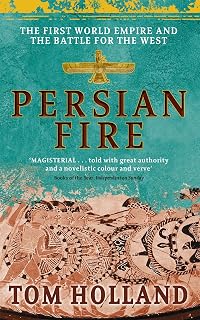
Persian Fire: The First World Empire and the Battle for the West
by Tom Holland
On This Page
Description
In the fifth century BC, a global superpower was determined to bring truth and order to what it regarded as two terrorist states. The superpower was Persia, incomparably rich in ambition, gold, and men. The terrorist states were Athens and Sparta, eccentric cities in a poor and mountainous backwater: Greece. The story of how their citizens took on the Great King of Persia, and thereby saved not only themselves but Western civilization as well, is as heart-stopping and fateful as any episode show more in history. Tom Holland's brilliant study of these critical Persian Wars skillfully examines a conflict of critical importance to both ancient and modern history. show lessTags
Recommendations
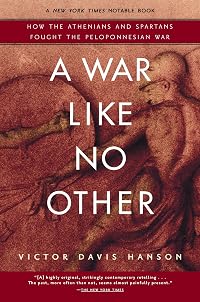
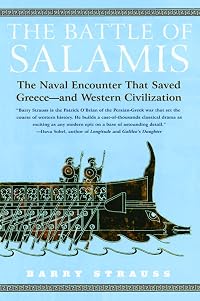
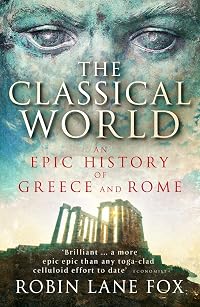
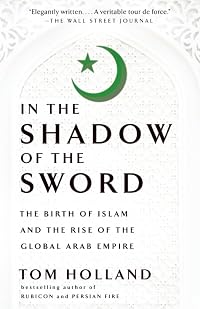

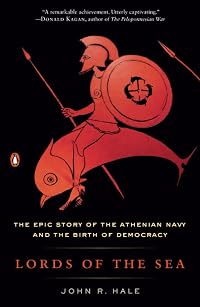
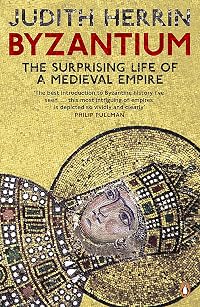

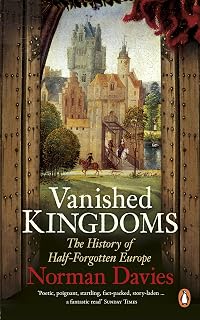
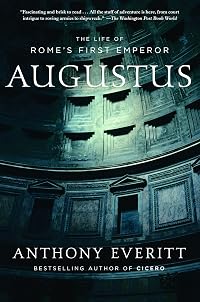
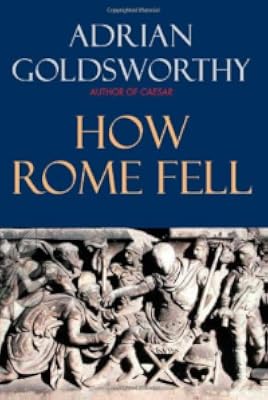
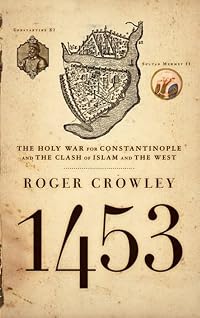
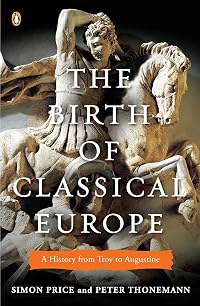
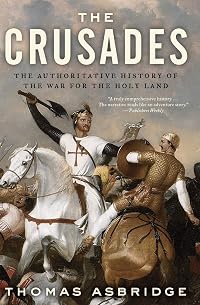
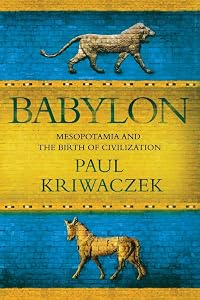
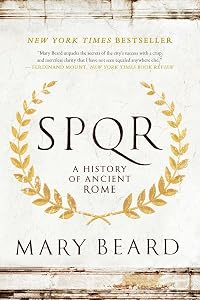
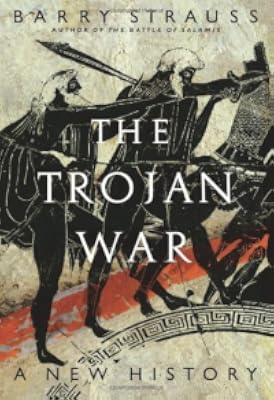
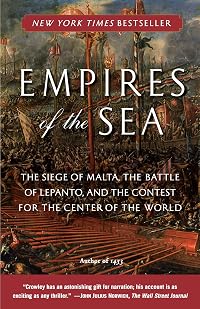

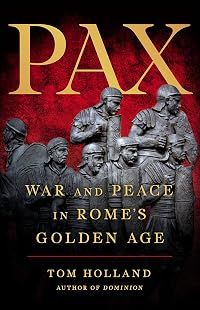

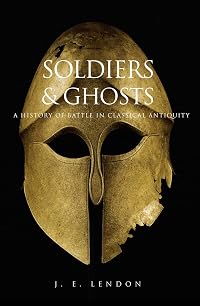
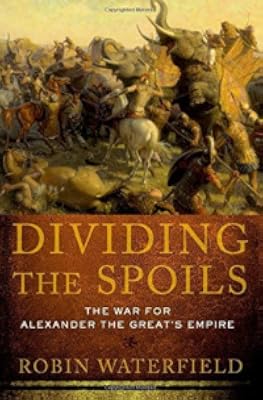
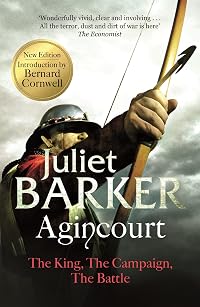


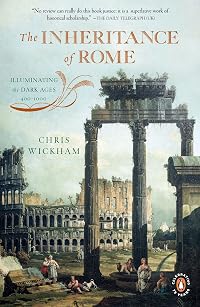
Member Recommendations
santhony The same narrative approach to history.
20
Member Reviews
If you love a good history story, well-written and compelling, then this is for you. Perhaps a bit too in-depth even, especially when it comes to the endless disputes and power shifts within the Greek cities. But Tom Holland is a master of his craft, I won't deny that.
Only, if you want to know what really happened 2,500 years ago in the struggle between the Greeks and the Persians, no, this is definitely not for you. What Holland does is essentially retell, cobble together, and even embellish the stories that circulated about the Greek Persian Wars. Granted, he certainly cites his sources, and there's a touch of criticism here and there. But this isn't history, far from it. But Holland is certainly a skilled storyteller.
More in my show more History Account on Goodreads: https://www.goodreads.com/review/show/8327779606 show less
Only, if you want to know what really happened 2,500 years ago in the struggle between the Greeks and the Persians, no, this is definitely not for you. What Holland does is essentially retell, cobble together, and even embellish the stories that circulated about the Greek Persian Wars. Granted, he certainly cites his sources, and there's a touch of criticism here and there. But this isn't history, far from it. But Holland is certainly a skilled storyteller.
More in my show more History Account on Goodreads: https://www.goodreads.com/review/show/8327779606 show less
Despite the name, this book is very much told from a Greek perspective with the narrative hewing closely to the "300" template of brave, liberty-loving Greeks battling for the fate of their democracy against the decadent east giving birth to the Western civilization in the process. While this felt like the overall thrust of the narrative, Holland is a serious historian who keeps emphasizing that this is an oversimplification and that the truth is more complex. Despite these warnings, the vibe never really goes away. This is almost certainly due to the abundance of source materials on the Greek side (courtesy Herodotus) and the total dearth thereof on the Persian side. Still, I wish the book had focused a little less on the intricacies show more of Athenian and Spartan politics and a little more on the big picture. After all, it seems to me like "army with overstretched supply lines couldn't overcome a geographically well-entrenched enemy" is a perfectly good way to understand these wars instead of framing it in terms of Eastern effeteness vs. Western vigour. show less
Greeks vs. Persians, 5th century BC
Finally finished! This one went on forever, mostly because I kept misplacing the book. But I'm done, and I have to say, I don't like any of these guys very much. I was honestly hoping for the Persians to beat up the Greeks (again), but of course, Sparta and all that. I really enjoyed it, but a little too much detail. I wanted to get on with the main event, but there was a LOT of build up and a lot of names to keep straight. I could have done with a glossary in the back to keep them all straight. And after the intro which ties in much of the conflict between Middle East and the West to this very conflict, I would like to have the author wrap it up again and tie it back into the present. Still, 4 stars.
Finally finished! This one went on forever, mostly because I kept misplacing the book. But I'm done, and I have to say, I don't like any of these guys very much. I was honestly hoping for the Persians to beat up the Greeks (again), but of course, Sparta and all that. I really enjoyed it, but a little too much detail. I wanted to get on with the main event, but there was a LOT of build up and a lot of names to keep straight. I could have done with a glossary in the back to keep them all straight. And after the intro which ties in much of the conflict between Middle East and the West to this very conflict, I would like to have the author wrap it up again and tie it back into the present. Still, 4 stars.
A lot more details in here than I can possibly remember! But just to get Marathon and Salamis straight, that's something! Holland does a great job of telling a story, keeping things motivated enough that the book is not just a list of names and dates... though there are a lot of names and dates!
I particularly loved the key turning point in the book, where Themistocles tricks Xerxes into getting the Persian fleet bogged down in the straits by Salamis... or how did this really go down? Holland outlined the possibilities and didn't try to untangle them, didn't insist on one version of the story.
I particularly loved the key turning point in the book, where Themistocles tricks Xerxes into getting the Persian fleet bogged down in the straits by Salamis... or how did this really go down? Holland outlined the possibilities and didn't try to untangle them, didn't insist on one version of the story.
Tom Holland's Persian Fire is the type of history book that will make you want to read more history books. While it is 370+ pages long, there is a sense here that you need all those pages to cover the vast sprawling histories of both Ancient Greece and the Persian Empire. Holland's prose flows nicely and feels like you are right in the thick of it. From the formation of one of the world's first democracies to the battle at Thermopylae, there is a lot to enjoy here.
A fan of history, but never really into the ancient world, this was my first serious book about the Persian and Greek empires of the 5th century BC. Tom Holland writes with passion, authority and immediacy. This reads more like reportage than history. He clearly states the chronological narrative, but also brings alive the key figures involved, thus painting a rich picture of life and politics in this ancient world.
Clearly, if the Persian Empire had overrun Greece the history of what we call the Western world would have been very different, although from 2,500 years way, exactly how different is hard to judge. The Persian Empire could have stretched into mainland Europe, Italy and further, with consequences for the Roman Empire as well show more as the impact on thought and societal development in Greece.
I think this is a great example of good writing as well as good history. show less
Clearly, if the Persian Empire had overrun Greece the history of what we call the Western world would have been very different, although from 2,500 years way, exactly how different is hard to judge. The Persian Empire could have stretched into mainland Europe, Italy and further, with consequences for the Roman Empire as well show more as the impact on thought and societal development in Greece.
I think this is a great example of good writing as well as good history. show less
I've just finished reading this book again for the second time through. In doing so, Tom Holland has cemented his place atop my list of favorite historical authors. He excels in giving an almost novelistic description of events which took place some 2,500 years ago; no mean feat, considering this gulf in time which may seem to irrevocably distance the events in "Persian Fire" from the modern day.
At 372 pages of actual text, it may seem a bit of a slog, and yet it is far from it. Holland's captivating prose carries the reader from the peaks of the Zagros to the crags of central Greece, flashing the author's extensive vocabulary while still allowing for the occasional colloquialism; I can't remember the last time I read a historical work show more that employed modern profanity without sounding sophomoric, and yet Holland somehow pulls it off.
This book serves the needs of both novices and seasoned scholars alike; providing a wealth of background material leading up to that fateful first showdown between east and west, it weaves a vivid tapestry replete with fascinating characters, exotic peoples, and monumental events of a time gone by which have had lasting ramifications all the way up to the present day.
I cannot recommend this book highly enough. show less
At 372 pages of actual text, it may seem a bit of a slog, and yet it is far from it. Holland's captivating prose carries the reader from the peaks of the Zagros to the crags of central Greece, flashing the author's extensive vocabulary while still allowing for the occasional colloquialism; I can't remember the last time I read a historical work show more that employed modern profanity without sounding sophomoric, and yet Holland somehow pulls it off.
This book serves the needs of both novices and seasoned scholars alike; providing a wealth of background material leading up to that fateful first showdown between east and west, it weaves a vivid tapestry replete with fascinating characters, exotic peoples, and monumental events of a time gone by which have had lasting ramifications all the way up to the present day.
I cannot recommend this book highly enough. show less
Members
- Recently Added By
Published Reviews
Thanks for such a fascinating essay. It sparked much contemplation, which I will pursue. https://minicrossword.io/
added by heidenmaverick
Lists

Top Five Books of 2013
1,562 works; 721 members

Non-Fiction Worth Reading
1,015 works; 255 members

Books bought at library sales
98 works; 4 members

r/History Recommended Reading List
603 works; 12 members

THE WAR ROOM
813 works; 24 members

Kindle Non-Fiction
221 works; 1 member

Best 21st Century Books (So Far)
670 works; 85 members

In Our Time books
4,934 works; 2 members
Author Information

30+ Works 14,184 Members
Awards and Honors
Awards
Common Knowledge
- Canonical title*
- Marathon : det persiska imperiet och kampen om västerlandet
- Original title
- Persian Fire : The First World Empire and the Battle for the West
- Original publication date
- 2005
- People/Characters
- Xerxes I
- Important places
- Athens, Greece; Greece, Ancient; Persian Empire; Sparta, Greece; Greece; Persia
- Important events
- Greco-Persian Wars (499 BCE | 449 BCE); Persian Wars; Second Persian Invasion of Greece (480 BCE | 479 BCE); Battle of Salamis (480 BCE-09)
- Epigraph
- Listen now to a further point: no mortal thing
Has a beginning, nor does it end in death and obliteration;
There is only a mixing and then a separating of what was mixed,
But by mortal men these processes are named â... (show all)€śbeginnings.”
Empedocles - Dedication
- For Jamie and Caroline
- First words
- The gods, having scorned to mold a world that was level, had preferred instead to divide it into two.
- Last words
- (Click to show. Warning: May contain spoilers.)Even Nemesis, perhaps, might have permitted herself a smile.
- Original language
- English
*Some information comes from Common Knowledge in other languages. Click "Edit" for more information.
Classifications
Statistics
- Members
- 2,415
- Popularity
- 8,080
- Reviews
- 40
- Rating
- (4.02)
- Languages
- 11 — Chinese, Dutch, English, Finnish, German, Greek, Italian, Norwegian (Bokmål), Portuguese, Spanish, Swedish
- Media
- Paper, Audiobook, Ebook
- ISBNs
- 33
- UPCs
- 1
- ASINs
- 14