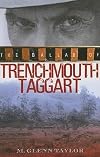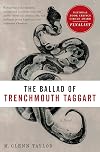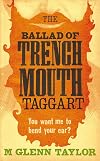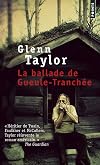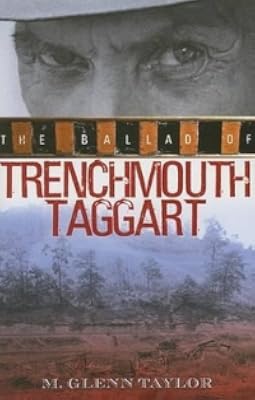
The Ballad of Trenchmouth Taggart
by M. Glenn Taylor
On This Page
Description
Meet Trenchmouth Taggart, a man born and orphaned in 1903, a man nicknamed for his lifelong oral affliction. His boyhood is shaped by the Widow Dorsett, a strong mountain woman who teaches him to hunt and to survive the taunts of others. In the hills of southern West Virginia, a boy grows up fast. Trenchmouth sips moonshine, handles snakes, pleases women, and masters the rifle—a skill that lands him in the middle of the West Virginia coal wars. A teenaged union sniper, Trenchmouth is show more exiled to the back-woods of Appalachia's foothills, where he spends his years running from the past. But trouble will sniff a man down, and an outlaw will eventually run home. Here Trenchmouth Taggart's story, like the best ballads, etches its mark deep upon the memory.. show less
Tags
Recommendations









Member Reviews
The disappointment of Glenn Taylor's The Ballad of Trenchmouth Taggart shows that sometimes worthy literary experiments can fail, and eccentricity cannot always pass for originality. Trenchmouth is a strange and sometimes gnarly ramble through backwoods Americana, following the titular character from his birth in 1903 through the moonshine years and coal-mine wars in West Virginia and up until the present day.
Pitched as an Appalachian Forrest Gump, Taylor's attempt at an old-timey tall-tale doesn't really work. The early stuff, up to and including the violent plight of the coal miners in the 1920s, is good stuff, but Taylor then breezes through the rest of Trenchmouth's life. Significant periods of solitude as a mountain man are show more delivered hastily, and once we get into the 1950s all the magic is gone. It is often difficult, from this point on, to know which decade it is meant to be in the story, and most of the side characters are sketchily created. Even the protagonist, by this time, seems uprooted in his character. Gump-like encounters with famous American figures are half-hearted; President Kennedy, the most prominent such encounter, is drawn blandly and with no authenticity or sense of occasion. Whereas Gump was in the thick of everything, to great effect, Taylor only occasionally (and blithely) refers to the great historical motions of America in his own story, and they all take place elsewhere.
In truth, the storytelling is not all that great. The plot is scattershot, the characters don't shine and literary depths are hinted at but not sounded. The 'tall tale' structure is not delivered well: if an 'unreliable narrator' device is to be used in a story, there ought to be clues for the reader in order to make it engaging, or it needs to be so completely outlandish or in such command of its language that you enjoy the ride. Trenchmouth does neither and, frankly, the book unravels.
There are some good moments. As a comment on how outsiders perceive the 'hill people' of Appalachia, the visit of the eugenicist whose leg Trenchmouth pulls is rather pointed and amusing (pg. 85). The moment towards the end where the old Trenchmouth realises the hills of West Virginia from his youth are gone, the tops of the mountains levelled out by strip-miners (pg. 266), manages to summon up some pathos.
However, while the book's messages are worthy ones – the importance of friends and family and of music's power to heal (pg. 251), the broad refutation of the bad images people conjure "when they heard the words 'West Virginia'" (pg. 161) – these messages are handed to rather than created for the reader. When the old Trenchmouth writes that he "recognized the uselessness of most things considered useful today, and the demise of most things once considered grand" (pg. 300), it doesn't really land with a great deal of grace, even if we can objectively appreciate the sentiment.
Ultimately, despite some neat touches, the book can't fulfil its ambitious premise. It's a tall tale that topples over, and after its strong opening part it never really brings the reader along with any of its characters or its ideas. The book skates across the surface of its deep territory, and it can never really bring itself to navigate its strange dimensions. show less
Pitched as an Appalachian Forrest Gump, Taylor's attempt at an old-timey tall-tale doesn't really work. The early stuff, up to and including the violent plight of the coal miners in the 1920s, is good stuff, but Taylor then breezes through the rest of Trenchmouth's life. Significant periods of solitude as a mountain man are show more delivered hastily, and once we get into the 1950s all the magic is gone. It is often difficult, from this point on, to know which decade it is meant to be in the story, and most of the side characters are sketchily created. Even the protagonist, by this time, seems uprooted in his character. Gump-like encounters with famous American figures are half-hearted; President Kennedy, the most prominent such encounter, is drawn blandly and with no authenticity or sense of occasion. Whereas Gump was in the thick of everything, to great effect, Taylor only occasionally (and blithely) refers to the great historical motions of America in his own story, and they all take place elsewhere.
In truth, the storytelling is not all that great. The plot is scattershot, the characters don't shine and literary depths are hinted at but not sounded. The 'tall tale' structure is not delivered well: if an 'unreliable narrator' device is to be used in a story, there ought to be clues for the reader in order to make it engaging, or it needs to be so completely outlandish or in such command of its language that you enjoy the ride. Trenchmouth does neither and, frankly, the book unravels.
There are some good moments. As a comment on how outsiders perceive the 'hill people' of Appalachia, the visit of the eugenicist whose leg Trenchmouth pulls is rather pointed and amusing (pg. 85). The moment towards the end where the old Trenchmouth realises the hills of West Virginia from his youth are gone, the tops of the mountains levelled out by strip-miners (pg. 266), manages to summon up some pathos.
However, while the book's messages are worthy ones – the importance of friends and family and of music's power to heal (pg. 251), the broad refutation of the bad images people conjure "when they heard the words 'West Virginia'" (pg. 161) – these messages are handed to rather than created for the reader. When the old Trenchmouth writes that he "recognized the uselessness of most things considered useful today, and the demise of most things once considered grand" (pg. 300), it doesn't really land with a great deal of grace, even if we can objectively appreciate the sentiment.
Ultimately, despite some neat touches, the book can't fulfil its ambitious premise. It's a tall tale that topples over, and after its strong opening part it never really brings the reader along with any of its characters or its ideas. The book skates across the surface of its deep territory, and it can never really bring itself to navigate its strange dimensions. show less
I didn't know what to expect from a novel called The Ballad of Trenchmouth Taggart, but what I discovered was a unique story epically told, just like the best tales in the foothills of Appalachia. The novel covers the life of Trenchmouth Taggart, a wopping 108 years, from his tramatic infancy to his mountainman adulthood in West Virginia. From snake handling to Pulitzer Prize winning, Trenchmouth does it all. Despite being an outlaw on the run for most of his life, the urge to return to his childhood home is hard to ignore.
Glenn Taylor has written an engaging addition to the "Americana" genre, that successfully avoids common pitfalls yet still brings some originality to the table.
Trenchmouth Taggart is born in Virginia hills, and his life will encompass the better part of a century. Union ally, crack shot, writer, musician and more, his tale is taller than Robert Wadlow.
I enjoy this Twain-esque sub-genre, but there's no denying its population often stumbles under the weight of burdensome prose that's all shine and no structure. Taylor, thankfully, does a brisk trade in simile and his writing is probably one of the defining pleasures of the book. He never sacrifices accuracy for colour - and he skirts cliche with facility.
I suppose it also helps that - show more for all the hyperbole of these folk tales - he has a keen insight in people, and isn't afraid to root parts of his story in quieter realities.
Indeed, this inner contrast, an understanding that even in stories like this, some things need to be smaller as well as larger than life, kept my interest towards the end as the narrative started to peter out. By that stage, I was attached to Trenchmouth and the other characters. I can't deny, I probably would have enjoyed a novel that dealt more thoroughly with just *one* chapter of Trenchmouth's fabled life, but these books don't offer that, and you have to take them as they are.
Short, sharp, fun, and well-written, you could do a lot worse. show less
Trenchmouth Taggart is born in Virginia hills, and his life will encompass the better part of a century. Union ally, crack shot, writer, musician and more, his tale is taller than Robert Wadlow.
I enjoy this Twain-esque sub-genre, but there's no denying its population often stumbles under the weight of burdensome prose that's all shine and no structure. Taylor, thankfully, does a brisk trade in simile and his writing is probably one of the defining pleasures of the book. He never sacrifices accuracy for colour - and he skirts cliche with facility.
I suppose it also helps that - show more for all the hyperbole of these folk tales - he has a keen insight in people, and isn't afraid to root parts of his story in quieter realities.
Indeed, this inner contrast, an understanding that even in stories like this, some things need to be smaller as well as larger than life, kept my interest towards the end as the narrative started to peter out. By that stage, I was attached to Trenchmouth and the other characters. I can't deny, I probably would have enjoyed a novel that dealt more thoroughly with just *one* chapter of Trenchmouth's fabled life, but these books don't offer that, and you have to take them as they are.
Short, sharp, fun, and well-written, you could do a lot worse. show less
I read this for a book club and was surprised at how engrossing the story is. I thoroughly enjoyed it. Written in 3 parts, the novel follows the life story of Trenchmouth Taggart, born in West Virginia.
What I found most appealing was the manner in which the author took the traditional and exaggerated manner of telling tall tales and re-told it in a modern novel. I didn't find the novel fantastical so much as a new telling of old tales. The strength of the story was in the first part of Trenchmouth's life, following his childhood in the hills of West Virginia. It successfully combines exaggerated tales and bits of historical moments in the mining operations of West Virginia.
The second and third parts feel a little abbreviated, as if the show more author needed more time to tell them. Trenchmouth's subsequent incarnations seem too short and not delved into deeply. The writing is solid and fun. For a first time author I thought it was a carefully crafted tale that could have used more depth in the last two parts but overall was thoroughly enjoyable. show less
What I found most appealing was the manner in which the author took the traditional and exaggerated manner of telling tall tales and re-told it in a modern novel. I didn't find the novel fantastical so much as a new telling of old tales. The strength of the story was in the first part of Trenchmouth's life, following his childhood in the hills of West Virginia. It successfully combines exaggerated tales and bits of historical moments in the mining operations of West Virginia.
The second and third parts feel a little abbreviated, as if the show more author needed more time to tell them. Trenchmouth's subsequent incarnations seem too short and not delved into deeply. The writing is solid and fun. For a first time author I thought it was a carefully crafted tale that could have used more depth in the last two parts but overall was thoroughly enjoyable. show less
Review: The Ballad of Trenchmouth Taggart by M. Glenn Taylor. 01/28/2017
Glenn Taylor’s style of writing shows how good he is as a storyteller. He wrote the book in four sections from childhood, adolescence, adulthood and old age. Taylor has captured the essence of historical time but also of a culture of a small town when coal miners and families help each other, roughens that know it all, isolated mountain people, and some adventurous hillbilly’s.
Within this story Trenchmouth Taggart was named after his tooth breaking disease brought on a week after he was born. With very little schooling he does acquires and perfects the skills needed to live in the back-country and survive. There was a lot of dysfunction and poverty in his life show more but also some goodness and happiness. Taggart was an interesting man that kept me reading to the last page. As Taggart aged he accumulated many skills. In one scene he was a snake handler, the next a sniper, a one-time inventor, a prize-winning writer, woodsman, newspaper man, and a harmonica player in a band.
Taggart greatest encounters was meeting John Kennedy during the 1960 campaign, jamming with Chuck Berry in his earlier rock period and talking with Joseph Mitchell a New York writer comparing similarities and differences in their written notes. There were times when Taggart isolated himself in hidden cavities he built because he felt agoraphobia around people and another time when he was on the run from authority figures. At times Taggart would change his name to accommodate his situation.
There is so much about Taggart’s life, which the author organized so brilliantly and so fascinating that I couldn’t put it down. I thought it was a wonderful story…. show less
Glenn Taylor’s style of writing shows how good he is as a storyteller. He wrote the book in four sections from childhood, adolescence, adulthood and old age. Taylor has captured the essence of historical time but also of a culture of a small town when coal miners and families help each other, roughens that know it all, isolated mountain people, and some adventurous hillbilly’s.
Within this story Trenchmouth Taggart was named after his tooth breaking disease brought on a week after he was born. With very little schooling he does acquires and perfects the skills needed to live in the back-country and survive. There was a lot of dysfunction and poverty in his life show more but also some goodness and happiness. Taggart was an interesting man that kept me reading to the last page. As Taggart aged he accumulated many skills. In one scene he was a snake handler, the next a sniper, a one-time inventor, a prize-winning writer, woodsman, newspaper man, and a harmonica player in a band.
Taggart greatest encounters was meeting John Kennedy during the 1960 campaign, jamming with Chuck Berry in his earlier rock period and talking with Joseph Mitchell a New York writer comparing similarities and differences in their written notes. There were times when Taggart isolated himself in hidden cavities he built because he felt agoraphobia around people and another time when he was on the run from authority figures. At times Taggart would change his name to accommodate his situation.
There is so much about Taggart’s life, which the author organized so brilliantly and so fascinating that I couldn’t put it down. I thought it was a wonderful story…. show less
Verging on fantastical and repellant, this first novel is a mix of The Beans of Egypt, Maine and Forrest Gump, written in a not-for-the-faint-of-stomach style. The author is clearly writing about a culture he knows, and the deep realism of the coal country ultra-poor is beautifully done and makes this book a must read. Except for some small slices, it's written in the third person, and tracks the protagonist through his life--one might call the book a vicious, scandalous, crude life story. The main character has a number of exploits as well as bad luck raining down on him, with specific skills. The book toggles at times from explaining country living in a Foxfire-esque style to using labor troubles in coal regions before strip mining as show more a backdrop for the story. Overall, the book tries to do too much, but there are sections where the author gets close to perfection. Warning: includes explicit and disgusting content that might offend your sensibilities. show less
The story of an orphan baby from 1903 who grows up to becomes a snake handler, woodsman, reporter, sniper and outlaw among other things in rural West Virginia in the 20th century.
This was quite a nice surprise, having acquired this one purely from the synopsis on the back page, and it is almost refreshing to read a tale so vastly different from the normal fare.
Trenchmouth Taggart, so named for his mouth disease, was a precocious child but an entertaining one and we learn of a tough boy who uses his adoptive mother's moonshine to cope with the pain in his gums, is enamoured with his adopted sister, and who becomes a crack shot with a sling and a rifle, the latter one getting him into trouble that would cause him to go on the run for the show more rest of his life.
The setting is the shootout at Matewan, the murder of sheriff Sid Hatfield, and the Battle of Blair Mountain which all arose as part of miners strikes. T.T. becomes embroiled in this history, becomes a wanted man, and takes off to the mountains and I really appreciated the clever way in which the author places our hero right into the middle of West Virginia history.
Along the course of his life T.T. also encounters Churck Berry, John F. Kennedy, and Johnnie Johnston among a few famous names and rather than seeming like name dropping, Taylor infuses these characters into the plot with natural ease.
Although I felt the story did lag a bit in the middle, I was quite entranced for the majority of the book and will definitely keep my eye out for Taylor's second novel, The Marrowbone Marble Company. An excellent author to watch out for. show less
This was quite a nice surprise, having acquired this one purely from the synopsis on the back page, and it is almost refreshing to read a tale so vastly different from the normal fare.
Trenchmouth Taggart, so named for his mouth disease, was a precocious child but an entertaining one and we learn of a tough boy who uses his adoptive mother's moonshine to cope with the pain in his gums, is enamoured with his adopted sister, and who becomes a crack shot with a sling and a rifle, the latter one getting him into trouble that would cause him to go on the run for the show more rest of his life.
The setting is the shootout at Matewan, the murder of sheriff Sid Hatfield, and the Battle of Blair Mountain which all arose as part of miners strikes. T.T. becomes embroiled in this history, becomes a wanted man, and takes off to the mountains and I really appreciated the clever way in which the author places our hero right into the middle of West Virginia history.
Along the course of his life T.T. also encounters Churck Berry, John F. Kennedy, and Johnnie Johnston among a few famous names and rather than seeming like name dropping, Taylor infuses these characters into the plot with natural ease.
Although I felt the story did lag a bit in the middle, I was quite entranced for the majority of the book and will definitely keep my eye out for Taylor's second novel, The Marrowbone Marble Company. An excellent author to watch out for. show less
Members
- Recently Added By
Published Reviews
ThingScore 92
Taylor demonstrates a flair for episodic narrative as he pans through Trenchmouth’s long, lonely flight from the law. Finely imagined stretches describing life in the Appalachian wilderness alternate with wry, brisk incursions into history
added by simon_carr
The writing is limber, and the real life it bundles up into its freakish, charismatic character make this a genuine success that admirers of John Irving – and others, too – will surely enjoy.
added by simon_carr
"The boy was full of rotten teeth but his eye was keen and sure," we're told, which latter sentiment might describe the book itself. For the scope of ambition within these pages is commendable, and if it flags just a little in the final third (the ballad form should always recruit brevity as its collaborator) it would be churlish to carp. For Trenchmouth is a dervish cat o'nine tails, which in show more its confidence can leave one gasping, as in the section where the shape-shifting protagonist, at once an inventor, "cunnilinguist" and sniper, fetches up in the coal wars of West Virginia. show less
added by simon_carr
Author Information

3 Works 486 Members
Awards and Honors
Awards
Common Knowledge
- Original publication date
- 2008
- People/Characters
- Early "Trenchmouth" Taggart; Clarissa; Ewart Smith; Arly Scott Jr; Arly Scott Sr; Ona Dorsett (show all 10); Sid Hatfield; Clarence Dickason; Cynthia Webster; Zizi Kozma
- Important places
- West Virginia, USA
Classifications
Statistics
- Members
- 195
- Popularity
- 167,382
- Reviews
- 14
- Rating
- (3.74)
- Languages
- English, French, Italian
- Media
- Paper, Ebook
- ISBNs
- 10
- ASINs
- 3