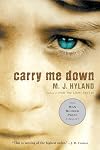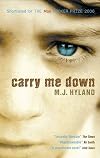
Carry Me Down
by M. J. Hyland
On This Page
Description
John Egan is a misfit, a twelve-year-old in the body of a grown man with the voice of a giant. He has been able to detect lies for as long as he can remember and diligently keeps track of them, large and small, in a log of lies. With an obsession for the Guinness Book of World Records, a keenly inquisitive mind, and a kind of faith, John is like a tuning fork, sensitive to the vibrations within himself and his family's shifting dynamics. From his changing voice, body, and psyche to his show more parents' disheartening marital difficulties, this is a trying year in a fragile young boy's life, and when his sanity reaches near collapse, a frightening family catastrophe threatens to ruin what little they have. show lessTags
Recommendations

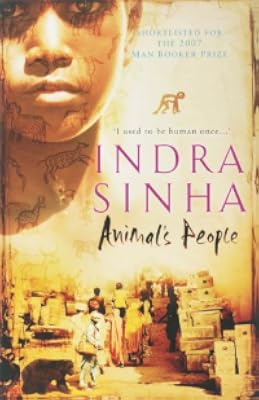
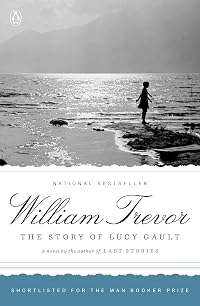
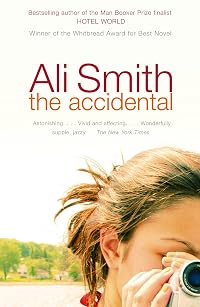
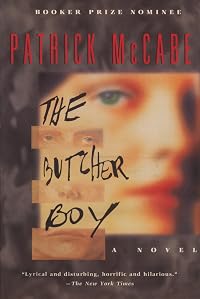





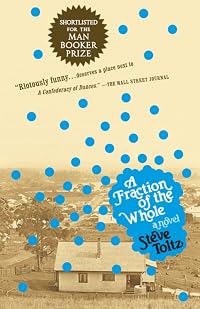

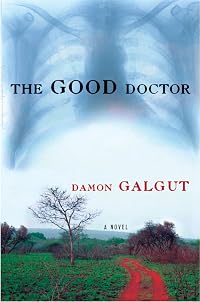
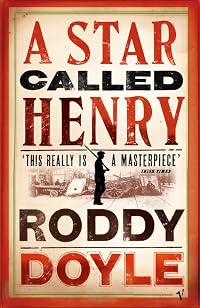
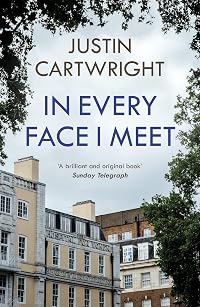



Member Recommendations
by RocknRain

Member Reviews
Pain is much harder on the mind than ignorance.
My head, as though filled with helium, has nothing in it to carry me down to rest, to dark, down to sleep. It is pitch-black and yet there is no darkness in my mind. There is blinding bright day when it should be night.
M.J. Hyland’s second novel languished on my shelf for years. I honestly don’t know why. Last week, it called to me for some reason, and over the last few days it’s riveted me with its dark, strangely compelling narrative about an odd Irish boy. John Egan is a misfit, for sure. For one thing, he’s a giant—nearly six feet tall—and his voice has broken early. According to his mother, he’s “An eleven-year-old in the body of a grown man who insists on the show more ridiculous truth and who has got into a bad habit of lying.” At first, there’s regular talk of taking John to the doctor yet again to investigate what is evidently some abnormality of the endocrine system. School personnel are also concerned. There are embarrassing exchanges between John and the headmaster about how the physically and socially awkward boy, who stands out like a sore thumb, is getting along. There’s even talk of moving him up a grade, where he might blend in better with the older kids. Psychiatric problems are suggested, but it’s an ongoing challenge for the reader to understand what is really going on with this boy and his family. It always seems possible that John’s unusual thoughts, preoccupations, and impulses are actually adaptations to a highly dysfunctional family dynamic. Reading this book, one enters R.D. Laing territory for sure. (A brutal scene early on in the book, in which his father challenges John to prove that he’s more than “a poor soft lad” by assisting in the hot-water drowning of a litter of kittens (“grubs with fur”) was almost more than I could bear. I very nearly quit right then and there.)
As the narrative opens, it is 1972 and John and his parents are living with his granny in Gorey, County Wexford. His parents, John tells us, are extraordinarily glamorous, and their love story is the stuff of myth. (In order to marry, both Helen and Michael, like movie stars, broke off engagements to others.) Here’s the thing about this detail: it, like so many others John provides, cannot be trusted. As far as narrators go, he could take the cake for unreliability. Still, one can’t shake the sense that everyone else in John’s enmeshed nuclear family is equally unreliable and untrustworthy. There’s a big secret here—possibly many—and the reader is swept along, not by an eventful plot (there isn’t one), but by the desire to get to the bottom of it all, to understand why there’s such a sense of menace.
John, as his father (Michael) observes much later in the book, is “an odd mixture . . . of little boy and . . . grown lad” and it’s sometimes difficult for others to figure out which one they’re interacting with. The boy’s favourite book is The Guinness Book of World Records. The accounts of escape artists particularly captivate him, suggesting that he too wants or needs to break free. John’s goal is to get himself in The Guinness Book “along with all the other people who do not want to be forgotten or ignored.” “I will break an important record,” he vows, “or do a remarkable thing. I don’t see the point of living unless there is something I can do better than anyone else can do or unless I can do something that nobody else can.” Because of the mood that Hyland creates, I almost immediately thought of the teenaged Columbine school shooters, Eric Harris and Dylan Klebold. But no, that’s not where Hyland is headed.
John decides that he has an extraordinary talent. He’s a human lie detector, which does not mean he himself is a model of truthfulness. In fact, he makes quite a pastime of lying; he also engages in impulsive stealing. To him, there is no cognitive dissonance. He is not a criminal. He sees himself as potentially more sensitive than any polygraph, picking up as he does on changes in the musculature and colouring of a liar’s face, as well as alterations in vocal tone and diction. His own physiological responses alert him. Initially, he vomits (or wants to) when being lied to. Gradually, he gets this reflex under control and attends to other signals that his body provides—an elevation in temperature, for example. So confident is he in his unique gift that he writes repeatedly to The Guinness Book publishers. He is willing to undergo testing, he tells them, to prove he is worthy of inclusion in their book.
Certainly, John’s immediate family provides him with ample opportunity for lie-detection practice. His mother, with whom he shares an abnormal intimacy and whom he tells about his talent, points out that most of what John is detecting are people’s white lies about embarrassing personal matters or socially sensitive topics. As perceptive as John may be, he can’t seem to pick up on the big things. His father, Michael, once an electrician, has been unemployed for three years. In fact, his job loss is what forced the family of three to move in with John’s granny. The boy blindly accepts the story that his father, who apparently gained easy entry into MENSA, the oldest high IQ society in the world, is simply preparing for a place at Trinity College Dublin. Michael spends his days reading obscure texts on phrenology, criminology, and abnormal psychology, rather than making an effort to find gainful employment. John is also entirely unaware of the reason why the family hastily leaves Gorey for Dublin, ultimately ending up in the notoriously squalid, crime-ridden Ballymun highrise tower complex.
In Dublin, John is increasingly stressed, prone to episodes of shouting and physical aggression. After he calls out a lie—an act which threatens to destroy the family—his behaviour becomes plainly pathological. His mother calls the Garda and a social worker transports him late at night to a boys’ home. The housefather there is interested in John’s view of himself “as a bit of a lie detector”. “Did you know,” he asks the boy, “that there are other people in the world who can do this?” He continues: “most lie detectors develop their super-sensitivity to emotion early in life. . . [It] is often due to unusual childhood circumstances. . . many have extremely irritable mothers, or alcoholic fathers, or some other force or presence in their early life that is, or was, unhealthy, unnatural, unpleasant, or extremely upsetting in some way.”
That’s one theory; Hyland provides others. However, she doesn’t give the reader an easy time or an easy resolution. Her dark tale has all the complexity and ambiguity of real life. Carry Me Down is not a book for everyone, obviously, but it is a compelling and impressive work—one of those books whose many knots you want to disentangle through discussion with others. show less
My head, as though filled with helium, has nothing in it to carry me down to rest, to dark, down to sleep. It is pitch-black and yet there is no darkness in my mind. There is blinding bright day when it should be night.
M.J. Hyland’s second novel languished on my shelf for years. I honestly don’t know why. Last week, it called to me for some reason, and over the last few days it’s riveted me with its dark, strangely compelling narrative about an odd Irish boy. John Egan is a misfit, for sure. For one thing, he’s a giant—nearly six feet tall—and his voice has broken early. According to his mother, he’s “An eleven-year-old in the body of a grown man who insists on the show more ridiculous truth and who has got into a bad habit of lying.” At first, there’s regular talk of taking John to the doctor yet again to investigate what is evidently some abnormality of the endocrine system. School personnel are also concerned. There are embarrassing exchanges between John and the headmaster about how the physically and socially awkward boy, who stands out like a sore thumb, is getting along. There’s even talk of moving him up a grade, where he might blend in better with the older kids. Psychiatric problems are suggested, but it’s an ongoing challenge for the reader to understand what is really going on with this boy and his family. It always seems possible that John’s unusual thoughts, preoccupations, and impulses are actually adaptations to a highly dysfunctional family dynamic. Reading this book, one enters R.D. Laing territory for sure. (A brutal scene early on in the book, in which his father challenges John to prove that he’s more than “a poor soft lad” by assisting in the hot-water drowning of a litter of kittens (“grubs with fur”) was almost more than I could bear. I very nearly quit right then and there.)
As the narrative opens, it is 1972 and John and his parents are living with his granny in Gorey, County Wexford. His parents, John tells us, are extraordinarily glamorous, and their love story is the stuff of myth. (In order to marry, both Helen and Michael, like movie stars, broke off engagements to others.) Here’s the thing about this detail: it, like so many others John provides, cannot be trusted. As far as narrators go, he could take the cake for unreliability. Still, one can’t shake the sense that everyone else in John’s enmeshed nuclear family is equally unreliable and untrustworthy. There’s a big secret here—possibly many—and the reader is swept along, not by an eventful plot (there isn’t one), but by the desire to get to the bottom of it all, to understand why there’s such a sense of menace.
John, as his father (Michael) observes much later in the book, is “an odd mixture . . . of little boy and . . . grown lad” and it’s sometimes difficult for others to figure out which one they’re interacting with. The boy’s favourite book is The Guinness Book of World Records. The accounts of escape artists particularly captivate him, suggesting that he too wants or needs to break free. John’s goal is to get himself in The Guinness Book “along with all the other people who do not want to be forgotten or ignored.” “I will break an important record,” he vows, “or do a remarkable thing. I don’t see the point of living unless there is something I can do better than anyone else can do or unless I can do something that nobody else can.” Because of the mood that Hyland creates, I almost immediately thought of the teenaged Columbine school shooters, Eric Harris and Dylan Klebold. But no, that’s not where Hyland is headed.
John decides that he has an extraordinary talent. He’s a human lie detector, which does not mean he himself is a model of truthfulness. In fact, he makes quite a pastime of lying; he also engages in impulsive stealing. To him, there is no cognitive dissonance. He is not a criminal. He sees himself as potentially more sensitive than any polygraph, picking up as he does on changes in the musculature and colouring of a liar’s face, as well as alterations in vocal tone and diction. His own physiological responses alert him. Initially, he vomits (or wants to) when being lied to. Gradually, he gets this reflex under control and attends to other signals that his body provides—an elevation in temperature, for example. So confident is he in his unique gift that he writes repeatedly to The Guinness Book publishers. He is willing to undergo testing, he tells them, to prove he is worthy of inclusion in their book.
Certainly, John’s immediate family provides him with ample opportunity for lie-detection practice. His mother, with whom he shares an abnormal intimacy and whom he tells about his talent, points out that most of what John is detecting are people’s white lies about embarrassing personal matters or socially sensitive topics. As perceptive as John may be, he can’t seem to pick up on the big things. His father, Michael, once an electrician, has been unemployed for three years. In fact, his job loss is what forced the family of three to move in with John’s granny. The boy blindly accepts the story that his father, who apparently gained easy entry into MENSA, the oldest high IQ society in the world, is simply preparing for a place at Trinity College Dublin. Michael spends his days reading obscure texts on phrenology, criminology, and abnormal psychology, rather than making an effort to find gainful employment. John is also entirely unaware of the reason why the family hastily leaves Gorey for Dublin, ultimately ending up in the notoriously squalid, crime-ridden Ballymun highrise tower complex.
In Dublin, John is increasingly stressed, prone to episodes of shouting and physical aggression. After he calls out a lie—an act which threatens to destroy the family—his behaviour becomes plainly pathological. His mother calls the Garda and a social worker transports him late at night to a boys’ home. The housefather there is interested in John’s view of himself “as a bit of a lie detector”. “Did you know,” he asks the boy, “that there are other people in the world who can do this?” He continues: “most lie detectors develop their super-sensitivity to emotion early in life. . . [It] is often due to unusual childhood circumstances. . . many have extremely irritable mothers, or alcoholic fathers, or some other force or presence in their early life that is, or was, unhealthy, unnatural, unpleasant, or extremely upsetting in some way.”
That’s one theory; Hyland provides others. However, she doesn’t give the reader an easy time or an easy resolution. Her dark tale has all the complexity and ambiguity of real life. Carry Me Down is not a book for everyone, obviously, but it is a compelling and impressive work—one of those books whose many knots you want to disentangle through discussion with others. show less
Completely unintended, the last book I read had much in common with the previous one. Waar je valt/Carry me down is about an eleven year old boy, and tells the story of one year in his life when everything changes, in him, his body and his family. The situation this boy, John Egan, is in, is a lot more tragic than in Black Swan Green, but while reading it I couldn’t help but compare the two. In Carry Me Down, taking place in Ireland in the early seventies, the parents of John are struggling with themselves, their relationship and their future. Meanwhile John, who is really tall for his age and has hit puberty early, is trying to keep everything the way it was, and understand why everything seems to be changing. The story is a long show more winding road downhill, and John tries his hardest to stop it. This leads to inevitable tragedy.
While reading it I kept asking myself if John was just growing up, and reacting the way he does because he is still a child at heart and tries to do what he can, or if there is something ‘wrong’ him, psychologically. I still don’t know. I finished the book in nearly one go, I just couldn’t put it down. A great read. show less
While reading it I kept asking myself if John was just growing up, and reacting the way he does because he is still a child at heart and tries to do what he can, or if there is something ‘wrong’ him, psychologically. I still don’t know. I finished the book in nearly one go, I just couldn’t put it down. A great read. show less
M. J. Hyland’s novel of a young Irish boy growing up in domestic turmoil is poignant, moving, and well-written. If, like me, you suffered similar domestic turmoil in your own childhood, there’s a lot here you’re going to relate to. And I did, not least because the first-person narrator is my namesake.
It takes a special kind of writer to construct a novel so that, in sinking into the sea of prose, you find yourself immersed in the narrator’s world. Hyland’s prose does just that. From the very opening lines, you are in John’s world and seeing things shaped by his own understanding of them or, more often, his lack of understanding.
And there is much John does not understand. This I found so evocative of what childhood is all show more about. You start life from a place of such supreme ignorance that even when you can look back on those days 30, 40, or more years later, you still really don’t understand what happened. This is especially the case when there are domestic issues that your family are trying to hide from you.
It’s easy for us as adults to recognise the signs in his parents’ relationship and John’s own response to them that indicate that all is not well between them or in the mind of the child. But to John, there is little to go on. That little, though, is enough. John becomes convinced that he has the ability to detect lies in ways that other people simply cannot. Hyland constructs the novel so very well that even though your adult side says that it’s surely just an emotional response to his doubts about the stability of his family life, there’s still a little child inside each of us that hopes that what John believes is really true. Thankfully, we never get a definitive answer.
John’s family are forced through their circumstances to leave their rural Ireland and relocate to Dublin and that’s where things start to go from bad to worse. The anxiety and stress of their new life affects each of the them in turn but your view is constantly coloured by the fact that you only get John’s point of view.
So many authors successfully create the childhood viewpoint but then forget that even six months in a child’s life is a decade to an adult. Hyland does not. Instead, she does a great job of creating a flow of development of John’s thinking and emotional response throughout the novel. I found this fascinating. At the same time, you see his relationships with both parents also change, particularly in the aftermath of certain crises.
I would have enjoyed this novel a lot in print, but this is a great example of how audiobooks can just add an extra dimension to literature. I listened to this on Audible and absolutely loved the thick Irish accent of Gerard Doyle. show less
It takes a special kind of writer to construct a novel so that, in sinking into the sea of prose, you find yourself immersed in the narrator’s world. Hyland’s prose does just that. From the very opening lines, you are in John’s world and seeing things shaped by his own understanding of them or, more often, his lack of understanding.
And there is much John does not understand. This I found so evocative of what childhood is all show more about. You start life from a place of such supreme ignorance that even when you can look back on those days 30, 40, or more years later, you still really don’t understand what happened. This is especially the case when there are domestic issues that your family are trying to hide from you.
It’s easy for us as adults to recognise the signs in his parents’ relationship and John’s own response to them that indicate that all is not well between them or in the mind of the child. But to John, there is little to go on. That little, though, is enough. John becomes convinced that he has the ability to detect lies in ways that other people simply cannot. Hyland constructs the novel so very well that even though your adult side says that it’s surely just an emotional response to his doubts about the stability of his family life, there’s still a little child inside each of us that hopes that what John believes is really true. Thankfully, we never get a definitive answer.
John’s family are forced through their circumstances to leave their rural Ireland and relocate to Dublin and that’s where things start to go from bad to worse. The anxiety and stress of their new life affects each of the them in turn but your view is constantly coloured by the fact that you only get John’s point of view.
So many authors successfully create the childhood viewpoint but then forget that even six months in a child’s life is a decade to an adult. Hyland does not. Instead, she does a great job of creating a flow of development of John’s thinking and emotional response throughout the novel. I found this fascinating. At the same time, you see his relationships with both parents also change, particularly in the aftermath of certain crises.
I would have enjoyed this novel a lot in print, but this is a great example of how audiobooks can just add an extra dimension to literature. I listened to this on Audible and absolutely loved the thick Irish accent of Gerard Doyle. show less
A life-like close up of a downward journey of a family, brilliantly observed by a boy with highly sensitive antennae and voiced in his not-so-subtle inward and outward cries. It gave me the creeps all the way, as I gingerly turned the pages, expecting terrible, unspeakable things. I felt like someone peering through a keyhole or gaping at a traffic accident, not too happy to see what is front of me, but compelled to do so.
The best thing about this book was its narrator John, an overly tall 11-year-old who eats sandwiches pretty much constantly, and who believes himself to be an infallible lie-detector. The author cleverly retreats into the background and allows the voice of her protagonist, with his many eccentricities and insecurities, take centre stage. It's a great piece of writing. One minute I was admiring the measured way John handles bullying, and the next I was thinking: crikey, this is one disturbed kid.
Impressive too was John's mother: despite this being a first-person narrative what comes across is someone on the edge, struggling against circumstances and the fact she has a child who doesn't fit within the normal distribution.
A somewhat robust show more and unconventional anti-bullying policy is depicted at John's school - depending on one's sensibilities it provokes cringing or cheering. I'm afraid I was cheering.
There is work for the reader to do: how much is John's behaviour caused by the upheavals in his family, the tendency for people to think he is older than he is; how much is down to his own personality? Is he weird or are all kids like that? How reliable a narrator is he? In the end it is an opportunity for the reader to test their own lie detection skills. show less
Impressive too was John's mother: despite this being a first-person narrative what comes across is someone on the edge, struggling against circumstances and the fact she has a child who doesn't fit within the normal distribution.
A somewhat robust show more and unconventional anti-bullying policy is depicted at John's school - depending on one's sensibilities it provokes cringing or cheering. I'm afraid I was cheering.
There is work for the reader to do: how much is John's behaviour caused by the upheavals in his family, the tendency for people to think he is older than he is; how much is down to his own personality? Is he weird or are all kids like that? How reliable a narrator is he? In the end it is an opportunity for the reader to test their own lie detection skills. show less
Creating an effective child narrator is a difficult task. Whatever their age, they need to be credible. If the child's speech sounds too old for their age, or they handle situations that are overly complex or physically impossible, that's not credible. Carry me Down is narrated by 10-year-old John Egan, and while his speech and inner thoughts sounded about right, his actions didn't always ring true for me and this significantly affected my impressions of this book.
Early in the novel, John becomes physically ill after catching one of his parents in a lie. Over time he uncovers more lies, first with similar results but later he is able to detect lies without getting sick. John becomes convinced he has a special gift for lie detection, and show more obsesses about getting into the Guinness Book of World Records. John is a bit of a loner and a social misfit at school, and using his "gift" doesn't help much. Meanwhile, there is a lot of dysfunctional behavior between his mother, father, and grandmother. John's father is out of work, and they have been forced to live in grandmother's house. John's mother is an emotional train wreck with unpredictable mood swings. The reader has to interpret events through John's lens, but he doesn't understand half of what's going on. Some gaps are easier to fill in than others. Eventually John's lie detection escalates to a level that leads to family crisis.
M. J. Hyland describes John as very tall for his age, and implies his physical maturation is taking place earlier than normal. But how "abnormal" is he? Some characters were put off by his size; others dismissed it as a minor detail. I also found it difficult to decide whether John was a misfit because he had superior intelligence, or because he was emotionally disturbed. John seems to ignore his height, which would be unusual for a child wanting to fit in at school. And yet late in the novel, he uses his size to gain an advantage in a frightening way. This was the most significant credibility gap in his character, but there were many other minor situations that didn't seem like the behavior of a 10-year-old.
The story of John's unraveling family held my interest, especially because so much was left to conjecture. But I've read a lot of "dysfunctional family novels," and they need to bring something new and fresh for me to really enjoy them. In this case, too much revolved around John's character, and once he had lost credibility my enthusiasm for this novel waned. show less
Early in the novel, John becomes physically ill after catching one of his parents in a lie. Over time he uncovers more lies, first with similar results but later he is able to detect lies without getting sick. John becomes convinced he has a special gift for lie detection, and show more obsesses about getting into the Guinness Book of World Records. John is a bit of a loner and a social misfit at school, and using his "gift" doesn't help much. Meanwhile, there is a lot of dysfunctional behavior between his mother, father, and grandmother. John's father is out of work, and they have been forced to live in grandmother's house. John's mother is an emotional train wreck with unpredictable mood swings. The reader has to interpret events through John's lens, but he doesn't understand half of what's going on. Some gaps are easier to fill in than others. Eventually John's lie detection escalates to a level that leads to family crisis.
M. J. Hyland describes John as very tall for his age, and implies his physical maturation is taking place earlier than normal. But how "abnormal" is he? Some characters were put off by his size; others dismissed it as a minor detail. I also found it difficult to decide whether John was a misfit because he had superior intelligence, or because he was emotionally disturbed. John seems to ignore his height, which would be unusual for a child wanting to fit in at school. And yet late in the novel, he uses his size to gain an advantage in a frightening way. This was the most significant credibility gap in his character, but there were many other minor situations that didn't seem like the behavior of a 10-year-old.
The story of John's unraveling family held my interest, especially because so much was left to conjecture. But I've read a lot of "dysfunctional family novels," and they need to bring something new and fresh for me to really enjoy them. In this case, too much revolved around John's character, and once he had lost credibility my enthusiasm for this novel waned. show less
This book could easily be described as the story of a misfit boy in 1970s Ireland, but it's so much more than that. Twelve-year-old John Egan's mind is slowly unraveling, and the book takes him from an odd, quirky child to a dangerous threat. However, as the reader I never saw him as a danger. His voice is written so well and so believably that I almost felt myself understanding his actions. At the beginning, I certainly understood his obsession with the Guinness Book of Records and his passion for fame and 'Truth' -- in a world that was so unstable (family, community, etc.), he was searching for order everywhere and searching for a way to stand out from the others. In the end, it's John's insistence on truth which leads to the show more breakdown of his family, as his quest for order results in the complete opposite. There were faint undertones of an incestuous relationship between John and his mother, but nothing ever materialised there. Perhaps it was just intended to show yet another facet of yet another peculiar relationship in the life of a disturbed child. John's mind becomes more and more unglued as the book progresses, and his ultimate act is frightening and horrific. In spite of this, I couldn't help but sympathize with John. Hyland's writing is spare and beautiful, and John's narrative shows very painfully his helplessness in a powerful adult world. show less
Members
- Recently Added By
Lists

1001 Books You Must Read Before You Die
1,448 works; 1,134 members

Booker Prize
491 works; 62 members

Man Booker Prize Longlist 2006
19 works; 2 members

Booker Prize Shortlist: Titles Not Yet Read
161 works; 4 members

Swinging Seventies
255 works; 18 members
Author Information

7+ Works 1,972 Members
Some Editions
Awards and Honors
Series
Belongs to Publisher Series
Common Knowledge
- Canonical title*
- Die Liste der Lügen
- Original title
- Carry me down
- Original publication date
- 2006
- Dedication
- For
Stewart Andrew Muir
(if only there were more like you) - First words
- It is January, a dark Sunday in winter, and I sit with may mother and father at the kitchen table.
- Blurbers
- Coetzee, J.M.
*Some information comes from Common Knowledge in other languages. Click "Edit" for more information.
Classifications
Statistics
- Members
- 995
- Popularity
- 26,370
- Reviews
- 40
- Rating
- (3.42)
- Languages
- 7 — Chinese, Dutch, English, French, German, Italian, Swedish
- Media
- Paper, Audiobook, Ebook
- ISBNs
- 38
- ASINs
- 6