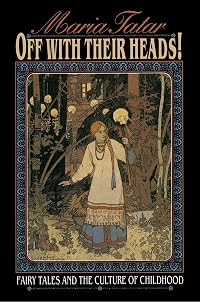
Off with Their Heads! Fairy Tales and the Culture of Childhood
by Maria Tatar
On This Page
Description
When Hansel and Gretel try to eat the witch's gingerbread house in the woods, are they indulging their "uncontrolled cravings" and "destructive desires" or are they simply responding normally to the hunger pangs they feel after being abandoned by their parents? Challenging Bruno Bettelheim and other critics who read fairy tales as enactments of children's untamed urges, Maria Tatar argues that it is time to stop casting the children as villians. In this provocative book she explores how show more adults mistreat children, focusing on adults not only as hostile characters in fairy tales themselves but also as real people who use frightening stories to discipline young listeners. show lessTags
Recommendations
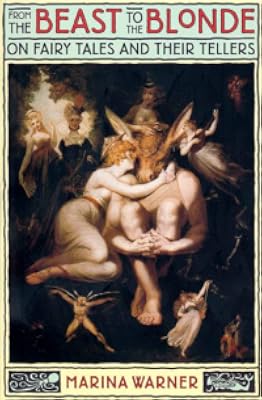

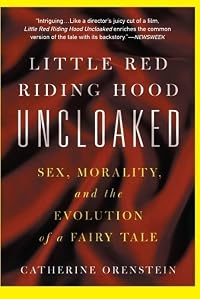
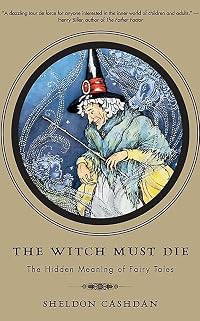
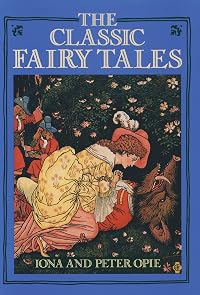
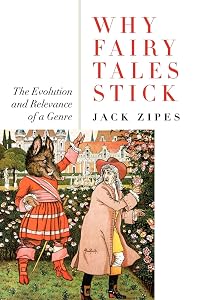
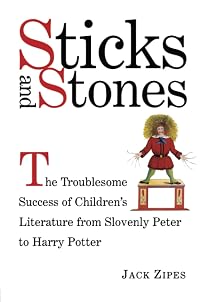


Member Reviews
Never mind the blurb. This is, especially at the beginning and end, a fascinating book about how children perceive folk tales, adaptations, and original stories, and how that often differs from how adults do. The author takes into account different cultural contexts* and different interpretations both scholarly and popular. It includes extensive notes and bibliography, but is accessible, not just scholarly.
*For example: Those of you interested in this subject remember learning about the moral tales in which the most obedient and kind children would be blessed with a peaceful early death. Well, that's not so horrible, if one realizes that very many young children were going to die anyway... at least they'd learn from these tales how to show more prepare themselves to do so, and to not get sent to Hell. Now, in our current context, those tales are not so 'necessary.'
But what to do with tales like Jack and the Beanstalk, for example? Shall a 21st century adaptation make it clear why it's ok for Jack to take the harp etc. from the giant? Or does that spoil the tale? Tatar doesn't come right out and say either way. What she does say is that folk tales, fairy tales, and wonder stories are always being adapted, by the adult telling or writing or illustrating, by the child understanding only parts and misunderstanding other parts, by the very fact that a particular story is made available to that child and another story isn't. Therefore, parents and educators have a duty to at least pay attention to what messages are being sent, and preferably to discuss the themes with the children and to read adaptations more suitable to contemporary context.
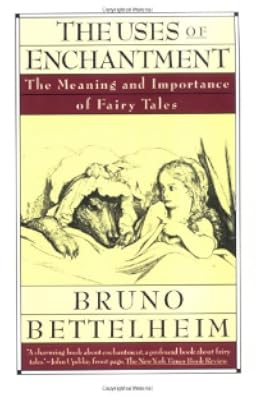
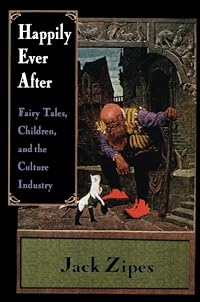
Readers of this book will likely get a lot more out of classic children's lit. than those who know only the critical views of BB (who I refuse to name outright in favor of condemning him to oblivion) or even Zipes. Even the Aarne-Thompson system is shown to be problematic. After all, Tatar is not only a scholar but a mother who read *and listened* to her children, so it's good to read from her perspective.
Unfortunately she does sometimes succumb to academese, ie to using fancy words when simpler ones would do. And sometimes she gets lost in her ideas and, while managing to find her own way out, leaves the reader behind. And the thesis itself seems lost when much analytic attention is paid to stories that were surely never offered for children. It's not a terribly rigorous analysis.
Still, it is worth reading, if you have plenty of time and interest.
Some book darts:
"Curiosity and disobedience, along with a variety of other vices, are seen as the besetting sins of both children and women."
Re *Caterinella* "But is it really such a bad thing to outwit a creature who makes a habit out of devouring human beings?"
Hans Christian Andersen adamantly refused to have the statue in his honor be of him reading to children. The quote from him, and Tatar's commentary, makes it clear that he and many other writers were, effectively, pedophobic. Their tales were often exemplary and/or cautionary because inquisitive and spirited children were perceived as, well, frightening. Think of parents you know who still think that it's good to control children, who believe in corporal punishment, who want to indoctrinate them in their beliefs. Tatar and I aren't actually saying there's something for sure going on there, but think about it....
"The fact that fairy tales guide feelings and control responses give lie to the notion [held by BB] that children work their way from dependence to autonomy through literature."
"Our current agenda and the wisdom of our time may seem vastly superior to Janeway's sanctimoniously lurid descriptions of dying children, or Dr. Heinrich Hoffmann's unforgettable images of thumbsuckers getting their digits sheared off, but they are ultimately our own adult ideas about what is 'for their own good.'"
"Think, for example, of *Hansel and Gretel,* where the villain of the tale first appears as a cruel stepmother at home, then as a cannibalistic witch residing in enchanted woods."
(Did you ever make the connection between the two women? Tatar is being metaphorical, I hope... but she does mention this duality twice.... Huh.)
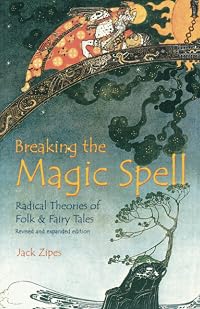
And some adaptations to add to the list of such that I've read: [a:Russell Shorto|25254|Russell Shorto|https://images.gr-assets.com/authors/1212954873p2/25254.jpg]'s [b:Cinderella and Cinderella's Stepsister|14888123|Cinderella and Cinderella's Stepsister|Russell Shorto|https://s.gr-assets.com/assets/nophoto/book/50x75-a91bf249278a81aabab721ef782c4a74.png|1356552] and [a:Tim Paulson|1110255|Tim Paulson|https://s.gr-assets.com/assets/nophoto/user/u_50x66-632230dc9882b4352d753eedf9396530.png]'s [b:Jack and the Beanstalk and the Beanstalk Incident|14888125|Jack and the Beanstalk and the Beanstalk Incident|Tim Paulson|https://s.gr-assets.com/assets/nophoto/book/50x75-a91bf249278a81aabab721ef782c4a74.png|2510454]. Also Rosemarie Kunzler's *Rumpelstiltskin* which is found in [b:Breaking the Magic Spell: Radical Theories of Folk and Fairy Tales|291164|Breaking the Magic Spell Radical Theories of Folk and Fairy Tales|Jack D. Zipes|https://i.gr-assets.com/images/S/compressed.photo.goodreads.com/books/1347314559l/291164._SY75_.jpg|282490]. Also [b:The Forest Princess|22921605|The Forest Princess|Harriet Herman|https://i.gr-assets.com/images/S/compressed.photo.goodreads.com/books/1408141938l/22921605._SX50_.jpg|42489177]. show less
*For example: Those of you interested in this subject remember learning about the moral tales in which the most obedient and kind children would be blessed with a peaceful early death. Well, that's not so horrible, if one realizes that very many young children were going to die anyway... at least they'd learn from these tales how to show more prepare themselves to do so, and to not get sent to Hell. Now, in our current context, those tales are not so 'necessary.'
But what to do with tales like Jack and the Beanstalk, for example? Shall a 21st century adaptation make it clear why it's ok for Jack to take the harp etc. from the giant? Or does that spoil the tale? Tatar doesn't come right out and say either way. What she does say is that folk tales, fairy tales, and wonder stories are always being adapted, by the adult telling or writing or illustrating, by the child understanding only parts and misunderstanding other parts, by the very fact that a particular story is made available to that child and another story isn't. Therefore, parents and educators have a duty to at least pay attention to what messages are being sent, and preferably to discuss the themes with the children and to read adaptations more suitable to contemporary context.
Readers of this book will likely get a lot more out of classic children's lit. than those who know only the critical views of BB (who I refuse to name outright in favor of condemning him to oblivion) or even Zipes. Even the Aarne-Thompson system is shown to be problematic. After all, Tatar is not only a scholar but a mother who read *and listened* to her children, so it's good to read from her perspective.
Unfortunately she does sometimes succumb to academese, ie to using fancy words when simpler ones would do. And sometimes she gets lost in her ideas and, while managing to find her own way out, leaves the reader behind. And the thesis itself seems lost when much analytic attention is paid to stories that were surely never offered for children. It's not a terribly rigorous analysis.
Still, it is worth reading, if you have plenty of time and interest.
Some book darts:
"Curiosity and disobedience, along with a variety of other vices, are seen as the besetting sins of both children and women."
Re *Caterinella* "But is it really such a bad thing to outwit a creature who makes a habit out of devouring human beings?"
Hans Christian Andersen adamantly refused to have the statue in his honor be of him reading to children. The quote from him, and Tatar's commentary, makes it clear that he and many other writers were, effectively, pedophobic. Their tales were often exemplary and/or cautionary because inquisitive and spirited children were perceived as, well, frightening. Think of parents you know who still think that it's good to control children, who believe in corporal punishment, who want to indoctrinate them in their beliefs. Tatar and I aren't actually saying there's something for sure going on there, but think about it....
"The fact that fairy tales guide feelings and control responses give lie to the notion [held by BB] that children work their way from dependence to autonomy through literature."
"Our current agenda and the wisdom of our time may seem vastly superior to Janeway's sanctimoniously lurid descriptions of dying children, or Dr. Heinrich Hoffmann's unforgettable images of thumbsuckers getting their digits sheared off, but they are ultimately our own adult ideas about what is 'for their own good.'"
"Think, for example, of *Hansel and Gretel,* where the villain of the tale first appears as a cruel stepmother at home, then as a cannibalistic witch residing in enchanted woods."
(Did you ever make the connection between the two women? Tatar is being metaphorical, I hope... but she does mention this duality twice.... Huh.)
And some adaptations to add to the list of such that I've read: [a:Russell Shorto|25254|Russell Shorto|https://images.gr-assets.com/authors/1212954873p2/25254.jpg]'s [b:Cinderella and Cinderella's Stepsister|14888123|Cinderella and Cinderella's Stepsister|Russell Shorto|https://s.gr-assets.com/assets/nophoto/book/50x75-a91bf249278a81aabab721ef782c4a74.png|1356552] and [a:Tim Paulson|1110255|Tim Paulson|https://s.gr-assets.com/assets/nophoto/user/u_50x66-632230dc9882b4352d753eedf9396530.png]'s [b:Jack and the Beanstalk and the Beanstalk Incident|14888125|Jack and the Beanstalk and the Beanstalk Incident|Tim Paulson|https://s.gr-assets.com/assets/nophoto/book/50x75-a91bf249278a81aabab721ef782c4a74.png|2510454]. Also Rosemarie Kunzler's *Rumpelstiltskin* which is found in [b:Breaking the Magic Spell: Radical Theories of Folk and Fairy Tales|291164|Breaking the Magic Spell Radical Theories of Folk and Fairy Tales|Jack D. Zipes|https://i.gr-assets.com/images/S/compressed.photo.goodreads.com/books/1347314559l/291164._SY75_.jpg|282490]. Also [b:The Forest Princess|22921605|The Forest Princess|Harriet Herman|https://i.gr-assets.com/images/S/compressed.photo.goodreads.com/books/1408141938l/22921605._SX50_.jpg|42489177]. show less
Mostly talking back to Bruno Bettelheim. Not bad.
Ratings
Members
- Recently Added By
Lists

Academic Studies of Fairy Tales and Folklore
28 works; 6 members
Author Information

22+ Works 4,770 Members
Maria Tatar is the John L. Loeb Professor of Germanic Languages and Literatures at Harvard University. Her many books include Off with Their Heads! Fairy Tales and the Culture of Childhood and Lustmord: Sexual Murder in Weimar Germany (both Princeton).
Some Editions
Awards and Honors
Awards
Common Knowledge
- Canonical title
- Off with Their Heads! Fairy Tales and the Culture of Childhood
- People/Characters
- Charles Perrault; Jakob Grimm; Wilhelm Grimm
Classifications
- Genres
- Nonfiction, Literature Studies and Criticism, General Nonfiction
- DDC/MDS
- 398.45 — Society, government, & culture Customs, etiquette & folklore Folklore & Folktales Paranatural and legendary phenomena as subjects of folklore Paranormal beings of human and semihuman form
- LCC
- GR550 .T38 — Geography, Anthropology and Recreation Folklore Folklore By subject Supernatural beings, demonology, fairies, ghosts,
- BISAC
Statistics
- Members
- 227
- Popularity
- 143,367
- Reviews
- 2
- Rating
- (3.69)
- Languages
- English
- Media
- Paper, Ebook
- ISBNs
- 3
- ASINs
- 1