On This Page
Description
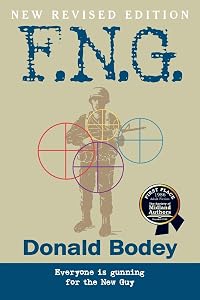
Everyone is gunning for the New Guy Gabriel Sauers of Two Squad is a soldier, newly arrived in Vietnam--a country too beautiful to invite so savagely unreal a war. But Gabriel won't be a New Guy for long. He'll go through incoming mortars, he'll see the enemy alive. He'll wander through a hell that will turn the green recruit lucky enough to survive into a death-hardened veteran, longing for nothing more than a return to the world of hot baths and cold beer, no bullets, and no noise. Now, 40 show more years later, he is grappling with an action on the verge of his grandson Seth's deployment to Iraq that will change both their lives forever. Critics Praise Don Bodey's F.N.G "One of the most hard-hitting of all the vietnam novels" -- The Boston Herald "A powerful social document and a well-written, deeply moving first novel...highly recommended" --The Library Journal "Raw, profane...a candidly moving portrayal of the average American soldier in Vietnam, who often found courage when he did not seek it--but little of anything else." --Chicago Sun-Times "The day to day grind, beautifully and touchingly rendered by...a Vietnam veteran, is told with an unrelenting accumulation of detail." --The New York Times Book Review "Bodey packs considerable emotional freight...into a style that remains deliberately supple, cool, and declarative...An impressive novel." --The Cleveland Plain Dealer "A harrowing vividly written account of hell with a leavening of light moments. A revelation for one who wasn't there. Painful for those who were." -Bob Mason, author of CHICKENHAWK "All Quiet on the Western Front drives its readers to the front of World War I. F.N.G helicopters its readers to a new front: Vietnam." -Bestsellers More info at www.DonBodey.com The Reflections of History Series from Modern History Press www.ModernHistoryPress.com (an Imprint of Loving Healing Press) show lessTags
Recommendations


































Member Recommendations
sunking0426 another great account of life in war and fighting in Vietnam

vvolkman A non-fiction account of a grunt's life in Viet Nam and the psychic aftermath. A brutal, uncensored look at how humanity is flayed from the soul, layer by layer.
Member Reviews
When I got a hold on this book, my first thought was, "Huh, they should've used a different title." That's because I had already read a novel about the Vietnam war called F.N.G. years ago, but since it was a common phrase in Vietnam, I figured "Fair enough."
The first thing I noticed when I picked up this copy was that it was not published by Viking and Ballantine, as in the eighties. Instead it was published by Modern History Press. Bizarrely, the logo for Modern History Press held the initial MHP over a monarch butterfly. Huh. A little weird, but okay. I looked over the front cover and saw that it was a "New Revised Edition." I wondered how it had been revised. When I looked over the publishing information in the first couple of pages, show more and read over the pamphlet the publisher had included with the book, I was that Modern History Press was simply an imprint of...Loving Healing Press, Inc. Curiosity aroused, I looked at the back of the book for author's info, but first found two pages promoting other books by the same publisher: My Tour in Hell, A Marine's Battle With Combat Trauma, and the book Beyond Trauma: Conversations on Traumatic Incident Reduction. The blurb for the latter promised to show us how "TIR has helped domestic violence survivors, crime victims, Vietnam vets, children, and others." So I was picking up a novel I'd already read, had thought okay, if a bit whiny, which was published by a house that considered beaten wives, raped children, and Vietnam veterans to be victims of the same type and degree.
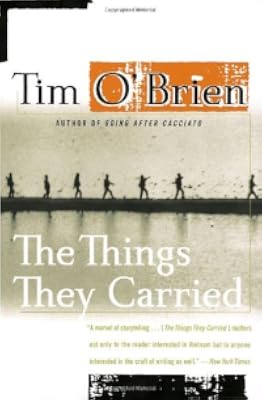
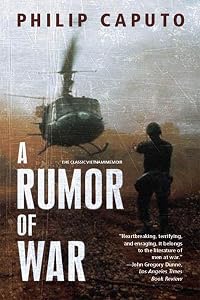
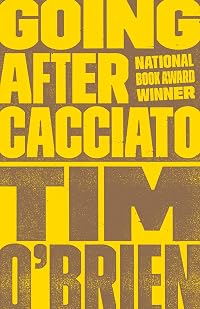
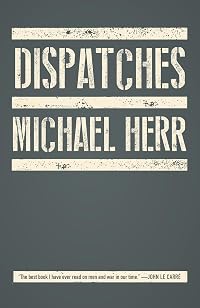
I'm a bit of a military history buff, and I've read my fair share of histories, memoirs, and novels. There are plenty of works of fiction or non-fiction that address the F.N.G. scenario to one degree or another, and Vietnam generally, without being whiny. The books may be dirty, sad, bloody, muddy, exultant, perverse, depressed, ironic, withdrawn, whatever. I'll admit it...I love the stuff. Tim O'Brien with his memoir, If I Die In A Combat Zone, or his famous novels, Going After Cacciato and The Things They Carried. Classic memoirs from others, such as A Rumor of War or Herr's Dispatches. Novels like The Short-timers or The Quiet American. All of them take different perspectives on the war, on courage, on fear, on killing, on camaraderie. But they're all great books. They don't differ from the frank memoirs of preceding generations in any significant way (think of e.e. cumming's The Enormous Room, or of William Manchester's Goodbye, Darkness).
F.N.G. is not a great book, or even a good one. It's not Full Metal Jacket, it's Platoon. It's not sad, it's not full of despair or grief, it's just whiny, and whiny is selfish. That was my mildly held opinion when I first read it in the early nineties, but it's my passionately held opinion now.
Why suddenly "passionately held"? Is it because I have changed so much in that time? Nope. It goes back to that "New Revised Edition" I wondered about. As far as I can tell, the body of the text is the same, but now there's a new first chapter: "Present Day".
I start reading, and it turns out that the protagonist of the novel is now the father of a grown young man. This young man was not drafted, but volunteered to join the army. And now he's being sent to Iraq. But before then, they go on one last hunting trip. The father intends to shoot his son in the foot, to give him that million-dollar wound that will keep him safe (by the way, that phrase has been in use since WWII, and refers to an enemy-inflicted wound that was, well, perfect: not serious enough to cripple, but enough to get you off the front lines or home). I read on, hoping that something would happen to make him see the error of his ways, something that would instead turn the hunting trip into a "keep your head down" sort of pep talk. That doesn't happen, which was bad enough, but then the author (one Donald Bodey) finally gave me the creeps, straight-up physical creeps, where you read something that physically disgusts you.
There's this intimate moment when the father is sneaking up on the son to shoot him, but is losing his resolve. The son somehow knows what his father intends, and urges him to. They both smile courageously, and father shoots son.
And this is why whiny is selfish. Whiny doesn't follow through with its promise to the now all-volunteer military. No surprise. Whiny in the sixties didn't stand up and go to jail for being a conscientious objector. No surprise. There are no principles involved here except survive at all costs, and at all costs try to maintain the standard of living I'm entitled to. That's the selfish part. I wouldn't think much of you if you refused to ship out with your unit to a combat zone. But I'd certainly respect you much more if you did it by saying "Throw me in the brig" than if you did it by working the system in a way that left you without having made any sacrifice, or taking a hit for going back on your word and/or breaking the law.
The moment in that new chapter when craven father and craven son made craven eye contact before following through with craven deed made me feel, well...craven. Slimy. show less
The first thing I noticed when I picked up this copy was that it was not published by Viking and Ballantine, as in the eighties. Instead it was published by Modern History Press. Bizarrely, the logo for Modern History Press held the initial MHP over a monarch butterfly. Huh. A little weird, but okay. I looked over the front cover and saw that it was a "New Revised Edition." I wondered how it had been revised. When I looked over the publishing information in the first couple of pages, show more and read over the pamphlet the publisher had included with the book, I was that Modern History Press was simply an imprint of...Loving Healing Press, Inc. Curiosity aroused, I looked at the back of the book for author's info, but first found two pages promoting other books by the same publisher: My Tour in Hell, A Marine's Battle With Combat Trauma, and the book Beyond Trauma: Conversations on Traumatic Incident Reduction. The blurb for the latter promised to show us how "TIR has helped domestic violence survivors, crime victims, Vietnam vets, children, and others." So I was picking up a novel I'd already read, had thought okay, if a bit whiny, which was published by a house that considered beaten wives, raped children, and Vietnam veterans to be victims of the same type and degree.
I'm a bit of a military history buff, and I've read my fair share of histories, memoirs, and novels. There are plenty of works of fiction or non-fiction that address the F.N.G. scenario to one degree or another, and Vietnam generally, without being whiny. The books may be dirty, sad, bloody, muddy, exultant, perverse, depressed, ironic, withdrawn, whatever. I'll admit it...I love the stuff. Tim O'Brien with his memoir, If I Die In A Combat Zone, or his famous novels, Going After Cacciato and The Things They Carried. Classic memoirs from others, such as A Rumor of War or Herr's Dispatches. Novels like The Short-timers or The Quiet American. All of them take different perspectives on the war, on courage, on fear, on killing, on camaraderie. But they're all great books. They don't differ from the frank memoirs of preceding generations in any significant way (think of e.e. cumming's The Enormous Room, or of William Manchester's Goodbye, Darkness).
F.N.G. is not a great book, or even a good one. It's not Full Metal Jacket, it's Platoon. It's not sad, it's not full of despair or grief, it's just whiny, and whiny is selfish. That was my mildly held opinion when I first read it in the early nineties, but it's my passionately held opinion now.
Why suddenly "passionately held"? Is it because I have changed so much in that time? Nope. It goes back to that "New Revised Edition" I wondered about. As far as I can tell, the body of the text is the same, but now there's a new first chapter: "Present Day".
I start reading, and it turns out that the protagonist of the novel is now the father of a grown young man. This young man was not drafted, but volunteered to join the army. And now he's being sent to Iraq. But before then, they go on one last hunting trip. The father intends to shoot his son in the foot, to give him that million-dollar wound that will keep him safe (by the way, that phrase has been in use since WWII, and refers to an enemy-inflicted wound that was, well, perfect: not serious enough to cripple, but enough to get you off the front lines or home). I read on, hoping that something would happen to make him see the error of his ways, something that would instead turn the hunting trip into a "keep your head down" sort of pep talk. That doesn't happen, which was bad enough, but then the author (one Donald Bodey) finally gave me the creeps, straight-up physical creeps, where you read something that physically disgusts you.
There's this intimate moment when the father is sneaking up on the son to shoot him, but is losing his resolve. The son somehow knows what his father intends, and urges him to. They both smile courageously, and father shoots son.
And this is why whiny is selfish. Whiny doesn't follow through with its promise to the now all-volunteer military. No surprise. Whiny in the sixties didn't stand up and go to jail for being a conscientious objector. No surprise. There are no principles involved here except survive at all costs, and at all costs try to maintain the standard of living I'm entitled to. That's the selfish part. I wouldn't think much of you if you refused to ship out with your unit to a combat zone. But I'd certainly respect you much more if you did it by saying "Throw me in the brig" than if you did it by working the system in a way that left you without having made any sacrifice, or taking a hit for going back on your word and/or breaking the law.
The moment in that new chapter when craven father and craven son made craven eye contact before following through with craven deed made me feel, well...craven. Slimy. show less
 This review was written for LibraryThing Early Reviewers.
This is the first fictionalized memoir of the Vietnam war that I recall reading. Based on other reviewers' notes, it seems that the only major change is the addition of a chapter at the beginning about how the main character doesn't want to see his son go through what he did in Iraq, and the length to which he is willing to go to keep him from going. I don't know if what he did is right, but it dramatizes how he feels about the horrors of war that are inflicted on the unknowing young people whom we send into combat.
I've met my share of Vietnam Vets who physically came back intact, but didn't bring back all their marbles. I've met a few who came back and led seemingly normal lives. I've never read an account of what it was like to be a show more American soldier in Vietnam. A movie just doesn't put you into somebody else's mind or let you experience things through the senses of someone who was there.
I don't know how much of the book was a fictionalized account of the author's own experience there. I'm sure that a lot of it was real. I do know that I did not want to put the book down until I ran out of book. The fear and the futility, the confusion of being a F***g New Guy in a war zone, to the confusion of surviving until he was responsible for the squad ... and wishing that he didn't have so many F.N.G.'s who were without a clue ... and the transition between.
I enjoyed reading the book. I felt confused, I felt frightened, I felt lost, just as Gabriel did. The writing style is a bit fragmented ... there are little bits and pieces left out. I was frustrated at first because I wasn't sure who was talking to whom, or what they were trying to say. The jargon was explained ... sometimes much later. It only occurred to me that this could have been intentional -- Gabriel was confused about where to get information and what course of action to pursue, and Bodey managed to throw some of the confusion over to the reader. It got better as the book progressed.
Don't read this book if you want a sanitized perspective of the life of a soldier in Vietnam. Its all here, the bad and the worse. The language is profane, the scenes are nasty, and there isn't any sugar coating, and there isn't a happy ending. I wasn't there so I can't say if this is how it was to be there, but it sure seems like this account tells it like it was. show less
I've met my share of Vietnam Vets who physically came back intact, but didn't bring back all their marbles. I've met a few who came back and led seemingly normal lives. I've never read an account of what it was like to be a show more American soldier in Vietnam. A movie just doesn't put you into somebody else's mind or let you experience things through the senses of someone who was there.
I don't know how much of the book was a fictionalized account of the author's own experience there. I'm sure that a lot of it was real. I do know that I did not want to put the book down until I ran out of book. The fear and the futility, the confusion of being a F***g New Guy in a war zone, to the confusion of surviving until he was responsible for the squad ... and wishing that he didn't have so many F.N.G.'s who were without a clue ... and the transition between.
I enjoyed reading the book. I felt confused, I felt frightened, I felt lost, just as Gabriel did. The writing style is a bit fragmented ... there are little bits and pieces left out. I was frustrated at first because I wasn't sure who was talking to whom, or what they were trying to say. The jargon was explained ... sometimes much later. It only occurred to me that this could have been intentional -- Gabriel was confused about where to get information and what course of action to pursue, and Bodey managed to throw some of the confusion over to the reader. It got better as the book progressed.
Don't read this book if you want a sanitized perspective of the life of a soldier in Vietnam. Its all here, the bad and the worse. The language is profane, the scenes are nasty, and there isn't any sugar coating, and there isn't a happy ending. I wasn't there so I can't say if this is how it was to be there, but it sure seems like this account tells it like it was. show less
This review was written for LibraryThing Early Reviewers.Filthy. Soaked. Oozing. Scared. Stoned. Tired. To the bone. Some combination thereof. Every day.
Don Bodey depicts Gabriel Sauer's transformation from an Effengee to a combat veteran in Vietnam. No one, no thing, and no country is shown in a glorious or heroic light. The focus is on the often mundane but miserable day to day existence of a single squad, a handful of men. Building hooches and bailing them during monsoon season. Humping for days in the jungle carrying heavy rucks and guns. Trying to remain alert even while exhausted and distracted by the aches and pains that never go away.
When Sauer's squad does see close combat, it is upon them quickly and the effects are devastating, both physically and mentally. No battles are won. show more Some are lost. Surviving the one-year tour is a victory.
As much as Michael Herr's brilliant Dispatches is surreal, F. N. G. is real. It is ironic that the former is non-fiction and the latter is fiction. The author is a veteran and F. N. G. reads like much of the content is based on first-hand experience.
The new first chapter in this revised edition is understandably controversial, but the rest of the book stands strongly on its own.
More reviews. show less
Don Bodey depicts Gabriel Sauer's transformation from an Effengee to a combat veteran in Vietnam. No one, no thing, and no country is shown in a glorious or heroic light. The focus is on the often mundane but miserable day to day existence of a single squad, a handful of men. Building hooches and bailing them during monsoon season. Humping for days in the jungle carrying heavy rucks and guns. Trying to remain alert even while exhausted and distracted by the aches and pains that never go away.
When Sauer's squad does see close combat, it is upon them quickly and the effects are devastating, both physically and mentally. No battles are won. show more Some are lost. Surviving the one-year tour is a victory.
As much as Michael Herr's brilliant Dispatches is surreal, F. N. G. is real. It is ironic that the former is non-fiction and the latter is fiction. The author is a veteran and F. N. G. reads like much of the content is based on first-hand experience.
The new first chapter in this revised edition is understandably controversial, but the rest of the book stands strongly on its own.
More reviews. show less
This review was written for LibraryThing Early Reviewers.F.N.G is a book about a grunt trying to live through a year in the Vietnam War. I personally have no military experience and I was not alive during the Vietnam War. Therefore, I can only speak to how I enjoyed this book as fiction and based on my third hand knowledge of the War.
F.N.G. was originally published in 1985. This revised addition includes a new first chapter which involves the main character Gabriel Sauers, now a Grandfather, taking his Grandson hunting before the Grandson ships out to Iraq. Sauers doesn’t want his Grandson to go through the traumatic experience of a war like he had to, so he shoots him in the foot with a 12 gauge slug from 50 feet to keep him out of the war; with his Grandson’s permission of course. This show more chapter strikes a discordant note with the rest of the book and is the only part that I truly did not like. The rest of the book details Sauers experience in Vietnam and it paints a gritty, sad, funny, crazy picture. The strength of this book revolves around the relationships that Sauers develops with his squad mates. It does an excellent job of showing of how, as a new guy, Sauers depends on and trusts the older hands. As the experienced soldiers rotate back home newer soldiers come to depend on Sauers for his experience. His relationship is stronger with the guys he first served with, and he is less attached to the new new-guys, much as the experienced soldiers probably felt about him.
The author, Donald Bodey, also has a knack for making me empathize with Sauers. I could perfectly picture being in the stark blackness of a jungle night, straining to hear any sound while you wait in ambush or the constant itch of the everyday irritation that is jungle rot. He also drove home the arbitrary factors that decided who lived and who died. Everyone was stumbling around the jungle fighting guerillas that had been fighting on this land for years. A misstep here, moving a little to the left there, choosing the wrong place to sleep on the wrong night: these are the things that dictate life and death. You don’t need good or bad luck to live or die, but chance does play a major role in who goes home and when.
The book did have some weak points. At times the story drags and the characters seem less real in some chapters, behaving as generic, stoned soldiers in order to drive Sauers’ story but overall I enjoyed this book. It doesn’t rank up with my favorite war novels. My reaction to this story was more of, “What a crappy situation,” as opposed to, “War is hell,” but it does get some of the same feelings across. show less
F.N.G. was originally published in 1985. This revised addition includes a new first chapter which involves the main character Gabriel Sauers, now a Grandfather, taking his Grandson hunting before the Grandson ships out to Iraq. Sauers doesn’t want his Grandson to go through the traumatic experience of a war like he had to, so he shoots him in the foot with a 12 gauge slug from 50 feet to keep him out of the war; with his Grandson’s permission of course. This show more chapter strikes a discordant note with the rest of the book and is the only part that I truly did not like. The rest of the book details Sauers experience in Vietnam and it paints a gritty, sad, funny, crazy picture. The strength of this book revolves around the relationships that Sauers develops with his squad mates. It does an excellent job of showing of how, as a new guy, Sauers depends on and trusts the older hands. As the experienced soldiers rotate back home newer soldiers come to depend on Sauers for his experience. His relationship is stronger with the guys he first served with, and he is less attached to the new new-guys, much as the experienced soldiers probably felt about him.
The author, Donald Bodey, also has a knack for making me empathize with Sauers. I could perfectly picture being in the stark blackness of a jungle night, straining to hear any sound while you wait in ambush or the constant itch of the everyday irritation that is jungle rot. He also drove home the arbitrary factors that decided who lived and who died. Everyone was stumbling around the jungle fighting guerillas that had been fighting on this land for years. A misstep here, moving a little to the left there, choosing the wrong place to sleep on the wrong night: these are the things that dictate life and death. You don’t need good or bad luck to live or die, but chance does play a major role in who goes home and when.
The book did have some weak points. At times the story drags and the characters seem less real in some chapters, behaving as generic, stoned soldiers in order to drive Sauers’ story but overall I enjoyed this book. It doesn’t rank up with my favorite war novels. My reaction to this story was more of, “What a crappy situation,” as opposed to, “War is hell,” but it does get some of the same feelings across. show less
This review was written for LibraryThing Early Reviewers.After reading the first chapter I wanted to toss this book into the fire. From then on things changed dramatically.
This book is a tribute to every grunt who has served in any war in our history. Trying to make sense of the insanity around them, all the while trying to keep their own sanity. Through all the whining and bitching, they do their duty for the country and for their fellow grunts.
This book is a tribute to every grunt who has served in any war in our history. Trying to make sense of the insanity around them, all the while trying to keep their own sanity. Through all the whining and bitching, they do their duty for the country and for their fellow grunts.
This review was written for LibraryThing Early Reviewers.This is a novel of a draftees one-year deployment in Vietnam. Bodey is particularly good at describing the interactions between soldiers especially those who are new to an unit [the FNG's of the title] and short timers near the end of their time. There really isn't much plot here this is more a book of atmosphere. The new material is an opening chapter which is set in the present day where the narrator must decide what to do with his grandsons deployment to Iraq.
Recommended!
This book was provided through Lt's early review program.
Recommended!
This book was provided through Lt's early review program.
This review was written for LibraryThing Early Reviewers.Reading this novel was a little different for me as I usually read about World War II and never fiction. The only thing I really know about the Vietnam war is that I was still in diapers, my father didn't go because he had small children and a wife and that it was not a fair war. The book starts out with a scenario between a grandfather and his grandson who is about to go to Iraq. This lasts for only one chapter (I will not spoil the scenario). The remainder of the story is about the grandfather when he was drafted to serve in Vietnam. I have to admit that I hated the book at the beginning, only because of the foul language. Plenty of foul language. However, as the story progressed, the story became engrossing and I soon learned to get show more past the language to dig into the story. The story describes this grandfather's experience, from the time he was an Effengee until the day his tour was over and found himself on a helicopter going home. The grandfather suffered a lot of loss, and it really started me reflecting upon all the men who survived Vietnam, a snapshot glimpse of what they went through over there. I never really gave much thought to Vietnam. I'm too wrapped up in WWII, but I sure will not look at those who served the same again. I mean that respectfully.
In my honest opinion, I enjoyed the story (almost wanted to watch Apocalypse Now after I finished). Not as much as I would have if it was World War II, but that is just my preference. I did think there was a lot of profanity, but I guess taking that element out may destroy the purpose of making the reader think they are there. I would think this is would be a great pleasure reading for anyone interested in war stories, especially Vietnam. show less
In my honest opinion, I enjoyed the story (almost wanted to watch Apocalypse Now after I finished). Not as much as I would have if it was World War II, but that is just my preference. I did think there was a lot of profanity, but I guess taking that element out may destroy the purpose of making the reader think they are there. I would think this is would be a great pleasure reading for anyone interested in war stories, especially Vietnam. show less
This review was written for LibraryThing Early Reviewers.Members
- Recently Added By
Author Information

2 Works 66 Members
Awards and Honors
Awards
Series

Common Knowledge
- Canonical title
- F.N.G.
- Original publication date
- 1985 (First Edition) (First Edition)
- People/Characters
- Gabriel Sauers ("Chieu Hoi"); Pops; Callmeblack; Peacock; Prophet; Bostick (show all 7); Albert Steven Saxon ("ASS")
- Important places
- Cam Ranh Bay; Okinawa, Japan; Cambodia; Ho Chi Minh Trail, Vietnam
Classifications
Statistics
- Members
- 27
- Popularity
- 1,009,787
- Reviews
- 9
- Rating
- (3.96)
- Languages
- English
- Media
- Paper
- ISBNs
- 2
- ASINs
- 1