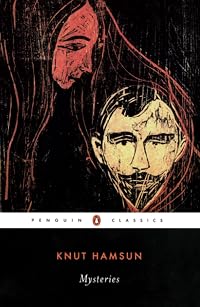
Mysteries
by Knut Hamsun
On This Page
Description
Mysteries is a classic of European literature, one of the seminal novels of the twentieth century. It is the story of Johan Nagel, a strange young man who arrives to spend a summer in a small Norwegian coastal town. His presence acts as a catalyst for the hidden impulses, concealed thoughts and darker instincts of the local people. Cursed with the ability to understand the human soul, especially his own, Nagel can foresee, but cannot prevent, his own self-destruction.Tags
Recommendations
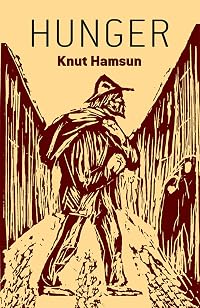
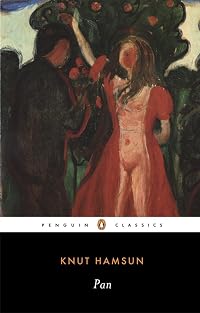
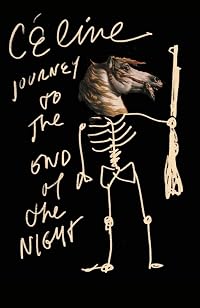
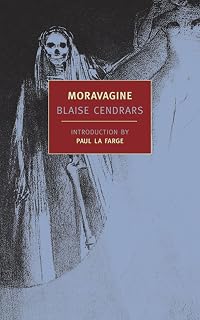
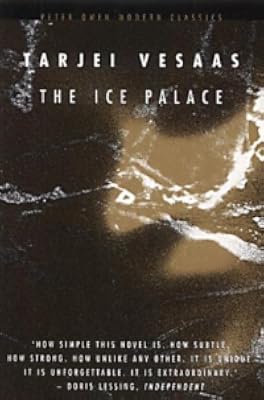
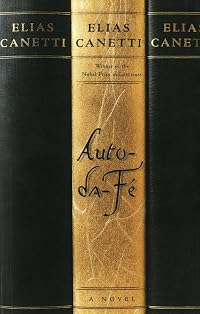
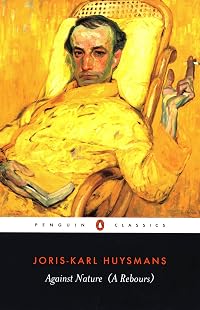
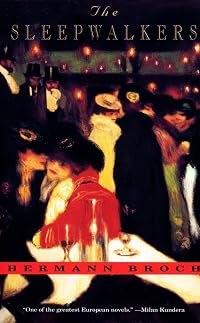
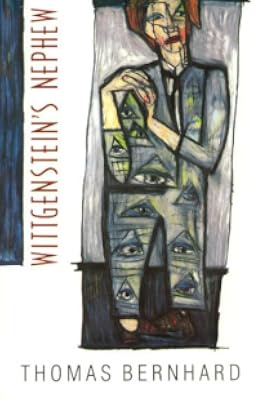
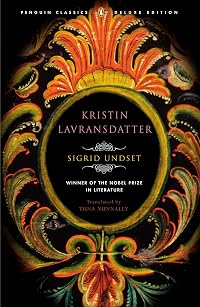







Member Recommendations
Member Reviews
Norwegian Wood
It was hard to believe that this book was written in 1892. Certainly in style it’s ahead of its time. The depiction of the inner life of its characters, the stream of consciousness writing, the strange feelings we get of the troubled Camus-like anti-hero, are the most memorable features of this Norwegian novel.
Although written in the third person, Hansun drops into the mind of Nagel, the rebel without a cause who is the protagonist of this fascinating book.
The book starts with Nagel who| arrives unannounced at a Norwegian coastal town knowing no one, wearing a yellow suit and carrying a fur coat and a violin-less violin case. He takes a room at the local hotel and proceeds to embark upon some very unpredictable acts show more whose purposes are at odds with conventional society.
He takes pleasure in persuading people to act contravention to their own dispositions. He orders a new coat for the town jester, a cripple who ignorant villagers laugh at, calling him as “the midget”. He insists on buying an old worn-out chair from a poor widow for a price that exceeds her annual income. These people don’t want his money but Nagel wants them to go against their virtue of poverty to satisfy himself.
To Nigel money is no object and he throws it around hosting a “stag party” for the towns local dignitaries.
The dinner party scene was the highlight of the book. The town’s pastor, doctor, deputy and Negal sit around a table discussing world políticas. When thoroughly inebriated the move on to literature. Negal is contemptuous of Tolstoy, and Ibsen, calling them mediocre. He despises Marx, socialists and liberals, claiming the latter are makers of bureaucracies whose height of legislation is the setting up of a committee to improve the footwear of mailmen.
As the book progresses Nagel becomes manic, contradictory and irrational in his thought patterns. He confuses himself as his opposing desires clash. He proclaims his useless passion for the pastor’s blond-haired daughter and proposes to a poor gray-haired widow. When he falls down in his manic dementia the novel veers from the third person narrative to the stream of consciousness of Nagel’s mind.
Mysteries is a very intriguing book. I had to keep reminding myself that it was written in the 19th century. I had to google this writer, Knut Hamsun - I’d chanced upon the novel by accident. I needed to know more. This was when I was halfway through the book. I discovers he had, much later in life, praised Hitler. I almost stopped reading but continued to the end because I felt there must be some obscure reason. How could this be?
I ended up going with the Guardian reviewer in The Nazi novelist you should read -
“I will not defend Hamsun's politics. He betrayed both his country and more importantly humanity in general and deserves every bit of the scorn that's been heaped upon him. Hamsun's writing, however, is another matter. Whether we like the man or not, it seems to me both foolish and pointless to continue ignoring the significance of Hamsun's work - if for no other reason than it's an important part of our literary evolution and denying this can do nothing but cloud our understanding of our ourselves as readers and writers.”
I am both glad and ashamed that I finished this novel. Like the book’s main character, I’m holding two competing thoughts in my head. I can’t unread it. I thought the book was brilliant. show less
It was hard to believe that this book was written in 1892. Certainly in style it’s ahead of its time. The depiction of the inner life of its characters, the stream of consciousness writing, the strange feelings we get of the troubled Camus-like anti-hero, are the most memorable features of this Norwegian novel.
Although written in the third person, Hansun drops into the mind of Nagel, the rebel without a cause who is the protagonist of this fascinating book.
The book starts with Nagel who| arrives unannounced at a Norwegian coastal town knowing no one, wearing a yellow suit and carrying a fur coat and a violin-less violin case. He takes a room at the local hotel and proceeds to embark upon some very unpredictable acts show more whose purposes are at odds with conventional society.
He takes pleasure in persuading people to act contravention to their own dispositions. He orders a new coat for the town jester, a cripple who ignorant villagers laugh at, calling him as “the midget”. He insists on buying an old worn-out chair from a poor widow for a price that exceeds her annual income. These people don’t want his money but Nagel wants them to go against their virtue of poverty to satisfy himself.
To Nigel money is no object and he throws it around hosting a “stag party” for the towns local dignitaries.
The dinner party scene was the highlight of the book. The town’s pastor, doctor, deputy and Negal sit around a table discussing world políticas. When thoroughly inebriated the move on to literature. Negal is contemptuous of Tolstoy, and Ibsen, calling them mediocre. He despises Marx, socialists and liberals, claiming the latter are makers of bureaucracies whose height of legislation is the setting up of a committee to improve the footwear of mailmen.
As the book progresses Nagel becomes manic, contradictory and irrational in his thought patterns. He confuses himself as his opposing desires clash. He proclaims his useless passion for the pastor’s blond-haired daughter and proposes to a poor gray-haired widow. When he falls down in his manic dementia the novel veers from the third person narrative to the stream of consciousness of Nagel’s mind.
Mysteries is a very intriguing book. I had to keep reminding myself that it was written in the 19th century. I had to google this writer, Knut Hamsun - I’d chanced upon the novel by accident. I needed to know more. This was when I was halfway through the book. I discovers he had, much later in life, praised Hitler. I almost stopped reading but continued to the end because I felt there must be some obscure reason. How could this be?
I ended up going with the Guardian reviewer in The Nazi novelist you should read -
“I will not defend Hamsun's politics. He betrayed both his country and more importantly humanity in general and deserves every bit of the scorn that's been heaped upon him. Hamsun's writing, however, is another matter. Whether we like the man or not, it seems to me both foolish and pointless to continue ignoring the significance of Hamsun's work - if for no other reason than it's an important part of our literary evolution and denying this can do nothing but cloud our understanding of our ourselves as readers and writers.”
I am both glad and ashamed that I finished this novel. Like the book’s main character, I’m holding two competing thoughts in my head. I can’t unread it. I thought the book was brilliant. show less
I first read this at the age of about 15, pulling it from my parents' shelves probably on some miserable rainy weekend. I remember liking the gloomy forest on the cover and thinking the book was weird, and good, and I'm of the same opinion today, although I understand it better now having read a couple of Hamsun's other novels and also being much older and wearier of the world. Now I think that Mysteries is doubly ahead of its time. It's proto-Modernist in its theme of the individual — or maybe "ego" is a better word — vs society. Its weirdo protagonist, Nagel, unlike the narrator of Hamsun's first novel Hunger, doesn't just eschew the society of his fellow Norwegians; he actively tries to shake it up, to show it for the charade he show more believes it to be. This is his perverse way of trying to connect. But I think it's even more relevant today, because Nagel is the kind of mythomaniac shit-stirrer that social media has supercharged.
Nagel (likely a false name, we later learn) shows up in a small coastal town wearing an absurd yellow suit, with a phial of prussic acid in his vest and among his luggage a violin case which turns out only to contain dirty laundry. He takes an interest in a local laughing-stock known as "The Midget", protects him from the abuse of townspeople, buys him new clothes, offers him money "to acknowledge the paternity of a boy", and later on takes against him and suspects him of murder. He falls in love, Young Werther-style, with the local beauty; he hosts a wild "stag party" in his hotel room where he denounces liberals, communists, Tolstoy, Ibsen, and Gladstone without propounding any definite credo of his own; he pretends to be wealthy; he claims to be poor. He inveigles a lonely spinster into accepting a ludicrous amount of money for a worthless old chair, then proposes marriage to her. He professes to be unmusical, then shocks the town with an impromptu display of violin virtuosity. I read somewhere that The Midget could be seen as Nagel's alter-ego, his inner self, his conscience, and I think that makes sense.
All this mad behaviour reminds one of the eccentricities of Dostoevsky's characters, but in Dostoevsky there's always the spectre of (Christian) morality presiding over the histrionics, the sense that the unhinged antics are due to the lack of a guiding (or restraining) hand; Hamsun is Modernist because he's not interested in that shit, in providing a safety net. Mysteries is written in the third person, but the narrative voice gets sucked ever deeper into Nagel's disordered mind, finally approaching a stream (or whirlpool) of consciousness as the character, his disruptive ambitions thwarted, comes unglued. He's modern because Nagel, for all his posturing and performative trolling, needs the oxygen of an audience to survive — but in the end, the tolerance of any audience for a self-obsessed showoff is limited. Even The Midget spurns poor Nagel in the end. show less
Nagel (likely a false name, we later learn) shows up in a small coastal town wearing an absurd yellow suit, with a phial of prussic acid in his vest and among his luggage a violin case which turns out only to contain dirty laundry. He takes an interest in a local laughing-stock known as "The Midget", protects him from the abuse of townspeople, buys him new clothes, offers him money "to acknowledge the paternity of a boy", and later on takes against him and suspects him of murder. He falls in love, Young Werther-style, with the local beauty; he hosts a wild "stag party" in his hotel room where he denounces liberals, communists, Tolstoy, Ibsen, and Gladstone without propounding any definite credo of his own; he pretends to be wealthy; he claims to be poor. He inveigles a lonely spinster into accepting a ludicrous amount of money for a worthless old chair, then proposes marriage to her. He professes to be unmusical, then shocks the town with an impromptu display of violin virtuosity. I read somewhere that The Midget could be seen as Nagel's alter-ego, his inner self, his conscience, and I think that makes sense.
All this mad behaviour reminds one of the eccentricities of Dostoevsky's characters, but in Dostoevsky there's always the spectre of (Christian) morality presiding over the histrionics, the sense that the unhinged antics are due to the lack of a guiding (or restraining) hand; Hamsun is Modernist because he's not interested in that shit, in providing a safety net. Mysteries is written in the third person, but the narrative voice gets sucked ever deeper into Nagel's disordered mind, finally approaching a stream (or whirlpool) of consciousness as the character, his disruptive ambitions thwarted, comes unglued. He's modern because Nagel, for all his posturing and performative trolling, needs the oxygen of an audience to survive — but in the end, the tolerance of any audience for a self-obsessed showoff is limited. Even The Midget spurns poor Nagel in the end. show less
Do princípio ao fim, sentimo-nos como numa zaragata de café: o autor empurra uma mesa e entala-nos, com um sorriso, de encontro à parede. Mas que raio estou a ler? Mas que raio acabei de ler? Não sabemos exactamente o que pensar sobre cada um dos personagens; o enredo é psicologicamente intrincado (a expressão inglesa, mind-bending, é talvez a mais ilustrativa); a prosa é belíssima, cheia de diálogos e monólogos fantásticos, que nos arrastam para o outro lado do espelho - aproximamo-nos, tanto quando possível, do estado mental alterado, à falta de melhor classificação, do protagonista.
É absolutamente impossível esquecer estes personagens: Nagel; Dagny; Grøgaard, o Anão; a menina Gude; Reinert, o ajudante judicial. show more Todos têm uma marca que os situa para além do racionalmente apreensivel. Nagel, sobretudo, tem a qualidade de um animal selvagem, completamente imprevisível, impossível de se lhe pôr o dedo em cima; um maníaco-depressivo genial.
O próprio título do livro é intrigante, não sendo, como tudo o resto, cabalmente esclarecido. Dando um passo atrás, afastando a mesa de café onde nos entalaram pela cintura, podemos conjecturar que a intenção do livro não está escondida, a sua intenção é parecer que está (mind-bending), produzindo a sensação que algo nos escapa. Não é possível elaborar uma explicação eficaz sobre o livro, perceber o que o autor realmente nos quis dizer, porque somente pela experiência de leitura se poderá sentir, mais do que perceber, que algo profundo, que escapa à linguagem, foi tocado. E por isso nos fica próximo, interior.
Mais uma vez, uma vénia à tradução do João Reis. Que prazer. show less
É absolutamente impossível esquecer estes personagens: Nagel; Dagny; Grøgaard, o Anão; a menina Gude; Reinert, o ajudante judicial. show more Todos têm uma marca que os situa para além do racionalmente apreensivel. Nagel, sobretudo, tem a qualidade de um animal selvagem, completamente imprevisível, impossível de se lhe pôr o dedo em cima; um maníaco-depressivo genial.
O próprio título do livro é intrigante, não sendo, como tudo o resto, cabalmente esclarecido. Dando um passo atrás, afastando a mesa de café onde nos entalaram pela cintura, podemos conjecturar que a intenção do livro não está escondida, a sua intenção é parecer que está (mind-bending), produzindo a sensação que algo nos escapa. Não é possível elaborar uma explicação eficaz sobre o livro, perceber o que o autor realmente nos quis dizer, porque somente pela experiência de leitura se poderá sentir, mais do que perceber, que algo profundo, que escapa à linguagem, foi tocado. E por isso nos fica próximo, interior.
Mais uma vez, uma vénia à tradução do João Reis. Que prazer. show less
Of the three Knut Hamsun novels I've read, Mysteries was by far the most difficult to handle. Despite the fact that the story is told from a third-person perspective, we're privy to the deepest thoughts of the novel's central character, Johan Nagel, many different times. These thoughts are dumped stream-of-consciousness style in large, unwieldy chunks that give you a very thorough understanding of Nagel's mental state (if not who he really is or what he really does), but at what cost? Hamsun was successful enough at going back and forth between third-person perspective and first-person thought, but it's indisputably more muddled than his prose in his earlier novel Hunger, in which we get a very coherent narrative that's fully show more first-person.
I think I've shared my thoughts on this in another review before, but I'll give it another go here. I have no problem with writers (or really any artist) experimenting and taking risks with their chosen medium. That doesn't mean it's ok for their work to be worse because of it. Trying something new doesn't mean you can hold that new thing to a lower standard. Hamsun's narration flourishes in Hunger. It's only just functional in Mysteries.
Don't worry, though. There's so much here to like! Hamsun's prose is still as good as ever. It's incredibly frantic without ever feeling like it's going too fast, which is key here, because you don't want to be going too fast in a book without much of a plot.
As far as that goes, a guy shows up in town, falls hopelessly in love, and then un-shows up. If you just read the Sparknotes, it would look like The Sorrows of Young Werther with a couple discussions about 19th century Norwegian politics thrown in. But the difference between the two books is what makes Mysteries worth reading. Unlike The Sorrows of Young Werther, this book has secondary characters that have actual names.
The best of these is a sad, ugly, impoverished coal-hauler named Miniman. The relationship between Nagel and Miniman felt in some ways like a mirror image to that of Ivan Karamazov and Smerdyakov in The Brothers Karamazov. Nagel is blown away by the extremity of Miniman's actions, but rather than extreme evil and depravity (like what Ivan saw in Smerdyakov), Miniman acts in a pure, almost infantile manner. Nagel, whose thoughts and actions tend to waffle between Christlike and Satanic (he's not big on half-measures), is caught in between assisting a poor man that treats people decently and fostering an obsessiveand accurate suspicion over what he sees as Miniman's inner darkness. It's a fun relationship that colors nearly every interaction Nagel has with the other townspeople.
That being said, I wouldn't recommend Mysteries to anyone who doesn't already like Knut Hamsun. It's a much more extreme version of how he writes in his other novels, and regardless of whether you want to start with his most famous book (Hunger) or the one that won him the Nobel Prize (Growth of the Soil), you're going to read something better than this. show less
I think I've shared my thoughts on this in another review before, but I'll give it another go here. I have no problem with writers (or really any artist) experimenting and taking risks with their chosen medium. That doesn't mean it's ok for their work to be worse because of it. Trying something new doesn't mean you can hold that new thing to a lower standard. Hamsun's narration flourishes in Hunger. It's only just functional in Mysteries.
Don't worry, though. There's so much here to like! Hamsun's prose is still as good as ever. It's incredibly frantic without ever feeling like it's going too fast, which is key here, because you don't want to be going too fast in a book without much of a plot.
As far as that goes, a guy shows up in town, falls hopelessly in love, and then un-shows up. If you just read the Sparknotes, it would look like The Sorrows of Young Werther with a couple discussions about 19th century Norwegian politics thrown in. But the difference between the two books is what makes Mysteries worth reading. Unlike The Sorrows of Young Werther, this book has secondary characters that have actual names.
The best of these is a sad, ugly, impoverished coal-hauler named Miniman. The relationship between Nagel and Miniman felt in some ways like a mirror image to that of Ivan Karamazov and Smerdyakov in The Brothers Karamazov. Nagel is blown away by the extremity of Miniman's actions, but rather than extreme evil and depravity (like what Ivan saw in Smerdyakov), Miniman acts in a pure, almost infantile manner. Nagel, whose thoughts and actions tend to waffle between Christlike and Satanic (he's not big on half-measures), is caught in between assisting a poor man that treats people decently and fostering an obsessive
That being said, I wouldn't recommend Mysteries to anyone who doesn't already like Knut Hamsun. It's a much more extreme version of how he writes in his other novels, and regardless of whether you want to start with his most famous book (Hunger) or the one that won him the Nobel Prize (Growth of the Soil), you're going to read something better than this. show less
I was introduced to the author Knut Hamsun by reading his first novel, Hunger. It is a Dostoevskian tale of a young journalist who is literally starving to death. His story is about trying to write and live while not even being able to afford a scrap of food, pawning his vest to be able to survive a few more days. It is a searing story that one does not forget. I had reread that book about a year ago, but still had not tackled any of Hamsun's other works before I had picked this book. My expectations were high, as he is a Nobel Laureate, but I was not sure if he would equal, much less surpass, his earlier novel. Now I look forward to reading more of his works.
I was drawn to Mysteries because of a reference in Henry Miller's The Colossus show more of Maroussi where he said of Mysteries that it "is closer to me than any other book I have read." High praise from a writer that I respect and whose Colossus I loved.
Mysteries is not exactly thrilling, but it is an adventure into the unknown. It does not rely on a traditional plot, rather it starts under mysterious circumstances where a strange young man named Johan Nagel without any past appears in a small coastal town where a person has been recently killed. However, playing against expectations the book doesn't delve in to the suspense of the murder, rather all the mysteries lie in Nagel's relations with the townspeople and in discovering the duality of human mind. The duality that confuses us more than the bystander why we are what we are. How can we be so selfish while performing a selfless act? Why do we care about so much about something whose absence doesn't matter in long run? Why we love someone who doesn't love us back? I found moments in the book left me feeling that I was sharing a dream with the characters - an eerie feeling indeed but more puzzling than frightening.
Sven Birkerts has said that Hamsun has created " works of desperate lyrical romanticism". But Hamsun is also a precursor to and in some ways participant in modernism, writing works that span the end of the 19th and beginning of the 20th centuries. This book is compelling with challenging arguments that you think and perhaps question your beliefs, especially the arguments on societal interpretation of the genius. Birkerts, in his introduction, goes on to say that Mysteries is "compelling in its fans a depth of devotion that owes less to narrative, character development, or evocative prose than to something more elemental, more . . . mysterious." (p. x)
It is thus to me and a novel of ideas that I can truly enjoy. show less
I was drawn to Mysteries because of a reference in Henry Miller's The Colossus show more of Maroussi where he said of Mysteries that it "is closer to me than any other book I have read." High praise from a writer that I respect and whose Colossus I loved.
Mysteries is not exactly thrilling, but it is an adventure into the unknown. It does not rely on a traditional plot, rather it starts under mysterious circumstances where a strange young man named Johan Nagel without any past appears in a small coastal town where a person has been recently killed. However, playing against expectations the book doesn't delve in to the suspense of the murder, rather all the mysteries lie in Nagel's relations with the townspeople and in discovering the duality of human mind. The duality that confuses us more than the bystander why we are what we are. How can we be so selfish while performing a selfless act? Why do we care about so much about something whose absence doesn't matter in long run? Why we love someone who doesn't love us back? I found moments in the book left me feeling that I was sharing a dream with the characters - an eerie feeling indeed but more puzzling than frightening.
Sven Birkerts has said that Hamsun has created " works of desperate lyrical romanticism". But Hamsun is also a precursor to and in some ways participant in modernism, writing works that span the end of the 19th and beginning of the 20th centuries. This book is compelling with challenging arguments that you think and perhaps question your beliefs, especially the arguments on societal interpretation of the genius. Birkerts, in his introduction, goes on to say that Mysteries is "compelling in its fans a depth of devotion that owes less to narrative, character development, or evocative prose than to something more elemental, more . . . mysterious." (p. x)
It is thus to me and a novel of ideas that I can truly enjoy. show less
I've decided I need a new bookshelf. 'It's not you, it's me'. Perhaps all ex-Catholics need one of them, the one for the books they feel guilty about not finishing.
To begin with I hated this in a 'I hate this but I want to read it' way. That became 'I hate this but by God I'm going to finish it'. And a couple of nights ago, up at 3am that in turn became 'Yeah, nah. Move on'. And sometimes one moves on without the least guilt at all, other times one is tortured by it. Then one adds the inadequacy of looking it up on goodreads and discovering one wasn't clever enough to stick with it. I suppose that's the 'fear of missing out' on literary social media.
And I still do feel a bit like that. Guilt aside, I also feel like I might be missing show more out on a whopper of an ending.
Grrrrr. Maybe the shelf should be called 'I'm moving on but I can't get you out of my mind.' show less
To begin with I hated this in a 'I hate this but I want to read it' way. That became 'I hate this but by God I'm going to finish it'. And a couple of nights ago, up at 3am that in turn became 'Yeah, nah. Move on'. And sometimes one moves on without the least guilt at all, other times one is tortured by it. Then one adds the inadequacy of looking it up on goodreads and discovering one wasn't clever enough to stick with it. I suppose that's the 'fear of missing out' on literary social media.
And I still do feel a bit like that. Guilt aside, I also feel like I might be missing show more out on a whopper of an ending.
Grrrrr. Maybe the shelf should be called 'I'm moving on but I can't get you out of my mind.' show less
Hamsun's Johann Nagel slowly unravels before our eyes, his strange interactions with the residents of a small village just as perplexing to the reader as to those who encounter our sad and silly hero. There is an unsettling humour in this psychological finger trap, with the increasing exaggeration of the narrative eliciting more chuckles nad raised eyebrows, but also heightening its bleak mood and the utterly pitiful state of its central character. A strange and haunting novel in which Hamsun again proves that he is a master of psychological characterization.
Members
- Recently Added By
Lists

Reading Globally
136 works; 16 members

Scandinavian Fiction of the 19th Century in English Translation
77 works; 2 members

Philip Ward's Lifetime Reading Plan
592 works; 22 members

The 150 Greatest Novels of All Time
150 works; 6 members

Books We Couldn't Put Down
443 works; 197 members

Best of World Literature
437 works; 52 members
Author Information

383+ Works 15,908 Members
Knut Pedersen Hamsun was born in Gudbrandsdalen, Norway on August 4, 1859 and grew up in poverty in Hamarøy. At the age of 17, he became an apprentice to a ropemaker and also began to dabble in writing. This eventually became his full-time career. He wrote numerous books during his lifetime including The Intellectual Life of Modern America, show more Hunger, and Pan. In 1920, his novel Growth of the Soil, a book describing the attraction and honesty of working with the land, won the Nobel Prize in Literature. As a supporter of Hitler and the Nazi Occupation of Norway during World War II, Hamsun was charged with treason for his affiliation with the party after the war ended. His property was seized, he was placed under psychiatric observation, and his last years were spent in poverty. He died on February 19, 1952. A 15-volume compilation of his complete works was published posthumously in 1954. (Bowker Author Biography) show less
Some Editions
Awards and Honors
Notable Lists
Series
Belongs to Publisher Series
Work Relationships
Is contained in
Common Knowledge
- Canonical title*
- Mysterier
- Original title
- Mysterier
- Original publication date
- 1892
- People/Characters
- Johan Nilsen Nagel; Dagny Kielland; Minutten (Johannes Grøgård); Martha gude
- Important places*
- Noorwegen
- First words
- In the middle of the summer of 1891 the most extraordinary things began happening in a small Norwegian coastal town.
- Last words
- (Click to show. Warning: May contain spoilers.)He reached the docks, ran to the farthest pier, and leaped into the sea. Some bubbles came up to the surface.
- Blurbers*
- Jannoud, Claude; Sperber, Manes ; Miller, Henry; Hermans, W.F.
- Original language
- Norwegian
*Some information comes from Common Knowledge in other languages. Click "Edit" for more information.
Classifications
Statistics
- Members
- 1,585
- Popularity
- 14,445
- Reviews
- 26
- Rating
- (3.94)
- Languages
- 17 — Czech, Dutch, English, Finnish, French, German, Italian, Lithuanian, Norwegian (Nynorsk), Norwegian (Bokmål), Norwegian, Portuguese, Russian, Slovenian, Spanish, Swedish, Turkish
- Media
- Paper, Audiobook, Ebook
- ISBNs
- 65
- ASINs
- 30