
Edvard Munch (1863–1944)
Author of Edvard Munch: Leben und Werks
About the Author
Works by Edvard Munch
The Private Journals of Edvard Munch: We Are Flames Which Pour Out of the Earth (2004) 35 copies, 1 review
Munch : (cat. exp., Milan, Palazzo Reale, Palazzo Bagatti Valsecchi, Milano), [4 dicembre 1985-16 marzo 1986] (1985) 14 copies, 1 review
Edvard Munch, expressionist paintings, 1900-1940: A loan exhibition from the Munch Museum in Oslo (1982) 12 copies
Edvard Munch;: The graphic work: a loan exhibition from the Munch Museum, Oslo, Norway, 1972-1973 (1973) 10 copies
Art noir : camera work by = valokuvaajina Edvard Munch, Akseli Gallen-Kallela, Hugo Simberg, August Strindberg (1995) 7 copies
Edvard Munch, 1863-1944: [exposición] Salas Pablo Ruiz Picasso, Madrid, abril-mayo 1984 (1984) 4 copies
Edvard Munch, sein Werk in schweizer Sammlungen : Kunstmuseum Basel, 9. Juni-22. September 1985 (1985) 4 copies
Edvard Munch - Bilder aus Norwegen - Ausstellung in der Kunsthalle Emden 02.10.2004 - 16.01.2005 (2004) 3 copies
Collected Paintings of Edvard Munch 3 copies
Munch 2 copies
The Great Artists : Their lives, works and inspiration : 74 : Munch — Illustrator — 2 copies
Edvard Munch in Frankreich 2 copies
Echoes of the Scream: Arken Museum of Modern Art, 3 Feb.-5 June 2001, Munch Museum, 17 June-30 Sept. 2001 (2001) 2 copies
Edvard Munchs brev familien 1 copy
Utstilling i Göteborgs konstmuseum 25 februari - 16 mars 1947 : [Illustr.] [Portr.] Edvard Munch 1 copy
The Scream [image] 1 copy
Alpha en Omega 1 copy
The Musicians of Bremen 1 copy
Uit het Noorden 1 copy
Frammenti sull'arte 1 copy
Edvard Munch: Original 50 prints (Fujikawa Gallery 50th Anniversary Exhibition series) (1986) 1 copy
Munch. Prameny sv. 27 1 copy
Edvard Munch: Graphical works from a well-known Norwegian private collection and from other sources, June-August 1969 (1969) 1 copy
Edvard Munch: Graphical Works From Norwegian Private Collections-- Also Crayons And Watercolours, Summer 1973 (1973) 1 copy
Edvard Munch Grafiek 1 copy
L'univers d'Edvard Munch 1 copy
Edvard Munch, 1863-1944 Gemäldegalerie Neue Meister, Albertinum, 13. Dez. 1983 bis 22. Feb. 1984 1 copy
Edvard Munch [exhibition] The Solomon R. Guggenheim Museum, New York, October 1965-January 1966 1 copy
Notes of a genius 1 copy
The Epstein Collection 1 copy
Associated Works
Pan: From Lieutenant Thomas Glahn's Papers (1894) — Cover artist, some editions — 1,636 copies, 35 reviews
Theories of Modern Art: A Source Book by Artists and Critics (1968) — Contributor — 858 copies, 6 reviews
Rosmersholm / The Master Builder / Little Eyolf / John Gabriel Borkman (1958) — Cover artist, some editions — 286 copies, 3 reviews
The Kiss of Judas & The Death of Halpin Frayser — Illustrator, some editions — 2 copies
Edvard Munch: Alpha en Omega 2 copies
Tagged
Common Knowledge
- Birthdate
- 1863-12-12
- Date of death
- 1944-01-23
- Education
- Royal School of Art and Design, Christiania, Norway
- Occupations
- artist
printmaker - Nationality
- Norway
- Birthplace
- Ådalsbruk, Løten, Norway
- Places of residence
- Oslo, Norway
- Place of death
- Oslo, Norway
- Associated Place (for map)
- Oslo, Norway
Members
Reviews
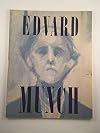
A great display of mesmerizing, powerful paintings that touch on the nature of human experience and what it means to encompass that. The brief biographical information is also extremely well-written and relevant to what you view. Even though I've read, and seen, another collection of Munch paintings, this one stands tall as a great addition to get a better glimpse into Munch's life and work.
5 stars!
5 stars!

an old book. art books are so much better now. colour, paintings all facing the same way. discussion of individual paintings with the painting.
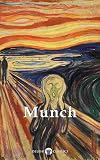
Delphi Collected Paintings of Edvard Munch (Illustrated) (Delphi Masters of Art Book 38) by Edvard Munch
No doubt, art starts with a drawing. Often science too starts with a drawing! A drawing is, in fact, a bridge between Art and Science. Learning to draw well puts students of science and Maths on a firm pursuit of learning (I speak from personal experience). I have not seen another teacher who can draw a perfect circle before a class on a black (white)-board, instantly, like my Math school-teacher did back in the day. He taught us fourteen theorems of trigonometry in final-year of our school, show more with elan. He always started the class by drawing a perfect circle on blackboard, effortlessly in one shot, without lifting the chalk piece. The level of his confidence in doing so inspired the students to learn not only the subject of trigonometry but also to draw!
Some Art teachers become an inspiration for young students to take up painting. Some have a penchant for making colored-pencil drawings of famous monuments of our metropolis - old Gothic buildings, driveways, and other inspiring architectures. He recently held a full-fledged exhibition of all his paintings in an art gallery. Dr. Homi J. Bhabha, the architect of Indian nuclear energy program, was an accomplished artist too, who drew pencil drawings (portraits) of several celebrities, among them two famous Nobel laureates - Sir C.V. Raman and Prof. P.M.S. Blackett. The layout of the beautiful gardens maintained at the Tata Institute of Fundamental Research and at Bhabha Atomic Research Centre, both in Mumbai were all planned by Bhabha after sketching them at his drawing board. The famous painting Starry Night (1889) by van Gogh drew inspiration from the depiction of a spiralling whirlpool galaxy by the astronomer, W. Parsons in 1845. Neuroscientists are giving profound meanings to what goes on in our minds when we look at drawings/paintings made by celebrated masters, such as the Woman in Gold, a portrait of Adele Bloch-Bauer I, by Klimt in 1907. Eric Kandel, the 2000 Nobel Laureate, proposed that as we walk and forth in front of this painting, the eyes of Adele seem to follow us because our visual systems convert a 2D image into a 3D portrait in our minds. Though the picture that forms in our visual and cerebral cortex, when we look at a sketch or a painting, is same for all individuals, the way it is processed, analyzed, resolved visually and emotionally, and reconstructed in our brains based on our past experiences and lifestyles, makes each person see a different view. In fact, the boost that each one of us gets in the number of synaptic contacts between our nerve cells is specific to the individual, and that alone decides the capacity of an individual to think and feel about what he/she makes out of the sketch/paintings. That also largely explains why different onlookers make out the extent of the hidden smile of 'Mona Lisa' to different levels when they are looking at it in The Louvre Museum in Paris. Similarly, it is up to the onlooker to decide whether it is a human figure shrieking or an inverted Edison's bulb in The Scream, the 1893 painting by Edvard Munch. show less
Some Art teachers become an inspiration for young students to take up painting. Some have a penchant for making colored-pencil drawings of famous monuments of our metropolis - old Gothic buildings, driveways, and other inspiring architectures. He recently held a full-fledged exhibition of all his paintings in an art gallery. Dr. Homi J. Bhabha, the architect of Indian nuclear energy program, was an accomplished artist too, who drew pencil drawings (portraits) of several celebrities, among them two famous Nobel laureates - Sir C.V. Raman and Prof. P.M.S. Blackett. The layout of the beautiful gardens maintained at the Tata Institute of Fundamental Research and at Bhabha Atomic Research Centre, both in Mumbai were all planned by Bhabha after sketching them at his drawing board. The famous painting Starry Night (1889) by van Gogh drew inspiration from the depiction of a spiralling whirlpool galaxy by the astronomer, W. Parsons in 1845. Neuroscientists are giving profound meanings to what goes on in our minds when we look at drawings/paintings made by celebrated masters, such as the Woman in Gold, a portrait of Adele Bloch-Bauer I, by Klimt in 1907. Eric Kandel, the 2000 Nobel Laureate, proposed that as we walk and forth in front of this painting, the eyes of Adele seem to follow us because our visual systems convert a 2D image into a 3D portrait in our minds. Though the picture that forms in our visual and cerebral cortex, when we look at a sketch or a painting, is same for all individuals, the way it is processed, analyzed, resolved visually and emotionally, and reconstructed in our brains based on our past experiences and lifestyles, makes each person see a different view. In fact, the boost that each one of us gets in the number of synaptic contacts between our nerve cells is specific to the individual, and that alone decides the capacity of an individual to think and feel about what he/she makes out of the sketch/paintings. That also largely explains why different onlookers make out the extent of the hidden smile of 'Mona Lisa' to different levels when they are looking at it in The Louvre Museum in Paris. Similarly, it is up to the onlooker to decide whether it is a human figure shrieking or an inverted Edison's bulb in The Scream, the 1893 painting by Edvard Munch. show less

Publsihed on the occasion of Edvard Munch Exhibition held at The Vancouver Art Gallery 31 May - 4 August 1986
You May Also Like


Associated Authors
Statistics
- Works
- 139
- Also by
- 33
- Members
- 742
- Popularity
- #34,227
- Rating
- 4.0
- Reviews
- 6
- ISBNs
- 88
- Languages
- 10