
Käthe Kollwitz (1867–1945)
Author of Prints and Drawings of Kathe Kollwitz
About the Author
Image credit: Courtesy of the NYPL Digital Gallery
(image use requires permission from the New York Public Library)
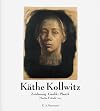
(image use requires permission from the New York Public Library)
Works by Käthe Kollwitz
Käthe Kollwitz: Zeichnung. Grafik. Plastik. Bestandskatalog des Käthe-Kollwitz-Museums Berlin (1999) 8 copies, 1 review
Ich will wirken in dieser Zeit: Auswahl aus den Tagebüchern und Briefen, aus Graphik, Zeichnungen und Plastik. (Biographie) (1989) 7 copies
Käthe Kollwitz : [catalogue of an] exhibition, December 1-31, 1976 at Kennedy Galleries, Inc. [and] Galerie St Etienne (1976) 5 copies
Blätter über den Bauernkrieg 3 copies
The power of the print 3 copies
Tagebuchblätter und Briefe 2 copies
Käthe Kollwitz, 1867-1945 2 copies
Käthe Kollwitz. Gráfica 1 copy
Postcard 'War to the War' with a reproduction of the lithography 'The Survivors' by Käthe Kollwitz 1 copy, 1 review
Ich Will Wirken in Dieser Zeit: Auswahl Aus Den Tagebuchern Und Briefen, Aus Graphik, Zeichnungen Und Plastik (German Edition) (1981) 1 copy
Kaethe Kollwitz: In the Cause of Humanity (Exhibition Arranged to Commemorate the Hundredth Birthday of the Artist) (1967) 1 copy
Blickwechsel: Käthe Kollwitz - Paula Modersohn- Becker. Zwei Künstlerinnen zu Beginn der Moderne (2000) 1 copy
Käthe Kollwitz 1 copy
Käthe Kollwitz : Mensch 1 copy
Mother and child 1 copy
Das plastische Werk 1 copy
Tod Und Frau 1 copy
Portrait of a Woman 1 copy
Kathe Kollwitz werk Ä 1 copy
Schlachtfeld - Battlefield 1 copy
Käthe Kollwitz (1867-1945) : Graphik : Ausstellung anläßlich des 10. Bundeskongresses des ÖGB 1 copy
Aufruhr - The Revolt 1 copy
Associated Works
Making Modernism: Paula Modersohn-Becker, Käthe Kollwitz, Gabriele Münter and Marianne Werefkin (2022) — Artist — 20 copies
Tagged
Common Knowledge
- Canonical name
- Kollwitz, Kathe
- Birthdate
- 1867-07-08
- Date of death
- 1945-04-22
- Gender
- female
- Education
- Women's Art School, Munich, Germany
Academie Julian, Paris, France - Occupations
- printmaker
lithographer
sculptor
German expressionist artist
draughtsman - Awards and honors
- Prussian Academy of Arts (member)
- Short biography
- Käthe Kollwitz, née Schmidt, was born in Konigsberg, Prussia (now Kaliningrad, Russia), to a prosperous artisan family. Recognizing her artistic talent, her parents arranged art lessons for her when she was a teenager. She attended The Berlin School of Art and then the Women's Art School in Munich. In 1890, she returned to Konigsberg and rented her first art studio. A year later, she married Dr. Karl Kollwitz, a physician to whom she had been engaged since he was a medical student. The couple settled in one of the poorest sections of the city. There Kollwitz developed the strong social conscience that was reflected in her work. She was influenced by the artist Max Klinger and the writings of Emile Zola, as well as by the suffering of workers and her husband's patients. She produced etchings, lithographs, drawings, and woodcuts. Her first public success came when her portfolio entitled A Weavers’ Revolt (1895–1898), inspired by the Gerhard Hauptmann play Die Weber, was shown at the Grosse Berliner Kunstausstellung. She was appointed to a special teaching post at the Künstlerinnenschule.
In 1904, on a trip to Paris, she visited to the Académie Julian, where she learned the basic principles of sculpture. She became the first woman elected to the Prussian Academy but because of her socialist beliefs, she was expelled from the academy on the rise of the Nazi regime in 1933. She was harassed and threatened by the Nazis, who classified her art as "degenerate" and forbid her to exhibit it. Her home was bombed during World War II, and she moved to Moritzburg, a town near Dresden, where she lived her final months. In 1986, the private Käthe-Kollwitz-Museum opened in Berlin as a permanent home for a major portion of her complete works. - Nationality
- Germany
- Birthplace
- Königsberg, East Prussia (now Kaliningrad, Russia)
- Places of residence
- Königsberg, Prussia (now Kalingrad ∙ Russia)
Berlin, Germany
Nordhausen, Germany
Moritzburg, Germany - Place of death
- Moritzburg, Germany
- Burial location
- Zentralfriedhof Friedrichsfelde, Berlin, Germany
- Associated Place (for map)
- Germany
Members
Reviews
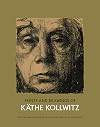
A compact Intro with a Kollwitz biography/evaluation preceeds the giant reproductions of the prints and drawings. (Her sculpture is not represented in this book.) The scale of the reproductions is really advantageous and, being monochrome prints and drawings, little is lost in photography and re-printing, compared to art forms where colour and texture are crucial.
Kollwitz seems to have had two main strands to her work - social justice and personal tragedy. The former was expressed by themes show more of workers' rights, poverty, ill-health and powerlessness and by pacifism. She didn't subscribe to any particular political movement or party, however and the link between the social justice works and the individual tragedies is simply basic human compassion. Kollwitz evidently had this in abundance. There is also a clear connection between her pacifism and the theme of individuals meeting Death (personified) with diverse reactions.
Kollwitz had enormous talent for expressing emotion through depiction of bodily posture and facial expression and this is what gives her work its power. I'm glad to have discovered her museum on my trip to Berlin last year. show less
Kollwitz seems to have had two main strands to her work - social justice and personal tragedy. The former was expressed by themes show more of workers' rights, poverty, ill-health and powerlessness and by pacifism. She didn't subscribe to any particular political movement or party, however and the link between the social justice works and the individual tragedies is simply basic human compassion. Kollwitz evidently had this in abundance. There is also a clear connection between her pacifism and the theme of individuals meeting Death (personified) with diverse reactions.
Kollwitz had enormous talent for expressing emotion through depiction of bodily posture and facial expression and this is what gives her work its power. I'm glad to have discovered her museum on my trip to Berlin last year. show less
Postcard 'War to the War' with a reproduction of the lithography 'The Survivors' by Käthe Kollwitz by Käthe Kollwitz

This lithography is published internationally on similar cards.
You May Also Like


Associated Authors
Statistics
- Works
- 78
- Also by
- 3
- Members
- 392
- Popularity
- #61,821
- Rating
- 4.5
- Reviews
- 3
- ISBNs
- 42
- Languages
- 5
- Favorited
- 2

