
Vincent van Gogh (1853–1890)
Author of The Letters of Vincent van Gogh
About the Author
Vincent van Gogh was one of the great post-impressionist masters and, because of the power and accessibility of his work and the tragedy and dedication of his life, he became a legend as an artist. He was born on March 30, 1853 in the Netherlands.The son of a Dutch parson, he was largely show more self-taught as an artist. Ascetic and intensely spiritual, he viewed art as almost a religious vocation. He painted incessantly and left a vast volume of work but sold only one picture during his lifetime. In 1888, van Gogh went to Arles in search of the glowing sunlight, there breaking from the somber, earthbound realism of his early style to the brilliant color, passionate thick brushstrokes, and incredible joyousness of his later style. Some of these paintings include: The Yellow House, Bedroom in Arles, The red vineyard, and paul Gauguin's Armchair. Although he suffered a mental breakdown in his later years, he still went on to paint masterpieces like Starry Night and The Sower. On July 27, 1890 he is said to have shot himself. Many believe this was a suicide act, but others maintain it was accidental or that he was shot by neighboring kids with a "malfunctioning" gun. The gun was never found. His letters to his brother Theo are a moving and fascinating account of his working processes and the agony and drama of his daily life. Van Gogh was buried on July 30 in the municipal cemetery of Auvers-sur-Oise at a funeral attended by his brother, Theo van Gogh, who died six months later, on January 25, 1891. They are buried side by side. (Bowker Author Biography) show less
Disambiguation Notice:
(fre) Il y a d'autres Van Goghs que Vincent. Prière de ne pas combiner cette page avec les autres. Merci.
There are van Goghs other than Vincent: please don't combine this page with any of them. Thanks.
Image credit: . The description on its description page there is shown below.
Vincent van Gogh, Paris, Frühjahr 1887: Selbstbildnis (Öl auf Karton, 42 x 33,7 cm) Chicago, The Art Institute of Chicago
Works by Vincent van Gogh
Van Gogh's Letters: The Mind of the Artist in Paintings, Drawings, and Words, 1875-1890 (2010) 103 copies
Vincent van Gogh (1853-1890) 12 copies
The Great Artists : Their lives, works and inspiration : 02 : Van Gogh (1990) — Illustrator — 11 copies
Ein Malerleben Vincent van Gogh : Der Künstler in seinen Briefen an den Bruder Theo, an Freunde und Familie (1982) — Author — 10 copies
Zelfportret in brieven en schetsen 8 copies
Vincent van Gogh: The Sketchbooks 8 copies
Vincent Van Gogh 7 copies
Van Gogh: Dipingero col rosso e col verde le terribili passioni umane (ArtBook) (Italian Edition) (1998) 4 copies
Starry Night [Painting] 4 copies
Vincent van Gogh 3 copies
Vincent van Gogh [cat. exp., 12 Oct - 8 Dec 1985, National Museum of Western Art, Tokyo] (1985) 3 copies
Letters to His Brother, Volume 2 3 copies
Van Gogh door Van Gogh : de brieven als commentaar op zijn werk Geordend en toegelicht door dr.J.Hulsker (1973) 3 copies
Letters to His Brother, Volume 1 3 copies
Letters to His Brother, Volume 3 3 copies
Van Gogh's universe 2 copies
Work by Vincent van Gogh: Catalogue of a Loan Exhibition at The Cleveland Museum of Art, November 3 through December 12, 1948 (1948) 2 copies
van Gogh bulletin 2 copies
Lettere a Theo 2 copies
Dostlukla - Seçme Mektuplar (Ciltli) 2 copies
The Bedroom In Arles 2 copies
Sunflowers 2 copies
Scrisori (Vol. I) 2 copies
The Starry Night 2 copies
Vincent van Gogh: janvier-mars 1947 2 copies
Scrisori Volumul 2 2 copies
Van Gogh 2016 Calendar 2 copies
Self-Portrait 2 copies
The Bedroom at Arles 2 copies
Van Gogh's life in his drawings ; Van Gogh's relationship with Signac : [exhibition] May-June 1962 2 copies
Scrisori 2 copies
Sunflowers 2 copies
Blumen und Landschaften 2 copies
Complete Works of Vincent van Gogh 2 copies
Gaugin's Chair 1 copy
A Wheatfield with Cypresses 1 copy
Self-Portrait 1 copy
Van Gogh V.. Letter to his brother Theo (N / A ) / Van Gog V..Pisma k bratu Teo (n/o ) (2010) 1 copy
Van Gogh's Chair 1 copy
The Passionate Eye 1 copy
A great Piece of art! 1 copy
Lettres a son frere Theo 1 copy
Interior of a Restaurant 1 copy
Vincent VanGough 1853-1890. 1 copy
Portrait of Joseph Roulin 1 copy
A NOITE ESTRLADA 1 copy
Still Life With Pears 1 copy
Wheat Field with Crows 1 copy
Self Portrait, September 1 copy
Olive Trees 1 copy
The Siesta 1 copy
Van Gogh válogatott levelei 1 copy
Vase With Twelve Sunflowers 1 copy
The Bedroom 1 copy
Van Gogh : girasoli 1 copy
Van Gogh Calendar 1 copy
Green Vase of Flowers 1 copy
Self Portrait at Easel 1 copy
Houses at Auvers 1 copy
Portrait of Pere Tanguy 1 copy
Postman Joseph Roulin 1 copy
A Pair of Boots 1 copy
The Bedroom 1 copy
The Church At Auvers 1 copy
Green Wheat Field 1 copy
The Poet's Garden 1 copy
The Harvest (oil on canvas) 1 copy
ART GALLERY Van Gogh NO.2 1 copy
Willows at Sunset 1 copy
The Pink Orchard 1 copy
Cows 1 copy
Self-Portrait with Straw Hat 1 copy
Starry Night on the Rhone 1 copy
Church 1 copy
Weaver 1 copy
Flower Beds in Holland 1 copy
GRANDS PEINTRES 1 copy
Scene in the Dunes 1 copy
The Olive Orchard 1 copy
Study for 'Romans Parisiens' 1 copy
Cafe-Terrace at Night 1 copy
Landscape with Bog Trunks 1 copy
The Night Café 1 copy
Dear Theo 1 copy
Almond Blossoms 1 copy
The drawings 1 copy
Vincent van Gogh Zeichnungen 1 copy
Handzeichnungen 1 copy
De verzameling Engelse prenten van Vincent van Gogh : Rijksmuseum Vincent van Gogh... vanaf 24 September 1975 (1975) 1 copy
Counted Cross Stitch Pattern: "Starry Night over the Rhone" by Vincent van Gogh (The Great Artists Series) (2015) 1 copy
عزيزي تيو 1 copy
Cypresses [Postcard] 1 copy
1886-1889 1 copy
Van Gogh in Auckland 1 copy
Portrait of Dr Gachet 1 copy
Lettres à sa mère lettres à Paul Gauguin lettres aux époux Ginoux - Vincent van Gogh - Éditions Falaize (1952) 1 copy
Teo'ya Mektuplar 1 copy
Van Gogh: Genio e follia 1 copy
Get a Fucking Job 1 copy
Vincent van Gogh: Catalogue of a loan exhibition at the Contemporary Arts Museum of Houston, February 4 through 25, 1951 (1951) 1 copy
Twenty-two paintings 1 copy
Van Gogh Auvers-sur-Oise 1 copy
Shoes 1 copy
Alle guten Wünsche 1 copy
Collection of Art Prints 1 copy
The Life of Vincent van Gogh 1 copy
"The Cafe Terrace on the Place de Forum, Arles, at Night" French street at night, cafe, stars 1 copy, 1 review
Lettre à Gauguin 1 copy
The Sower 1 copy
oranges and lemons in basket, two blue gloves in foreground (not in notebook at this number) 1 copy, 1 review
Starry Night Over The Rhone 1 copy
First Steps 1 copy
Wheat Field With Cypresses 1 copy
Les Alyscamps 1 copy
Orchard in Blossom 1 copy
Make a Masterpiece -- Van Gogh's Starry Night (Dover Little Activity Books: Art & Desig) (2014) 1 copy
Stick Together. Starry night 1 copy
Catalogue of 271 Works By Vincent Van Gogh Belonging To the Collection of the State Museum Kröller-Müller (1956) 1 copy
Vincent Van Gog 1 copy
Vincent Van Gogh (2 volumes) 1 copy
Van Gough 1 copy
Vincent Van Gogh 1 copy
Vincent Van Gogh, 1991 1 copy
Cypress trees 1 copy
Elysian fields 1 copy
The Artist's bedroom 1 copy
Associated Works
Vincent Van Gogh: The Complete Paintings (Two Volume Set) (1990) — Illustrator — 1,184 copies, 9 reviews
Theories of Modern Art: A Source Book by Artists and Critics (1968) — Contributor — 856 copies, 6 reviews
Van Gogh's Van Goghs : Masterpieces from the Van Gogh Museum, Amsterdam [catalogue] (1998) 334 copies, 1 review
Children's Book of Art: An Introduction to the World's Most Amazing Paintings and Sculptures (DK Children's Book of) (2009) — Artist — 189 copies, 1 review
A fuller understanding of the paintings at the Orsay Museum (2001) — Cover artist, some editions — 182 copies
The Great Artists : A library of their lives, times and paintings : Book 01 : Van Gogh (1963) 77 copies, 1 review
Vincent van Gogh: The Letters: The Complete Illustrated and Annotated Edition (6 Volume Set) (2009) 70 copies, 2 reviews
Vincent Van Gogh: A Self-Portrait in Art and Letters (2006) — Author, some editions — 53 copies, 1 review
Van Gogh Museum: Vincent van Gogh: Life, Work and Contemporaries (2005) — Illustrator — 48 copies, 3 reviews
Vincent van Gogh: Paintings, Watercolours and Drawings [1962-64 exhibition catalogue] (1962) — Illustrator — 41 copies
The Artist's Table: A Cookbook by Master Chefs Inspired by Paintings in the National Gallery of Art (1995) — Contributor — 39 copies
Catalogus van 272 werken van Vincent van Gogh behorende tot de verzameling van het Rijksmuseum Kröller-Müller (1961) 34 copies
VINCENT VAN GOGH: Schilderijen en tekeningen - een keuze uit de verzameling van de Vincent van Gogh Stichting (1973) 27 copies
Vincent van Gogh Paintings and Drawings [Exhibition West Coast Museums October 1958 to April 1959] (1958) 19 copies
L'opera pittorica completa di van Gogh e i suoi nessi grafici, Volume Secondo Da Arles a Auvers (2008) 13 copies
Holst : The planets + Walton : Facade {excerpts} {sound recording} {1961 Ormandy/Philadelphia, 1971 Bernstein/New York Philharmonic} (1961) — Cover artist, some editions — 8 copies
Drawings and prints by Vincent van Gogh in the collection of the Kroller-Muller Museum (2007) 7 copies
Genoveva, Op.81: Overture + Manfred, Op.115 : Overture + Symphony no.3 in E flat major, Op.97 'Rhenish' + Birtwhistle : Pulse shadows : Night {excerpt} + Debussy : The girl with… — Cover artist, some editions — 5 copies
Vincent van Gogh : Briefe an den Bruder aus Arles, Saint-Rémy und Auvers ; 1888 - 1890 (1948) 2 copies
Hymne an die Provence — Contributor — 1 copy
* De Provence Lege Artis: Verhalen uit het land van Van Gogh — Contributor — 1 copy
Tagged
Common Knowledge
- Canonical name
- Gogh, Vincent van
- Legal name
- Gogh, Vincent Willem van
- Birthdate
- 1853-03-30
- Date of death
- 1890-07-29
- Gender
- male
- Education
- Willem II College
École des arts décoratifs - Occupations
- painter
- Relationships
- Gogh, Theo van (brother)
Gogh, V. W. van (nephew)
Gogh-Bonger, Johanna van (sister-in-law) - Nationality
- Netherlands
- Birthplace
- Groot-Zundert, Netherlands
- Places of residence
- Arles, France
Paris, France
Antwerp, Belgium - Place of death
- Auvers-sur-Oise, France
- Burial location
- Auvers-sur-Oise, France
- Map Location
- Netherlands
- Disambiguation notice
- There are van Goghs other than Vincent: please don't combine this page with any of them. Thanks.
Members
Discussions
Folio Archives 365 : Vincent van Gogh Sketchbooks – LIMITED EDITION 2013 in Folio Society Devotees (March 2024)
Vincent van Goh in Legacy Libraries (December 2017)
Reviews
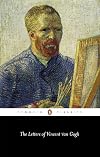
This generous selection of letters not only gives insight into Van Gogh’s aims and values as an artist, but stands as the literary record of a magnificent human soul. I was fascinated to follow him as he struggled to find his vocation. His detours as an art dealer, a bookseller, a preacher, all the while recording in his letters vivid visual descriptions of landscape and people. When he finally realized art was his calling, he had the sensibility of an artist from the start, even as he show more struggled with perspective and other matters of technique.
The hints of mania that take the form of religious fanaticism when he preached among coal miners transmuted to a personal approach to art. In a letter to his brother Theo in July 1885, Vincent contrasts his paintings of workers with earlier artists’ depiction of “types.” He is more interested in depicting work than in portraying exotic figures. When he paints faces, his ambition was to create a new kind of portrait, one that showed the mind, the soul, of the subject, rather than carefully recreating the surface facial features. To achieve what he’s after, he places less value on strict anatomical accuracy, becoming a forerunner of modernism.
Since most of his surviving letters were addressed to Theo, there is little from his hand to report his stay in Theo’s apartment in Paris. There he met the Impressionists and studied their trailblazing work. His own canvases from his time there reflect his absorption of their brighter palette. Yet when he left Paris for Arles, in the south of France, he consciously rejected many aspects of their style. He explained his decision to Theo. The Impressionists used color combinations to more accurately convey their visual impression than a direct application of color would. Van Gogh became convinced he should use vivid colors to express his emotional reaction to what he saw.
His letters not only report on his progress as an artist and his thoughts on theory, technique, and other artists. I was struck by how Vincent documents his passion for reading. It’s no surprise that he read books by and about artists, but he also devoured much contemporary literature, especially in French and English (he was good at languages).
In light of his complicated relationships (not only with Gaughin), his breakdowns, and his violent end, there is the temptation to read all his passionate outbursts and his tendency to preach condescendingly as ravings of a madman. The editor, Ronald de Leeuw, argues against this in his introduction. Yet, there are features in some of the letters that would sustain such a view. Balanced against this, however, are passages that convey his love of life and humanity and art. It took me a while to finish the book as I often stopped to copy out passages such as this one: “Anything complete and perfect renders infinity tangible.” Vincent Van Gogh’s output was impressive, both in volume and in its striking originality. Yet it is clear reading these letters that he is striving to convey the lustrous wonder of life, something far beyond what he or any other artist can achieve. show less
The hints of mania that take the form of religious fanaticism when he preached among coal miners transmuted to a personal approach to art. In a letter to his brother Theo in July 1885, Vincent contrasts his paintings of workers with earlier artists’ depiction of “types.” He is more interested in depicting work than in portraying exotic figures. When he paints faces, his ambition was to create a new kind of portrait, one that showed the mind, the soul, of the subject, rather than carefully recreating the surface facial features. To achieve what he’s after, he places less value on strict anatomical accuracy, becoming a forerunner of modernism.
Since most of his surviving letters were addressed to Theo, there is little from his hand to report his stay in Theo’s apartment in Paris. There he met the Impressionists and studied their trailblazing work. His own canvases from his time there reflect his absorption of their brighter palette. Yet when he left Paris for Arles, in the south of France, he consciously rejected many aspects of their style. He explained his decision to Theo. The Impressionists used color combinations to more accurately convey their visual impression than a direct application of color would. Van Gogh became convinced he should use vivid colors to express his emotional reaction to what he saw.
His letters not only report on his progress as an artist and his thoughts on theory, technique, and other artists. I was struck by how Vincent documents his passion for reading. It’s no surprise that he read books by and about artists, but he also devoured much contemporary literature, especially in French and English (he was good at languages).
In light of his complicated relationships (not only with Gaughin), his breakdowns, and his violent end, there is the temptation to read all his passionate outbursts and his tendency to preach condescendingly as ravings of a madman. The editor, Ronald de Leeuw, argues against this in his introduction. Yet, there are features in some of the letters that would sustain such a view. Balanced against this, however, are passages that convey his love of life and humanity and art. It took me a while to finish the book as I often stopped to copy out passages such as this one: “Anything complete and perfect renders infinity tangible.” Vincent Van Gogh’s output was impressive, both in volume and in its striking originality. Yet it is clear reading these letters that he is striving to convey the lustrous wonder of life, something far beyond what he or any other artist can achieve. show less

Los pensamientos y las preocupaciones diarias de Van Gogh.
Lo que me ha sorprendido es que se preocupaba mucho sobre dinero, ya que era pobre, apenas podia pagarse comida y pasa dias enteros sin comer a veces, no me extraña.
Y le preocupaba el arte, pero no le preocupaba no triunfar, sino no hacerlo lo suficientemente pronto como para poder dejar de tener esas preocupaciones de dinero.
Yo creo que sabia que lo que hacia tenia valor pero le preocupaba no poder demostrarlo.
En todo caso, una gran show more ventana a los pensamientos de una persona muy influyente en arte. Interesantisimo. show less
Lo que me ha sorprendido es que se preocupaba mucho sobre dinero, ya que era pobre, apenas podia pagarse comida y pasa dias enteros sin comer a veces, no me extraña.
Y le preocupaba el arte, pero no le preocupaba no triunfar, sino no hacerlo lo suficientemente pronto como para poder dejar de tener esas preocupaciones de dinero.
Yo creo que sabia que lo que hacia tenia valor pero le preocupaba no poder demostrarlo.
En todo caso, una gran show more ventana a los pensamientos de una persona muy influyente en arte. Interesantisimo. show less
Los pensamientos y las preocupaciones diarias de Van Gogh.
Lo que me ha sorprendido es que se preocupaba mucho sobre dinero, ya que era pobre, apenas podia pagarse comida y pasa dias enteros sin comer a veces, no me extraña.
Y le preocupaba el arte, pero no le preocupaba no triunfar, sino no hacerlo lo suficientemente pronto como para poder dejar de tener esas preocupaciones de dinero.
Yo creo que sabia que lo que hacia tenia valor pero le preocupaba no poder demostrarlo.
En todo caso, una gran show more ventana a los pensamientos de una persona muy influyente en arte. Interesantisimo. show less
Lo que me ha sorprendido es que se preocupaba mucho sobre dinero, ya que era pobre, apenas podia pagarse comida y pasa dias enteros sin comer a veces, no me extraña.
Y le preocupaba el arte, pero no le preocupaba no triunfar, sino no hacerlo lo suficientemente pronto como para poder dejar de tener esas preocupaciones de dinero.
Yo creo que sabia que lo que hacia tenia valor pero le preocupaba no poder demostrarlo.
En todo caso, una gran show more ventana a los pensamientos de una persona muy influyente en arte. Interesantisimo. show less
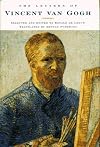
I first began my reading of these letters as a way to learn more about the art process, the way to creation coming from the mind of such a gifted artist such as Vincent Van Gogh. I also was interested in his life, his story, and how he got to this end. Personal letters seem to be so much more profitable to me as a reader than fiction, or even a biography. Throughout the entire book I came to feel, and inhabit, his struggle, his pain, his lack of recognition for what he deemed so important in show more total to his life. I learned through almost countless correspondences that he was rarely given the respect he felt he deserved, and he had just terrible luck with women. It was so sad the difficulties he faced socially. But I never felt once he was suicidal in his thinking. He was a creator, and a sick man obviously, but his genius insisted that he live and make history. I am of the opinion that Van Gogh shot himself in order that his brother Theo’s family could once again thrive as they had fallen on hard times and were suffering. A gut shot is a slow death, and in it one has the opportunity to say what needs to be said to those around him even though the end of life is inevitable.
In regards to the art of Van Gogh, the letters presented a complete study in the use of color. I came to understand his selections based on these letters explaining in great detail why he chose specific colors to use in his paintings. The man was authentic, and that is all one might hope to become in such a short and often confusing life we are all faced with. Vincent Van Gogh was gifted in so many ways, and had such high hopes as dreamers often do. The letters are a testament to his great love for his brother, and the many works of genius he left for those of us who today appreciate it. And as good a literary work as anything I have ever read. show less
In regards to the art of Van Gogh, the letters presented a complete study in the use of color. I came to understand his selections based on these letters explaining in great detail why he chose specific colors to use in his paintings. The man was authentic, and that is all one might hope to become in such a short and often confusing life we are all faced with. Vincent Van Gogh was gifted in so many ways, and had such high hopes as dreamers often do. The letters are a testament to his great love for his brother, and the many works of genius he left for those of us who today appreciate it. And as good a literary work as anything I have ever read. show less
Lists
Awards


You May Also Like


Associated Authors
Statistics
- Works
- 375
- Also by
- 88
- Members
- 4,300
- Popularity
- #5,841
- Rating
- 3.9
- Reviews
- 52
- ISBNs
- 252
- Languages
- 18
- Favorited
- 8


