
Martin Gayford
Author of The Yellow House: Van Gogh, Gauguin, and Nine Turbulent Weeks in Arles
About the Author
Martin Gayford is the co-editor of The Grove Book of Art Writing. Currently the chief art critic for Bloomberg Europe
Works by Martin Gayford
Modernists and Mavericks: Bacon, Freud, Hockney and the London Painters (2018) 123 copies, 2 reviews
The Grove Book of Art Writing: Brilliant Words on Art from Pliny the Elder to Damien Hirst (2000) — Editor — 91 copies, 2 reviews
Associated Works
David Hockney : A Bigger Picture {catalogue of the exhibition Royal Academy of Arts, London; 21 Jan - 09 April 2012, Guggenheim Museum, Bilbao 14. Mai - 30. Sept 2012; Museum… (2012) — Contributor — 114 copies, 1 review
David Hockney : Some Very, Very, Very New Paintings Not Yet Shown in Paris : 7 November 2025 - 28 February 2026 (2025) — Contributor — 2 copies
Tagged
Common Knowledge
- Canonical name
- Gayford, Martin
- Birthdate
- 1952
- Gender
- male
- Education
- University of Cambridge
Courtauld Institute of Art, University of London - Occupations
- art critic
art historian
editor - Organizations
- University of Buckingham
Spectator
Sunday Telegraph
Bloomberg Europe - Nationality
- UK
- Places of residence
- Cambridge, Cambridgeshire, England, UK
- Associated Place (for map)
- England, UK
Members
Reviews
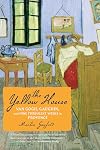
Vincent van Gogh and Paul Gauguin lived together for a few months in Arles, where they each produced some of their most famous paintings. But all was not peace and artistic harmony, and a lot of the problems stemmed from Vincent's volatility. This was an interesting and unflinching look at their lives during this time, including the bickering and brothels and madness. Both of them wrote Vincent's brother (an art dealer) and others often, so there's quite a bit of documentation of how the two show more felt during those weeks. What really stuck with me were the descriptions of Vincent's mood swings. It's quite likely that one of the things plaguing him was bipolar disorder. This is a subject close to my heart, and I found it far more thought-provoking and even upsetting than I'd expected. But in a good way, if that makes any sense.
In terms of art, my favorites by far were the times when Gauguin and Vincent painted the same scene/person. Seeing their different interpretations side by side was simply fascinating. I definitely will need to pick up more books about these artists and their contemporaries.
A note on this edition: This is the fault of the publisher rather than the author, but the photographs really should be in color. Color is so important in both Vincent and Gauguin's paintings. I ended up looking up a lot of them on my phone while I was reading. The black and white photos simply did not do them justice. show less
In terms of art, my favorites by far were the times when Gauguin and Vincent painted the same scene/person. Seeing their different interpretations side by side was simply fascinating. I definitely will need to pick up more books about these artists and their contemporaries.
A note on this edition: This is the fault of the publisher rather than the author, but the photographs really should be in color. Color is so important in both Vincent and Gauguin's paintings. I ended up looking up a lot of them on my phone while I was reading. The black and white photos simply did not do them justice. show less

This is one of those books where you have to look quite closely at the title: It's not a history of visual art, it's a history of pictures. In other words, Hockney and Gayford are discussing the history of human depictions of the real world on flat surfaces. They look at the interaction between imaginative reproduction — artists putting lines and colours on paper — and technical reproduction where we use optical devices to project images of the real world either temporarily onto a wall show more or a screen or more permanently onto a photographic film or a digital sensor.
Hockney, of course, has a long-standing bee in his bonnet about the way artists have used optical devices to assist them in composing pictures. So there's a lot about how every important artist from the renaissance onwards has been using a camera obscura to trace forms or at least to establish the composition of their work. It's perhaps controversial if you're an art historian, but if you don’t have a vested interest, it does seem to make perfect sense. Why wouldn't you use a tool if it's available and makes your work easier?
Of course, they emphasise that there's still always an important creative element in choosing the composition and lighting of what you want in your picture and then choosing how you want to transfer it from the projection to the permanent record.
Hockney points out that trained artists have often also turned out to be very good at taking photographs, whilst people who have no sense of visual art are unlikely to be good at taking photographs, except in a technical sense.
The book also covers moving images and digital creation of pictures — Hockney is the great advocate of iPad art, of course — but it’s just a bit too old to cover the rapidly developing topic of AI-created images. I’m sure there will be a chapter on that if they ever update the book. It would be interesting to know what Hockney thinks about computers producing images of penguins on surfboards or inadequately-clothed Asian girls in post-apocalyptic cityscapes.
It's interesting how this book is set up very explicitly as a dialogue with alternate passages written by Hockney and Gayford. Hockney writes, of course, from the practical viewpoint of a practising artist and also from his own aesthetic insight, whilst Gayford sticks more to filling us in on the history of art, explaining the background and context of the things that were going on around the artists at the time. It's a very good collaboration and it works surprisingly smoothly. I didn't find it at all distracting really.
The book is very richly illustrated. It includes practically every picture mentioned in the text, even the very over-familiar ones. In the paperback it's not always the most beautiful, glossy reproduction, but they're all perfectly adequate. The book is quite pretty to look at, although a bit chunky to be a coffee table book.
If you're going to read just one book on the history of visual images, this is probably a bit too random and discursive: you would probably want to start with someone like Gombrich. But this is also a very nice one, and a lively, entertaining read. show less
Hockney, of course, has a long-standing bee in his bonnet about the way artists have used optical devices to assist them in composing pictures. So there's a lot about how every important artist from the renaissance onwards has been using a camera obscura to trace forms or at least to establish the composition of their work. It's perhaps controversial if you're an art historian, but if you don’t have a vested interest, it does seem to make perfect sense. Why wouldn't you use a tool if it's available and makes your work easier?
Of course, they emphasise that there's still always an important creative element in choosing the composition and lighting of what you want in your picture and then choosing how you want to transfer it from the projection to the permanent record.
Hockney points out that trained artists have often also turned out to be very good at taking photographs, whilst people who have no sense of visual art are unlikely to be good at taking photographs, except in a technical sense.
The book also covers moving images and digital creation of pictures — Hockney is the great advocate of iPad art, of course — but it’s just a bit too old to cover the rapidly developing topic of AI-created images. I’m sure there will be a chapter on that if they ever update the book. It would be interesting to know what Hockney thinks about computers producing images of penguins on surfboards or inadequately-clothed Asian girls in post-apocalyptic cityscapes.
It's interesting how this book is set up very explicitly as a dialogue with alternate passages written by Hockney and Gayford. Hockney writes, of course, from the practical viewpoint of a practising artist and also from his own aesthetic insight, whilst Gayford sticks more to filling us in on the history of art, explaining the background and context of the things that were going on around the artists at the time. It's a very good collaboration and it works surprisingly smoothly. I didn't find it at all distracting really.
The book is very richly illustrated. It includes practically every picture mentioned in the text, even the very over-familiar ones. In the paperback it's not always the most beautiful, glossy reproduction, but they're all perfectly adequate. The book is quite pretty to look at, although a bit chunky to be a coffee table book.
If you're going to read just one book on the history of visual images, this is probably a bit too random and discursive: you would probably want to start with someone like Gombrich. But this is also a very nice one, and a lively, entertaining read. show less
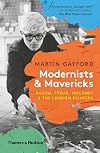
Martin Gayford has provided us with an intriguing snap shot of British art from 1945 to the end of the 1960s, making use of many personal testimonies and yet retaining the discipline of a historian. He rightly centres on Francis Bacon, Lucien Freud and David Hockney without neglecting the 'scene'.
This book is not just about those three dominant artists. There is scarcely a significant artist from this era who is not introduced and positioned in his or her milieu by Gayford. His story of show more these 25 years flows so that you get a sense of a fairly closed world that only sometimes spills out into ours.
The core point here is the sheer variety of artistic endeavours so that at no time can we speak of some dominant school or fashion as we might with, say, Abstract Expressionism in New York. Even such Schools as do emerge (such as Pop Art) prove to be more fluid than we might expect.
The creative attraction of America is important, however. It is arguable that Hockney has always been a Californian as much as an English artist. The pioneering work of the British Pop artists depended on the pull of American popular culture whilst remaining wholly distinctive.
It was also perhaps a culture that was perhaps more tolerant of difference than others. Abstraction never crushed figurative art (unlike in the US). The figurative and abstract could merge creatively as they appeared to do in the work of Bacon and Hockney. Freud never ceased being figurative.
Gayford is also good at letting artists speak for themselves on occasions if only to demonstrate that speaking is not really very helpful when it comes to art. Artists will talk amongst themselves in what becomes a private language that hides as much as it shows. Their bias is towards 'doing' - action.
One is struck by Bridget Riley's comments about her creative process which was highly individualistic and 'unscientific', its fashionable 'zeitgeist' aspect accidental and even irritating in its commercial exploitation without the artist's consent.
Artists simply 'do' Art. Bacon, Freud and Hockney are all extremely different from each other but what they had in common (only Hockney is still alive) was an intense creative obsession to 'act' and then, having acted, to move on and act something else out, to express, to develop.
I found myself by chance in a room full of film directors a few weeks ago and found the same attitude. It was for critics to analyse their work and that was another profession entirely. They were interested in making their peculiar sausages and, once the sausages were made, they were sent off to be eaten.
The educational system, the galleries, commissions, social change, private ambition, networks and Soho (and Camberwell) are all covered but the emphasis is always on the artist and what they actually did - their work - and how relationships between artists affected that work.
These are (mostly) sociable people in their way and yet the act of artistic creation seems to be one of existential isolation, a working out of 'being in the world' using physical materials where language simply has minimal place except sometimes as just another raw material in its own right.
I ended up with the rather uncharitable thought that perhaps 95% of the artistically fascinated middle classes who troop along to retrospectives and blockbusters are likely to emerge no wiser as to the apparent meaning of the work they have just viewed.
This is not to be a snob but a realist. The artist's world is intensely private and belongs to a club of artists where it is not. Little can be communicated when much art actually has no meaning (in linguistic terms) despite the best interpretative efforts of critics.
The famous and apparently Philistine comment that 'I don't know much about art but I know what I like' may, in fact, be as far as most of us can go in practice. Few 'art lovers' can go further. Even the critics (it becomes clear from the book) are likely to be guessing much of the time.
But we could say this about any of the great zones of human thought - Art, Religion, Science, Music, Politics, the list goes on. We bathe in their glow, accept or reject them, pretend to knowledge as opposed to pleasure or aversion, trust in others for our views yet not know their inner secrets.
An excellent book with excellent and appropriate illustrations, it is highly recommended to anyone interested in post war British Art and in the rather unique individualism of a culture that was still able to emphasise learned basic skills like drawing until quite late in the day. show less
This book is not just about those three dominant artists. There is scarcely a significant artist from this era who is not introduced and positioned in his or her milieu by Gayford. His story of show more these 25 years flows so that you get a sense of a fairly closed world that only sometimes spills out into ours.
The core point here is the sheer variety of artistic endeavours so that at no time can we speak of some dominant school or fashion as we might with, say, Abstract Expressionism in New York. Even such Schools as do emerge (such as Pop Art) prove to be more fluid than we might expect.
The creative attraction of America is important, however. It is arguable that Hockney has always been a Californian as much as an English artist. The pioneering work of the British Pop artists depended on the pull of American popular culture whilst remaining wholly distinctive.
It was also perhaps a culture that was perhaps more tolerant of difference than others. Abstraction never crushed figurative art (unlike in the US). The figurative and abstract could merge creatively as they appeared to do in the work of Bacon and Hockney. Freud never ceased being figurative.
Gayford is also good at letting artists speak for themselves on occasions if only to demonstrate that speaking is not really very helpful when it comes to art. Artists will talk amongst themselves in what becomes a private language that hides as much as it shows. Their bias is towards 'doing' - action.
One is struck by Bridget Riley's comments about her creative process which was highly individualistic and 'unscientific', its fashionable 'zeitgeist' aspect accidental and even irritating in its commercial exploitation without the artist's consent.
Artists simply 'do' Art. Bacon, Freud and Hockney are all extremely different from each other but what they had in common (only Hockney is still alive) was an intense creative obsession to 'act' and then, having acted, to move on and act something else out, to express, to develop.
I found myself by chance in a room full of film directors a few weeks ago and found the same attitude. It was for critics to analyse their work and that was another profession entirely. They were interested in making their peculiar sausages and, once the sausages were made, they were sent off to be eaten.
The educational system, the galleries, commissions, social change, private ambition, networks and Soho (and Camberwell) are all covered but the emphasis is always on the artist and what they actually did - their work - and how relationships between artists affected that work.
These are (mostly) sociable people in their way and yet the act of artistic creation seems to be one of existential isolation, a working out of 'being in the world' using physical materials where language simply has minimal place except sometimes as just another raw material in its own right.
I ended up with the rather uncharitable thought that perhaps 95% of the artistically fascinated middle classes who troop along to retrospectives and blockbusters are likely to emerge no wiser as to the apparent meaning of the work they have just viewed.
This is not to be a snob but a realist. The artist's world is intensely private and belongs to a club of artists where it is not. Little can be communicated when much art actually has no meaning (in linguistic terms) despite the best interpretative efforts of critics.
The famous and apparently Philistine comment that 'I don't know much about art but I know what I like' may, in fact, be as far as most of us can go in practice. Few 'art lovers' can go further. Even the critics (it becomes clear from the book) are likely to be guessing much of the time.
But we could say this about any of the great zones of human thought - Art, Religion, Science, Music, Politics, the list goes on. We bathe in their glow, accept or reject them, pretend to knowledge as opposed to pleasure or aversion, trust in others for our views yet not know their inner secrets.
An excellent book with excellent and appropriate illustrations, it is highly recommended to anyone interested in post war British Art and in the rather unique individualism of a culture that was still able to emphasise learned basic skills like drawing until quite late in the day. show less
Дэвид Хокни, популярный современный художник, и Мартин Гейфорд, художественный критик, историк искусства и автор биографий Ван Гога, Констебля и Микеланджело, ведут увлекательный диалог о месте и истории изображений в жизни людей. Именно изображений, потому что беседа, show more начинаясь с глубин веков, органично вплетает все больше и больше визуальных средств их воспроизведения, самыми узнаваемыми из которых, безусловно, по сей день являются картины. Однако и фотография, и кинематограф оказали заметное влияние на то, как мы воспринимаем изображения сейчас, и на то, как пишутся картины, а потому разговор идет и о них. Отдельная нить обсуждения — технологии: импрессионизма не было бы без изобретения тюбиков для краски, которые позволили писать на пленэре, а камера-обскура совершила подлинный переворот в живописи, хотя многие великие художники стеснялись признаваться в ее использовании. Хокни и Гейфорд, демонстрируя энциклопедические знания, распознают тайные приемы мэтров и даже находят у них ляпы. Впрочем, делается это без злого умысла, их интересует вопрос правдивого изображения мира. Ведь «если одни картины более правдивы, чем другие, они все равно не говорят всей правды, ибо это невозможно». show less
Lists
Awards


You May Also Like


Associated Authors
Statistics
- Works
- 36
- Also by
- 4
- Members
- 1,781
- Popularity
- #14,459
- Rating
- 4.1
- Reviews
- 26
- ISBNs
- 110
- Languages
- 10