
Marco Livingstone
Author of David Hockney (World of Art)
About the Author
Marco Livingstone is an American-born art historian and critic living in England. Since 1991 he has worked full-time as an independent curator and writer. He has organized numerous exhibitions including two large surveys of Pop Art and retrospectives of major British and American artists.
Works by Marco Livingstone
David Hockney : A Bigger Picture {catalogue of the exhibition Royal Academy of Arts, London; 21 Jan - 09 April 2012, Guggenheim Museum, Bilbao 14. Mai - 30. Sept 2012; Museum… (2012) — Contributor — 113 copies, 1 review
David Hockney: espace, paysage: [cat. exp., Galerie Sud, Centre Georges Pompidou, Paris 27 jan -26 avril 1999] (1999) 10 copies
Tom Wesselmann 1 copy
Pop art: die pop art show 1 copy
Télémaque Hervé : des modes & travaux, 1959-1999 : [exposition, Centre d'art de Tanlay, château de Tanlay, 22 mai-3 (1999) 1 copy
Portrait of David Hockney. 1 copy
Associated Works
David Hockney {catalogue of exhibition Tate Britain 2017, Centre Georges Pompidou 2017, Metropolitan Museum of Art 2017-2018} (2017) — Contributor — 94 copies
Duane Hanson: A survey of his work from the '30s to the '90s (1999) — some editions; some editions — 16 copies
Jim Dine: The Photographs, So Far (Vol. 1 - 4) (v. 1-4) (2003) — Contributor, some editions — 15 copies
Tagged
Common Knowledge
- Birthdate
- 1952
- Gender
- male
- Occupations
- art historian
Members
Reviews
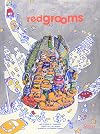
This work of art is vintage Red Grooms -a feast for the eyes: to list several: the fire engine sooooo long it can't fit in the rectangular frame; the Dalmation chomping a woman's butt; that woman with wild curly grey hair has the face of a granny; the fireman in front wears a Charles Dickens Christmas Carrol top hat; the bold number 5 on the fire engine echoes The Figure 5 in Gold, famous 1928 painting by American artist Charles Demuth.
What a treasure! Thank you, Rizzoli New York for this show more marvelous coffee-table book with hundreds of large color plates of the creations of American multimedia artist Red Grooms (Born 1937), without question an artist possessing one of the most spectacular, outlandish, over-the-top visual imaginations of all time. Also includes are three essays - from author/painter Timothy Human, art critic Marco Livningstone and philosopher of art Arthur C. Danto. The essay by Danto is nothing short of brilliant and it this essay The World as Ruckus – Red Grooms and the Spirit of Comedy I quote below along with adding my own modest comments.
“The term ruckus in any case fits the style – the way Grooms applies and uses cartoony exaggerations. In a way, his characteristic works are three-dimensional cartoons, and, whatever its motivation, the ruckus is intended as a form of comedy, by contrast with the typical piece of installation art, which in general takes itself pretty seriously.” ----------- Some years back I had the good fortune to see a Red Grooms exhibit - many where the times I smiled; many where the times I laughed. A gallery should put up a sign at the entrance to a Red Grooms exhibit: SOURPUSSES KEEP OUT.
“I would dearly love to see Grooms make a piece based on Plato’s Symposium, showing Alcibiades staggering in with the help of a flute-girl, ivy twisted in his golden hair.” --------- So would I, Arthur! Anytime you encounter an event or activity where the participants are taking themselves and others much too seriously, imagine the whole thing rendered as a Red Grooms.
“A lot of Groom’s work is about art; he has an immense and an affectionate knowledge of art history, and he likes to use his art to make statements about its history and his own relationship to it. Often these meta-artistic works are extremely illuminating about the work they take as their subject.” ---------- Case in point, the Jackson Pollock below. And further down, the Willem De Kooning and the Piet Mondrian. I'm especially fond of the sculpture where Mondrian is enclosed in a three-dimensional version of his painting.
Jackson in Action
“Grooms’s art has the form it has because of the response it is intended to have, with laughter as the outward manifestation of the change of inner state.” ----------- Once you make a connection with a Red Grooms creation, it will stick with you for years.
Philadelphia Cornucopia
“Grooms in some way makes his figures look ridiculous, even laughable, but he does not give himself an air of superiority in doing so because he makes his own work look proportionately ludicrous or laughable. ---------- There's nothing condescending about the artist's humor. Red Grooms puts his heart right out there along with his imagination and lives, via his art, with the men and women he creates.
Joltin' Joe Takes a Swing
“When the elevator doors of the Whitney Museum opened on Groom’s retrospective exhibition in 1987, I felt such an inrush of pleasure that I could not help but think – after all, mine, as you can tell, is in large measure the world of the professional philosopher – of Thomas Hobbes’s piquant definition of laughter in The Leviathan: laughter is “sudden glory.” For in a way that is what I felt: a flash of aesthetic glory.” ---------- Bulls-eye, Arthur! My experience exactly. And there's no aesthetic experience like one of aesthetic glory. If you spend a good hunk of time with Red Grooms, you will feel ten years younger. Guaranteed!
“In order for comedy to do its therapeutic work, it has to be accessible. The audience has to recognize what the work is about, and recognize itself in the work, as if in a mirror. The truth cannot be hidden, or be obscure.” ----------- There's no question, like the stories and art in the books of Dr. Seuss, the art of Red Grooms can be instantly understood.
‘His wonderful comic style was not intended at any point to degrade or ridicule its subjects but to present them with warmth by removing what might have been taken as fearful. The subway can be seen as a great iron dragon that worms through the dark underground beneath the city. Grooms shows it instead as comical and ingratiating, noting to be afraid of but as embodying, to use again Hegel’s description, “a fundamentally happy craziness, folly, and idiosyncrasy in general.”” ---------- The above Red Grooms subway sculpture allows the viewer to get on the subway and walk through. Yes, that's right - life-size and life-like. What a blast and a half.
Willem De Kooning
Sculpture of Piet Mondrian
Red Grooms show less
What a treasure! Thank you, Rizzoli New York for this marvelous coffee-table book with hundreds of large color plates of the creations of American multimedia artist Red Grooms (Born 1937), without question an artist possessing one of the most spectacular, outlandish, over-the-top visual imaginations of all time. Also includes are three essays - from author/painter Timothy Human, art critic Marco Livningstone and philosopher of art Arthur C. Danto. The essay by Danto is nothing short of show more brilliant and it this essay The World as Ruckus – Red Grooms and the Spirit of Comedy I quote below along with adding my own modest comments.
“The term ruckus in any case fits the style – the way Grooms applies and uses cartoony exaggerations. In a way, his characteristic works are three-dimensional cartoons, and, whatever its motivation, the ruckus is intended as a form of comedy, by contrast with the typical piece of installation art, which in general takes itself pretty seriously.” ----------- Some years back I had the good fortune to see a Red Grooms exhibit - many where the times I smiled; many where the times I laughed. A gallery should put up a sign at the entrance to a Red Grooms exhibit: SOURPUSSES KEEP OUT.
“I would dearly love to see Grooms make a piece based on Plato’s Symposium, showing Alcibiades staggering in with the help of a flute-girl, ivy twisted in his golden hair.” --------- So would I, Arthur! Anytime you encounter an event or activity where the participants are taking themselves and others much too seriously, imagine the whole thing rendered as a Red Grooms.
“A lot of Groom’s work is about art; he has an immense and an affectionate knowledge of art history, and he likes to use his art to make statements about its history and his own relationship to it. Often these meta-artistic works are extremely illuminating about the work they take as their subject.” ---------- Jackson Pollock, Willem De Kooning, Piet Mondrian. I'm especially fond of the sculpture where Mondrian is enclosed in a three-dimensional version of his painting.
“Grooms’s art has the form it has because of the response it is intended to have, with laughter as the outward manifestation of the change of inner state.” ----------- Once you make a connection with a Red Grooms creation, it will stick with you for years.
“Grooms in some way makes his figures look ridiculous, even laughable, but he does not give himself an air of superiority in doing so because he makes his own work look proportionately ludicrous or laughable. ---------- There's nothing condescending about the artist's humor. Red Grooms puts his heart right out there along with his imagination and lives, via his art, with the men and women he creates.
“When the elevator doors of the Whitney Museum opened on Groom’s retrospective exhibition in 1987, I felt such an inrush of pleasure that I could not help but think – after all, mine, as you can tell, is in large measure the world of the professional philosopher – of Thomas Hobbes’s piquant definition of laughter in The Leviathan: laughter is “sudden glory.” For in a way that is what I felt: a flash of aesthetic glory.” ---------- Bulls-eye, Arthur! My experience exactly. And there's no aesthetic experience like one of aesthetic glory. If you spend a good hunk of time with Red Grooms, you will feel ten years younger. Guaranteed!
“In order for comedy to do its therapeutic work, it has to be accessible. The audience has to recognize what the work is about, and recognize itself in the work, as if in a mirror. The truth cannot be hidden, or be obscure.” ----------- There's no question, like the stories and art in the books of Dr. Seuss, the art of Red Grooms can be instantly understood.
‘His wonderful comic style was not intended at any point to degrade or ridicule its subjects but to present them with warmth by removing what might have been taken as fearful. The subway can be seen as a great iron dragon that worms through the dark underground beneath the city. Grooms shows it instead as comical and ingratiating, noting to be afraid of but as embodying, to use again Hegel’s description, “a fundamentally happy craziness, folly, and idiosyncrasy in general.”” ---------- Red Grooms's subway sculpture allows the viewer to get on the subway and walk through. Yes, that's right - life-size and life-like. What a blast and a half. show less
“The term ruckus in any case fits the style – the way Grooms applies and uses cartoony exaggerations. In a way, his characteristic works are three-dimensional cartoons, and, whatever its motivation, the ruckus is intended as a form of comedy, by contrast with the typical piece of installation art, which in general takes itself pretty seriously.” ----------- Some years back I had the good fortune to see a Red Grooms exhibit - many where the times I smiled; many where the times I laughed. A gallery should put up a sign at the entrance to a Red Grooms exhibit: SOURPUSSES KEEP OUT.
“I would dearly love to see Grooms make a piece based on Plato’s Symposium, showing Alcibiades staggering in with the help of a flute-girl, ivy twisted in his golden hair.” --------- So would I, Arthur! Anytime you encounter an event or activity where the participants are taking themselves and others much too seriously, imagine the whole thing rendered as a Red Grooms.
“A lot of Groom’s work is about art; he has an immense and an affectionate knowledge of art history, and he likes to use his art to make statements about its history and his own relationship to it. Often these meta-artistic works are extremely illuminating about the work they take as their subject.” ---------- Jackson Pollock, Willem De Kooning, Piet Mondrian. I'm especially fond of the sculpture where Mondrian is enclosed in a three-dimensional version of his painting.
“Grooms’s art has the form it has because of the response it is intended to have, with laughter as the outward manifestation of the change of inner state.” ----------- Once you make a connection with a Red Grooms creation, it will stick with you for years.
“Grooms in some way makes his figures look ridiculous, even laughable, but he does not give himself an air of superiority in doing so because he makes his own work look proportionately ludicrous or laughable. ---------- There's nothing condescending about the artist's humor. Red Grooms puts his heart right out there along with his imagination and lives, via his art, with the men and women he creates.
“When the elevator doors of the Whitney Museum opened on Groom’s retrospective exhibition in 1987, I felt such an inrush of pleasure that I could not help but think – after all, mine, as you can tell, is in large measure the world of the professional philosopher – of Thomas Hobbes’s piquant definition of laughter in The Leviathan: laughter is “sudden glory.” For in a way that is what I felt: a flash of aesthetic glory.” ---------- Bulls-eye, Arthur! My experience exactly. And there's no aesthetic experience like one of aesthetic glory. If you spend a good hunk of time with Red Grooms, you will feel ten years younger. Guaranteed!
“In order for comedy to do its therapeutic work, it has to be accessible. The audience has to recognize what the work is about, and recognize itself in the work, as if in a mirror. The truth cannot be hidden, or be obscure.” ----------- There's no question, like the stories and art in the books of Dr. Seuss, the art of Red Grooms can be instantly understood.
‘His wonderful comic style was not intended at any point to degrade or ridicule its subjects but to present them with warmth by removing what might have been taken as fearful. The subway can be seen as a great iron dragon that worms through the dark underground beneath the city. Grooms shows it instead as comical and ingratiating, noting to be afraid of but as embodying, to use again Hegel’s description, “a fundamentally happy craziness, folly, and idiosyncrasy in general.”” ---------- Red Grooms's subway sculpture allows the viewer to get on the subway and walk through. Yes, that's right - life-size and life-like. What a blast and a half. show less
David Hockney: A Bigger Picture by Tim Barringer is a collection of essays about the work of painter and photographer, David Hockney, in conjunction with an exhibit at the Tate Museum. Each essay focuses on a different aspect of Hockey's long and varied career, though most are about his work in the last two decades when he returned to England and began applying lessons learned from his photographic collages and panoramas to large scale, plein air paintings.
Hockney is an artist whose work I show more was very familiar with as a child. He was living and working in Los Angeles at the time, and an uncle of mine was a fan of his work. He gave my grandmother a print of one of his collages — done with two or three dozen Polaroid photographs. The print hung in my grandmother's house for years and was something I saw on an almost daily basis.
It was actually my son who found this book at the library. He was drawn to it by Hockney's wide variety of artistic styles. Most recently he's explored born digital art, using Brushes on his iPad. It was an interesting, albeit somewhat surreal, experience to reconnect with an artist's work through my son's discovery. show less
Hockney is an artist whose work I show more was very familiar with as a child. He was living and working in Los Angeles at the time, and an uncle of mine was a fan of his work. He gave my grandmother a print of one of his collages — done with two or three dozen Polaroid photographs. The print hung in my grandmother's house for years and was something I saw on an almost daily basis.
It was actually my son who found this book at the library. He was drawn to it by Hockney's wide variety of artistic styles. Most recently he's explored born digital art, using Brushes on his iPad. It was an interesting, albeit somewhat surreal, experience to reconnect with an artist's work through my son's discovery. show less
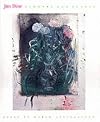
A fascinating look at Jim Dine's nature studies from 1976 to 1993. Dine, best known for his bold Pop Art creations, felt a need to return to drawing from observation in the mid-seventies, something that hadn't been of particular interest to him in his days as an art student. There is a wide range of work, from small scale, meticulously observed and rendered subject in pencil drawing to large scale multimedia works combining charcoal, watercolour, pastel, oil and enamel paint. The text, which show more features a running explanation of the artist's process for each of the plates shown was both informative and brief. As an art student, I find this book to be an invaluable teaching tool and inspiration for my own forays into painting and drawing. show less
You May Also Like


Associated Authors
Statistics
- Works
- 66
- Also by
- 6
- Members
- 1,088
- Popularity
- #23,608
- Rating
- 4.2
- Reviews
- 6
- ISBNs
- 102
- Languages
- 7
- Favorited
- 1