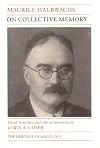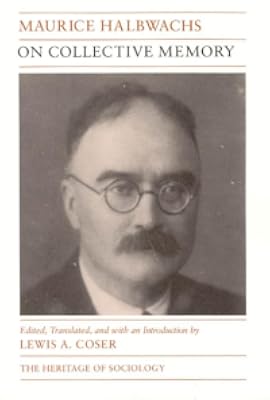
On Collective Memory
by Maurice Halbwachs
On This Page
Description
How do we use our mental images of the present to reconstruct our past? Maurice Halbwachs (1877-1945) addressed this question for the first time in his work on collective memory, which established him as a major figure in the history of sociology. This volume, the first comprehensive English-language translation of Halbwach's writings on the social construction of memory, fills a major gap in the literature on the sociology of knowledge. Halbwachs' primary thesis is that human memory can show more only function within a collective context. Collective memory, Halbwachs asserts, is always selective; various groups of people have different collective memories, which in turn give rise to different modes of behavior. Halbwachs shows, for example, how pilgrims to the Holy Land over the centuries evoked very different images of the events of Jesus' life; how wealthy old families in France have a memory of the past that diverges sharply from that of the nouveaux riches; and how working class construction of reality differ from those of their middle-class counterparts. With a detailed introduction by Lewis A. Coser, this translation will be an indispensable source for new research in historical sociology and cultural memory. Lewis A. Coser is Distinguished Professor of Sociology Emeritus at the State University of New York and Adjunct Professor of Sociology at Boston College. show lessTags
Recommendations

















Member Reviews
São Paulo: Centauro, 2006, 224p.
Jean Duvignaud
Prefácio, 7-16
MH evoca o depoimento da testemunha, que só tem sentido em relação a um grupo do qual esta faz parte, porque pressupõe um evento real vivido outrora em comum e, através desse evento, depende do contexto de referência no qual atualmente transitam o grupo e o indivíduo que o atesta. 12
Recorremos a testemunhos para reforçar ou enfraquecer e também para completar o que sabemos de um evento sobre o qual já temos alguma informação, embora muitas circunstâncias a ele relativas permaneçam obscuras para nós. O primeiro testemunho a que podemos recorrer será sempre o nosso. Quando diz: "não acredito no que vejo", a pessoa sente que nela coexistem dois seres - um, o ser show more sensível, é uma espécie de testemunha que vem depor sobre o que viu, e o eu que realmente não viu, mas que talvez tenha visto outrora e talvez tenha formado uma opinião com base no testemunho de outros. 29+110o homem é duplo...
base comum, noções comuns 39
intuição sensível = estado de consciência puramente individual 42, ela está sempre no presente 60
O que chamamos de sentimento da unidade do nosso eu, em que às vezes enxergamos um princípio original de coesão dos estados, no fundo não é senão a consciência que temos a cada instante de pertencer ao mesmo tempo a diversos ambientes - mas ela só existe no presente. 64
história: não uma sucessão cronológica de eventos e datas, mas tudo o ue faz com que um período se distinga dos outros, do qual os livros e as narrativas em geral nos apresentam apenas um quadro muito esquemático e incompleto 79. Compilação dos fatos que ocuparam maior lugar na memória dos homens. 100
Na realidade, existem muitas memórias coletivas. 105
tempo coletivo ou social 118
A memória dos pais vai ainda mais longe, talvez porque o grupo que eles formavam outrora não foi inteiramente absorvido na família ampliada. 151 show less
Jean Duvignaud
Prefácio, 7-16
MH evoca o depoimento da testemunha, que só tem sentido em relação a um grupo do qual esta faz parte, porque pressupõe um evento real vivido outrora em comum e, através desse evento, depende do contexto de referência no qual atualmente transitam o grupo e o indivíduo que o atesta. 12
Recorremos a testemunhos para reforçar ou enfraquecer e também para completar o que sabemos de um evento sobre o qual já temos alguma informação, embora muitas circunstâncias a ele relativas permaneçam obscuras para nós. O primeiro testemunho a que podemos recorrer será sempre o nosso. Quando diz: "não acredito no que vejo", a pessoa sente que nela coexistem dois seres - um, o ser show more sensível, é uma espécie de testemunha que vem depor sobre o que viu, e o eu que realmente não viu, mas que talvez tenha visto outrora e talvez tenha formado uma opinião com base no testemunho de outros. 29+110o homem é duplo...
base comum, noções comuns 39
intuição sensível = estado de consciência puramente individual 42, ela está sempre no presente 60
O que chamamos de sentimento da unidade do nosso eu, em que às vezes enxergamos um princípio original de coesão dos estados, no fundo não é senão a consciência que temos a cada instante de pertencer ao mesmo tempo a diversos ambientes - mas ela só existe no presente. 64
história: não uma sucessão cronológica de eventos e datas, mas tudo o ue faz com que um período se distinga dos outros, do qual os livros e as narrativas em geral nos apresentam apenas um quadro muito esquemático e incompleto 79. Compilação dos fatos que ocuparam maior lugar na memória dos homens. 100
Na realidade, existem muitas memórias coletivas. 105
tempo coletivo ou social 118
A memória dos pais vai ainda mais longe, talvez porque o grupo que eles formavam outrora não foi inteiramente absorvido na família ampliada. 151 show less
Mar 21, 2011Portuguese (Brazil)
Ratings
Members
- Recently Added By
Author Information

33+ Works 419 Members
Awards and Honors
Series
Belongs to Publisher Series
Common Knowledge
- Canonical title
- On Collective Memory
- Original title
- La mémoire collective
- Original publication date
- 1992
Classifications
- Genres
- Sociology, Nonfiction, History, General Nonfiction, Philosophy
- DDC/MDS
- 306.42 — Society, government, & culture Social sciences, sociology & anthropology Social Behavior - Dating, Marriage, Divorce Specific aspects of culture Sociology of knowledge
- LCC
- BF378 .S65 .H35 — Philosophy, Psychology and Religion Psychology Psychology Consciousness. Cognition
- BISAC
Statistics
- Members
- 330
- Popularity
- 95,939
- Reviews
- 3
- Rating
- (3.61)
- Languages
- 7 — English, French, German, Italian, Portuguese, Slovenian, Spanish
- Media
- Paper, Ebook
- ISBNs
- 21
- ASINs
- 2