Paris without End: The True Story of Hemingway’s First Wife
by Gioia Diliberto
On This Page
Description
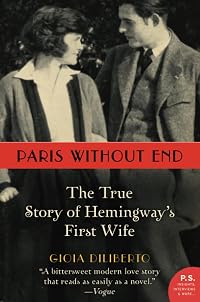
Hadley Richardson and Ernest Hemingway were the golden couple of Paris in the twenties, the center of an expatriate community boasting the likes of Scott and Zelda Fitzgerald, Gertrude Stein and Alice B. Toklas, and James and Nora Joyce. In this haunting account of the young Hemingways, Gioia Diliberto explores their passionate courtship, their family life in Paris with baby Bumby, and their thrilling, adventurous relationship--a literary love story scarred by Hadley's loss of the only copy show more of Hemingway's first novel, and ultimately destroyed by a devastating ménage à trois on the French Riviera. Compelling, illuminating, poignant, and deeply insightful, Paris Without End provides a rare, intimate glimpse of the writer who so fully captured the American imagination and the remarkable woman who inspired his passion and his art--the only woman Hemingway never stopped loving.--From publisher description. show lessTags
Recommendations




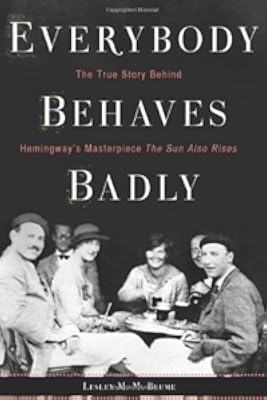


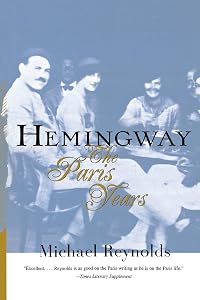
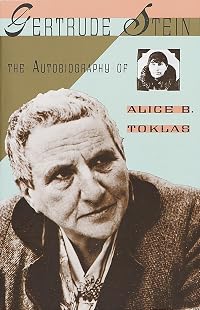
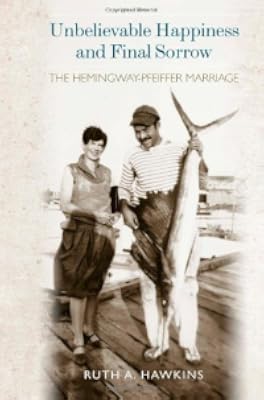

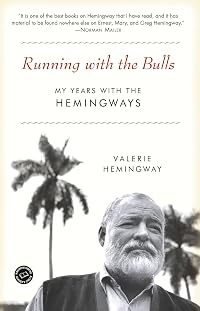
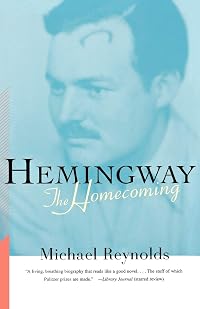
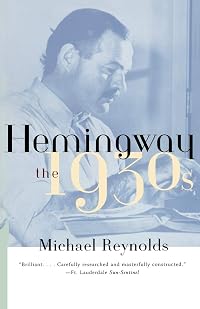



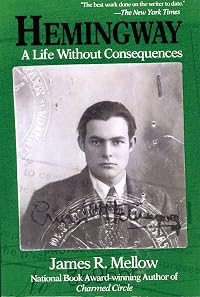
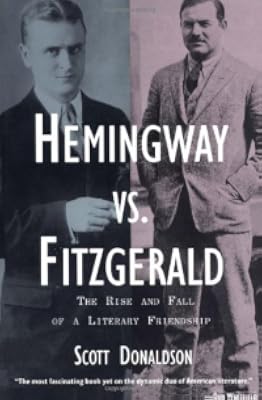
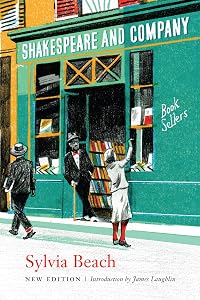


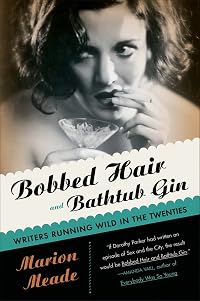



Member Recommendations
Member Reviews
Having read "The Paris Wife" by Paula McLain recently, I became intrigued by Hadley Richardson and her life. In this biography (which Paula McLain relied on heavily as research for her fictional book), Gioia Diliberto traces the life of Hadley from her birth to her death. Although she was only married to Hemingway for five years before they separated, much of the book focuses on this relationship. It's a fascinating account not just of Hadley and Hemingway, but of an era, a place and a stellar cast of characters who provide a vivid backdrop to the main story.
It's a book that can be read on many levels. It's claimed that Hadley was the inspiration for many of Hemingway's female characters and that his perception of love and romance was show more fundamentally shaped by their marriage, despite its brevity. It's also a look at a time when women were becoming increasingly independent and while Hadley was the woman behind the great man, the assumption that women in literature and the other arts should be relegated to the role of wife or muse was being questioned.
The facts of the book have been meticulously researched and rely on many sources, including interviews with those who knew the characters personally, including their son Jack, and many letters. The author has done a brilliant job at bringing all the facts and characters to vivid life and it's as absorbing (if not more so) than the fictional account. She has managed to round out the character of Hadley far more fully than Paula McLain and the account of this woman who some say was responsible for precipitating Hemingway's fledgling career onto its eventually illustrious path, is compelling reading. show less
It's a book that can be read on many levels. It's claimed that Hadley was the inspiration for many of Hemingway's female characters and that his perception of love and romance was show more fundamentally shaped by their marriage, despite its brevity. It's also a look at a time when women were becoming increasingly independent and while Hadley was the woman behind the great man, the assumption that women in literature and the other arts should be relegated to the role of wife or muse was being questioned.
The facts of the book have been meticulously researched and rely on many sources, including interviews with those who knew the characters personally, including their son Jack, and many letters. The author has done a brilliant job at bringing all the facts and characters to vivid life and it's as absorbing (if not more so) than the fictional account. She has managed to round out the character of Hadley far more fully than Paula McLain and the account of this woman who some say was responsible for precipitating Hemingway's fledgling career onto its eventually illustrious path, is compelling reading. show less
Gioia DiLiberto's biography of Hadley Richardson, Ernest Hemingway's first wife, is a wonderful narrative of the Nobel Prize winner's muse. It is well-documented with 40 pages of notes detailing specific citations of information, many of them from primary sources. A 14 page index provides locations devoted to all the major figures in the enduring love story. There is an "conversation" with the author and a reader's guide is provided.
Hadley and the younger Ernest were high energy young adults when they were married, each influenced for a lifetime by their Midwestern family upbringing. Both enjoyed outdoor activities (hiking) and sports (skiing). They also developed habits of drinking, and smoking in Hadley's case, that increased as they show more went from economic hardship to affluence. Hadley was a drinking partner for Ernest during their 5 years of marriage, and this contributed to the novelty and fun of moving from the US to living in Europe. Both were able to party every night and still get up in the morning full of energy and enthusiasm. Ernest had a focal point of writing and Hadley supported this without a meaningful one of her own.
I found in Paris Without End that there were positive factors in the intense relationship between Hadley and Ernest that support the idea that Hadley was a muse for him. These positives became overshadowed by negatives as the marriage began to unravel. First, dependence on alcohol was a major influence on the marriage and Ernest's writing. This can be observed in the nostalgia concerning the relationship Ernest described so eloquently in A Moveable Feast. In addition to short stories written during the cafe life Paris years, The Sun Also Rises was completed during the early years of the marriage. It is a novel focusing on partying and complicated relationships of expatriate friends mirroring Hadley and Ernest's activities. The young couple definitely lived the high life with little money required in Paris, fueled by alcohol. The problem with this is that drinking took its destructive toll even though the two were remarkably resilient.
A second positive is that Hadley was a good sport. She went along with Ernest's desire for traveling and his efforts to meet as many writers and artists as possible. A common misinterpretation is that Hadley was a drag on Ernest's hypomanic interests. The truth is just the opposite. She participated in the Hemingway's constant movement and interaction even though she was marginalized by the artistic crowd because she did not have a creative focal point of her own. Oddly enough, Hadley was a very good piano player, an artist in her own right, who appeared to have stage fright. She could practice for hours but then backed out of concerts when it came time to perform.
A third positive that backs the idea that Hadley was a muse was her support for Ernest's writing. Even though his style was ground-breaking and changed the direction of literature, it was not well-received at first. His early short stories were rejected many times. Hadley read all of his work and suggested that he write in a straight-forward minimalist style cutting out the embellishments of contemporary writers. This was very helpful to Ernest's persistence in establishing his unique approach to story telling. An unexpected problem in this area had a major influence in the decline of their relationship. Ernest earned money during the rejection period by working as a correspondent for US newspapers. On one assignment when the couple were separated, Ernest asked Hadley to join him on location. Hadley gathered up all of Ernest's work in progress (including the carbon copies) and took a train from Paris to meet him. The bag containing the manuscripts was stolen, and almost all of the work was lost. Ernest forgave Hadley, but the lack of trust in her seemed to decrease Ernest's love for her in a permanent way.
The last positive was Hadley's pregnancy, a great surprise for both of them, even though they were aware of a time of carelessness in their birth control methods that allowed for the conception. The birth of their son gave Hadley a focus of her own that she had not had during early part of the marriage. Hadley had mostly given up practicing her piano playing. Both Hadley and Ernest loved "Bumby" very much and delighted in his early development. As with the other three positives, this turned to a negative influence when Bumby became ill and had to be quarantined. This led to Hadley reducing her social and physical activity to some extent while Ernest seemed to increase his drinking and socializing. This restriction of Hadley's movements and interaction may have opened the door enough for the journalist Pauline Pfeiffer, Ernest's second wife, to compete with Hadley and eventually win him over.
Ernest's work was a constant focus, but Hadley's roll as muse seemed to diminish over time. It is clear, though, that Hadley had a lasting effect on Ernest's best writing. His 3 greatest works (The Sun Also Rises, A Farewell to Arms, and For Whom the Bell Tolls) are partly love stories that reflect Ernest's attitude toward love and marriage he developed during his 5 year marriage to Hadley. Gioia DiLiberto's book is a biography that reads like a novel. The factual account, however, is reliable and valid with a minimum of speculation. For readers who like learning about the lives of great writers, I highly recommend that they read this interesting and enjoyable book. show less
Hadley and the younger Ernest were high energy young adults when they were married, each influenced for a lifetime by their Midwestern family upbringing. Both enjoyed outdoor activities (hiking) and sports (skiing). They also developed habits of drinking, and smoking in Hadley's case, that increased as they show more went from economic hardship to affluence. Hadley was a drinking partner for Ernest during their 5 years of marriage, and this contributed to the novelty and fun of moving from the US to living in Europe. Both were able to party every night and still get up in the morning full of energy and enthusiasm. Ernest had a focal point of writing and Hadley supported this without a meaningful one of her own.
I found in Paris Without End that there were positive factors in the intense relationship between Hadley and Ernest that support the idea that Hadley was a muse for him. These positives became overshadowed by negatives as the marriage began to unravel. First, dependence on alcohol was a major influence on the marriage and Ernest's writing. This can be observed in the nostalgia concerning the relationship Ernest described so eloquently in A Moveable Feast. In addition to short stories written during the cafe life Paris years, The Sun Also Rises was completed during the early years of the marriage. It is a novel focusing on partying and complicated relationships of expatriate friends mirroring Hadley and Ernest's activities. The young couple definitely lived the high life with little money required in Paris, fueled by alcohol. The problem with this is that drinking took its destructive toll even though the two were remarkably resilient.
A second positive is that Hadley was a good sport. She went along with Ernest's desire for traveling and his efforts to meet as many writers and artists as possible. A common misinterpretation is that Hadley was a drag on Ernest's hypomanic interests. The truth is just the opposite. She participated in the Hemingway's constant movement and interaction even though she was marginalized by the artistic crowd because she did not have a creative focal point of her own. Oddly enough, Hadley was a very good piano player, an artist in her own right, who appeared to have stage fright. She could practice for hours but then backed out of concerts when it came time to perform.
A third positive that backs the idea that Hadley was a muse was her support for Ernest's writing. Even though his style was ground-breaking and changed the direction of literature, it was not well-received at first. His early short stories were rejected many times. Hadley read all of his work and suggested that he write in a straight-forward minimalist style cutting out the embellishments of contemporary writers. This was very helpful to Ernest's persistence in establishing his unique approach to story telling. An unexpected problem in this area had a major influence in the decline of their relationship. Ernest earned money during the rejection period by working as a correspondent for US newspapers. On one assignment when the couple were separated, Ernest asked Hadley to join him on location. Hadley gathered up all of Ernest's work in progress (including the carbon copies) and took a train from Paris to meet him. The bag containing the manuscripts was stolen, and almost all of the work was lost. Ernest forgave Hadley, but the lack of trust in her seemed to decrease Ernest's love for her in a permanent way.
The last positive was Hadley's pregnancy, a great surprise for both of them, even though they were aware of a time of carelessness in their birth control methods that allowed for the conception. The birth of their son gave Hadley a focus of her own that she had not had during early part of the marriage. Hadley had mostly given up practicing her piano playing. Both Hadley and Ernest loved "Bumby" very much and delighted in his early development. As with the other three positives, this turned to a negative influence when Bumby became ill and had to be quarantined. This led to Hadley reducing her social and physical activity to some extent while Ernest seemed to increase his drinking and socializing. This restriction of Hadley's movements and interaction may have opened the door enough for the journalist Pauline Pfeiffer, Ernest's second wife, to compete with Hadley and eventually win him over.
Ernest's work was a constant focus, but Hadley's roll as muse seemed to diminish over time. It is clear, though, that Hadley had a lasting effect on Ernest's best writing. His 3 greatest works (The Sun Also Rises, A Farewell to Arms, and For Whom the Bell Tolls) are partly love stories that reflect Ernest's attitude toward love and marriage he developed during his 5 year marriage to Hadley. Gioia DiLiberto's book is a biography that reads like a novel. The factual account, however, is reliable and valid with a minimum of speculation. For readers who like learning about the lives of great writers, I highly recommend that they read this interesting and enjoyable book. show less
I tend to find the artists and writers who lived in Paris in the 1920s endlessly fascinating. Although I am not a Hemingway fan, I did like his (Fiesta) The Sun Also Rises as well as The Moveable Feast, which I just read recently. He writes so longingly for his first wife Hadley in that book that I was curious to know more about her. If your curiosity is piqued as well, you will probably enjoy this book, as I did. The writing is good enough although some of the dates are out of order, and if you notice that kind of thing, it can be distracting. Not that the book was heavy with dates, but some were given and when they were not correct, it had me going back and forth, trying to get things straight. But overall getting dates straight show more wasn't the most important thing. What was important was to learn what kind of man Hemingway was, what kind of woman Hadley Richardson was, what they were like as a couple, and how and why it all turned out as it did. Someone could make a novel out of it, except that Hemingway, in a way, did, several times over. show less
Having recently read The Paris Wife I was interested to see a more in-depth accounting of her life. This book definitely went deeper than the fictionalized one which focused mostly on meeting and marriage of the Hemingways. Diliberto's biography gives more background on Hadley's previous life and covered the continued connections between them up to Hadley's remarriage to Paul Mrower. Neither of the Hemingways was eager to let go of the other though they argued a lot and both went through bouts of depression. This seemed to run through both of their families. I'm glad I read this although it did not draw me any more to either of them than I was after reading the fictionalized version.
Diliberto takes a more romantic view of the Hemingway marriage than I do. But this book remains indispensable if you have any interest in Hemingway's first wife. If you are tempted to read [b:The Paris Wife|8683812|The Paris Wife|Paula McLain|https://d.gr-assets.com/books/1320545874s/8683812.jpg|13556031], read this instead.
Diliberto takes a more romantic view of the Hemingway marriage than I do. But this book remains indispensable if you have any interest in Hemingway's first wife. If you are tempted to read [b:The Paris Wife|8683812|The Paris Wife|Paula McLain|https://d.gr-assets.com/books/1320545874s/8683812.jpg|13556031], read this instead.
I've read a lot of books about Ernest Hemingway, and none of them show him a a particularly favorable light.This book that focuses on his relationship with his first wife, Hadley, however, does a fairly good job at assessing the demons he dealt with & his ultimate regret at how he treated his fist wife.
If you've read The Paris Wife this is a good non-fiction follow-up to see how the story ends.
If you've read The Paris Wife this is a good non-fiction follow-up to see how the story ends.
Members
- Recently Added By
Author Information

8 Works 830 Members
Gioia Diliberto is the author of the biographies Paris Without End: The True Story of Hemingway's First Wife, A Useful Woman: The Early Life of Jane Addams, and Debutante: The Story of Brenda Frazier and the novels I Am Madame X and The Collection. Named one of Bustle's "11 Women In Nonfiction Who Are Totally Killing It" in 2015, her work has show more appeared in numerous publications, including the New York Times, Smithsonian, and Vanity Fair, and she is a visiting lecturer in writing at the Savannah College of Art and Design and DePaul University. She lives in Chicago, Illinois. show less
Common Knowledge
- Canonical title
- Paris without End: The True Story of Hemingway’s First Wife
- Original title
- Hadley: A Life of Hadley Richardson Hemingway
- Original publication date
- 1992
- People/Characters
- Ernest Hemingway; Hadley Hemingway Mowrer
- Dedication
- for Dick, as always
- First words
- The Alton Midnight Special gasped and sputtered out of Union Station, then rumbled through the red brick northside of St. Louis, Missouri, and out into the open country. (Introduction)
Elizabeth Hadley Richardson grew up in the bosom of upper-class St. Louis, a society whose stiff Victorian manners were starting to creak under turn-of-the-century industrialism. - Last words
- (Click to show. Warning: May contain spoilers.)When he wrote about the passions of Brett Ashley and Jake Barnes; of Catherine Barkley and Lieutenant Henry; of Maria and Robert Jordan -- some of the greatest romances in modern American literature -- he was celebrating the power of true love, the love he'd had with Hadley.
- Publisher's editor
- John Herman; Jayne Yaffe
- Blurbers
- Pollitt, Katha
- Canonical DDC/MDS
- 813.52
- Canonical LCC
- PS3515.E37
- Disambiguation notice
- Hadley: a life of Hadley Richardson Hemingway (1992) was reissued in 2011 as Paris Without End: The True Story of Hemingway's First Wife.
Classifications
Statistics
- Members
- 199
- Popularity
- 164,626
- Reviews
- 9
- Rating
- (3.98)
- Languages
- English
- Media
- Paper, Audiobook, Ebook
- ISBNs
- 5
- ASINs
- 1