On This Page
Description
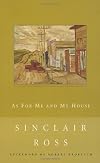
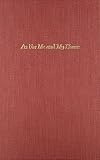
“It’s an immense night out there, wheeling and windy. The lights on the street and in the houses against the black wetness, little unilluminating glints that might be painted on it. The town seems huddled together, cowering on a high tiny perch, afraid to move lest it topple into the wind.” The town is Horizon, the setting of Sinclair Ross’ brilliant classic study of life in the Depression era. Hailed by critics as one of Canada’s great novels,As For Me and My Housetakes the form show more of a journal. The unnamed diarist, one of the most complex and arresting characters in contemporary fiction, explores the bittersweet nature of human relationships, of the unspoken bonds that tie people together, and the undercurrents of feeling that often tear them apart. Her chronicle creates an intense atmosphere, rich with observed detail and natural imagery. As For Me and My Houseis a landmark work. It is essential reading for anyone who seeks to understand the scope and power of the Canadian novel. show lessTags
Recommendations




















Member Reviews
I loved this seemingly quiet book...a book which packs a lot of powerful emotions and life challenges. This is the story of Mrs. Bentley, told through her diary entries spanning just over a year. Her husband, Philip, is a minister in a small prairie town. He struggles with his faith, with his artistic dreams; she struggles with him...to be a better wife. Her whole purpose in life is him, while he treats her largely with indifference. This story shows how lonely life can be, how hard it can be to communicate honestly with someone else, or even with yourself. The imagery is beautifully written. Mrs. Bentley is a strong character whom we come to know well despite the detachment she tries to maintain in her journal entries. Amazing book.
Sinclair Ross' first novel, As For Me and My House, is considered one of the milestone texts in Canadian Literature, and is often thought of as the definitive "prairie" novel. Set in the small town of Horizon (the province is never named, but in my mind I picture Saskatchewan) during the Great Depression, As For Me and My House is the diary of Mrs. Bentley, whose husband Philip is an unsuccessful minister. Mrs. Bentley is never given a first name, and this is one of the first indications that she is a woman whose life is not entirely her own.
In fact, Mrs. Bentley lives for her husband. Unfortunately, Philip does not live for his wife. He is an artist, a tortured soul, a man with a troubled childhood. Oh, boo hoo. I hated Philip - hated show more his personality, the way he treated his wife, and most of all, the worshipful way in which Mrs. Bentley loves him.
So, the characters of this book are certainly not the reason I enjoyed it. Instead, it is Ross' sense of place that is the star of this novel. No other author depicts the loneliness and the barren quality of the Canadian prairies the way Ross does. The reader hears the howling wind, sees the dust that covers every surface, and yearns for the day that rain will finally come. Though the prairies are wide open spaces, they feel claustrophobic. The town of Horizon is the same. Everywhere Mrs. Bentley goes, people watch her, and they comment on her actions. Her home is the same way - day in, day out, Mrs. Bentley and her husband circle each other in their tiny house, watching, wondering at the thoughts of the other, and rarely talking. Never has a novel evoked such a sense of strangulation.
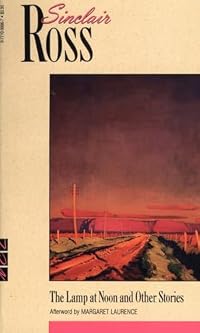
This is a tiny novel - only just over 200 pages - but it contains a lot of food for thought. The form of a diary is well-suited to the narrative, and Mrs. Bentley has moments of insight that almost make her slavish love for Philip understandable. As far as Canadian Lit goes, Ross is one of my personal favourites. His short story collection, The Lamp at Noon and Other Stories, is compelling, and contains the brilliant "The Painted Door." His writing is far from cheery, but it showcases a sense of the Canadian West in the 30s and 40s. For anyone interested in the development of Canadian Literature, Ross is a must. show less
In fact, Mrs. Bentley lives for her husband. Unfortunately, Philip does not live for his wife. He is an artist, a tortured soul, a man with a troubled childhood. Oh, boo hoo. I hated Philip - hated show more his personality, the way he treated his wife, and most of all, the worshipful way in which Mrs. Bentley loves him.
So, the characters of this book are certainly not the reason I enjoyed it. Instead, it is Ross' sense of place that is the star of this novel. No other author depicts the loneliness and the barren quality of the Canadian prairies the way Ross does. The reader hears the howling wind, sees the dust that covers every surface, and yearns for the day that rain will finally come. Though the prairies are wide open spaces, they feel claustrophobic. The town of Horizon is the same. Everywhere Mrs. Bentley goes, people watch her, and they comment on her actions. Her home is the same way - day in, day out, Mrs. Bentley and her husband circle each other in their tiny house, watching, wondering at the thoughts of the other, and rarely talking. Never has a novel evoked such a sense of strangulation.
This is a tiny novel - only just over 200 pages - but it contains a lot of food for thought. The form of a diary is well-suited to the narrative, and Mrs. Bentley has moments of insight that almost make her slavish love for Philip understandable. As far as Canadian Lit goes, Ross is one of my personal favourites. His short story collection, The Lamp at Noon and Other Stories, is compelling, and contains the brilliant "The Painted Door." His writing is far from cheery, but it showcases a sense of the Canadian West in the 30s and 40s. For anyone interested in the development of Canadian Literature, Ross is a must. show less
McClelland and Stewart contributed a lot to the literary landscape of Canada before they were bought out by Penguin. The New Canadian Library (NCL) was just one way that they kept great Canadian writing in print at affordable prices. Between 1958 and 1978 M & S published 152 titles in the NCL line but more were added after that. Now there is no mention of the New Canadian Library on the Penguin Random House website and, as far as I know, the only way to pick up NCL titles is at used book sales. This book was No. 4 in the New Canadian Library.
This book chronicles one year in the life of a minister and his wife. Reverend and Mrs. Bentley came to Horizon (a fictitious town in Saskatchewan) on April 8 in the 1930s. The Bentleys do not show more have any children although they have been married twelve years. There is mention of a still birth early in the marriage but no further details of pregnancies. Horizon is right in the middle of the Dust Bowl and the church seldom gets enough offerings to pay the minister his proper salary. The Bentleys have to scrimp and save and make do. If that wasn't enough hardship Reverend Bentley, who wanted to be an artist, doesn't believe what he preaches and he resents his wife for steering him into the ministry. Mrs. Bentley, an accomplished pianist, doesn't like to play the piano for fear of disturbing her husband. So each partner has given up what they love best and their marriage suffers. Then their quiet life is turned upside down by a series of events which could be the undoing of the marriage or could breathe new life into it.
The false fronts of the Main Street stores represent the lives of the Bentleys. They pretend to be devout, god-fearing people but have no belief in the preachings of the Bible. Reverend Bentley never indicates to his wife how much he resents being forced into the ministry or even how much he misses having children. Mrs. Bentley wears old clothes and deprives herself of her music and never tells her husband how much it bothers her.
I grew up with stories of what Saskatchewan was like during "The Dirty Thirties" but Ross's portrayal of the heat and the dust almost had me choking in sympathy. Equally his descriptions of the cold and snow of winter had me shivering in my boots. This book deserves to be read by every Canadian. show less
This book chronicles one year in the life of a minister and his wife. Reverend and Mrs. Bentley came to Horizon (a fictitious town in Saskatchewan) on April 8 in the 1930s. The Bentleys do not show more have any children although they have been married twelve years. There is mention of a still birth early in the marriage but no further details of pregnancies. Horizon is right in the middle of the Dust Bowl and the church seldom gets enough offerings to pay the minister his proper salary. The Bentleys have to scrimp and save and make do. If that wasn't enough hardship Reverend Bentley, who wanted to be an artist, doesn't believe what he preaches and he resents his wife for steering him into the ministry. Mrs. Bentley, an accomplished pianist, doesn't like to play the piano for fear of disturbing her husband. So each partner has given up what they love best and their marriage suffers. Then their quiet life is turned upside down by a series of events which could be the undoing of the marriage or could breathe new life into it.
The false fronts of the Main Street stores represent the lives of the Bentleys. They pretend to be devout, god-fearing people but have no belief in the preachings of the Bible. Reverend Bentley never indicates to his wife how much he resents being forced into the ministry or even how much he misses having children. Mrs. Bentley wears old clothes and deprives herself of her music and never tells her husband how much it bothers her.
I grew up with stories of what Saskatchewan was like during "The Dirty Thirties" but Ross's portrayal of the heat and the dust almost had me choking in sympathy. Equally his descriptions of the cold and snow of winter had me shivering in my boots. This book deserves to be read by every Canadian. show less
I have never read a book written by a man from a woman's perspective written as convincing as this one. In fact, I don't believe he wrote it without help from his wife. In a sense it's more accurate expression of a woman than many books written by women.
This book is not for the plot-based, cliff-hanger types. It's for those who enjoy dwelving deep into the hidden sorrows, struggles and perceptions that go on behind the facade of human beings as we try to understand each other and bridge our silent conflicts.
This book is not for the plot-based, cliff-hanger types. It's for those who enjoy dwelving deep into the hidden sorrows, struggles and perceptions that go on behind the facade of human beings as we try to understand each other and bridge our silent conflicts.
A book that will forever be dear to my prairie heart, but it can be gloomy and stark. About sticking it out, making it work, surviving.
A novel of the drought years in Saskatchewan, a canlit classic. "In this two-fold study, Ross describes the barrenness of the West through its varying effects on the consciousness of a man and a woman who long to escape from the taboos of their small prairie town. In its depth of insight this book has become a classic in Canadian literature." - jacket notes.
The man is Philip Bentley, a minister arriving in a new parish with Mrs. Bentley. The story is told in the form of journal entries written by her (we never learn her first name.) Themes of infertility, infidelity, marriage, adoption and change are developed through a realistic account of life in a small conservative town, strapped for cash and desperate to survive. The tone is show more bittersweet, angry and fierce sometimes, beautiful, painful and sorrowful at others. A compelling read. show less
The man is Philip Bentley, a minister arriving in a new parish with Mrs. Bentley. The story is told in the form of journal entries written by her (we never learn her first name.) Themes of infertility, infidelity, marriage, adoption and change are developed through a realistic account of life in a small conservative town, strapped for cash and desperate to survive. The tone is show more bittersweet, angry and fierce sometimes, beautiful, painful and sorrowful at others. A compelling read. show less
Well-written and depressing.
Members
- Recently Added By
Lists

The Best of Canadian Literature
235 works; 31 members

Favourite Books
1,817 works; 316 members
CBC Books - Canada's 100 (+ bonus 10): Which have you read?
110 works; 23 members

Books Set in Canada
80 works; 16 members

Female Protagonist
1,056 works; 56 members

New Canadian Library
191 works; 7 members

Top Five Books of 2017
757 works; 231 members
LibraryThingers' 1001 Books You Must Read Before You Die
442 works; 30 members

Five star books
1,755 works; 108 members

Books Set in Canada
57 works; 10 members

Allie's Favourite 150 Books
145 works; 3 members
Best Books of the 20th Century
193 works; 5 members

What are your favourite books?
121 works; 11 members

Favourite Books
50 works; 1 member

My favourite books
96 works; 3 members

Alphabetical Books
211 works; 3 members

Books You Read For University
184 works; 3 members
School Made Us Read It
380 works; 196 members
Author Information

7+ Works 575 Members
Born and reared on the prairies of Saskatchewan, Sinclair Ross has spent his life working in Canadian banks. It may have been these experiences that led him to write about the isolation of farm families and the hardships of farmers during the Depression---both of which lend his work an air of desolation. Introducing Sinclair's collection of short show more fiction The Lamp at Noon (1968), Margaret Laurence notes that, in the stories, "the farms stand far apart. . . . The human community is, for most of the time, reduced to its smallest unit, one family. The isolation is virtually complete." No matter how bleak the circumstances, however, the characters survive, even if they are often trapped between the poles of despair and hope. Ross has also published four novels, but his reputation rests on his first one, As for Me and My House (1941). Although it did not receive much attention when it appeared, it is now firmly established as a Canadian classic. Spare yet richly textured, the narrative recounts the relationship between a disillusioned minister and his wife, whose diary serves as the vehicle for the tale. A Whir of Gold (1970), concerned with city life in Canada, and Sawbones Memorial (1974), about Canadian small-town life, lack the power of the first book. Ross is considered one of the first Canadian writers to employ modernist techniques, such as a restricted third-person point of view, the unreliable narrator, and multiple points of view. A monument in his honour has been erected in Indian Head by Saskatchewan artists and readers with a bronze statue sculpted by Joe Fafard. In 1992, he was made a Member of the Order of Canada. He died in 1996 after battling Parkinson's Disease, and was buried in Indian Head. (Bowker Author Biography) show less
Some Editions
Awards and Honors
Notable Lists
Series

Belongs to Publisher Series
Common Knowledge
- Canonical title
- As For Me and My House
- Original publication date
- 1941
- People/Characters
- Mr. Philip Bentley; Mrs. Bentley
- Important places
- Saskatchewan, Canada; Canada; Horizon, Saskatchewan, Canada
- Important events
- Great Depression (1930's)
- First words
- Philip has thrown himself across the bed and fallen asleep, his clothes on still, one of his long legs dangling to the floor.
- Last words
- (Click to show. Warning: May contain spoilers.)I want it so.
Classifications
Statistics
- Members
- 464
- Popularity
- 65,298
- Reviews
- 12
- Rating
- (3.72)
- Languages
- English
- Media
- Paper
- ISBNs
- 9
- ASINs
- 4