On This Page
Description
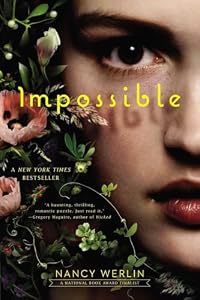
When seventeen-year-old Lucy discovers her family is under an ancient curse by an evil Elfin Knight, she realizes to break the curse she must perform three impossible tasks before her daughter is born in order to save them both.Tags
Recommendations




Member Recommendations
Member Reviews
Read this for book club. None of us could figure out why it had been recommended to us, or why it was nominated for awards. I don't think there has ever been another selection for our book club that was so universally disliked.
Reasons:
*Offensive, retrograde, disturbing implications for the young women that the book is aimed toward. An evil faerie lord has cursed the women of the protagonists' family for generations. She is doomed to be raped, have a baby, and then go crazy. But of course, having the rape-baby is the Most Important Thing! (Shades of crappy Twilight, here.)
*Messages that a young woman cannot be self-reliant. You need someone to help you, or your will won't be strong enough, and you'll fail. Also, you'll be really dumb show more unless you have a guy around to point obvious stuff out to you, apparently. If you're pregnant, you should marry SOMEONE, even if it's the guy who you grew up with and always treated like a brother. (eww, incest-creepy!)
*Disturbing lack of concern for the apparently very decent young man who is possessed by supernatural forces, forced to have sex with someone, and then is killed or commits suicide.
*Unrealistic, unconvincing relationships between everyone in the book. Interactions felt flat and unbelievable.
*Shallow and unrealistic portrayal of a "crazy" person.
In addition to the above, I also had a problem with the re-imagining of the song, and of Faerie itself.
I don't think Faerie should be described as "evil." I see it as amoral. Yes, it may screw with your life, but out of alien-ness, dealing with beings from a different realm. This faerie lord came across more as a Christian devil. Boring.
The 'solutions' for the impossible tasks were unimaginative and/or derived from the author's reworkings of the song. (People did actually KNOW about felting, back in the day. Cambric is a woven material. No, the shirt was never supposed to be "magical." etc.)
According to the author's note, the whole book was based on her early misunderstanding of the song "Scarborough Fair." She thought it was "romantic." Umm. No. The whole appeal of "Scarborough Fair," to me, is that it's a powerful message that says, "No, never going back to you, not ever, no way, no how." It's a "romance is over" song, not a romantic song.
So, on a personal level, I just didn't like the changing of the message of a song I really love. On an objective level, this just isn't a very good book.
The premise for this book sounded amazing, but I found it sadly disappointing. We had a good book club meeting bashing it, though! show less
Reasons:
*Offensive, retrograde, disturbing implications for the young women that the book is aimed toward. An evil faerie lord has cursed the women of the protagonists' family for generations. She is doomed to be raped, have a baby, and then go crazy. But of course, having the rape-baby is the Most Important Thing! (Shades of crappy Twilight, here.)
*Messages that a young woman cannot be self-reliant. You need someone to help you, or your will won't be strong enough, and you'll fail. Also, you'll be really dumb show more unless you have a guy around to point obvious stuff out to you, apparently. If you're pregnant, you should marry SOMEONE, even if it's the guy who you grew up with and always treated like a brother. (eww, incest-creepy!)
*Disturbing lack of concern for the apparently very decent young man who is possessed by supernatural forces, forced to have sex with someone, and then is killed or commits suicide.
*Unrealistic, unconvincing relationships between everyone in the book. Interactions felt flat and unbelievable.
*Shallow and unrealistic portrayal of a "crazy" person.
In addition to the above, I also had a problem with the re-imagining of the song, and of Faerie itself.
I don't think Faerie should be described as "evil." I see it as amoral. Yes, it may screw with your life, but out of alien-ness, dealing with beings from a different realm. This faerie lord came across more as a Christian devil. Boring.
The 'solutions' for the impossible tasks were unimaginative and/or derived from the author's reworkings of the song. (People did actually KNOW about felting, back in the day. Cambric is a woven material. No, the shirt was never supposed to be "magical." etc.)
According to the author's note, the whole book was based on her early misunderstanding of the song "Scarborough Fair." She thought it was "romantic." Umm. No. The whole appeal of "Scarborough Fair," to me, is that it's a powerful message that says, "No, never going back to you, not ever, no way, no how." It's a "romance is over" song, not a romantic song.
So, on a personal level, I just didn't like the changing of the message of a song I really love. On an objective level, this just isn't a very good book.
The premise for this book sounded amazing, but I found it sadly disappointing. We had a good book club meeting bashing it, though! show less
Wow, where do I even begin to write the review for this amazing book? This is a story, unlike so many, that fills you upon completion. You feel whole, you feel complete, when you've taken up this book, and have touched the pages, read it through, and finally grasped that tangible end right in your heart and mind. It's a book that I found myself almost surprisingly addicted too! Considering how easy it is to read this book--because Nancy Werlin did an amazing job of writing flawlessly smooth--I was seriously going back to it like it was a crime to put it down. On the train to classes, I would stand there and find my eyes drifting to the seats, thinking to myself before I even realized what was going on that I should "sit down and show more continue reading." Considering I get motion sickness, this is a BIG thing for me! And yet time and time again, I just gave in. I'm an English major, and with a stack of books waiting to be read, I took this one, thinking I needed a break... and I haven't read a shred of anything else since I picked it up. Considering one of my other classes is about Comics and Graphic Novels, and the other I'm a SUPER DORK for, you would think I'd have some serious competition over mentally what book I should focus on! Nope. It was this book, Impossible all the way.
But first impressions aside (and plenty of rambling), let's get down to the nitty gritty details of things, starting off with the manner in which the book was written. Nancy Werlin is an incredible writer. Reading her book is like floating in the calmest waters, unaware that you're being carried tenderly, gently downstream. It's like breathing, like a cool drink flowing down your throat when you're parched, like the sensation of resting in bed and knowing nothing will disturb you no matter how long you lay there. It's a sensation of such delicious perfection--this smoothness and unfaltering pace in which her book is written--that reading the book becomes a literal addiction. You. Cannot. Put. Down. Her. Book. And considering most pieces of junk written today, this is an honor--an honor--that few are ever, ever given, by myself or the otherwise mentally profound. To read her writing is a delight in and of itself, just to enjoy the mastery she has over mood, the seamless way her words are woven together--the complete surety of her words itself melds fully with the reader from almost the start, so that (at least from my personal experience reading this book) you trust this author to tell you this story, to show you what's right and what's wrong, to lead you through absolutely everything. Nancy Werlin, if I ever rated on individual characteristics of books, you would receive a 5 out of 5 from me on your writing alone. It was spectacular. Your own seamless garment, woven pure.
Coming to another point, I want to more than commend Nancy Werlin on her unbelievable imagination. It's a streak of inspiration to take a piece of old folk poetry and turn it into a concept, an idea. It's a world, a universe away, to take that concept, its origin, and every miniscule difficult detail and fit it in together to create an unfaltering piece of literature many thousands of words longer than the small grain from which it was birthed. Werlin, you took something that people must have enjoyed, mulled over, and even analyzed for years... and you created an entire new child from it. You gave birth to a creation that had its origins here and there, but was nonetheless your own brainchild, and remains wholly and surely your own now that it stands here before the world to judge it. And I know--God do I know...--the strain, the struggles, and the wonders that go into a creation like this, inspired! but your very own. You took the Scarborough Fair poem and you gave it a timeless new meaning almost as profound as the poem itself. That deserves the greatest of congratulations and the sternest of support on my part. You did wonderful, and I have to let you know that. *Smiles warmly* You deserve to.
The last thing I would like to address in Nancy Werlin's book is the characters that she placed in it. My God, I could talk for ages about many of them! Let's begin with the main character, Lucy. For the first part of the book, I had my hard, ready-to-pounce suspicions. I'd been exposed to the YA genre enough to know that books written by women about main female leads usually involved a great deal of... well, to put it literally: Pathetic whores jacking off and rubbing up on anything with a hard enough object to pierce them in all the wrong ways. *Tries to hold back the urge to gag even as she writes the description* Good God, what is wrong with the people who write miserable little fantasies like that and call it a book?! But to get back on track, this very premonition is what trilled in me like a live wire, waiting for the first touch of the sallow waters these normal female leads drowned and lavished themselves in. Instead, I got an honest surprise very soon into the book! And here's the best part, it lasted and kept throughout the entire story. The main character was competent. She had a brain. She was not ready to hump the first male silhouette she saw, whether it be vampire, werewolf, angel (fallen or otherwise), or a trumped up mannequin with a feather duster that would do the trick. I finished reading this book with the sincere peace in my heart that I could enjoy it! And the SOLE reason for that was that the main character was a thinking human being, not a bitch in heat--how literal those words are. Lucy was smart, she was logical, and that carried on not just through schoolwork--which was hardly mentioned, to all you monstrous YA female writers out there--but she had an intelligence that showed through her people skills, the manner in which she handled situations with concern not just for herself, the way she depended on others but didn't throw herself at them like a wuss, thinking she suddenly didn't have to lift a finger and it'd all be okay. She was someone who knew quite well how to give, and how to receive, in the most generous and humane ways possible.
Now I must say, there is more than just Lucy to the story. Lucy was a strong and capable character herself, but it was the shining glory of this book that it had the cast of characters that it did. Lucy's foster parents, Leo and Soledad, were gems. They were realistic as parents: not just acting the role, but living and caring, responding emotionally and mentally--not just fussing or complaining or serving as reminders and authority figures as parents usually do in most stories. In addition, I love how Lucy's best friend, Sarah, who started off as a character that seemed more than a little pathetic in my eyes, redeemed herself and showed her true colors throughout the book. She was a support figure that was often silently there, holding up our lead female even when we weren't consciously thinking about her. Knowing that we didn't have another strand of senseless and miserable (aka, pathetic) drama to cloud up things throughout the main storyline was one of the smartest moves Nancy Werlin could have done with Sarah's character. She truly became a subtle steadying factor that underscored much of our reassurances in the face of our worries throughout the book. Even Miranda, Lucy's real mother who went insane, was a beautiful, sensitive, caring person, and I loved her throughout every single part, even when she was so clearly in trouble.
Perhaps the best character of all though, and I mean this with full sincerity--the best character in this book by far--was Zach Greenfield. He's the boy next door that grew up as Lucy's best friend, and God is he absolutely, jaw-droppingly amazing. He is everything that stands for determination, perseverance, generosity, care, love, humor, affection, kindness, deep feeling, understanding, honor, decisiveness, guidance, gentleness, and... I have to say it again... pure, pure wonder. He is a character with such heart in him, and so much goodness, that he is...
Undeniable.
His inner beauty, his great love, creates from every charming and self-indulging and peevish moment, that might have belonged to a more arrogant or dim-witted man, in him exudes in everything positive. For my anime and videogame fans, he has the same heart, the same soul and spirit in him that Zack Fair from Final Fantasy VII has, that Vash the Stampede from Trigun has, and that no one else! can hold a candle to! That no one else can touch upon! This is a beauty of a kind that is not only irregular, but is almost untouched in any realm--human, real, or created and imagined. There are people that try to mimic it, and there are people that come close, but there's always something missing. There's always something wrong. ...Zach, I feel, is a true Zack type. Honest, courageous in heart, embodying love... embodying love. The greatest, self-sacrificing love--to give one's self wholly to another. And to love them through every torment and vicious falling, through every injury they do to you and through every ugliness they take on. To love them, and do everything within their power to save them. This is what I felt in Zach when I read every part of his. He was more real, more authentic, more tangible and present to me throughout this book than any other character! He was like a living force, and he drove this book in ways that I cannot even begin to explain. His character deserves the best of honors from me, and the greatest appreciation and affection. I loved him. That alone should say enough.
Ah, but since I have gone on such a long tangent, let me endeavor to say a word or two more about our main villain, Mr. Person-Who-Shall-Not-Be-Named-Even-Though-Most-Of-Us-Can-Figure-Out-Who-He-Is-From-The-First-Time-He-Enters-The-Scene. *Laughs* That was a task to type! Try saying it! But to comment a little on his behalf, I felt that it was a very interesting take on the main villain (not that there usually is one). Still, he was both always present throughout the book, and yet not. He doesn't claim his villainhood (yes, I'm inventing words now) until almost the very end of the book, and by the time he does, we don't even bat an eyelash because we've known all along from that point on. That's what makes him peculiar. Even though he's the cause of all that's going on in this story, he's perceptively absent from playing an active role in things besides one or two points at the beginning and end of the story. Yet somehow, that adds to his arrogance whenever he does show up on the scene. It's like we're almost infuriated with him because he's detracted from the little time we have to take care of the three tasks in the poem, and all this other chaos! He manages to be a pretty dang good villain, for all that he's so scarce, and that's a considerably surprising outcome--since most villains cannot manage that. But the oppressive evil he instigates on the entire story plays his role for him: it sets the mood and keeps us reminded of his presence. Overall, it was a unique and expertly played move on Nancy Werlin's part to integrate the villain in this manner, and I have only compliments on how she did it. While I felt he may have been lacking a little bit in his physical presence, whenever he did manage to show up and we got to see him interacting, we understood perfectly well just how powerful he was and why it wasn't necessary for him to even be present while everything unfolded. So well done.
As you can tell by the very length of this review, there are many things I had to compliment about it. The story is fantastic, creative, full of rich and engaging characters--and! unlike so many YA novels today--it's realistic, believable, and intelligent. I have only the highest praise to give Nancy Werlin on this book. If I could, I'd give you a higher mark than I have already. my personal library, for my friends and family to grow up seeing, borrowing and reading. I know it's going to be an honored and excitedly enjoyed addition with many re-reads in the future! Thank you again so much for this story! It's just amazing. For you readers, if you haven't already picked up Nancy Werlin's Impossible, it's time for you to do so now! Go out and buy it! You won't regret it. show less
But first impressions aside (and plenty of rambling), let's get down to the nitty gritty details of things, starting off with the manner in which the book was written. Nancy Werlin is an incredible writer. Reading her book is like floating in the calmest waters, unaware that you're being carried tenderly, gently downstream. It's like breathing, like a cool drink flowing down your throat when you're parched, like the sensation of resting in bed and knowing nothing will disturb you no matter how long you lay there. It's a sensation of such delicious perfection--this smoothness and unfaltering pace in which her book is written--that reading the book becomes a literal addiction. You. Cannot. Put. Down. Her. Book. And considering most pieces of junk written today, this is an honor--an honor--that few are ever, ever given, by myself or the otherwise mentally profound. To read her writing is a delight in and of itself, just to enjoy the mastery she has over mood, the seamless way her words are woven together--the complete surety of her words itself melds fully with the reader from almost the start, so that (at least from my personal experience reading this book) you trust this author to tell you this story, to show you what's right and what's wrong, to lead you through absolutely everything. Nancy Werlin, if I ever rated on individual characteristics of books, you would receive a 5 out of 5 from me on your writing alone. It was spectacular. Your own seamless garment, woven pure.
Coming to another point, I want to more than commend Nancy Werlin on her unbelievable imagination. It's a streak of inspiration to take a piece of old folk poetry and turn it into a concept, an idea. It's a world, a universe away, to take that concept, its origin, and every miniscule difficult detail and fit it in together to create an unfaltering piece of literature many thousands of words longer than the small grain from which it was birthed. Werlin, you took something that people must have enjoyed, mulled over, and even analyzed for years... and you created an entire new child from it. You gave birth to a creation that had its origins here and there, but was nonetheless your own brainchild, and remains wholly and surely your own now that it stands here before the world to judge it. And I know--God do I know...--the strain, the struggles, and the wonders that go into a creation like this, inspired! but your very own. You took the Scarborough Fair poem and you gave it a timeless new meaning almost as profound as the poem itself. That deserves the greatest of congratulations and the sternest of support on my part. You did wonderful, and I have to let you know that. *Smiles warmly* You deserve to.
The last thing I would like to address in Nancy Werlin's book is the characters that she placed in it. My God, I could talk for ages about many of them! Let's begin with the main character, Lucy. For the first part of the book, I had my hard, ready-to-pounce suspicions. I'd been exposed to the YA genre enough to know that books written by women about main female leads usually involved a great deal of... well, to put it literally: Pathetic whores jacking off and rubbing up on anything with a hard enough object to pierce them in all the wrong ways. *Tries to hold back the urge to gag even as she writes the description* Good God, what is wrong with the people who write miserable little fantasies like that and call it a book?! But to get back on track, this very premonition is what trilled in me like a live wire, waiting for the first touch of the sallow waters these normal female leads drowned and lavished themselves in. Instead, I got an honest surprise very soon into the book! And here's the best part, it lasted and kept throughout the entire story. The main character was competent. She had a brain. She was not ready to hump the first male silhouette she saw, whether it be vampire, werewolf, angel (fallen or otherwise), or a trumped up mannequin with a feather duster that would do the trick. I finished reading this book with the sincere peace in my heart that I could enjoy it! And the SOLE reason for that was that the main character was a thinking human being, not a bitch in heat--how literal those words are. Lucy was smart, she was logical, and that carried on not just through schoolwork--which was hardly mentioned, to all you monstrous YA female writers out there--but she had an intelligence that showed through her people skills, the manner in which she handled situations with concern not just for herself, the way she depended on others but didn't throw herself at them like a wuss, thinking she suddenly didn't have to lift a finger and it'd all be okay. She was someone who knew quite well how to give, and how to receive, in the most generous and humane ways possible.
Now I must say, there is more than just Lucy to the story. Lucy was a strong and capable character herself, but it was the shining glory of this book that it had the cast of characters that it did. Lucy's foster parents, Leo and Soledad, were gems. They were realistic as parents: not just acting the role, but living and caring, responding emotionally and mentally--not just fussing or complaining or serving as reminders and authority figures as parents usually do in most stories. In addition, I love how Lucy's best friend, Sarah, who started off as a character that seemed more than a little pathetic in my eyes, redeemed herself and showed her true colors throughout the book. She was a support figure that was often silently there, holding up our lead female even when we weren't consciously thinking about her. Knowing that we didn't have another strand of senseless and miserable (aka, pathetic) drama to cloud up things throughout the main storyline was one of the smartest moves Nancy Werlin could have done with Sarah's character. She truly became a subtle steadying factor that underscored much of our reassurances in the face of our worries throughout the book. Even Miranda, Lucy's real mother who went insane, was a beautiful, sensitive, caring person, and I loved her throughout every single part, even when she was so clearly in trouble.
Perhaps the best character of all though, and I mean this with full sincerity--the best character in this book by far--was Zach Greenfield. He's the boy next door that grew up as Lucy's best friend, and God is he absolutely, jaw-droppingly amazing. He is everything that stands for determination, perseverance, generosity, care, love, humor, affection, kindness, deep feeling, understanding, honor, decisiveness, guidance, gentleness, and... I have to say it again... pure, pure wonder. He is a character with such heart in him, and so much goodness, that he is...
Undeniable.
His inner beauty, his great love, creates from every charming and self-indulging and peevish moment, that might have belonged to a more arrogant or dim-witted man, in him exudes in everything positive. For my anime and videogame fans, he has the same heart, the same soul and spirit in him that Zack Fair from Final Fantasy VII has, that Vash the Stampede from Trigun has, and that no one else! can hold a candle to! That no one else can touch upon! This is a beauty of a kind that is not only irregular, but is almost untouched in any realm--human, real, or created and imagined. There are people that try to mimic it, and there are people that come close, but there's always something missing. There's always something wrong. ...Zach, I feel, is a true Zack type. Honest, courageous in heart, embodying love... embodying love. The greatest, self-sacrificing love--to give one's self wholly to another. And to love them through every torment and vicious falling, through every injury they do to you and through every ugliness they take on. To love them, and do everything within their power to save them. This is what I felt in Zach when I read every part of his. He was more real, more authentic, more tangible and present to me throughout this book than any other character! He was like a living force, and he drove this book in ways that I cannot even begin to explain. His character deserves the best of honors from me, and the greatest appreciation and affection. I loved him. That alone should say enough.
Ah, but since I have gone on such a long tangent, let me endeavor to say a word or two more about our main villain, Mr. Person-Who-Shall-Not-Be-Named-Even-Though-Most-Of-Us-Can-Figure-Out-Who-He-Is-From-The-First-Time-He-Enters-The-Scene. *Laughs* That was a task to type! Try saying it! But to comment a little on his behalf, I felt that it was a very interesting take on the main villain (not that there usually is one). Still, he was both always present throughout the book, and yet not. He doesn't claim his villainhood (yes, I'm inventing words now) until almost the very end of the book, and by the time he does, we don't even bat an eyelash because we've known all along from that point on. That's what makes him peculiar. Even though he's the cause of all that's going on in this story, he's perceptively absent from playing an active role in things besides one or two points at the beginning and end of the story. Yet somehow, that adds to his arrogance whenever he does show up on the scene. It's like we're almost infuriated with him because he's detracted from the little time we have to take care of the three tasks in the poem, and all this other chaos! He manages to be a pretty dang good villain, for all that he's so scarce, and that's a considerably surprising outcome--since most villains cannot manage that. But the oppressive evil he instigates on the entire story plays his role for him: it sets the mood and keeps us reminded of his presence. Overall, it was a unique and expertly played move on Nancy Werlin's part to integrate the villain in this manner, and I have only compliments on how she did it. While I felt he may have been lacking a little bit in his physical presence, whenever he did manage to show up and we got to see him interacting, we understood perfectly well just how powerful he was and why it wasn't necessary for him to even be present while everything unfolded. So well done.
As you can tell by the very length of this review, there are many things I had to compliment about it. The story is fantastic, creative, full of rich and engaging characters--and! unlike so many YA novels today--it's realistic, believable, and intelligent. I have only the highest praise to give Nancy Werlin on this book. If I could, I'd give you a higher mark than I have already. my personal library, for my friends and family to grow up seeing, borrowing and reading. I know it's going to be an honored and excitedly enjoyed addition with many re-reads in the future! Thank you again so much for this story! It's just amazing. For you readers, if you haven't already picked up Nancy Werlin's Impossible, it's time for you to do so now! Go out and buy it! You won't regret it. show less
Lucy has her share of teenage problems. Prom is coming up, and her birth mother is an insane bag lady who can be found all over town. Fortunately, she has the love of the foster parents and best friend, Zach, to keep her going - and she's going to need their support more than ever. Lucy is raped on prom night, but all is not as it appears. The Scarborough girls bear an ancient curse - they are impregnated at seventeen, birth a daughter at eighteen, and then they are rendered insane after they fail to complete three impossible tasks set by an Elfin Knight. Lucy and her family have no intention of surrendering quietly to that fate.
Wow. This book blew me away. It was one of the fastest reads I've had this year (rivaling The Hunger Games) show more and had incredible tension across its 400-pages. Werlin was inspired by the song, and created something magical. I especially loved how the Elfin Knight's manipulations were portrayed to the readers. Excellent book, and I highly recommend it to those who love fairy tales or mythology recreated in a modern setting. show less
Wow. This book blew me away. It was one of the fastest reads I've had this year (rivaling The Hunger Games) show more and had incredible tension across its 400-pages. Werlin was inspired by the song, and created something magical. I especially loved how the Elfin Knight's manipulations were portrayed to the readers. Excellent book, and I highly recommend it to those who love fairy tales or mythology recreated in a modern setting. show less
Lucy Scarborough is an ordinary teenager, with a loving family and good friends--her family is actually a foster family, and her mother is crazy. Then she is raped after the prom. When she finds first her mother's diary, then a letter her mother wrote before her birth, Lucy learns that her family is under a curse. Now she must complete three impossible tasks or lose her mind when her baby is born.
A compelling take on the old ballad Scarborough Fair, aka The Elfin Knight.
A compelling take on the old ballad Scarborough Fair, aka The Elfin Knight.
Synopsis:
A young woman discovers that she is cursed to go mad on the birth of her first child unless she can complete three impossible tasks.
Review:
Woven from the lyrics of the ballad Scarborough Fair, made famous by Simon and Garfunkel, Impossible successfully places a fairy tale in the context of modern life without sacrificing any magic at all.
Lucy Scarborough was raised by foster parents after her mother, Miranda, went mad on Lucy’s birth. Now Lucy finds herself pregnant at 17, and discovers a diary kept by Miranda during her pregnancy claiming that unless Lucy can complete the tasks named in the ballad, Lucy will go mad when her own daughter is born. Lucy chooses to believe, and sets out to weave a seamless shirt with no needles, show more find an acre of land between the saltwater and the sea strand, and plow it with one grain of corn using a goat’s horn. In the backdrop lurks the figure of the Elfin King, who seems to rule over Lucy’s plight, though she does not know yet exactly how.
I tore through this book. It’s fast paced, romantic, magical, and skillfully plotted. I’m not always a fan of updated fairy tales but this one really worked, I think because Werlin didn’t try to make it too contemporary. There was just enough realism for me to connect with the characters, and just enough magic for me to buy the premise. show less
A young woman discovers that she is cursed to go mad on the birth of her first child unless she can complete three impossible tasks.
Review:
Woven from the lyrics of the ballad Scarborough Fair, made famous by Simon and Garfunkel, Impossible successfully places a fairy tale in the context of modern life without sacrificing any magic at all.
Lucy Scarborough was raised by foster parents after her mother, Miranda, went mad on Lucy’s birth. Now Lucy finds herself pregnant at 17, and discovers a diary kept by Miranda during her pregnancy claiming that unless Lucy can complete the tasks named in the ballad, Lucy will go mad when her own daughter is born. Lucy chooses to believe, and sets out to weave a seamless shirt with no needles, show more find an acre of land between the saltwater and the sea strand, and plow it with one grain of corn using a goat’s horn. In the backdrop lurks the figure of the Elfin King, who seems to rule over Lucy’s plight, though she does not know yet exactly how.
I tore through this book. It’s fast paced, romantic, magical, and skillfully plotted. I’m not always a fan of updated fairy tales but this one really worked, I think because Werlin didn’t try to make it too contemporary. There was just enough realism for me to connect with the characters, and just enough magic for me to buy the premise. show less
I grew up singing Scarborough Fair, so Impossible struck a chord with me. I absolutely love the haunting vibe the song gives off, and Impossible managed to pull off that vibe beautifully. The writing was lovely, and I felt that the plot was well constructed.
Although I abhor reading about pregnancy (teen or otherwise), Impossible didn’t bother me one bit. It didn’t focus too much on the awful bits (morning sickness, the birth itself), but the more positive aspects (feeling a connection to the child before it’s even born).
Lucy was a great protagonist, and Zach was an amazingly sweet love interest. Impossible was well balanced between love and seriousness. Speaking of seriousness, the matter of the Scarborough curse was executed show more really well! I liked how even though it sounded crazy, Lucy’s family accepted her need to try to break the curse, whether they believed it to be true or not. They supported her because they loved her.
All in all, I really enjoyed Impossible. I found it to be a beautiful, haunting read.
(Originally posted to 365 Days of Reading) show less
Although I abhor reading about pregnancy (teen or otherwise), Impossible didn’t bother me one bit. It didn’t focus too much on the awful bits (morning sickness, the birth itself), but the more positive aspects (feeling a connection to the child before it’s even born).
Lucy was a great protagonist, and Zach was an amazingly sweet love interest. Impossible was well balanced between love and seriousness. Speaking of seriousness, the matter of the Scarborough curse was executed show more really well! I liked how even though it sounded crazy, Lucy’s family accepted her need to try to break the curse, whether they believed it to be true or not. They supported her because they loved her.
All in all, I really enjoyed Impossible. I found it to be a beautiful, haunting read.
(Originally posted to 365 Days of Reading) show less
Taut and suspenseful novel loosely based on the old ballad Scarborough Fair. The modern setting works admirably, the characters are sympathetic and involving, and I willingly suspended my disbelief regarding the parents' support of what, on the face of it, seems a preposterous whim of a pregnant teenager. Very nicely done.
Members
- Recently Added By
Lists

Best Young Adult
399 works; 101 members

Struggle for Freedom
69 works; 4 members
Author Information

21+ Works 5,705 Members
Nancy Werlin was born and raised in Peabody, Massachusetts. She received a bachelor's degree in English from Yale University. Besides writing fiction, she has worked as a technical writer and editor for several computer software and Internet companies. She won the Edgar Award for Best Young Adult Novel for The Killer's Cousin in 1999. (Bowker show more Author Biography) show less
Some Editions
Awards and Honors
Awards
Distinctions
Series

Common Knowledge
- Original publication date
- 2008
- People/Characters
- Lucinda (Lucy) Scarborough (Lucy); Soledad Markowitz; Zach Greenfield; Sarah Hebert; Leo Markowitz; Gray Spencer (show all 8); Miranda Scarborough; Padraig Seeley
- Important places
- Boston, Massachusetts, USA
- Dedication
- For my mother
Elaine Sylvia Romotsky Werlin
with love - First words
- On the evening of Lucy Scarborough's seventh birthday, after the biggest party the neighborhood had seen since, well, Lucy's sixth birthday, Lucy got one last unexpected gift.
- Last words
- (Click to show. Warning: May contain spoilers.)And as Soledad spoke, she was flinging herself into her mother's open arms.
- Blurbers
- Maguire, Gregory
Classifications
- Genres
- Teen, Fiction and Literature, Young Adult
- DDC/MDS
- 813.54 — Literature & rhetoric American literature in English American fiction in English 1900-1999 1945-1999
- LCC
- PZ7 .W4713 .I — Language and Literature Fiction and juvenile belles lettres Fiction and juvenile belles lettres Juvenile belles lettres
- BISAC
Statistics
- Members
- 1,891
- Popularity
- 11,238
- Reviews
- 124
- Rating
- (3.71)
- Languages
- English, German, Polish
- Media
- Paper, Audiobook, Ebook
- ISBNs
- 18
- ASINs
- 9