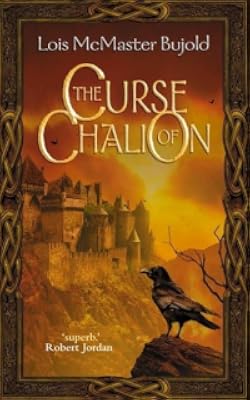
The Curse of Chalion
by Lois McMaster Bujold
World of the Five Gods - Publication Order (1), Chalion (1), World of the Five Gods - Chronological Order (4)
On This Page
Description
Lord Cazaril has been, in turn, courtier, castle-warder, and captain; now he is but a crippled ex-galley slave seeking nothing more than a menial job in the kitchens of the Dowager Provincara, the noble patroness of his youth. But Cazaril finds himself promoted to the exalted and dangerous position of tutor to Iselle, the beautiful, fiery sister of the heir to Chalion's throne. Amidst the decaying splendor and poisonous intrigue of Chalion's ancient capital, Cazaril is forced to confront not show more only powerful enemies but also the malignant curse that clings to the royal household, trapping him, flesh and soul, in a maze of demonic paradox, damnation, and death for as long as he dares walk the five-fold pathway of the gods. show lessTags
Recommendations


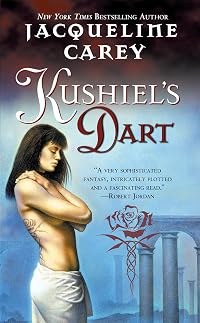
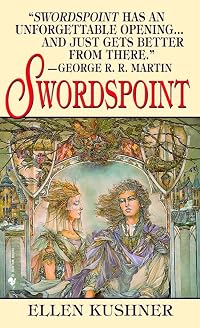
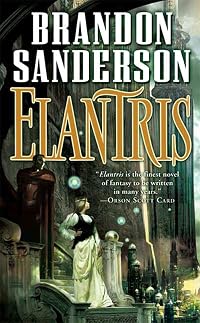
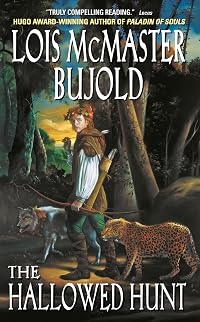











Member Recommendations
MyriadBooks For protagonists who have been thrown to the deep end, politically speaking.
40

PhoenixFalls Both books feature well-drawn, believable, and hopeful SFF religions.
The Book of Ile-Rien: The Element of Fire & The Death of the Necromancer - Updated and Revised Edition by Martha Wells
reading_fox Enjoyable low fantasy, characters driven in complex worlds.

souloftherose Both books are fantasy novels featuring an older, male protagonist who is struggling with past injuries (both physical and mental) and yet overcomes these in order to serve his kingdom. There are strong themes of self-sacrifice in both books.
02

pfuchsman Fantastic writing, interesting characters with non-snarky humor, fascinating concepts about gods
writard If you like mythology-centric fantasy stories and strong heroines.

Weezzle adult protagonists with history, beautiful descriptive language, not quite as good, but scratches the same itch
Member Reviews
What a happy re-read, lucky me. I had also managed to forget the book completely - except for the very beginning, the ending (the characters that end up together, that is), and that there was some kind of curse, lol. Obviously, it added to my enjoyment.
I really cannot thank Lois McMaster Bujold enough for her books. The writing is as great as always, creating characters that are vivid and alive. The plot is tightly and cleverly crafted. It is also taking its time at the very beginning, which is fine - you enjoy the worldbuilding and the details, getting to know the characters.
How can broken people heal? How do you remain human in horrible situations? How do you grow when thrust into a new role? What happens when good deeds snowball in show more unexpected and oh so right ways? I love how the answers are woven into the book.
I am left with a lovely “good book hangover” :) show less
I really cannot thank Lois McMaster Bujold enough for her books. The writing is as great as always, creating characters that are vivid and alive. The plot is tightly and cleverly crafted. It is also taking its time at the very beginning, which is fine - you enjoy the worldbuilding and the details, getting to know the characters.
How can broken people heal? How do you remain human in horrible situations? How do you grow when thrust into a new role? What happens when good deeds snowball in show more unexpected and oh so right ways? I love how the answers are woven into the book.
I am left with a lovely “good book hangover” :) show less
I'm not sure where to begin. I read a lot of fantasy. A lot. And to be honest, I love even the cliched stories where the protagonist has to save the world with his/her newfound yet extraordinary magical abilities. I do. But when I come across rare gems such as Bujold's "The Curse of the Chalion," I'm left bedazzled. What a magnificent book!
The story is slow-paced and takes time to build up.The world-building grows steadily, too. You're not suddenly thrown into a world of Mistborns or Hobbits, wherein you try to decipher the world or the magic system. Rather, it reads a bit like historical fiction and the magic is introduced gradually. Even then, it's not overwhelming. The magic is interwoven through the story and embellishes rather than show more taking center stage. It's the characters that hold your attention.
This is, perhaps, one of the best books in terms of characters. Cazaril is superb. Who would ever think that a middle-aged soldier, broken in body and spirit, would turn out to be so fine a hero. He's deliberate, not impetuous; nearing forty, not sixteen; and wise, not just brave. So, a lot different from the regular cast of fantasy heroes. Beatriz and Iselle are strong heroines who do what needs to be done and yet stay within the confines of what one expects from women of that era, which makes them all the more believable. The Provincara's strength, Orico's weakness, Sara's underlying steel are all beautifully described.
My only quibble is the lack of a strong villain. The dy Jironal brothers are not menacing enough. And yet, perhaps, there's beauty in that, too.
The book was slow to start. I kept waiting for there to be some magic, something that would make the book exciting. And yet, a hundred pages into the book, I had no recollection of reaching there. The story had drawn me so intensely that I forgot all my expectations and just read with unalloyed pleasure.
Do read it! show less
The story is slow-paced and takes time to build up.The world-building grows steadily, too. You're not suddenly thrown into a world of Mistborns or Hobbits, wherein you try to decipher the world or the magic system. Rather, it reads a bit like historical fiction and the magic is introduced gradually. Even then, it's not overwhelming. The magic is interwoven through the story and embellishes rather than show more taking center stage. It's the characters that hold your attention.
This is, perhaps, one of the best books in terms of characters. Cazaril is superb. Who would ever think that a middle-aged soldier, broken in body and spirit, would turn out to be so fine a hero. He's deliberate, not impetuous; nearing forty, not sixteen; and wise, not just brave. So, a lot different from the regular cast of fantasy heroes. Beatriz and Iselle are strong heroines who do what needs to be done and yet stay within the confines of what one expects from women of that era, which makes them all the more believable. The Provincara's strength, Orico's weakness, Sara's underlying steel are all beautifully described.
My only quibble is the lack of a strong villain. The dy Jironal brothers are not menacing enough. And yet, perhaps, there's beauty in that, too.
The book was slow to start. I kept waiting for there to be some magic, something that would make the book exciting. And yet, a hundred pages into the book, I had no recollection of reaching there. The story had drawn me so intensely that I forgot all my expectations and just read with unalloyed pleasure.
Do read it! show less
If I have any regrets about The Curse of Chalion, it's that I went into it with such high expectations. This is a beloved book, one that, if you express a preference for fantasies that favor courtly intrigue over magic, will be recommended again and again.
Chalion was very nearly a hate-read for me, but I suppose I'm glad I persevered, as the ending did soften my attitude to the novel as a whole. This novel follows Cazaril, a warrior nobleman who's been brought low in the world and, as the teenaged Royesse Iselle's advisor, saves the kingdom and regains his rightful status. It's a familiar story about a disenfranchised man coming back into his power, and if it felt fresh in 2001, it's only because popular fantasy fiction had been so show more dependent on a very narrow set of stock protagonists, princess ingenues and assistant pig-keepers.
It's a linear story—refreshingly so, relying on strong execution rather than twists. Bujold surprises us with an interesting take on magic, one that's rooted in miracle and faith. Cazaril's journey is revealed to be one of spiritual submission rather than material uplift, genuinely upending my expectations for the character. There's some intriguing gender stuff: intimations of male sexual trauma, an interrogation of masculine heroism, a dash of Immaculate Conception-adjacent body horror.
And yet I have rarely read a novel about court politics that was less interested in politics. The antagonists are flat and pulp-y, so insubstantial that they're not even all that fun to hate. They certainly don't provide the kind of complexity that makes for a really fun melodrama of manners. This flatness extends to the way identity is treated in the novel. Period-typical racism against our Moorish/Turkish stand-ins is never fully explored, let alone challenged; the existence of Umegat, our model refugee fleeing a wickedly intolerant enemy state, only reinforces the characters' prejudices. Oh, and don't expect any upstairs-downstairs shenanigans, as literally every named character of import who appears at first glance to be lowborn turns out to be an aristocrat or a saint.
I think Bujold is trying to do something interesting by making this an essentially domestic story—Cazaril is not a politician; he cares not a whit for the welfare of the kingdom and is purely devoted to Iselle out of personal compassion and loyalty. This is supposed to be feminist, I think? I would certainly prefer my political operatives to care less about personal glory and more about the welfare of teenage girls, but even if you can get behind the book's "princesses in charge" white feminism, we're left with the impression that no one in this court is all that bright and that Cazaril, for all his intelligence and education, has absolutely no interest in the wider political implications of his queenmaking activities.
I haven't even gotten to the most common complaint about this book, the age gap in its central romance (35-year-old Cazaril is paired with a literal teenager). In this, as in all else, the small-c conservatism of this novel wants to have it both ways. It wants a veneer of realism (age gaps were hIsToRiCaLlY aCcuRaTe), but it also wants to believe that Cazaril's good intentions are enough to obviate the structural inequities of the time period it's portraying. Nevertheless, the novel provides its own evidence that there is harm in him lusting after his sixteen-year-old pupil's best friend, including a truly bonkers passage in which he repeatedly ogles both of them when they're swimming, something that their female chaperone thinks is funny and not gross(??)
The Curse of Chalion isn't an unsuccessful novel, and if I was feeling (cattily) kind, I might concede that it's honestly too lightweight to deserve the weight of criticism I've heaped upon it. I do think that there's a place for small-c conservative genre fiction, because the reality is that most of us live small-c conservative lives and at most can aspire to personal transformation. But the failure of these kinds of novels is their dishonesty: not only do they declare that the world can't change, but they refuse to map the contours of the world as it is. show less
Chalion was very nearly a hate-read for me, but I suppose I'm glad I persevered, as the ending did soften my attitude to the novel as a whole. This novel follows Cazaril, a warrior nobleman who's been brought low in the world and, as the teenaged Royesse Iselle's advisor, saves the kingdom and regains his rightful status. It's a familiar story about a disenfranchised man coming back into his power, and if it felt fresh in 2001, it's only because popular fantasy fiction had been so show more dependent on a very narrow set of stock protagonists, princess ingenues and assistant pig-keepers.
It's a linear story—refreshingly so, relying on strong execution rather than twists. Bujold surprises us with an interesting take on magic, one that's rooted in miracle and faith. Cazaril's journey is revealed to be one of spiritual submission rather than material uplift, genuinely upending my expectations for the character. There's some intriguing gender stuff: intimations of male sexual trauma, an interrogation of masculine heroism, a dash of Immaculate Conception-adjacent body horror.
And yet I have rarely read a novel about court politics that was less interested in politics. The antagonists are flat and pulp-y, so insubstantial that they're not even all that fun to hate. They certainly don't provide the kind of complexity that makes for a really fun melodrama of manners. This flatness extends to the way identity is treated in the novel. Period-typical racism against our Moorish/Turkish stand-ins is never fully explored, let alone challenged; the existence of Umegat, our model refugee fleeing a wickedly intolerant enemy state, only reinforces the characters' prejudices. Oh, and don't expect any upstairs-downstairs shenanigans, as literally every named character of import who appears at first glance to be lowborn turns out to be an aristocrat or a saint.
I think Bujold is trying to do something interesting by making this an essentially domestic story—Cazaril is not a politician; he cares not a whit for the welfare of the kingdom and is purely devoted to Iselle out of personal compassion and loyalty. This is supposed to be feminist, I think? I would certainly prefer my political operatives to care less about personal glory and more about the welfare of teenage girls, but even if you can get behind the book's "princesses in charge" white feminism, we're left with the impression that no one in this court is all that bright and that Cazaril, for all his intelligence and education, has absolutely no interest in the wider political implications of his queenmaking activities.
I haven't even gotten to the most common complaint about this book, the age gap in its central romance (35-year-old Cazaril is paired with a literal teenager). In this, as in all else, the small-c conservatism of this novel wants to have it both ways. It wants a veneer of realism (age gaps were hIsToRiCaLlY aCcuRaTe), but it also wants to believe that Cazaril's good intentions are enough to obviate the structural inequities of the time period it's portraying. Nevertheless, the novel provides its own evidence that there is harm in him lusting after his sixteen-year-old pupil's best friend, including a truly bonkers passage in which he repeatedly ogles both of them when they're swimming, something that their female chaperone thinks is funny and not gross(??)
The Curse of Chalion isn't an unsuccessful novel, and if I was feeling (cattily) kind, I might concede that it's honestly too lightweight to deserve the weight of criticism I've heaped upon it. I do think that there's a place for small-c conservative genre fiction, because the reality is that most of us live small-c conservative lives and at most can aspire to personal transformation. But the failure of these kinds of novels is their dishonesty: not only do they declare that the world can't change, but they refuse to map the contours of the world as it is. show less
Cazaril returns from working as a slave on a galley ship to find respite with his old friend, the Provincara, thinking he can live out his days in quiet on her estate. Her granddaughter, a royesse and relative of the ruler of Chalion, is in need of a secretary-tutor and the Provincara neatly puts Cazaril into that role. He attempts to keep his head down and avoid the men who were out to kill him, but forces outside of his control seem to be pulling him into politics and the ultimate outcome of the ruling family of Chalion.
Oh, this fantasy hit all the right spots for me as a reader. It was complex, throwing you right into Cazaril's situation and ever so slowly opening up to reveal the religion, political intrigue, and titular curse of show more Chalion. It's intricate worldbuilding at its best, bringing you to an intense finale. If you love high fantasy, good characters trying their best to make tough decisions, and a smattering of humor, definitely give this a try. show less
Oh, this fantasy hit all the right spots for me as a reader. It was complex, throwing you right into Cazaril's situation and ever so slowly opening up to reveal the religion, political intrigue, and titular curse of show more Chalion. It's intricate worldbuilding at its best, bringing you to an intense finale. If you love high fantasy, good characters trying their best to make tough decisions, and a smattering of humor, definitely give this a try. show less
My first impression of this book, a slow-moving fantasy novel that reveals little of the inner world of its characters, was that it is a pompous exercise in "world building" fantasy, where the thread is valued more than the cloth. About 50 pages in, however, I "got it". The Curse of Chalion is a Science Fiction story trapped in the body of a fantasy. It raises questions about the nature of faith, through its long-suffering protagonist (think Emilio from The Sparrow), and tells an operatic story of alliances and betrayal. This was an intellectually engaging fantasy, not another Tolkienesque warrior-chosen-by-the-hand-of-fate-coming-of-age story, and it was very hard to put down.
I love Lois McMaster Bujold’s S.F. Vorkosigan series so I thought I would try some of her fantasy writing. And this wasn’t a disappointment at all - one of the most enjoyable fantasy books I’ve read in a long time.
Seventeen years ago Cazaril set out from Valenda in the train of the Provincar of Baocia to fight in Chalion’s wars against the Roknari. He’s now returning to Valenda a broken man, having spent two years as a galley slave on one of the Roknari ships. All he wants is to live out his life in peace, his only hope is that the Provincar’s widow will remember him, and be prepared to offer him a place in her household, no matter how menial that might be. But on returning to Valenda he is offered the position of tutor to show more the Provincara’s granddaughter Iselle, the daughter of Chalion’s late king, and her companion Beatriz.
But Iselle and her brother Teidez are recalled to the capital Cardegoss, as their older brother Orico’s marriage remains childless, and it seems more and more likely that Teidez will inherit the throne. So Cazaril’s dreams of a quiet life are dashed. For as a senior officer in Chalion’s army he knew he should have been ransomed by the Roknari, not sent to the galleys, and the only way that that would have happened was for a powerful man to have altered the lists of the ransomed on purpose. And Cazaril is pretty sure that that man sits in Cardegoss and still wants him dead. And more than that, there is a curse on the House of Chalion, which threatens to draw in Iselle.
This is an excellent read throughout, with Cazaril a flawed and very real protagonist throughout. The depiction of Chalion as a real place , and in particular the depiction of its religion of the five gods, is excellent. Highly recommended. show less
Seventeen years ago Cazaril set out from Valenda in the train of the Provincar of Baocia to fight in Chalion’s wars against the Roknari. He’s now returning to Valenda a broken man, having spent two years as a galley slave on one of the Roknari ships. All he wants is to live out his life in peace, his only hope is that the Provincar’s widow will remember him, and be prepared to offer him a place in her household, no matter how menial that might be. But on returning to Valenda he is offered the position of tutor to show more the Provincara’s granddaughter Iselle, the daughter of Chalion’s late king, and her companion Beatriz.
But Iselle and her brother Teidez are recalled to the capital Cardegoss, as their older brother Orico’s marriage remains childless, and it seems more and more likely that Teidez will inherit the throne. So Cazaril’s dreams of a quiet life are dashed. For as a senior officer in Chalion’s army he knew he should have been ransomed by the Roknari, not sent to the galleys, and the only way that that would have happened was for a powerful man to have altered the lists of the ransomed on purpose. And Cazaril is pretty sure that that man sits in Cardegoss and still wants him dead. And more than that, there is a curse on the House of Chalion, which threatens to draw in Iselle.
This is an excellent read throughout, with Cazaril a flawed and very real protagonist throughout. The depiction of Chalion as a real place , and in particular the depiction of its religion of the five gods, is excellent. Highly recommended. show less
From the moment that Cazaril trudges up the road to Valenda, fate seems to take a hand. Or perhaps the gods were gently guiding Cazaril long before. Who knows? His first task is to find some form of employment in this town where years earlier he had been a Page. And once he has managed to sustain mind and body, he can look to reclaiming some of his honour. Yet each step brings him closer to events which will transform both himself and the land from which his honour springs.
In this rollicking work of high fantasy, Bujold masterfully moves the chairs about in order to set up the ordering for the momentous events that will follow. And although plot is of necessity to the fore, she paints a bold portrait of her protagonist, Cazaril, and the show more two young women he is employed to serve, Iselle and Betrix. The political manoeuvrings of this medieval-like world might have been sufficient to hold any reader’s attention, but this is also a world in which the gods have a palpable presence. They lie behind the curse that enfolds Chalion and its eventual cure through the bravery and self-sacrifice of Cazaril.
I especially enjoyed Bujold’s pacing throughout. She provides just enough explanation to keep us riveted while continually pressing the larger plot forward. It gave the effect of brisk leisureliness, unexpectedly. In so doing, Bujold manages to encompass an epic story — what might have taken volumes for another writer - in one tome. Nicely done!
Gently recommended. show less
In this rollicking work of high fantasy, Bujold masterfully moves the chairs about in order to set up the ordering for the momentous events that will follow. And although plot is of necessity to the fore, she paints a bold portrait of her protagonist, Cazaril, and the show more two young women he is employed to serve, Iselle and Betrix. The political manoeuvrings of this medieval-like world might have been sufficient to hold any reader’s attention, but this is also a world in which the gods have a palpable presence. They lie behind the curse that enfolds Chalion and its eventual cure through the bravery and self-sacrifice of Cazaril.
I especially enjoyed Bujold’s pacing throughout. She provides just enough explanation to keep us riveted while continually pressing the larger plot forward. It gave the effect of brisk leisureliness, unexpectedly. In so doing, Bujold manages to encompass an epic story — what might have taken volumes for another writer - in one tome. Nicely done!
Gently recommended. show less
Members
- Recently Added By
Published Reviews
ThingScore 88
Ultimately, I can’t recommend this book highly enough. It drags very slightly in the middle, but that’s almost unnoticeable -- and the only flaw I can pick out in this book. If you’re a fantasy fan, pick this one up. If you’re a Vorkosigan fan but have been reluctant to try a Bujold that’s not a Vorkosigan book, don’t be. Take the plunge and pick this one up. You won’t regret it. show more Bujold’s hit another home run. show less
added by tcgardner
I really enjoy the way religion is portrayed in this book; I like the way its effect on the details of daily life have been thought through, including what being a saint might actually be like, and I also find the religion itself quite appealing. The problem, if you consider it a problem, is that theology ends up tying the plot into a very neat circle—too neat from some people, and I confess show more it bothered me somewhat as well, though I can see how it follows from the world's internal logic. If you're the kind of person that this sort of thing really bothers, don't read Chalion. Otherwise, I strongly recommend it. show less
added by tcgardner
Lists

Best Fantasy Novels
821 works; 357 members

Top-Rated Books on LibraryThing
272 works; 118 members

Favorite Series
238 works; 94 members

Epic fantasy by female authors
47 works; 7 members

Farm Boy Fantasy
51 works; 19 members

Amazon's 100 Science Fiction & Fantasy Books to Read in a Lifetime
87 works; 23 members

Religion in Fantasy and Horror
38 works; 9 members

Epic Fantasy
12 works; 7 members

Books tagged favorites
390 works; 30 members
Speculative Fiction to Read
706 works; 32 members

Recommended Speculative Fiction by Women and People of Color
298 works; 45 members

Top Five Books of 2016
795 works; 229 members
Books We Love to Reread
695 works; 298 members

Books Read in 2025
4,128 works; 98 members

hypatian_kat to-read
429 works; 3 members
Books We Couldn't Put Down
443 works; 197 members

Top Five Books of 2023
767 works; 317 members

Books discovered on LibraryThing
256 works; 35 members

Books Read in 2020
4,379 works; 124 members

mom
729 works; 1 member
Books Read in 2018
4,360 works; 110 members

Books Read in 2017
4,249 works; 129 members
Ten Books That Have Stayed With Me
160 works; 30 members

the old and the restless
62 works; 14 members

Unread books
1,063 works; 87 members

Guilty Pleasures
223 works; 86 members
Favorite Science Fiction by Women Authors
737 works; 202 members
Talk Discussions
Past Discussions
Group Read: The Curse of Chalion (Jan 2021) in The Green Dragon (February 2021)
Author Information

103+ Works 86,039 Members
Science fiction and fantasy author Lois McMaster Bujold was born in Columbus, Ohio in 1949. After graduating from Ohio State University, she worked as a pharmacy technician at Ohio State University Hospitals. Her first short story was published in Twilight Zone Magazine in 1984 and her first three novels were published in 1986. She received the show more Nebula Award for Falling Free and The Mountains of Mourning and the Hugo Award for The Vor Game, Barrayar, Mirror Dance, The Mountains of Mourning, and Paladin of Souls. She also received the Locus award for Mirror Dance and Paladin of Souls, the Minnesota Book Award for Komarr, the Mythopoeic Award for The Curse of Chalion, and a Romantic Times 2003 Reviewers' Choice Award for Paladin of Souls. She is best known for her series featuring Miles Vorkosigan. She currently lives in Minneapolis, Minnesota. (Bowker Author Biography) show less
Some Editions
Awards and Honors
Awards
Distinctions
Notable Lists
Series


Work Relationships
Common Knowledge
- Canonical title
- The Curse of Chalion
- Original title
- The Curse of Chalion
- Original publication date
- 2001
- People/Characters
- Lupe dy Cazaril; Provincara dy Baocia; Royesse Iselle dy Chalion; Royse Teidez dy Chalion; Betriz dy Ferrej; Ser dy Ferrej (show all 16); Ista dy Chalion; Roya Orico dy Chalion; Royina Sara dy Chalion; March Martou dy Jironal; Dondo dy Jironal; Umegat; March dy Palliar; Royse Bergon; Foix dy Gura; Ferda dy Gura
- Important places
- Chalion (fictional); City of Valenda, Province of Baocia, Chalion (fictional); Cardegoss, Chalion (capital, fictional); Zangre (palace, fictional); Ias' Tower in the Zangre (fictional); Zagosur, Ibra (fictional) (show all 8); Bastard's Teeth (mountain range, fictional); Gotorget (fortress, fictional)
- First words
- Cazaril heard the mounted horsemen on the road before he saw them.
- Last words
- (Click to show. Warning: May contain spoilers.)His ladies would be waiting.
- Original language
- English
- Disambiguation notice
- Originally published by Eos, (c2001), ISBN: 0380979012
Classifications
Statistics
- Members
- 5,282
- Popularity
- 2,586
- Reviews
- 196
- Rating
- (4.25)
- Languages
- 10 — Bulgarian, Chinese, English, French, German, Hungarian, Italian, Polish, Romanian, Spanish
- Media
- Paper, Audiobook, Ebook
- ISBNs
- 40
- ASINs
- 15