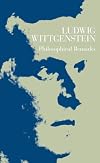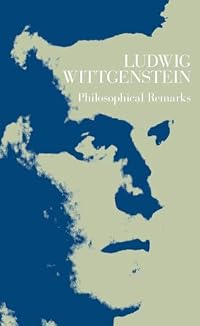
Philosophical Remarks
by Ludwig Wittgenstein
248 Members (4.71)
On This Page
Description
When in May 1930, the Council of Trinity College, Cambridge, had to decide whether to renew Wittgenstein's research grant, it turned to Bertrand Russell for an assessment of the work Wittgenstein had been doing over the past year. His verdict: The theories contained in this new work. . . are novel, very original and indubitably important. Whether they are true, I do not know. As a logician who like simplicity, I should like to think that they are not, but from what I have read of them I am show more quite sure that he ought to have the opportunity to work them out, since, when completed, they may easily prove to constitute a whole new philosophy. show lessTags
Recommendations













Member Reviews
Members
- Recently Added By
Author Information

160+ Works 17,441 Members
Born in Vienna, Ludwig Josef Johann Wittgenstein was educated at Linz and Berlin University. In 1908 he went to England, registering as a research student in engineering at the University of Manchester. There he studied Bertrand Russell's (see also Vol. 5) Principles of Mathematics by chance and decided to study with Russell at Cambridge show more University. From 1912 to 1913, he studied under Russell's supervision and began to develop the ideas that crystallized in his Tractatus. With the outbreak of World War I, he returned home and volunteered for the Austrian Army. During his military service, he prepared the book published in 1921 as the Tractatus, first translated into English in 1922 by C. K. Ogden. Wittgenstein emerged as a philosopher whose influence spread from Austria to the English-speaking world. Perhaps the most eminent philosopher during the second half of the twentieth century, Wittgenstein had an early impact on the members of the Vienna Circle, with which he was associated. The logical atomism of the Tractatus, with its claims that propositions of logic and mathematics are tautologous and that the cognitive meaning of other sorts of scientific statements is empirical, became the fundamental source of logical positivism, or logical empiricism. Bertrand Russell adopted it as his position, and A. J. Ayer was to accept and profess it 15 years later. From the end of World War I until 1926, Wittgenstein was a schoolteacher in Austria. In 1929 his interest in philosophy renewed, and he returned to Cambridge, where even G. E. Moore came under his spell. At Cambridge Wittgenstein began a new wave in philosophical analysis distinct from the Tractatus, which had inspired the rise of logical positivism. Whereas the earlier Wittgenstein had concentrated on the formal structures of logic and mathematics, the later Wittgenstein attended to the fluidities of ordinary language. His lectures, remarks, conversations, and letters made lasting imprints on the minds of his most brilliant students, who have long since initiated the unending process of publishing them. During his lifetime Wittgenstein himself never published another book after the Tractatus. However, he was explicit that the work disclosing the methods and topics of his later years be published. This work, Philosophical Investigations (1953), is esteemed to be his most mature expression of his philosophical method and thought. (Bowker Author Biography) show less
Series
Belongs to Publisher Series
Taskutieto (159)
Classifications
Statistics
- Members
- 248
- Popularity
- 130,416
- Rating
- (4.71)
- Languages
- 5 — English, Finnish, French, German, Italian
- Media
- Paper
- ISBNs
- 13
- ASINs
- 3