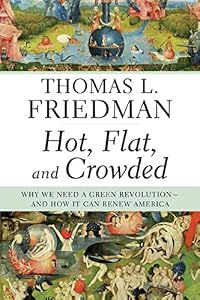
Hot, Flat, and Crowded: Why We Need a Green Revolution and How It Can Renew America
by Thomas L. Friedman
On This Page
Description
Friedman's bestseller "The World Is Flat" has helped millions of readers to see globalization in a new way. Now the author brings a fresh outlook to the crises of destabilizing climate change and rising competition for energy.Tags
Recommendations
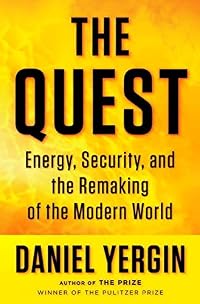
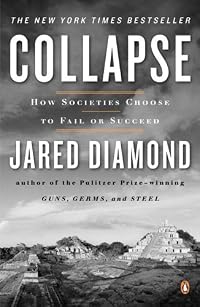
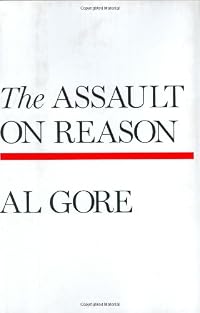
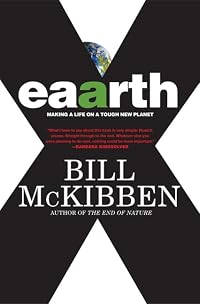


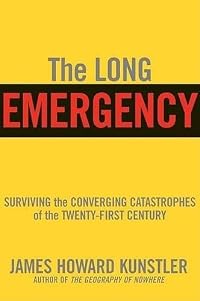
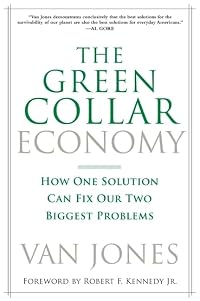
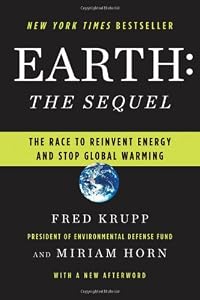
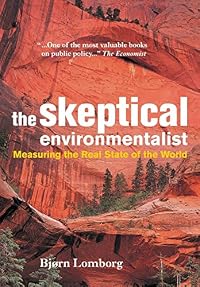







Member Recommendations
skyiscool Hot, Flat, and Crowded builds off many of the topics that Friedman presents in The World Is Flat. Although both books adequately stand on their own, they together form an informed and powerful worldview.
Member Reviews
The world is in trouble. There's some debate about how much trouble, what time frame we have before the point of no return, and what we ought to do about it. Friedman's Hot, Flat and Crowded tackles all of these questions with an inspiring and practical vision of America as the world leader in what is shaping up to be the next big thing.
Friedman's analysis deals with systems of systems - how massively interconnected systems affect each other and how we can understand and control them. As a system engineer, I really got into that part of the discussion. He makes it pretty clear that solving the energy/climate/ecology problem isn't just about those particular issues. Instead these problems ripple into so many other things. As a small show more example, the US Army is moving to solar arrays to power forward field posts instead of diesel generators, thus eliminating the cost (in dollars and in human lives) of hauling diesel fuel through dangerous territory. But this "greening" of the Army also has the effect of pushing civilian technology forward and provides the market base for reducing the cost of the technology to reasonable levels. Even if readers are skeptical of ecological and climate change arguments, it's hard to find fault with Friedman's discussions of energy supply and the growth of the middle class. But fortunately, as he points out so well, solving one problem often gives you other solutions for free.
Highly recommended, but fair warning - you may find yourself running around the house turning off lights and changing bulbs to compact fluorescents! show less
Friedman's analysis deals with systems of systems - how massively interconnected systems affect each other and how we can understand and control them. As a system engineer, I really got into that part of the discussion. He makes it pretty clear that solving the energy/climate/ecology problem isn't just about those particular issues. Instead these problems ripple into so many other things. As a small show more example, the US Army is moving to solar arrays to power forward field posts instead of diesel generators, thus eliminating the cost (in dollars and in human lives) of hauling diesel fuel through dangerous territory. But this "greening" of the Army also has the effect of pushing civilian technology forward and provides the market base for reducing the cost of the technology to reasonable levels. Even if readers are skeptical of ecological and climate change arguments, it's hard to find fault with Friedman's discussions of energy supply and the growth of the middle class. But fortunately, as he points out so well, solving one problem often gives you other solutions for free.
Highly recommended, but fair warning - you may find yourself running around the house turning off lights and changing bulbs to compact fluorescents! show less
preliminary review: Friedman has about as clear-eyed an understanding of the problems of climate, competition, and overpopulation as one could look for from an American technology enthusiast, but his solutions are impractical.
His future, in brief, has no DIRT. It has no hackers, no irrational people, no software bugs and hardware failures, no fools, no corporate interests... it really is science fiction.
The future America he describes is, well, shiny. Tomorrowland. Everything that consumes or produces electricity, and every part of the electrical grid, and every user of electricity, all work together in perfect integrated harmony, trillions of chips communicating, real-time electricity market running with trillions of transactions a show more second.
This kind of thing might work in some utopia where there were no hackers attacking every part of that electricity network, and there were no market speculators, and all the trillions of computer chips had no software bugs or computer failures, and if large computer networks and markets were inherently stable. But none of that is true.
It might work if the US was inhabited by Vulcans, or Star Trek: Next Generation humans, or even the educated. orderly, careful people who make up much of the European and Japanese population.
But that's also not true. America is the country where they can't bring in the Metric System. You're going to completely transform the energy economy, in a country where they shot at metric roadsigns? In a country where everywhere is all in favor of wind power, until you actually want to build a windmill, and then they all freak out about noise and appearance and dead birds and a bunch of irrational nonsense?
Friedman's America is apparently one without the poor people and Republicans, it's Europe with more innovation. Everyone all pulls together and somehow all the American forces that have been busily turning the world into fat, lazy, stupid, ugly, car-topia suburbanworld for 50 years become (in the span of maybe 10 years?) slim, energetic, rational, informed, bicycle-riding urbanites.
Every single step that's necessary: carbon tax, congestion pricing, road tolls, higher energy prices - these are all anathema to the 60 million Americans who voted against Obama (and probably to millions of those who did). Just those basic pieces will be fought tooth and nail. They might have been possible on September 12, 2001, but now in the middle of the 2nd Great Depression?
Yeah, good luck with that shiny green future there Friedman. show less
His future, in brief, has no DIRT. It has no hackers, no irrational people, no software bugs and hardware failures, no fools, no corporate interests... it really is science fiction.
The future America he describes is, well, shiny. Tomorrowland. Everything that consumes or produces electricity, and every part of the electrical grid, and every user of electricity, all work together in perfect integrated harmony, trillions of chips communicating, real-time electricity market running with trillions of transactions a show more second.
This kind of thing might work in some utopia where there were no hackers attacking every part of that electricity network, and there were no market speculators, and all the trillions of computer chips had no software bugs or computer failures, and if large computer networks and markets were inherently stable. But none of that is true.
It might work if the US was inhabited by Vulcans, or Star Trek: Next Generation humans, or even the educated. orderly, careful people who make up much of the European and Japanese population.
But that's also not true. America is the country where they can't bring in the Metric System. You're going to completely transform the energy economy, in a country where they shot at metric roadsigns? In a country where everywhere is all in favor of wind power, until you actually want to build a windmill, and then they all freak out about noise and appearance and dead birds and a bunch of irrational nonsense?
Friedman's America is apparently one without the poor people and Republicans, it's Europe with more innovation. Everyone all pulls together and somehow all the American forces that have been busily turning the world into fat, lazy, stupid, ugly, car-topia suburbanworld for 50 years become (in the span of maybe 10 years?) slim, energetic, rational, informed, bicycle-riding urbanites.
Every single step that's necessary: carbon tax, congestion pricing, road tolls, higher energy prices - these are all anathema to the 60 million Americans who voted against Obama (and probably to millions of those who did). Just those basic pieces will be fought tooth and nail. They might have been possible on September 12, 2001, but now in the middle of the 2nd Great Depression?
Yeah, good luck with that shiny green future there Friedman. show less
I am so glad this is done. Friedman has a lot of good things to say, but apparently his motto is why say something in 1,000 words if 10,000 will do. He beats every point plum to death. By the end, one is almost rooting for the greedy robber barons...
I generally am very favorable of all Friedman's books evaluating and analyzing globalism. This one, which focuses largely on the problems and possible solutions to global climate change, is generally insightful and enjoyable. However, I have two problems with it, both of which would not had been present had this book been edited for tightly to pare it down to the facts and away from the fanciful. As H.G. Wells' two-volume Outline of History, published in 1920, is a beautiful work flawed with a conclusion that the then recent violence of WW I would prove the end of global conflict, so Friedman lacks sufficient basis for the prophecy that only forceful government involvement, such as punitive taxation, will grow a green economy. Rather, show more look tot he previous American successes of nationwide electrification, the cross-continent railroad, the atom bomb, or the moon shot. Government should clear all obstacles and make the desired outcome the most strongly supported option to make it a success. That is, subsidies on a guaranteed long-term schedule (for businesses to plan), specific awards modeled on NASA and the X Prize Foundation and more will herd the unparalleled possibilities of American innovation and market forces toward the desired goal. Outmoded solutions, like fossil fuels will die off like the Pony Express without the need of being attacked. Also, hyper-taxation criminalizes normally legal activities creating new crime problems. Didn't we learn that with Prohibition and haven't we learned that with the "War on Drugs"?
Also, like an ornery curmudgeon declaiming "those darn kids" Friedman takes time to assault "continuous partial attention" based on the romantic view of an Amazonian guide that he meets. Well, the guide relies on the same "continuous partial attention" to track bird sounds, topography, and changing vegetation that a housewife orchestrating a symphony of kitchen gadgets for a multi-course meal while an iPod is in her ear and CNN is on mute on the TV.
Whew, with those two thinks off my chest I can recommend the remainder of the book for its timeliness. show less
Also, like an ornery curmudgeon declaiming "those darn kids" Friedman takes time to assault "continuous partial attention" based on the romantic view of an Amazonian guide that he meets. Well, the guide relies on the same "continuous partial attention" to track bird sounds, topography, and changing vegetation that a housewife orchestrating a symphony of kitchen gadgets for a multi-course meal while an iPod is in her ear and CNN is on mute on the TV.
Whew, with those two thinks off my chest I can recommend the remainder of the book for its timeliness. show less
It's no surprise that Hot, Flat and Crowded has generated so much press. Thomas Friedman, who in his 2005 best-seller made a strong case for globalization without even mentioning the environment, has definitely seen the light and added his voice to call for immediate U.S. action on climate change. The book uses his trademark format—traveling the world, hobnobbing with muckety-mucks and movers and shakers, and jotting down brilliant flashes of insight on whatever cocktail napkin is at hand. Seriously, the author does an excellent job of dissecting the implications of climate change for the U.S. and world economies as well as for biodiversity and the overall health of the biosphere. He tackles tough issues like population control and show more the material wants of growing economies in the developing world head on. His chapter on petropolitics makes a well-reasoned arguement that the transfer of immense wealth to oil-producing nations has shifted the geopolitical balance and ultimately diminished freedom around the world. His discussion of energy poverty—the pressing need for sustainable, nonpolluting power in Africa—highlights dimensions of the problem often overlooked in the mainstream media. All-in-all, the first half of the book does a masterful job of making the climate change problem relevant to Americans outside the environmental movement.
The second half of the book is more problematic. Friedman begins his assessment of solutions by belittling the notion that individuals can make lifestyle changes that to help alleviate global warming. Admittedly ten ways to save the earth (and money to boot) won't immediately reverse current climate trends, but I think they are every bit as important as many of the solutions Friedman envisions—particularly the idea of a smart energy grid with automated appliances in a country that can't even manage the digital TV conversion on an overly generous time line. Friedman contends that the only way to move the economy away from carbon-based fuels is to set a floor on oil and gas prices—he suggests keeping gas at a minimum of $4.50 a gallon and, for example, when prices fall to $2.00 a gallon using the extra $2.50 a gallon to fund alternative fuels. He also advocates energy efficiency through LEED building standards, plug-in electric hybrid vehicles and the creation of Noah's ark-like biodiversity reserves to stem equatorial deforestation. While all of these solutions are laudable long-term goals, they will take years to achieve and are financially unobtainable for most Americans (and Chinese and Indians). Few have the resources to buy all new appliances, replace their cars with plug-in hybrids and build new LEED-certified homes. I suspect even fewer in the developing world will be willing to leave Beijing or Mumbai and eek out a living by farming on the edge of a bioreserve. It is my hope that Thomas Friedman, having heard the altar call and burst forth evangelizing, will continue to tap the minds of the world's best and brightest and find solutions that allow everyone, not just the ultra-rich and rural poor, to participate in the solution. show less
The second half of the book is more problematic. Friedman begins his assessment of solutions by belittling the notion that individuals can make lifestyle changes that to help alleviate global warming. Admittedly ten ways to save the earth (and money to boot) won't immediately reverse current climate trends, but I think they are every bit as important as many of the solutions Friedman envisions—particularly the idea of a smart energy grid with automated appliances in a country that can't even manage the digital TV conversion on an overly generous time line. Friedman contends that the only way to move the economy away from carbon-based fuels is to set a floor on oil and gas prices—he suggests keeping gas at a minimum of $4.50 a gallon and, for example, when prices fall to $2.00 a gallon using the extra $2.50 a gallon to fund alternative fuels. He also advocates energy efficiency through LEED building standards, plug-in electric hybrid vehicles and the creation of Noah's ark-like biodiversity reserves to stem equatorial deforestation. While all of these solutions are laudable long-term goals, they will take years to achieve and are financially unobtainable for most Americans (and Chinese and Indians). Few have the resources to buy all new appliances, replace their cars with plug-in hybrids and build new LEED-certified homes. I suspect even fewer in the developing world will be willing to leave Beijing or Mumbai and eek out a living by farming on the edge of a bioreserve. It is my hope that Thomas Friedman, having heard the altar call and burst forth evangelizing, will continue to tap the minds of the world's best and brightest and find solutions that allow everyone, not just the ultra-rich and rural poor, to participate in the solution. show less
Adult nonfiction. Friedman presents more evidence of a global crisis and reminds us again that the world is already in serious, serious trouble (I'm not looking forward to the world 50 years from now), and that we're gonna need a whole lot more than reusable tote bags to get out of it. In fact we'll need several MAJOR policy changes and we'll need to make some big sacrifices and changes in the way we live our lives. I don't always agree 100% with what he says, and actually skimmed through most of the book, but Friedman does provide valuable perspective on various issues, and I would recommend this one to anyone who's got the time.
It should have been titled HOT, HOT, HOT, HOT, Flat, and Crowded since most of the book concerns climate change. There are chapters regarding globalization (flat) and increasing populations (crowded) but they take a back seat to climate change. I’ll say up front that I’m a climate change skeptic and Friedman’s arguments did not change my mind. However, I do think the U.S. needs to move towards renewable energy and away from overseas energy sources for national security reasons. So I found myself agreeing with a lot of Friedman’s proposals, if not always for the same reason. He proposes far too much government intervention for my taste. I think he was on firmer ground when discussing globalization on increasing population, show more although I think he should have looked a little more critically at the predicted population increases. His argument was similar to Kaplan’s in The Coming Anarchy. So, while I didn’t always agree with Friedman, the book was definitely worth reading and caused me to think about a number of ideas a little differently. show less
Members
- Recently Added By
Published Reviews
ThingScore 50
Where does a man who needs his own offshore drilling platform just to keep the east wing of his house heated get the balls to write a book chiding America for driving energy inefficient automobiles?
added by lorax
Why do we race to use up the earth’s non-renewable resources? How can we prevent the destruction of our ecosystem? Those are key questions posed in Tom Friedman’s follow-up to The World is Flat, entitled Hot, Flat, and Crowded
added by tim.taylor
Lists

LT picks: Blue Books
197 works; 44 members

Climate Change
87 works; 7 members

Obama Reads
181 works; 3 members

Caring for the Earth
19 works; 2 members

Books recommended by Barack Obama
295 works; 28 members
Author Information

19+ Works 28,836 Members
Journalist Thomas L. Friedman was born in 1953 in Minneapolis, Minnesota. Friedman graduated from Brandeis University with a degree in Mediterranean Studies and earned a graduate degree from Oxford in Modern Middle East Studies. His reporting on the war in Lebanon won the George Polk Award, the Pulitzer Prize, and the Livingston Award for Young show more Journalists. He won a second Pulitzer for his work in Israel. Friedman began his career as a correspondent for United Press International and later served as bureau chief for the New York Times in Beirut and Jerusalem. He moved to the op-ed page of The New York Times as a foreign affairs columnist. In 2002, Friedman won his third Pulitzer Prize, this time for Commentary. Friedman wrote about his experiences as a Jewish-American reporter in the Middle East in From Beirut to Jerusalem, which won the National Book Award in 1989. The bestselling Lexus and the Olive Tree won the 2000 Overseas Press Club Award for best nonfiction book on foreign policy. He wrote Longitudes and Attitudes: Exploring the World After September 11 and The World Is Flat, which received the first Financial Times and Goldman Sachs Business Book of the Year Award. His other works include Hot, Flat, and Crowded, Hot, Flat, and Crowded 2.0, and That Used to Be Us which made The New York Times Best Seller List for 2012. His title, Thank You for Being Late, made the New York Times Best Seller List in 2016. (Bowker Author Biography) show less
Some Editions
Awards and Honors
Awards
Distinctions
Notable Lists
Common Knowledge
- Canonical title
- Hot, Flat, and Crowded: Why We Need a Green Revolution and How It Can Renew America
- Original title
- Hot, Flat, and Crowded: Why We Need a Green Revolution and How It Can Renew America
- Alternate titles
- Hot, Flat, and Crowded: Why the World Needs a Green Revolution and How We Can Renew Our Global Future
- Original publication date
- 2008
- Important places
- USA; China
- Important events
- global warming
- Dedication
- For Ann, again
- First words
- In June 2004, I was visiting London with my daughter Orly, and one evening we went to see the play Billy Elliot at a theater near Victoria Station.
- Last words
- (Click to show. Warning: May contain spoilers.)But if we rise to the challenge, and truly become the Re-generation - redefining green and rediscovering, reviving, and regenerating America - we, and the world, will not only survive but thrive in an age that is hot, flat, and crowded.
- Original language*
- Engels
*Some information comes from Common Knowledge in other languages. Click "Edit" for more information.
Classifications
- Genres
- Economics, Science & Nature, General Nonfiction, Nonfiction, Politics and Government
- DDC/MDS
- 320.58 — Social sciences Political science Political science (Politics and government) Political ideologies Environmentalist political ideologies
- LCC
- GE197 .F75 — Geography, Anthropology and Recreation Environmental Sciences Environmental sciences Environmentalism. Green movement
- BISAC
Statistics
- Members
- 3,557
- Popularity
- 4,571
- Reviews
- 61
- Rating
- (3.70)
- Languages
- 15 — Czech, Dutch, English, French, German, Hebrew, Italian, Japanese, Polish, Portuguese, Russian, Slovenian, Spanish, Swedish, Chinese, traditional
- Media
- Paper, Audiobook, Ebook
- ISBNs
- 38
- ASINs
- 17