On This Page
Description
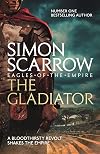
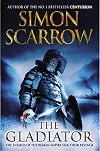
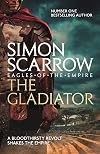
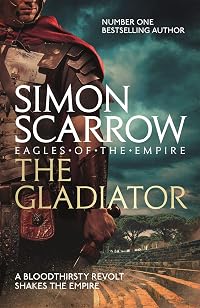
The action-packed new novel featuring Roman army officers Macro and Cato from Sunday Times bestselling author Simon Scarrow While centurions Macro and Cato are returning to Rome from a harrowing campaign against the Parthians, their transport ship is almost capsized by a tidal wave. They barely make it to the port of Matala in Crete where they are stunned to find a devastated town. An earthquake has struck the island, destroying its cities and killing thousands. In the chaotic aftermath, show more large bands of the island's slaves begin to revolt and local bandits, taking advantage of the slave rebellion, urge the Cretans to overthrow the Roman administration. With many of the island's troops either killed or wounded during the earthquake, the governor of the province calls on Macro and Cato for help. Can they move swiftly enough to counter the rebellion before it sweeps the Romans from the island? show lessTags
Recommendations










Member Reviews
‘The Gladiator’ is a Roman adventure that’s full of action and drama, along with a little humour. The plot is strong and is engaging.
The main characters from the previous books, Cato and Macro, endure more hardships and dangers; however, this time they’re not sent on a mission, they end up on one through fate. Fate, in this case, is a shipwreck. I like shipwreck stories, so the tidal wave section in the first chapter was high excitement.
An earthquake caused the tidal wave, so the survivors of the battered ship make it to a land that's in ruins. A side effect to the natural disaster is a slave revolt, led by a gladiator who was one of Cato and Macro’s antagonists in a previous novel.
This novel gripped me from start to finish. show more It also continues Cato’s love story with a Roman senator’s daughter called Julia, who is a welcome addition to the recurring cast of characters. She spices the story up.
I couldn’t fail to notice during this and the past few books in the series, along with the author’s Napoleon and Wellington quadrilogy, that he overuses the phrase, ‘cleared his/her throat.’ It’s done to locate a character so that you know who’s about speak without the need of dialogue attribution, which I’m in full favour of, but with countless other lead-ins available, it becomes repetitive and predictable. ‘Cato cleared his throat.’ ‘Macro cleared his throat.’ ‘Julia cleared her throat.’ It’s probable that the author doesn’t realise he’s doing it. People do have traits that they’re unaware of. The Scarrow books I’ve read so far are fifteen to twenty years old now, however, so I’m hoping someone’s pointed it out to him by now if he hasn’t realised himself.
The book’s language is contemporary, which makes the narrative flow better than if the author had used archaic turns of phrase. He also uses modern English slang, which some readers won’t like, but at least it’s consistent. I’ve read historical novels where in one scene a character says something like, ‘Keep it in your trousers,’ while in another scene someone else says, ‘Whence came he thus?’
While I admit I would’ve preferred the language to not incorporate modern slang, the characters and third-person narration are engaging enough for this not to make me feel like I’m reading a story set during any period other than the first century AD.
Perhaps my being an Englishman makes the slang words and phrases more palatable. I admit, it did annoy me when, in another historical novel, the author of that book used the odd Americanism – ‘ass’ and ‘butt’, for example – so I can understand why any non-English reader – and certainly non-British – would be distracted by the slang terms.
So, while the slang words and phrases didn’t bother me, three other elements did distract me at times. One being a trait that keeps cropping up in books I’ve read this year by different authors, namely this sort of thing: ‘more loudly’, ‘more closely’, instead of the concise ‘louder’ and ‘closer’. Don’t use two words if one will do.
Adverbs: they ‘tell’, not ‘show’, and should be cut or replaced with a strong verb wherever possible.
The two points above are minor criticisms. The one big gripe I have is the overuse of ‘then’ to state what happens next. This novel is riddled with ‘thens’, at times making the third-person narrative sound like a child’s voice. ‘Then’ is easy to cut when editing, and it’s not hard to drop it altogether. It ends up being a filler word, notably when using it to start a sentence. The reader knows whatever’s happening is taking place after what’s just happened, so no need to put, ‘Then he …’ and such like.
In most cases, I deduct a star if a book is riddled with ‘thens’ or swamped with adverbs. As someone who appreciates good writing style, these things drive me to distraction. Yet, as mentioned, ‘The Gladiator’ is such a cracking story it overrode these niggling points.
It’s easier to go on and on criticising a book than it is to praise it over and over, and I’ve doubtless not expressed how impressed I am with ‘The Gladiator’ to the extent it deserves, so, in a nutshell, I’ll state this: it’s a great read. show less
The main characters from the previous books, Cato and Macro, endure more hardships and dangers; however, this time they’re not sent on a mission, they end up on one through fate. Fate, in this case, is a shipwreck. I like shipwreck stories, so the tidal wave section in the first chapter was high excitement.
An earthquake caused the tidal wave, so the survivors of the battered ship make it to a land that's in ruins. A side effect to the natural disaster is a slave revolt, led by a gladiator who was one of Cato and Macro’s antagonists in a previous novel.
This novel gripped me from start to finish. show more It also continues Cato’s love story with a Roman senator’s daughter called Julia, who is a welcome addition to the recurring cast of characters. She spices the story up.
I couldn’t fail to notice during this and the past few books in the series, along with the author’s Napoleon and Wellington quadrilogy, that he overuses the phrase, ‘cleared his/her throat.’ It’s done to locate a character so that you know who’s about speak without the need of dialogue attribution, which I’m in full favour of, but with countless other lead-ins available, it becomes repetitive and predictable. ‘Cato cleared his throat.’ ‘Macro cleared his throat.’ ‘Julia cleared her throat.’ It’s probable that the author doesn’t realise he’s doing it. People do have traits that they’re unaware of. The Scarrow books I’ve read so far are fifteen to twenty years old now, however, so I’m hoping someone’s pointed it out to him by now if he hasn’t realised himself.
The book’s language is contemporary, which makes the narrative flow better than if the author had used archaic turns of phrase. He also uses modern English slang, which some readers won’t like, but at least it’s consistent. I’ve read historical novels where in one scene a character says something like, ‘Keep it in your trousers,’ while in another scene someone else says, ‘Whence came he thus?’
While I admit I would’ve preferred the language to not incorporate modern slang, the characters and third-person narration are engaging enough for this not to make me feel like I’m reading a story set during any period other than the first century AD.
Perhaps my being an Englishman makes the slang words and phrases more palatable. I admit, it did annoy me when, in another historical novel, the author of that book used the odd Americanism – ‘ass’ and ‘butt’, for example – so I can understand why any non-English reader – and certainly non-British – would be distracted by the slang terms.
So, while the slang words and phrases didn’t bother me, three other elements did distract me at times. One being a trait that keeps cropping up in books I’ve read this year by different authors, namely this sort of thing: ‘more loudly’, ‘more closely’, instead of the concise ‘louder’ and ‘closer’. Don’t use two words if one will do.
Adverbs: they ‘tell’, not ‘show’, and should be cut or replaced with a strong verb wherever possible.
The two points above are minor criticisms. The one big gripe I have is the overuse of ‘then’ to state what happens next. This novel is riddled with ‘thens’, at times making the third-person narrative sound like a child’s voice. ‘Then’ is easy to cut when editing, and it’s not hard to drop it altogether. It ends up being a filler word, notably when using it to start a sentence. The reader knows whatever’s happening is taking place after what’s just happened, so no need to put, ‘Then he …’ and such like.
In most cases, I deduct a star if a book is riddled with ‘thens’ or swamped with adverbs. As someone who appreciates good writing style, these things drive me to distraction. Yet, as mentioned, ‘The Gladiator’ is such a cracking story it overrode these niggling points.
It’s easier to go on and on criticising a book than it is to praise it over and over, and I’ve doubtless not expressed how impressed I am with ‘The Gladiator’ to the extent it deserves, so, in a nutshell, I’ll state this: it’s a great read. show less
One of the best in Scarrow's series about Cato and Macro, two Roman legionaries, to date. I've been reading them more or less in order, and the last few, though entertaining enough, have felt a bit formulaic. Gladiator though is a return to the form of the early books in the series. The plot is well constructed, a cut above the usual Roman military tourism. Central to the plot is a slave revolt in Crete, and Scarrow succeeds in portraying the perspective of both the rebel slaves and the Roman soldiers. Yes, much like C.S. Forrester's Hornblower series, or Bernard Cornwell's Sharpe novels, this is about characters who mysteriously play a central role in just about every campaign of the wars they live through; yes, there are quite a few show more battle scenes; yes, they're not great literature. But, like Hornblower and Sharpe, they're engagingly written, with a good eye for historical detail. show less
This is not a book I would normally choose to read but I was glad I did.
Its the story of Marco and Cato they with a boat load of other Romans get shipwrecked in Crete after an earthquake.
The slaves are rebelling chaos reigns and its up to them to sort out the mess. A slave called Ajax is leading the revolt. Marco and Cato have crossed paths with Ajax before and it was them that executed his father. Ajax wants blood and wants to kill his old adversaries.
Marco and Juila (Catos girfriend are held hostage) Cato has to go to Egypt to enlist reinforcements.
A large battle commences Julia and Marco are rescued, Marco joins in the fighting. Ajax escapes he will be hunted down in the next book though.. Good read this was quite interesting and show more I could imagine what it was like 2000 years ago. show less
Its the story of Marco and Cato they with a boat load of other Romans get shipwrecked in Crete after an earthquake.
The slaves are rebelling chaos reigns and its up to them to sort out the mess. A slave called Ajax is leading the revolt. Marco and Cato have crossed paths with Ajax before and it was them that executed his father. Ajax wants blood and wants to kill his old adversaries.
Marco and Juila (Catos girfriend are held hostage) Cato has to go to Egypt to enlist reinforcements.
A large battle commences Julia and Marco are rescued, Marco joins in the fighting. Ajax escapes he will be hunted down in the next book though.. Good read this was quite interesting and show more I could imagine what it was like 2000 years ago. show less
After success in the last book, and as this is a series, we do expect success by the end of the novel, it is time to make our way home to Rome and for the heroes to get their rewards. Macro and Cato have been stepping up and giving great needed service to Rome, and Claudius and they deserve accolades.
Instead an earthquake and tidal wave beset them as they are near Crete. It throws the Island into turmoil, seriously hammering the infrastructure and forcing our two Centurions to step up once more.
We see the continuing evolution of Cato as a leader and we also see that Macro, once the Master, now becoming the lieutenant. Something that we knew from book one was a possibility and long overdue.
What comes as an unexpected and pleasant show more addition is that we have an enemy who we had left behind long ago, emerge. One that gives us plausible cause to believe he is not only present at the recovering Crete, but his actions will and do impact the story.
In all, a very good book and nice to see Cato finally on his path instead of treading water. A definite reread when we have the entire series finished. show less
Instead an earthquake and tidal wave beset them as they are near Crete. It throws the Island into turmoil, seriously hammering the infrastructure and forcing our two Centurions to step up once more.
We see the continuing evolution of Cato as a leader and we also see that Macro, once the Master, now becoming the lieutenant. Something that we knew from book one was a possibility and long overdue.
What comes as an unexpected and pleasant show more addition is that we have an enemy who we had left behind long ago, emerge. One that gives us plausible cause to believe he is not only present at the recovering Crete, but his actions will and do impact the story.
In all, a very good book and nice to see Cato finally on his path instead of treading water. A definite reread when we have the entire series finished. show less
OK, these books contain quite a lot of anachronistic language and fairly predictable plotlines, but they have tremendous pace and excitement. I have a soft spot for them.
Another enjoyable and fun read about our two heroes as they battle Rome's enemies. This time it is slaves, slaves who use the opportunity provided by a destructive earthquake on the island of Crete to revolt against their masters, and attempt to free themselves. With a little help from the governor of Egypt and some daring do, Cato crushes the rebels, saves his girl, and his friend, but is then despatched to chase down the slave leader, following him across the Mediterranean. An Odysseus like conclusion.
To the same quality as the previous books in the series. I will admit the tension about the fate two centurions (though Cata is appointed a prefect by the end of this novel), is hard to find. It is obvious that if any two people survive show more a disaster it will be these two. They have survived so much thus far. show less
To the same quality as the previous books in the series. I will admit the tension about the fate two centurions (though Cata is appointed a prefect by the end of this novel), is hard to find. It is obvious that if any two people survive show more a disaster it will be these two. They have survived so much thus far. show less
Some of the dialogue seems far too anachronistic for the time period. The plot is pretty good, as are the characters. The way characters swear, or otherwise say or refer to things just seems a bit to modern and doesn't fit into the timeline for romans.
Members
- Recently Added By
Lists

Kindle Books - To Read
63 works; 1 member
Author Information

Some Editions
Awards and Honors
Awards
Series

Work Relationships
Common Knowledge
- Canonical title
- The Gladiator
- Original title
- The Gladiator
- Original publication date
- 2009
- People/Characters*
- Quintus Licinius Cato; Lucius Cornelius Macro
- Publisher's editor*
- Békési, József
- Original language*
- angol
*Some information comes from Common Knowledge in other languages. Click "Edit" for more information.
Classifications
Statistics
- Members
- 409
- Popularity
- 76,053
- Reviews
- 9
- Rating
- (3.81)
- Languages
- 11 — Czech, Danish, English, German, Hungarian, Italian, Polish, Portuguese (Portugal), Slovenian, Spanish, Swedish
- Media
- Paper, Audiobook, Ebook
- ISBNs
- 33
- ASINs
- 9