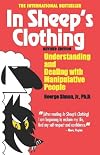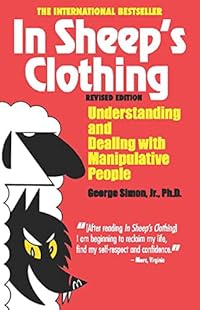
In Sheep's Clothing: Understanding and Dealing with Manipulative People
by George K. Simon Jr.
On This Page
Description
Dr. George K. Simon knows how people push your buttons: your children-especially teens-are experts at it, as is your mate. A coworker may quietly undermine your efforts while professing to be helpful, or your boss may prey on your weaknesses. Manipulative people have two goals: to win and to look good doing it. Too often, those they abuse are only vaguely aware of what is happening to them.In this eye-opening book, you'll discover:-four reasons why victims have a hard time leaving abusive show more relationships-power tactics manipulative people use to push their own agendas and justify their behavior-ways to redefine the rules of engagement between you and the abuser-how to spot potential weaknesses in your character that can set you up for manipulation-two tools for personal empowerment to help you maintain greater strength in all relationships. show lessTags
Recommendations

























Member Reviews
This book can potentially change your life!
Excellent book that nails the most common issue that people face in difficult relationships. One can read good number of books on psychology, psychological disorders like “understanding psychopath/sociopath and differentiating between two” and likes, or milder ones like “understanding him/her” and likes. It is possible such books may help, but I can bet they will help only in a small cases. After all, neither one meets a psychopath every day, nor one is driven nuts by minor quirks in others. However, one does meet covert-aggressive person (a commonly occurring sub-type of character disturbed in author’s term) every now and then in relationships, office, neighbors, and communities. show more And, if you are looking for relationship self-help books, reading this review, then it is very likely you have one such character in close quarters. So, throw away the rest and read this one, and reread few times.
What this book say is that unlike most people who are reasonable and normal in all situations, there are some people who are simply aggressive, trampling over most people around them. And, there is a worse sub-type of covert-aggressive people who are aggressive internally, but go about their goals in round-about way pulling all types of damaging tactics; and target keeps on giving up ground, feeling bad about self, gut screaming something but mind saying something else, and always wondering what is wrong. There is no point in making covert-aggressive see & understand the impact of their wrong ways, because they already see but disagree with social norms. Only effective way to deal with them is to change and improve oneself by increasing ability to detect their presence, to know tactics used by them, to know self, and finally to assertively go about things important to self.
It is battle out there when dealing with aggressive or covert-aggressive person. Best is to arm yourself as much as possible by having following:
- In Sheep’s Clothing by George K. Simon Jr. (understanding the covert-aggressive situation, handling them)
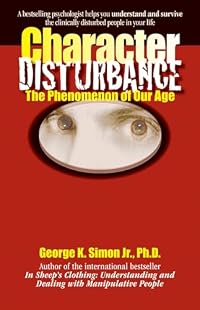
- Character Disturbance by George K. Simon Jr. (understanding all character disturbances, including covert-aggressive)
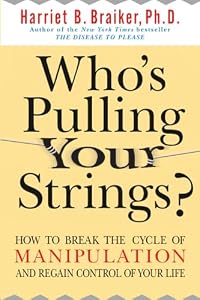
- Who’s Pulling Your Strings by Harriet Braiker (just understanding is not enough, good for getting a dumb 7 step process to initiate the behaviour change, not as good as Simon's book, but useful)
- People of the Lie by M Scott Peck (lying is the face they present. Bottomline: you meet liar, call them out, if they refuse to admit, stay away for those liars, no excuses, they are nothing but trouble, maybe bordering to evil in extreme cases)
- The Sociopath Next Door by Martha Stout (dealing with bit more extreme antisocial cases)
- Without Conscience by Robert D. Hare (dealing with bit more extreme psychopath cases)
Some people are turned off by a small essay at the end of the book on role of permissive society as the cause of character disturbance. Turning off is understandable as it goes against current social norms followed by majority of people. Treat essay as a critical look at current social norms, and those norms could change in years to come. show less
Excellent book that nails the most common issue that people face in difficult relationships. One can read good number of books on psychology, psychological disorders like “understanding psychopath/sociopath and differentiating between two” and likes, or milder ones like “understanding him/her” and likes. It is possible such books may help, but I can bet they will help only in a small cases. After all, neither one meets a psychopath every day, nor one is driven nuts by minor quirks in others. However, one does meet covert-aggressive person (a commonly occurring sub-type of character disturbed in author’s term) every now and then in relationships, office, neighbors, and communities. show more And, if you are looking for relationship self-help books, reading this review, then it is very likely you have one such character in close quarters. So, throw away the rest and read this one, and reread few times.
What this book say is that unlike most people who are reasonable and normal in all situations, there are some people who are simply aggressive, trampling over most people around them. And, there is a worse sub-type of covert-aggressive people who are aggressive internally, but go about their goals in round-about way pulling all types of damaging tactics; and target keeps on giving up ground, feeling bad about self, gut screaming something but mind saying something else, and always wondering what is wrong. There is no point in making covert-aggressive see & understand the impact of their wrong ways, because they already see but disagree with social norms. Only effective way to deal with them is to change and improve oneself by increasing ability to detect their presence, to know tactics used by them, to know self, and finally to assertively go about things important to self.
It is battle out there when dealing with aggressive or covert-aggressive person. Best is to arm yourself as much as possible by having following:
- In Sheep’s Clothing by George K. Simon Jr. (understanding the covert-aggressive situation, handling them)
- Character Disturbance by George K. Simon Jr. (understanding all character disturbances, including covert-aggressive)
- Who’s Pulling Your Strings by Harriet Braiker (just understanding is not enough, good for getting a dumb 7 step process to initiate the behaviour change, not as good as Simon's book, but useful)
- People of the Lie by M Scott Peck (lying is the face they present. Bottomline: you meet liar, call them out, if they refuse to admit, stay away for those liars, no excuses, they are nothing but trouble, maybe bordering to evil in extreme cases)
- The Sociopath Next Door by Martha Stout (dealing with bit more extreme antisocial cases)
- Without Conscience by Robert D. Hare (dealing with bit more extreme psychopath cases)
Some people are turned off by a small essay at the end of the book on role of permissive society as the cause of character disturbance. Turning off is understandable as it goes against current social norms followed by majority of people. Treat essay as a critical look at current social norms, and those norms could change in years to come. show less
I think we all have to deal with at least one toxic manipulative person at some point in our lives; it might be a parent, a spouse, a boss, a co-worker, or even a child. In my case, I grew up with a master manipulator for a father. And now I work with someone who, although not nearly in the league of my father, is still a fairly good manipulator.
I think the best thing about this book is that it does encourage you to go with your gut. I've been told by everyone that "K" is going through a hard time, that she doesn't MEAN to be so cruel and hateful, etc, etc. But I couldn't shake the feeling in my gut that K, no matter the circumstances, is just a manipulator, and she's using people around us. After reading this book, I definitely feel show more much more validated in my assessment of her personality, especially since the list of manipulative behaviors fit her to a tee. I could give multiple examples for each one.
I do wish that this book gave you more ideas on how to deal with the manipulators. There is a chapter at the end of the book that lists some coping strategies, but I feel like it's just not enough. Most of them deal with changing your own behavior and reactions, which does make sense, since you'll never be able to "force" a manipulator to change their own ways. I'm planning on utilizing those that I can to see if it makes a difference in my interactions with my coworker. show less
I think the best thing about this book is that it does encourage you to go with your gut. I've been told by everyone that "K" is going through a hard time, that she doesn't MEAN to be so cruel and hateful, etc, etc. But I couldn't shake the feeling in my gut that K, no matter the circumstances, is just a manipulator, and she's using people around us. After reading this book, I definitely feel show more much more validated in my assessment of her personality, especially since the list of manipulative behaviors fit her to a tee. I could give multiple examples for each one.
I do wish that this book gave you more ideas on how to deal with the manipulators. There is a chapter at the end of the book that lists some coping strategies, but I feel like it's just not enough. Most of them deal with changing your own behavior and reactions, which does make sense, since you'll never be able to "force" a manipulator to change their own ways. I'm planning on utilizing those that I can to see if it makes a difference in my interactions with my coworker. show less
Fuck. Manny’s reading this book In Sheep’s Clothing Understanding and Dealing with Manipulative People and I’m thinking he’s going to start applying it to goodreads, isn’t he? He’s going to start looking at reviews and writing comments like, sorry, but that’s a review that’s trying to get a vote through covert-aggression and I’m not falling for it. Vote withheld.
So he says he’s especially interested in this concept covert-aggression, he thinks it’s useful and I’ve spent all night sitting up in bed here in hospital going through my reviews and wondering. Shit. Is that review where I said I was going to kill myself if people didn’t vote for it, is that covert aggression? It doesn’t seem covert to me, I thought show more it was just desperate, but. And that review where –
Before I went too far I thought I’d better look up what it means and I found this extract from the book itself, which I’ve quoted in part, for the detail go to http://www.rickross.com/reference/brainwashing/brainwashing11.htm
So, this is what I want to say right now before the whole Manny psycho-analysing goodreads friends starts. I’m not covertly aggressive. Anybody who thinks I am is just not able to see that it is their problem that I’m like this, not mine. Telling you I’m writing this in hospital is not a covert aggressive attempt to make you feel like you have to vote for my review, even though it’s probably the fault of whoever is reading this that I’m here. If this review isn’t any good it’s not my fault, you should blame the author of the book, George Simon and Manny, not necessarily in that order. Frankly I already feel like I’m a victim of Manny’s use of psycho-analysis on goodreads, even though it hasn’t happened yet. I would also point out that I vote for lots of your reviews, Manny, and isn’t that worth anything?
And, Manny, if I may end by blowing you a kiss and hoping it lands in the right place, I am just so NOT doing this:
I just love blowing you kisses, even if it isn’t going to get me a vote. x show less
So he says he’s especially interested in this concept covert-aggression, he thinks it’s useful and I’ve spent all night sitting up in bed here in hospital going through my reviews and wondering. Shit. Is that review where I said I was going to kill myself if people didn’t vote for it, is that covert aggression? It doesn’t seem covert to me, I thought show more it was just desperate, but. And that review where –
Before I went too far I thought I’d better look up what it means and I found this extract from the book itself, which I’ve quoted in part, for the detail go to http://www.rickross.com/reference/brainwashing/brainwashing11.htm
The Process of Victimization
For a long time, I wondered why manipulation victims have a hard time seeing what really goes on in manipulative interactions. At first, I was tempted to fault them. But I've learned that they get hoodwinked for some very good reasons:
1. A manipulator's aggression is not obvious. Our gut may tell us that they're fighting for something, struggling to overcome us, gain power, or have their way, and we find ourselves unconsciously on the defensive. But because we can't point to clear, objective evidence they're aggressing against us, we can't readily validate our feelings.
2. The tactics manipulators use can make it seem like they're hurting, caring, defending, ..., almost anything but fighting. These tactics are hard to recognize as merely clever ploys. They always make just enough sense to make a person doubt their gut hunch that they're being taken advantage of or abused. Besides, the tactics not only make it hard for you to consciously and objectively tell that a manipulator is fighting, but they also simultaneously keep you or consciously on the defensive. These features make them highly effective psychological weapons to which anyone can be vulnerable. It's hard to think clearly when someone has you emotionally on the run.
3. All of us have weaknesses and insecurities that a clever manipulator might exploit. Sometimes, we're aware of these weaknesses and how someone might use them to take advantage of us. For example, I hear parents say things like: "Yeah, I know I have a big guilt button." – But at the time their manipulative child is busily pushing that button, they can easily forget what's really going on. Besides, sometimes we're unaware of our biggest vulnerabilities. Manipulators often know us better than we know ourselves. They know what buttons to push, when and how hard. Our lack of self-knowledge sets us up to be exploited.
4. What our gut tells us a manipulator is like, challenges everything we've been taught to believe about human nature. We've been inundated with a psychology that has us seeing everybody, at least to some degree, as afraid, insecure or "hung-up." So, while our gut tells us we're dealing with a ruthless conniver, our head tells us they must be really frightened or wounded "underneath." What's more, most of us generally hate to think of ourselves as callous and insensitive people. We hesitate to make harsh or seemingly negative judgments about others. We want to give them the benefit of the doubt and assume they don't really harbor the malevolent intentions we suspect. We're more apt to doubt and blame ourselves for daring to believe what our gut tells us about our manipulator's character.
Almost everyone is familiar with the term defense mechanism. Defense mechanisms are the "automatic" (i.e. unconscious) mental behaviors all of us employ to protect or defend ourselves from the "threat" of some emotional pain…..
While, from a certain perspective we might say someone engaging in these behaviors is defending their ego from any sense of shame or guilt, it's important to realize that at the time the aggressor is exhibiting these behaviors, he is not primarily defending (i.e. attempting to prevent some internally painful event from occurring), but rather fighting to maintain position, gain power and to remove any obstacles (both internal and external) in the way of getting what he wants. Seeing the aggressor as on the defensive in any sense is a set-up for victimization. Recognizing that they're primarily on the offensive, mentally prepares a person for the decisive action they need to take in order to avoid being run over. Therefore, I think it's best to conceptualize many of the mental behaviors (no matter how "automatic" or "unconscious" they may appear) we often think of as defense mechanisms, as offensive power tactics, because aggressive personalities employ them primarily to manipulate, control and achieve dominance over others. Rather than trying to prevent something emotionally painful or dreadful from happening, anyone using these tactics is primarily trying to ensure that something they want to happen does indeed happen….
Denial – This is when the aggressor refuses to admit that they've done something harmful or hurtful when they clearly have. It's a way they lie (to themselves as well as to others) about their aggressive intentions. This "Who... Me?" tactic is a way of "playing innocent," and invites the victim to feel unjustified in confronting the aggressor about the inappropriateness of a behavior. It's also the way the aggressor gives him/herself permission to keep right on doing what they want to do….
Rationalization – A rationalization is the excuse an aggressor tries to offer for engaging in an inappropriate or harmful behavior. It can be an effective tactic, especially when the explanation or justification the aggressor offers makes just enough sense that any reasonably conscientious person is likely to fall for it. It's a powerful tactic because it not only serves to remove any internal resistance the aggressor might have about doing what he wants to do (quieting any qualms of conscience he might have) but also to keep others off his back. If the aggressor can convince you he's justified in whatever he's doing, then he's freer to pursue his goals without interference….
Lying – It's often hard to tell when a person is lying at the time he's doing it. Fortunately, there are times when the truth will out because circumstances don't bear out somebody's story. But there are also times when you don't know you've been deceived until it's too late. One way to minimize the chances that someone will put one over on you is to remember that because aggressive personalities of all types will generally stop at nothing to get what they want, you can expect them to lie and cheat. Another thing to remember is that manipulators – covert-aggressive personalities that they are – are prone to lie in subtle, covert ways. Courts are well aware of the many ways that people lie, as they require that court oaths charge that testifiers tell "the truth, the whole truth, and nothing but the truth." Manipulators often lie by withholding a significant amount of the truth from you or by distorting the truth. They are adept at being vague when you ask them direct questions. This is an especially slick way of lying' omission. Keep this in mind when dealing with a suspected wolf in sheep's clothing. Always seek and obtain specific, confirmable information.
Covert Intimidation – Aggressors frequently threaten their victims to keep them anxious, apprehensive and in a one-down position. Covert-aggressives intimidate their victims by making veiled (subtle, indirect or implied) threats. Guilt-tripping and shaming are two of the covert-aggressive's favourite weapons. Both are special intimidation tactics.
Guilt-tripping – One thing that aggressive personalities know well is that other types of persons have very different consciences than they do. Manipulators are often skilled at using what they know to be the greater conscientiousness of their victims as a means of keeping them in a self-doubting, anxious, and submissive position. The more conscientious the potential victim, the more effective guilt is as a weapon. Aggressive personalities of all types use guilt-tripping so frequently and effectively as a manipulative tactic, that I believe it illustrates how fundamentally different in character they are compared to other (especially neurotic) personalities. All a manipulator has to do is suggest to the conscientious person that they don't care enough, are too selfish, etc., and that person immediately starts to feel bad. On the contrary, a conscientious person might try until they're blue in the face to get a manipulator (or any other aggressive personality) to feel badly about a hurtful behavior, acknowledge responsibility, or admit wrongdoing, to absolutely no avail.
Shaming – This is the technique of using subtle sarcasm and put-downs as a means of increasing fear and self-doubt in others. Covert-aggressives use this tactic to make others feel inadequate or unworthy, and therefore, defer to them. It's an effective way to foster a continued sense of personal inadequacy in the weaker party, thereby allowing an aggressor to maintain a position of dominance.
Playing the Victim Role – This tactic involves portraying oneself as an innocent victim of circumstances or someone else's behavior in order to gain sympathy, evoke compassion and thereby get something from another. One thing that covert-aggressive personalities count on is the fact that less calloused and less hostile personalities usually can't stand to see anyone suffering. Therefore, the tactic is simple. Convince your victim you're suffering in some way, and they'll try to relieve your distress….
Vilifying the Victim – This tactic is frequently used in conjunction with the tactic of playing the victim role. The aggressor uses this tactic to make it appear he is only responding (i.e. defending himself against) aggression on the part of the victim. It enables the aggressor to better put the victim on the defensive….
Playing the Servant Role – Covert-aggressives use this tactic to cloak their self-serving agendas in the guise of service to a more noble cause. It's a common tactic but difficult to recognize. By pretending to be working hard on someone else's behalf, covert-aggressives conceal their own ambition, desire for power, and quest for a position of dominance over others….
Projecting the blame (blaming others) – Aggressive personalities are always looking for a way to shift the blame for their aggressive behavior. Covert-aggressives are not only skilled at finding scapegoats, they're expert at doing so in subtle, hard to detect ways.
Minimization – This tactic is a unique kind of denial coupled with rationalization. When using this maneuver, the aggressor is attempting to assert that his abusive behavior isn't really as harmful or irresponsible as someone else may be claiming. It's the aggressor's attempt to make a molehill out of a mountain.
I've presented the principal tactics that covert-aggressives use to manipulate and control others. They are not always easy to recognize. Although all aggressive personalities tend to use these tactics, covert-aggressives generally use them slickly, subtly and adeptly. Anyone dealing with a covertly aggressive person will need to heighten gut-level sensitivity to the use of these tactics if they're to avoid being taken in by them.
So, this is what I want to say right now before the whole Manny psycho-analysing goodreads friends starts. I’m not covertly aggressive. Anybody who thinks I am is just not able to see that it is their problem that I’m like this, not mine. Telling you I’m writing this in hospital is not a covert aggressive attempt to make you feel like you have to vote for my review, even though it’s probably the fault of whoever is reading this that I’m here. If this review isn’t any good it’s not my fault, you should blame the author of the book, George Simon and Manny, not necessarily in that order. Frankly I already feel like I’m a victim of Manny’s use of psycho-analysis on goodreads, even though it hasn’t happened yet. I would also point out that I vote for lots of your reviews, Manny, and isn’t that worth anything?
And, Manny, if I may end by blowing you a kiss and hoping it lands in the right place, I am just so NOT doing this:
Seduction – Covert-aggressive personalities are adept at charming, praising, flattering or overtly supporting others in order to get them to lower their defenses.
I just love blowing you kisses, even if it isn’t going to get me a vote. x show less
This book covers a gambit of methods that people use to manipulate others. Some specific case studies are included that are instructive. The discussion is largely intellectual although the author becomes philosophical at the end of the book by closing with some unrealistic expectations of social evolution. I liked the book, since it makes you think about you own interactions with others.
Summary
The book is an operating manual for folks who might find themselves dealing with a covert aggressive personality type.
Liked
Differentiation of neurotic vs character sufficiency spectrum
Didn't vilify the character difficient beyond pointing out that the may be mal adapted to current societal trends
Could be improved
The book has a tone that was a little too pleased with homself. It would have been better if there had been more links to further reading and other related areas of research.
Stories were a bit one sided and too smooth. When people then use the stories to justify the conclusions I think the final ideas suffer for that. Perhaps include a more detailed version of case studies in an appendix.
There's a social agenda woven show more into the book as well. Not sure what I think about that.
Highlight
Don't make the mistake of assuming everyone's basically the same on the inside. show less
The book is an operating manual for folks who might find themselves dealing with a covert aggressive personality type.
Liked
Differentiation of neurotic vs character sufficiency spectrum
Didn't vilify the character difficient beyond pointing out that the may be mal adapted to current societal trends
Could be improved
The book has a tone that was a little too pleased with homself. It would have been better if there had been more links to further reading and other related areas of research.
Stories were a bit one sided and too smooth. When people then use the stories to justify the conclusions I think the final ideas suffer for that. Perhaps include a more detailed version of case studies in an appendix.
There's a social agenda woven show more into the book as well. Not sure what I think about that.
Highlight
Don't make the mistake of assuming everyone's basically the same on the inside. show less
Minus .5 🌟 for sloppy proofreading.
My mom and dad were Innocents. Moreover, they were too poor and not strong enough to support the seven children that they had. Consequently, I grew up without any real guidance to prepare me for the jungle of the world. I spent most of my life being run over by covertly or overtly-aggressive people. All of the partners I had in my life used and abused me and I tended to blame myself. Finally, I realized that I simply do not know how to judge a partner and that I was better off alone. How I wish I would have read this book or one like it when I was young. I'm 65 years old now and I'm only barely coming to know how to recognize and stop in its tracks a person trying to manipulate me. Here are some of show more the quotes from this book that I copied to help myself remember what kind of people I live in this world with:
When you're determined to have your way or gain advantage and you're open, direct, and obvious in your manner of fighting, your behavior is best labeled overly aggressive.p.19
When someone is being covertly aggressive, they're using calculating, underhanded means to get what they want or manipulate the response of others while keeping their aggressive intentions undercover. Page 20
Personality can also be defined as the unique manner that a person develops of perceiving, relating to an interacting with others and the World At Large. Page 29
The aspect of someone's personality that reflects how they accept and fulfill their social responsibilities and how they conduct themselves with others has sometimes been referred to as character. ....Persons of sound character temper their instinctual drives, moderate important aspects of their conduct, and especially, discipline their aggressive tendencies in the service of the greater social good. Page 29
Character - disordered personalities lack self - restraint when it comes to acting upon their Primal urges. They're not bothered enough by what they do. They're the kind of people who have two little conscience. Page 32
Character - disordered personalities, unencumbered by qualms of conscience, passionately pursue their personal goals with indifference to - and often at the expense of - the rights and needs of others, and cause all sorts of problems for others and Society at Large.
Problematic aspects of personality are ego - syntonic (i e character disordered personalities like who they are and are comfortable with their behavior patterns, even though who they are and how they act might bother others a Lot). They rarely seek help on their own but are usually pressured by others. Page 35
Problematic patterns of thinking are common to all types of disordered characters. Here are a couple:
Xtreme (all - or - none) thinking. The disordered character tends to think that if she can't have everything she wants, she won't accept anything. If she's not on top, she sees herself at the bottom. If someone doesn't agree with everything she says, she thinks they don't value her opinions at all.
Egomaniacal thinking. The disordered character so over values herself that she thinks that she is entitled to whatever she wants. SHe tends to think that things are owed her, as opposed to accepting that she needs to earn the things she desires. This kind of thinking promotes attitudes of superiority, arrogance, and entitlement. Page 37
Today's culture places such a premium on winning, and so little value on how we conduct the fight for personal success and dignity, that aggression against one another - destructive, pointless aggression - is way out of control.
Our country's founding fathers intended there to be fierce debate and competition in the arena of political ideas in order to keep a check on the power of government to prevent any one party's idiology from overly dominating all others. Today, the fighting that goes on in the political world is also out of hand. What was supposed to be a spirited contest about critical issues is often a no-holds-barred donnybrook between two opponents, each trying to decimate the other. And the fight the politicians wage is mostly about winning and securing or holding onto power. It's much less about striving to uphold principles or Advance the country's security and prosperity. it's no wonder that so many covertly aggressive personalities find a home for themselves in the world of politics. Page 165
To a disheartening degree, we have become a nation of misguided, undisciplined fighters who are no longer United in a common cause of mutual advancement and prosperity but ensnarled in an quote every man for himself unquote pursuit of power and game. The biggest reason that our country as a whole is losing its once outstanding character is because there are fewer and fewer people of sound character inhabiting it. P.169
A most disturbing trend has been emerging over the past several decades. Because truly pathological levels of neuroses have all but disappeared, and because character disturbance has become so commonplace, the social burden functional - level neurotics carry to make Society work has increased dramatically. Meanwhile, the burden placed on character - disordered individuals who tend to shirk their social responsibilities anyway has dramatically decreased. The integrity of our society cannot be maintained if this trend continues much longer. Greatness of our nation's character can only be determined by the degree to which its citizens develop, maintain, and display character in their daily affairs.
P.169 show less
My mom and dad were Innocents. Moreover, they were too poor and not strong enough to support the seven children that they had. Consequently, I grew up without any real guidance to prepare me for the jungle of the world. I spent most of my life being run over by covertly or overtly-aggressive people. All of the partners I had in my life used and abused me and I tended to blame myself. Finally, I realized that I simply do not know how to judge a partner and that I was better off alone. How I wish I would have read this book or one like it when I was young. I'm 65 years old now and I'm only barely coming to know how to recognize and stop in its tracks a person trying to manipulate me. Here are some of show more the quotes from this book that I copied to help myself remember what kind of people I live in this world with:
When you're determined to have your way or gain advantage and you're open, direct, and obvious in your manner of fighting, your behavior is best labeled overly aggressive.p.19
When someone is being covertly aggressive, they're using calculating, underhanded means to get what they want or manipulate the response of others while keeping their aggressive intentions undercover. Page 20
Personality can also be defined as the unique manner that a person develops of perceiving, relating to an interacting with others and the World At Large. Page 29
The aspect of someone's personality that reflects how they accept and fulfill their social responsibilities and how they conduct themselves with others has sometimes been referred to as character. ....Persons of sound character temper their instinctual drives, moderate important aspects of their conduct, and especially, discipline their aggressive tendencies in the service of the greater social good. Page 29
Character - disordered personalities lack self - restraint when it comes to acting upon their Primal urges. They're not bothered enough by what they do. They're the kind of people who have two little conscience. Page 32
Character - disordered personalities, unencumbered by qualms of conscience, passionately pursue their personal goals with indifference to - and often at the expense of - the rights and needs of others, and cause all sorts of problems for others and Society at Large.
Problematic aspects of personality are ego - syntonic (i e character disordered personalities like who they are and are comfortable with their behavior patterns, even though who they are and how they act might bother others a Lot). They rarely seek help on their own but are usually pressured by others. Page 35
Problematic patterns of thinking are common to all types of disordered characters. Here are a couple:
Xtreme (all - or - none) thinking. The disordered character tends to think that if she can't have everything she wants, she won't accept anything. If she's not on top, she sees herself at the bottom. If someone doesn't agree with everything she says, she thinks they don't value her opinions at all.
Egomaniacal thinking. The disordered character so over values herself that she thinks that she is entitled to whatever she wants. SHe tends to think that things are owed her, as opposed to accepting that she needs to earn the things she desires. This kind of thinking promotes attitudes of superiority, arrogance, and entitlement. Page 37
Today's culture places such a premium on winning, and so little value on how we conduct the fight for personal success and dignity, that aggression against one another - destructive, pointless aggression - is way out of control.
Our country's founding fathers intended there to be fierce debate and competition in the arena of political ideas in order to keep a check on the power of government to prevent any one party's idiology from overly dominating all others. Today, the fighting that goes on in the political world is also out of hand. What was supposed to be a spirited contest about critical issues is often a no-holds-barred donnybrook between two opponents, each trying to decimate the other. And the fight the politicians wage is mostly about winning and securing or holding onto power. It's much less about striving to uphold principles or Advance the country's security and prosperity. it's no wonder that so many covertly aggressive personalities find a home for themselves in the world of politics. Page 165
To a disheartening degree, we have become a nation of misguided, undisciplined fighters who are no longer United in a common cause of mutual advancement and prosperity but ensnarled in an quote every man for himself unquote pursuit of power and game. The biggest reason that our country as a whole is losing its once outstanding character is because there are fewer and fewer people of sound character inhabiting it. P.169
A most disturbing trend has been emerging over the past several decades. Because truly pathological levels of neuroses have all but disappeared, and because character disturbance has become so commonplace, the social burden functional - level neurotics carry to make Society work has increased dramatically. Meanwhile, the burden placed on character - disordered individuals who tend to shirk their social responsibilities anyway has dramatically decreased. The integrity of our society cannot be maintained if this trend continues much longer. Greatness of our nation's character can only be determined by the degree to which its citizens develop, maintain, and display character in their daily affairs.
P.169 show less
Yes I needed some reassurance. This book provided that in a concise manner and with some strategies to use going forward. So there, everyone happy.
One religious reference and a quite redundant state of the nation type spiel at the end of the book.
I did think there were one or two omissions - maybe they're in his next book.
One religious reference and a quite redundant state of the nation type spiel at the end of the book.
I did think there were one or two omissions - maybe they're in his next book.
Members
- Recently Added By
Lists

Recovery from Psychopath
127 works; 1 member
Author Information
George K. Simon Jr., Ph.D. received his degree in clinical psychology at Texas Tech University. For thirty years, he has studied disorders of character, including the mayhem caused by under-developed or failed characters in the home, the classroom, and in society. Following his international best-seller (see reader reviews above), this new book is show more the culmination of Dr. Simon's career in psychology. Websites where Dr. Simon's blogs and essays can be found include www.drgeorgeksimon.com and www.manipulative-people.com show less
Common Knowledge
- Canonical title*
- Como lidar com pessoas manipuladoras
- Original publication date
- 1996
- First words
- Whether it's the supervisor who claims to support you while thwarting every opportunity you have to get ahead, the co-worker who quietly undermines you to gain the boss's favor, the spouse who professes to love and care about... (show all) you but seems to control your life, or the child who always seems to know just what buttons to push to in order to get their way, manipulative people are like the proverbial wolf in sheep's clothing. (Preface)
Since this book's first wide publication in 1996, I have received literally hundreds of calls, letters, and emails, and heard countless testimonials and comments at workshops from individuals whose lives were changed merely b... (show all)y being exposed to and adopting a new perspective on understanding human behavior. (Author's Note on the Revised Edition)
Perhaps the following scenarios will sound familiar. (Introduction)
Understanding the true nature of manipulative people is the first step in dealing more effectively with them. (Chapter 1) - Last words
- (Click to show. Warning: May contain spoilers.)And it is the willingness and commitment of a person to carry this particular cross even unto death that opens the door to a higher plane of existence.
- Disambiguation notice
- Originally published by A.J. Christopher, Little Rock, AR, c1996. 2010 edition is revised.
*Some information comes from Common Knowledge in other languages. Click "Edit" for more information.
Classifications
Statistics
- Members
- 428
- Popularity
- 71,608
- Reviews
- 12
- Rating
- (3.94)
- Languages
- Czech, English, Hungarian, Portuguese (Brazil)
- Media
- Paper, Audiobook, Ebook
- ISBNs
- 10
- ASINs
- 4