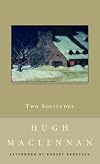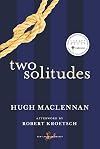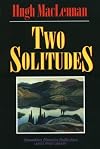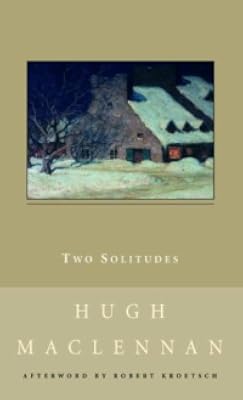
Two Solitudes
by Hugh MacLennan
On This Page
Description
Winner of the Governor General ?s Award for Fiction Canada Reads Selection (CBC), 2013A landmark of nationalist fiction, Hugh MacLennan ?s Two Solitudes is the story of two peoples within one nation, each with its own legend and ideas of what a nation should be. In his vivid portrayals of human drama in First World War ?era Quebec, MacLennan focuses on two individuals whose love increases the prejudices that surround them until they discover that ?love consists in this, that two solitudes show more protect, and touch and greet each other. ?The novel centres around Paul Tallard and his struggles in reconciling the differences between the English identity of his love Heather Methuen and her family, and the French identity of his father. Against this backdrop the country is forming, the chasm between French and English communities growing deeper. Published in 1945, the novel popularized the use of ?two solitudes ? as referring to a perceived lack of communication between English- and French-speaking Canadians.Content note: This book contains racial slurs that readers may find offensive or upsetting. show lessTags
Recommendations














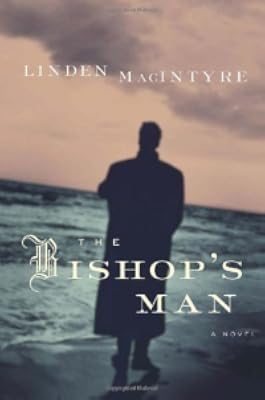
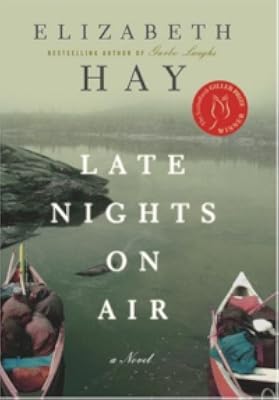
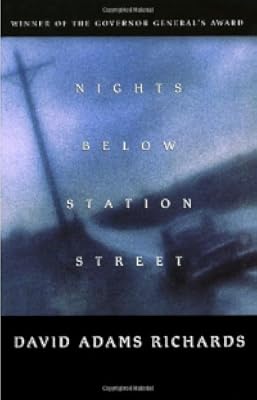


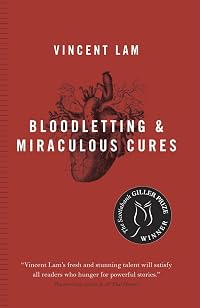





Member Recommendations

RedEyedNerd The French - English dualism of Canada is at the centre of MacLennan's novel which covers the years from 1917 to 1939.
Bovey's study of French Canada appeared in 1933. Thus it provides contemporary background information to the world of Two Solitudes.
Member Reviews
The essential novel for understanding the English-French dichotomy in Canada, albeit from a 1940s perspective. No mention of First Nations, non-English, or non-French Canadians and how they are part of Canadian culture, but this was written in the 1940s after all. The language is descriptive and beautiful, especially the first chapter, which may be the most evocative of any novel I've ever read. MacLennan takes a fair swipe at the stereotypical attidtudes of both the English and the French and how they see the same country in sometimes very different ways. The movement from decade to decade shows the gradual weakening of the Church, and it almost predicts the Quiet Revolution that grew in the years after the release of this story. The show more characters are quite believable, with the exception of Captain Yeardley. He's a very sympathetic character, but he's ultra-egalitarian, especially for the time period, and if he actually existed would have been quite an original man as far as his strong anti-prejudicial stance. It is clear that the main protagonist, Paul, is the author in Quebecois form, but he rings true as someone who has seen the world and can get past the ignorance of the 'other' that works against both English and French in Canada. show less
Warning: This review contains spoilers
****
Hugh MacLennan’s best-known (by reputation, if not by content) novel covers the first three decades of the twentieth century, from the First World War to the Second World War, and follows the lives of one French-Canadian and one English-Canadian family. The stories of the two families combine with Paul Tallard, son of a French father and an English mother, who must learn how to find a place for himself in a society that seems to be split in two.
Overall, this was not a terrible book. This sounds like faint praise for a book from one of my favourite authors (mainly on the strength of two of his other books, The Watch that Ends the Night and Barometer Rising), but I had a hard time rating this show more one. The story itself sweeps the reader right along, and it covers a lot of interesting historical ground.
However, to a 21st-century female reader, more than a few men don’t come off very well. Athanase Tallard causes his family huge upheavals without consulting them, Huntly McQueen is a symbol of Anglo dominance in French Canada, Marius Tallard is a whiny self-absorbed prick, and even Paul has a moment where he seems to be questioning whether marital rape is physically possible. (I’m still in shock about that. WHY did he have to ask that? He wasn’t doing it, he was wondering it about somebody else, but URGH.)
But it’s not just the men who are capable of being jerks. Janet Methuen absolutely infuriated me with her martyrdom and guilt-tripping of her daughter, Heather, who ends up marrying Paul. Janet doesn’t want Heather marrying him because he’s French, and also he doesn’t have a job. Never mind that it’s the Depression and work is hard to come by.
Of course, I could be disproportionately angry with Janet because her guilt-tripping reminded me SO MUCH of my own parents giving me a hard time when my boyfriend had a hard time finding a job after getting his master’s degree. He graduated at exactly the wrong time; the government had a hiring freeze, and the private companies that would normally have hired him were busy going bankrupt or getting creditor protection. So I could sympathize with Heather when Janet was giving her trouble.
Fortunately, John Yardley the sea captain was a bright spot in this book, as were the descriptions of Montreal, Lake Memphramagog, and Halifax. And I certainly don’t regret reading a Canadian classic. But I’d probably suggest that you read Barometer Rising or The Watch that Ends the Night first, if you haven’t tried MacLennan yet. show less
****
Hugh MacLennan’s best-known (by reputation, if not by content) novel covers the first three decades of the twentieth century, from the First World War to the Second World War, and follows the lives of one French-Canadian and one English-Canadian family. The stories of the two families combine with Paul Tallard, son of a French father and an English mother, who must learn how to find a place for himself in a society that seems to be split in two.
Overall, this was not a terrible book. This sounds like faint praise for a book from one of my favourite authors (mainly on the strength of two of his other books, The Watch that Ends the Night and Barometer Rising), but I had a hard time rating this show more one. The story itself sweeps the reader right along, and it covers a lot of interesting historical ground.
However, to a 21st-century female reader, more than a few men don’t come off very well. Athanase Tallard causes his family huge upheavals without consulting them, Huntly McQueen is a symbol of Anglo dominance in French Canada, Marius Tallard is a whiny self-absorbed prick, and even Paul has a moment where he seems to be questioning whether marital rape is physically possible. (I’m still in shock about that. WHY did he have to ask that? He wasn’t doing it, he was wondering it about somebody else, but URGH.)
But it’s not just the men who are capable of being jerks. Janet Methuen absolutely infuriated me with her martyrdom and guilt-tripping of her daughter, Heather, who ends up marrying Paul. Janet doesn’t want Heather marrying him because he’s French, and also he doesn’t have a job. Never mind that it’s the Depression and work is hard to come by.
Of course, I could be disproportionately angry with Janet because her guilt-tripping reminded me SO MUCH of my own parents giving me a hard time when my boyfriend had a hard time finding a job after getting his master’s degree. He graduated at exactly the wrong time; the government had a hiring freeze, and the private companies that would normally have hired him were busy going bankrupt or getting creditor protection. So I could sympathize with Heather when Janet was giving her trouble.
Fortunately, John Yardley the sea captain was a bright spot in this book, as were the descriptions of Montreal, Lake Memphramagog, and Halifax. And I certainly don’t regret reading a Canadian classic. But I’d probably suggest that you read Barometer Rising or The Watch that Ends the Night first, if you haven’t tried MacLennan yet. show less
This book is very different from the first MacLennan novel I read — and loved — The Watch that Ends the Night. This one is set in Canada between the end of WWI and England’s declaration of war against Germany in September 1939. Its major theme is the tension and division between Canadians of English heritage and those of French heritage, including culture, language, politics and religion. MacLennan reveals characters and delineates place in a slow and meticulous fashion. He also conveys depth of emotion with authenticity. Although there are some very dry and almost ponderous sections in which characters ponder and talk about philosophical and political matters, the novel is beautifully written and captured my attention and show more imagination. show less
This book is a good read for:
1. All Canadians
2. All Quebeckers
3. Anyone from the US/Britain that doesn't understand the Canadian identity crisis.
4. Readers interested in Quebec during WWI, Depression and WWII.
My sense about Canada, and this is beautifully illustrated in Two Solitudes, is that there is an ongoing struggle of identity. How does an individual cope with a questioning identity and furthermore, how to treat an entire nation suffering form this sort of confusion?
And how to deal with a superpower like the United States, a mere stones throw across the border? In the authors words "The Americans were doubtless all right but they would be far better if they were a thousand miles away." Fear of basking in the reflected glory of a show more country that might just as well swallow us up with it's shiny-ness.
I have only two complaints about Two Solitudes. First, why end with a tragic love story? It is ill-placed, unnecessary and all too predictable. Second- although in all fairness it was written in the 40s- is that no voice is given to the existence of First Nations. I guess when the book was written there was still a sense of Western imperialism. Perhaps that is still true in Quebec now. Also, what of the Acadians? Maybe that story has another place.
But I felt, after reading this novel, give Quebec sovereignty if they can reach consensus with Cree/Metis in the interior of the province. Quebec values their culture and are afraid of losing it to British and American interests- and who isn't? Good for them for trying to find their own cultural name. show less
1. All Canadians
2. All Quebeckers
3. Anyone from the US/Britain that doesn't understand the Canadian identity crisis.
4. Readers interested in Quebec during WWI, Depression and WWII.
My sense about Canada, and this is beautifully illustrated in Two Solitudes, is that there is an ongoing struggle of identity. How does an individual cope with a questioning identity and furthermore, how to treat an entire nation suffering form this sort of confusion?
And how to deal with a superpower like the United States, a mere stones throw across the border? In the authors words "The Americans were doubtless all right but they would be far better if they were a thousand miles away." Fear of basking in the reflected glory of a show more country that might just as well swallow us up with it's shiny-ness.
I have only two complaints about Two Solitudes. First, why end with a tragic love story? It is ill-placed, unnecessary and all too predictable. Second- although in all fairness it was written in the 40s- is that no voice is given to the existence of First Nations. I guess when the book was written there was still a sense of Western imperialism. Perhaps that is still true in Quebec now. Also, what of the Acadians? Maybe that story has another place.
But I felt, after reading this novel, give Quebec sovereignty if they can reach consensus with Cree/Metis in the interior of the province. Quebec values their culture and are afraid of losing it to British and American interests- and who isn't? Good for them for trying to find their own cultural name. show less
what a dense, wonderful important novel. this was a re-read for me but i had lost so many details over the years it was like a new experience, this time through. following the strands of story arcs concerning 'two solitudes', through this novel, was amazing. maclennan wrote about so many important issues and brought heart and humanity to the telling. certainly a canadian classic and a book that should continue to resonate for generations to come.
This book written by the marvellous Hugh MacLennan and was originally released in 1945. It’s a novel that has been on my “to read” list for a long time and it is a “must-read” classic for all Canadians. The novel revolves around the city of Montreal and the province of Quebec from just before the beginning of World War I and ends just as World War II begins in 1939. There are so many layers and so many intricacies in this book and it is defined by two solitudes as the title suggests. The two solitudes are varied. There are the solitudes of the English-speaking Canadians and the French-speaking Canadians, and the book depicts so clearly why there has been so much discord between the two nationalities in Canada. It depicts the show more solitudes of the Canadian way and Canada and our nearest neighbours the United States of America, and how and why there are such differences between the two countries. The most glaring thing is that Canadians really never considered themselves a separate country until after the second World War. We came into our own after that war, mostly because of the bravery and valour of the soldiers who fought and died in that war. Canada took it’s rightful place on the world stage after that war. There are the two solitudes of the fictional characters in the book. Young French-Canadian Paul Tallard, the son of a fading French Canadian aristocrat, is the soldering iron that connects the old French Canadian families to the English-speaking proletariat characters who controlled the money and affairs of Canada and its destiny. As Paul struggles with his English and French Canadian identities, he goes through many epiphanies that enable him to understand the solitudes and why they are there. When the book opens, the world and Canada are on the brink of war (WWI), but the world is also on the brink of enormous change and Canada is on the precipice of taking the leap forward or not - forever remaining a little country outpost in the British empire. As we all know we took the leap and became the Canada we are today. The main characters in the book are wonderfully drawn, but what really drew me in to the book is MacLennan’s love for Canada and for our vast and beautiful country. It was humbling to realize just how important and wonderful my country is. It’s one of those things that I’ve always known, but never really took the time to really examine. It’s the best place on earth and Mr. MacLennan makes that abundantly clear throughout this wonderful book. “O Canada, we stand on guard for thee”. show less
People mention this book often, as a political metaphor. But this book is such a loving and clear portrait of the times, people, and ideas that I fell in love with it. We've been happily married for over a year.
When I visited Montreal this summer I couldn't help but remember different scenes from the book, they are so full of place.
When I visited Montreal this summer I couldn't help but remember different scenes from the book, they are so full of place.
Members
- Recently Added By
Lists

The Best of Canadian Literature
235 works; 33 members
CBC Books - Canada's 100 (+ bonus 10): Which have you read?
110 works; 23 members

New Canadian Library
191 works; 7 members

Canada Reads Winners and Nominees
129 works; 9 members

Books Set in Canada
57 works; 10 members

CBC's Great Canadian Reading List
149 works; 5 members

Governor General of Canada's English Fiction Awards
89 works; 3 members

Canada
42 works; 3 members

Open Book 2021
17 works; 2 members

Shirley's Top Reads
9 works; 1 member
Author Information

24+ Works 1,607 Members
John Hugh MacLennan was born in Glace Bay, Cape Breton, Nova Scotia on March 20, 1907. He was educated at Dalhousie University, Oxford University, and Princeton University. He taught English at Lower Canada College and McGill University. His first book, Barometer Rising, was published in 1941. His other works included Each Man's Son, Return of the show more Sphinx, Voices in Time, and The Other Side of Hugh MacLennan. He won the Governor General's Literary Award three times for fiction for Two Solitudes, The Precipice, and The Watch that Ends the Night and twice for nonfiction for Cross-Country and Thirty and Three. He also won a Royal Bank Award in 1984 and in 1987 he became the first Canadian to receive Princeton University's James Madison Medal. He died on November 7, 1990. (Bowker Author Biography) show less
Awards and Honors
Awards
Distinctions
Series
Belongs to Publisher Series
Work Relationships
Has as a student's study guide
Common Knowledge
- Original publication date
- 1945
- People/Characters
- Athanase Tallard; Kathleen Tallard; Paul Tallard; Marius Tallard; John Yardley; Janet Methuen (show all 7); Huntly McQueen
- Important places
- Montréal, Québec, Canada; New England, USA; Greece; Québec, Canada
- Epigraph
- Love consists in this,
that two solitudes protect,
and touch, and greet each other.
--Rainer Maria Rilke - First words
- Northwest of Montreal, through a valley always in sight of the low mountains of the Laurentian Shield, the Ottawa River flows out of Protestant Ontario into Catholic Quebec.
Because this is a story, I dislike having to burden it with a foreword, but something of the kind is necessary, for it is a novel of Canada. (from the foreword)
Classifications
Statistics
- Members
- 497
- Popularity
- 60,706
- Reviews
- 11
- Rating
- (3.73)
- Languages
- English, French
- Media
- Paper, Audiobook, Ebook
- ISBNs
- 19
- UPCs
- 1
- ASINs
- 10